

B-Roll Footage: The Complete Guide (What It Is and How to Use It)

B-Roll Footage: The Complete Guide
B-roll footage is the secondary footage you cut to on top of your main footage. Your main footage (A-roll) is the talking head or interview that carries the message. B-roll is everything that illustrates it: hands typing, a wide shot of the location, a product close-up. Cutting between the two is what makes a video look edited rather than filmed in one take.
Quick answer: B-roll is supplemental footage used to cover cuts, illustrate what is being said, and add visual variety. Shoot 5 to 10 times more of it than you think you need, hold each shot for at least 10 seconds while filming, and use 3 to 7 second clips in your final edit. You can shoot your own on a smartphone or download it free from Pexels, Pixabay, Coverr, or Videvo.
Jump to: What is B-roll · Why it matters · Types · How to shoot it · Shot list checklist · Where to find it · How to use it · By video type · Common mistakes · Budget guide · 2026 trends · Tools · FAQ
Create content, post everywhere
Create captions, images, and videos with AI. Schedule to 9 platforms in seconds.
Start your free trial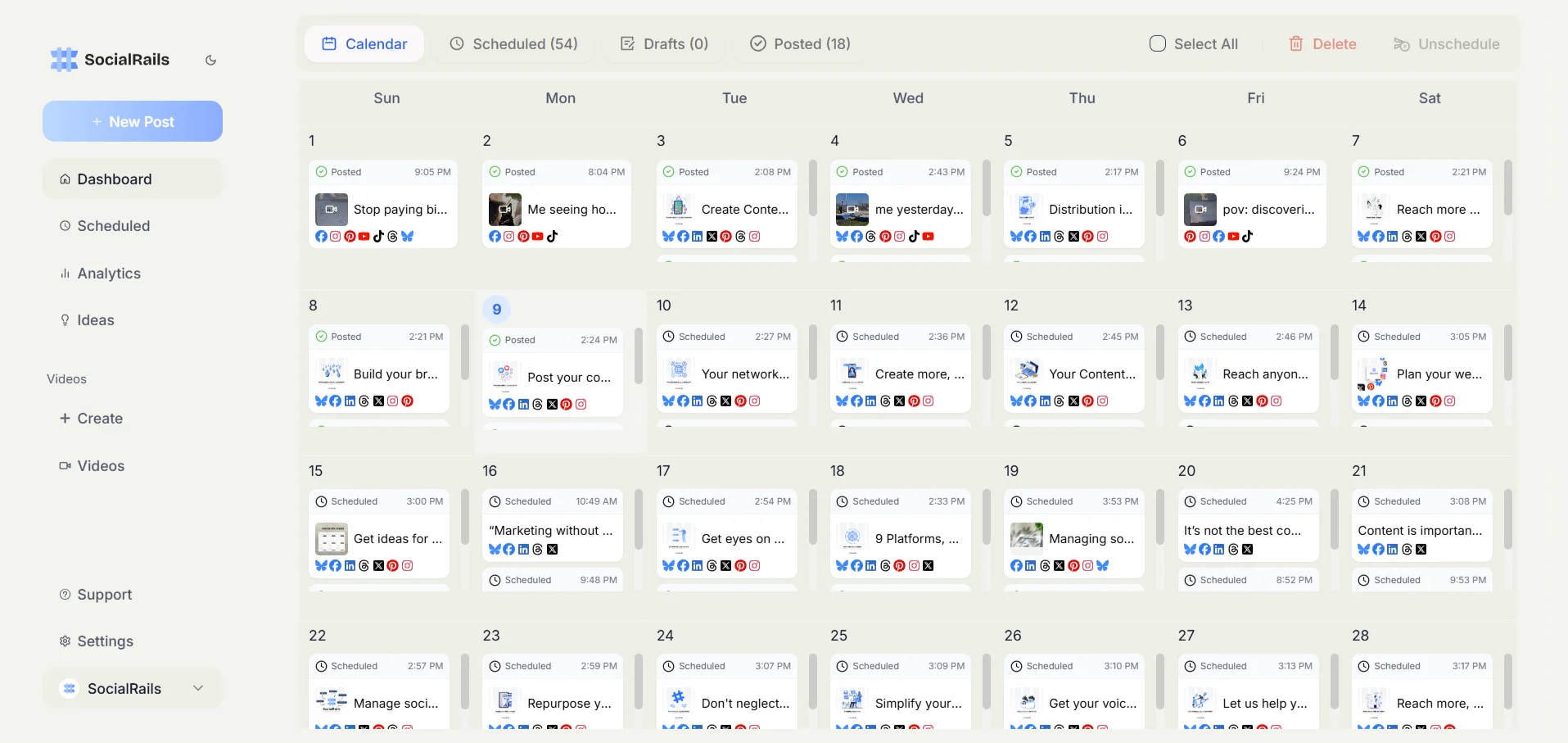
What is B-Roll?
B-roll is the visual seasoning in your video. If someone talks about running a marathon, A-roll shows them speaking. B-roll shows runners, training, race day, and finish lines. This combination creates professional, engaging content.
A-Roll vs B-Roll: The Key Differences
You're editing an interview about coffee. Someone says 'We roast beans daily.' What's the best b-roll?
💡 Tip: Think carefully before selecting your answer!
Why B-Roll Matters
B-roll makes videos look professional, increases retention, boosts social engagement, covers edits seamlessly, illustrates concepts visually, maintains attention, sets context, and adds production value.
Types of B-Roll
Establishing Shots: Wide shots showing location and setting context.
Detail Shots: Close-ups of hands, products, tools, and objects.
Action Shots: People working, processes in motion, demonstrations.
Lifestyle Shots: Products in use, team collaboration, real-life scenarios.
Stock Footage: Pre-existing footage for historical events, nature, cities.
How to Shoot Great B-Roll
Pre-Production: Create shot list, scout locations, gather equipment (camera, tripod, lighting).
Shooting Tips: Hold each shot 10+ seconds. Vary shot sizes (wide, medium, close). Shoot 5-10x more than needed. Use movement purposefully. Match lighting. Capture ambient sound.
Camera Settings: 24fps (cinematic), 30fps (standard), 60fps (slow-mo). Shutter: double frame rate. Aperture: f/2.8 (shallow), f/8 (balanced). ISO: as low as possible.
B-Roll Shot List Checklist
Print this list before a shoot and tick items off. It is built to give an editor enough coverage to never get stuck. Aim to capture at least one shot from every group.
Establishing (set the scene):
- Wide shot of the location or building exterior
- Slow push-in or reveal of the room/space
- Sign, logo, or address detail that names the place
Detail / insert (the visual proof):
- Close-up of hands doing the key action
- Product or object from three angles (front, 3/4, top-down)
- Extreme close-up of one texture or moving part
Action (motion and process):
- The main task performed start to finish (one continuous take)
- The same action from a second angle
- A step happening in slow motion at 60fps or higher
Human / reaction (adds life):
- Subject walking into or out of frame
- Genuine reaction or expression, no direction given
- Over-the-shoulder shot showing point of view
Transition / connective tissue:
- A "wipe" shot where something passes close to the lens
- Matching entrance and exit frames for two locations
- A static locked-off shot to rest the eye between moving shots
Coverage rule of thumb: hold every shot for 10 seconds minimum, shoot at least five options per group, and grab both a horizontal and a vertical version if the footage will run on both YouTube and Reels/TikTok.
Where to Find B-Roll
Free sites (no cost, check each clip's license before commercial use): Pexels and Pixabay offer a large no-attribution library; Coverr and Videvo add curated lifestyle and drone clips. Videezy is still online but many of its free clips are watermarked or require attribution, so read the license on each one.
Premium subscriptions (unlimited downloads, prices verified July 2026): Storyblocks starts around $15/month for video-only or $30/month all-access (billed annually); Artgrid runs roughly $20 to $50/month billed annually; Shutterstock and Adobe Stock sell per-clip or plan-based licenses that scale higher for large teams. Motion Array is another membership option bundling footage, templates, and music.
User-generated: YouTube Creative Commons and Vimeo, but only reuse footage the creator has explicitly licensed for reuse.
For a full side-by-side of the free platforms, see our best free stock video sites guide.
How to Use B-Roll
Basics: Use 3-7 second clips. Cover jump cuts. Illustrate what's being said. Cut at natural pauses.
Advanced: L-cuts (video before audio), J-cuts (audio before video), layering clips, match cuts, montages.
Pacing: Fast (2-3 sec clips for social), Medium (4-6 sec for explainers), Slow (6-10 sec for documentaries).
B-Roll for Different Video Types
YouTube Videos
Tutorial/How-To Content:
- Close-ups of steps being performed
- Screen recordings for digital tutorials
- Multiple angles of same action
- Results/before-and-after shots
Optimize your YouTube presence with our YouTube Tools.
Vlogs:
- Establishing shots of locations
- Transition shots between scenes
- Detail shots adding personality
- Time-lapse sequences
Product Reviews:
- Unboxing footage
- Product from multiple angles
- Close-ups of features
- Product in use demonstrations
Social Media Content
Instagram Reels/TikTok:
- Fast-paced B-roll (1-2 seconds per clip)
- Trending transitions
- Vertical format optimized (shoot and export at 1080 x 1920px, 9:16)
- Text overlays with B-roll background
Create compelling captions with our Instagram Caption Generator.
LinkedIn Videos:
- Professional setting B-roll
- Office environment shots
- Team collaboration footage
- Product/service demonstrations
Facebook Content:
- Attention-grabbing opening B-roll
- Captioned for sound-off viewing
- Variety to maintain feed-scrolling attention
- Call-to-action B-roll at end
Marketing/Commercial Videos
Explainer Videos:
- Animated graphics as B-roll
- Product feature demonstrations
- Customer testimonial environments
- Problem-solution visual sequences
Brand Videos:
- Lifestyle footage showing brand values
- Employee/culture shots
- Customer experience footage
- Product integration in daily life
Event Coverage:
- Crowd shots establishing attendance
- Keynote speaker cutaways
- Audience reactions
- Venue details and branding
Plan and slot your video posts across platforms with our Content Calendar Generator.
Common B-Roll Mistakes to Avoid
Mistake 1: Not Shooting Enough
Problem: Running out of B-roll options during editing, forcing awkward repetition or poor shot choices.
Solution: Shoot 5-10 times more B-roll than you think you need. Extra footage gives you creative flexibility.
Mistake 2: Irrelevant B-Roll
Problem: Using generic stock footage that doesn't match your message (talking about Hawaii while showing generic beach stock footage from Thailand).
Solution: Ensure every B-roll clip directly illustrates or enhances what's being discussed. When in doubt, leave it out.
Mistake 3: Inconsistent Visual Style
Problem: Mixing color grades, aspect ratios, or quality levels creates jarring, unprofessional feel.
Solution: Color grade all footage consistently. Use similar quality footage throughout. Match aspect ratios.
Mistake 4: Too Much Movement
Problem: Every B-roll shot panning, zooming, or tracking creates nausea and distraction.
Solution: Balance movement with static shots. Use stabilizers for smooth movement. Sometimes a simple locked-off shot is best.
Mistake 5: Poor Audio Continuity
Problem: Background noise changes dramatically when cutting to B-roll, breaking immersion.
Solution: Mix B-roll ambient audio with A-roll environment. Use consistent room tone underneath. Add subtle music to smooth transitions.
Mistake 6: Overused Stock Footage
Problem: Using the same overused stock clips viewers have seen a thousand times (same business meeting shots, same "diverse" team shots).
Solution: Shoot your own B-roll when possible. Use lesser-known stock sites. Search deeper than first-page results. Create original content.
Mistake 7: Wrong Aspect Ratio
Problem: Using landscape footage in vertical videos or vice versa, resulting in black bars or awkward cropping.
Solution: Shoot B-roll in the aspect ratio you'll edit in. Shoot separate vertical and horizontal versions when needed.
B-Roll Budget Guide
DIY B-Roll (Free - $500)
Equipment:
- Smartphone camera (free if you own one)
- Basic tripod: $20-50
- Smartphone gimbal: $50-150
- Natural lighting (free)
- Free editing software (DaVinci Resolve, iMovie)
Best For:
- Starting out
- Social media content
- Small business videos
- Regular content creation
Semi-Professional ($500 - $3,000)
Equipment:
- Mirrorless camera: $500-1,500
- 1-2 lenses: $200-800
- Gimbal stabilizer: $200-500
- LED lighting kit: $100-300
- Rode microphone: $100-250
Best For:
- Professional YouTube channels
- Marketing videos
- Client work
- High-quality content
Professional ($3,000+)
Equipment:
- Cinema camera: $2,000-15,000+
- Multiple cinema lenses: $1,000-5,000 each
- Professional stabilizer: $500-3,000
- Lighting package: $1,000-5,000
- Sound recording equipment: $500-2,000
Best For:
- Commercial productions
- High-end brand content
- Documentary filmmaking
- Broadcast television
Hiring B-Roll Shooters
Freelance Videographer:
- Half-day shoot: $300-800
- Full-day shoot: $600-1,500
- Includes basic editing: +$200-500
Production Company:
- Half-day: $1,500-3,000
- Full-day: $3,000-8,000
- Includes crew, equipment, editing
Stock Footage Budgets:
- Per-clip purchase: $20-200 per clip
- Monthly subscription: $25-80/month unlimited
- Annual subscription: $200-600/year unlimited
B-Roll Trends for 2026
Authentic, Raw Footage
Movement away from overly polished stock footage toward real, authentic, slightly imperfect B-roll that feels genuine.
Vertical-First B-Roll
With TikTok and Reels dominance, shooting B-roll primarily in vertical 9:16 format rather than traditional horizontal.
Behind-the-Scenes Content
B-roll showing the process, team, and reality behind productions rather than only polished final products.
Drone Footage
Aerial B-roll becoming standard rather than luxury, with drones more accessible and regulations clearer.
AI-Generated B-Roll
Emerging AI tools creating custom B-roll from text prompts, though human-shot footage still preferred for authenticity.
Cinematic Slow-Motion
High-frame-rate cameras more accessible, making smooth slow-motion B-roll a standard rather than special effect.
Mixed Media
Combining real footage with motion graphics, animation, and text overlays as integrated B-roll elements.
Tools and Resources
Editing Software
Beginner-Friendly:
- iMovie (Free, Mac only)
- DaVinci Resolve (Free, all platforms)
- Clipchamp (Free, Windows)
Professional:
- Adobe Premiere Pro (from $22.99/month on an annual plan, or $34.49 month-to-month)
- Final Cut Pro ($299.99 one-time, Mac only)
- DaVinci Resolve Studio ($295 one-time)
Mobile:
- CapCut (free tier with a large template library; paid Standard is $9.99/month and Pro is $19.99/month after the 2026 price change, see our CapCut pricing guide)
- Adobe Premiere on iPhone (free; the replacement for the discontinued Premiere Rush, which Adobe pulled from sale in 2025)
- LumaFusion ($29.99 one-time, iOS and Android)
B-Roll Organization
File Naming Convention:
ProjectName_BROLL_Location_Description_Date_001.mp4
Example: ClientVideo_BROLL_Office_CoffeePouring_2025-11-05_001.mp4
Folder Structure:
Project Name/
├── A-Roll/
├── B-Roll/
│   ├── Establishing/
│   ├── Details/
│   ├── Action/
│   └── Stock/
├── Audio/
└── Final/
Metadata Tags:
- Location
- Subject
- Action
- Time of day
- Camera settings
- Date
Frequently Asked Questions
What's the difference between A-roll and B-roll?
How much B-roll do I need for a video?
Can I use B-roll without A-roll?
Where can I get free B-roll footage?
How long should each B-roll clip be?
Should B-roll have audio?
Can I use B-roll from other videos?
How do I match B-roll to my A-roll?
Do I need expensive equipment for good B-roll?
How can B-roll improve my engagement?
Related Resources
Master video content creation with these guides:
Video Production:
- How to Make Corporate Videos That Don't Bore People - Corporate video excellence
- What is Motion Graphics - Add animated elements to your B-roll
- Challenge Video Ideas That Go Viral - Engaging video concepts
- Guerilla Marketing Ideas - Creative video marketing tactics
Platform-Specific Guides:
- LinkedIn Headlines for HR Professionals - Professional video content
- Animation Definition Complete Guide - Animation fundamentals
- Content Strategy - Strategic video planning
Free Tools for Video Content:
- YouTube Tools - Optimize titles, tags, and thumbnails
- Instagram Caption Generator - Write captions for social video
- Content Calendar Generator - Plan and schedule your video content
B-roll footage transforms ordinary videos into professional, engaging content that holds attention and communicates effectively. Whether you're shooting with a smartphone or cinema camera, using stock footage or creating your own, mastering B-roll is essential for modern content creation. Start incorporating B-roll today and watch your viewer retention, engagement, and perceived professionalism soar.
Was this article helpful?
Let us know what you think!