
Instagram Bans and Restrictions: An Honest Guide to Types, Causes, and Appeals (2026)

Quick answer
"Banned" is a word people use for five very different situations. Sorting out which one you have is the whole game, because the fix is different for each:
- Action block: a temporary stop on one action (liking, following, commenting) after behavior that looked automated. Usually clears on its own.
- Feature limit: a specific feature (commenting, DMs, going Live) is turned off for a set period after a violation.
- Reduced distribution: the thing most people call a "shadowban." Your account stays fully usable but is not recommended to non-followers.
- Temporary disable: the account is locked and shows a removal or disable notice, often with a review option.
- Permanent disable: the account is removed for repeated or severe violations.
Do this first: open Settings, then Account, then Account Status. It tells you exactly what, if anything, Instagram has done to your account. Do not guess.
Create content, post everywhere
Create captions, images, and videos with AI. Schedule to 9 platforms in seconds.
Start your free trial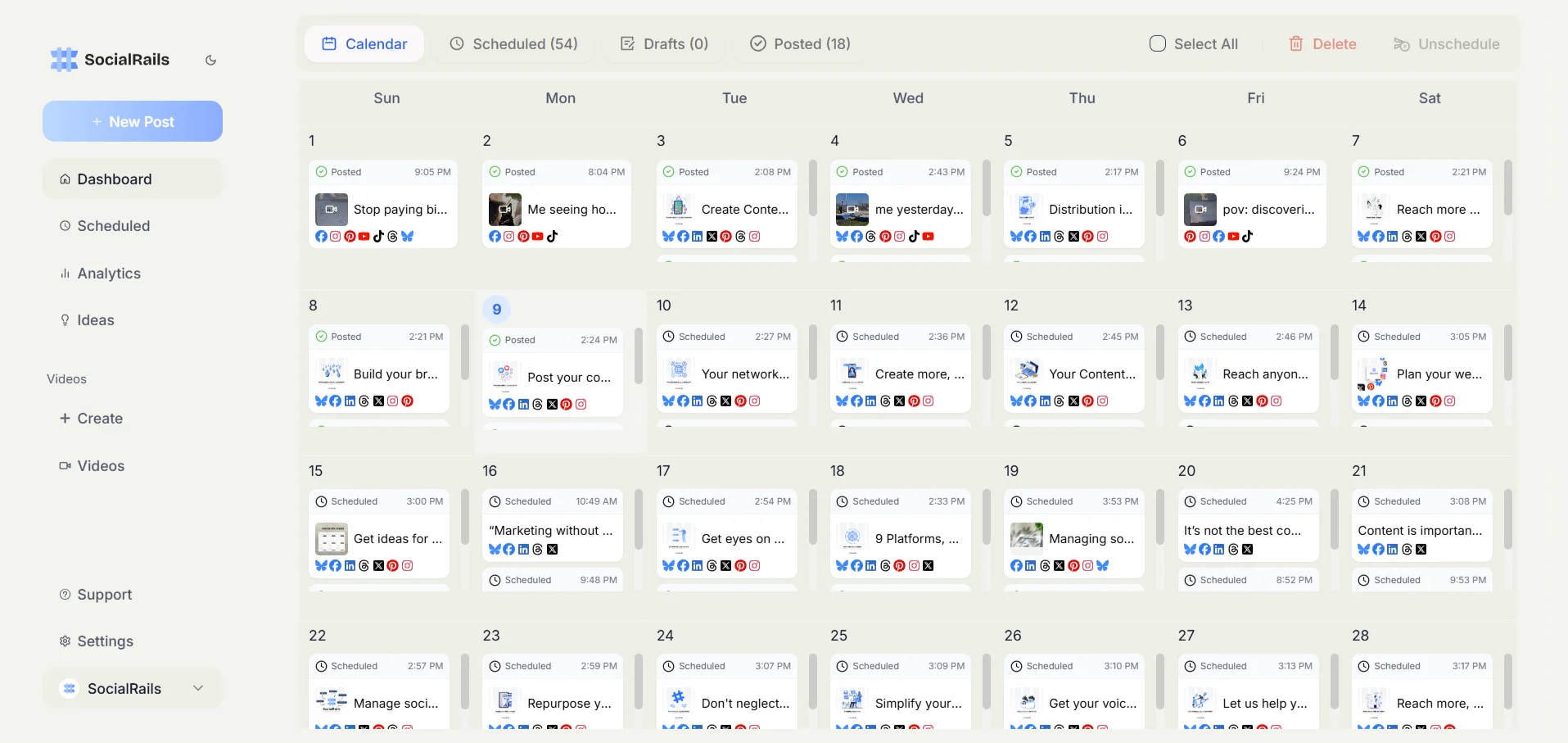
On this page
- What counts as an Instagram restriction
- Check your Account Status first
- What actually triggers restrictions
- How to appeal and request a review
- How long restrictions last
- How to prevent restrictions
- Frequently asked questions
What counts as an Instagram restriction
Most panic about Instagram "bans" comes from lumping five separate mechanics into one word. They escalate in severity, and only the last two remove your access to the account.
| Type | What it does | Can you still use the account? |
|---|---|---|
| Action block | One action (like, follow, comment) is temporarily stopped. Shows "Action Blocked" or "Try Again Later." | Yes, mostly |
| Feature limit | A specific feature (comments, DMs, Live) is disabled for a period after a policy violation. | Yes, minus that feature |
| Reduced distribution | Content is not recommended to non-followers in Explore, Reels, Feed recommendations, Search, or Suggested Accounts. Often called a shadowban. | Yes, fully |
| Temporary disable | Account is locked with a disable or removal notice, usually with a review option. | No, until reinstated |
| Permanent disable | Account is removed for repeated or severe violations. | No |
A note on the word "shadowban." Instagram does not use it and has no on/off "shadowban" switch. What people experience is Instagram declining to recommend an account to people who do not already follow it, which it describes under recommendation eligibility. It is real, but it is a distribution decision, not a hidden punishment tier, and it shows up in Account Status as content that is not eligible to be recommended. For the detection and recovery side of that specific problem, see our Instagram shadowban removal guide and why your posts are not showing.
Check your Account Status first
This is the single most useful thing on the page, and almost no other guide sends you here. Instagram has a built-in dashboard that tells you exactly what it has done to your account, so you never have to run a guessing "test."
How to open Account Status
- Open your profile and tap the menu, then Settings and activity.
- Tap Account.
- Tap Account Status.
What Account Status shows you, per Instagram's own Help Center:
- Content removed for violating Community Guidelines, with the option to request a review.
- Features you can no longer use (for example commenting, messaging, or going Live) if any are currently limited.
- Recommendation eligibility: whether your content can be recommended to non-followers across Explore, Reels, Feed recommendations, Search, and Suggested Accounts. This is the honest home of the "shadowban" question.
- Teen visibility and account risk: whether the account is limited from reaching under-18 users, or is at risk of being disabled.
If Account Status says everything is fine and content is recommendable, you are almost certainly not restricted, and a drop in reach is a normal algorithm or content issue rather than a ban. If it flags something, it usually gives you a Request a Review button right there. That is where recovery starts.
What actually triggers restrictions
Restrictions come from patterns and policy violations, not from a secret quota you tripped at action number 201. Instagram deliberately does not publish exact thresholds so they cannot be gamed. The genuine causes:
Behavior that looks automated
- Bursts of identical actions (liking or following dozens of accounts in a minute).
- Perfectly regular, machine-like timing.
- Aggressive follow then unfollow cycling.
- Third-party bots, "growth services," or auto-DM tools connected to your account.
- Buying followers, likes, or comments.
Community Guidelines and policy violations
- Nudity or sexual content, hate speech, harassment, or violent content.
- Selling regulated goods, or content promoting self-harm or eating disorders.
- Copyright or trademark infringement (repeat strikes can disable an account).
- Impersonation, spam, or coordinated inauthentic behavior.
About hashtags and "banned hashtag lists." Old guides circulate long lists of "permanently banned" hashtags and warn against using 30 of them. That framing is out of date. Hashtags no longer drive reach the way those guides assume, Instagram removed the ability to follow a hashtag, and since December 19, 2025 Instagram enforces a hard cap of 5 hashtags per post. There is no public, verifiable "banned hashtag list" that Instagram maintains. Adding a huge block of hashtags will not shadowban you; it just will not do anything, because posts above the cap will not accept the extras. Use a few relevant tags and move on.
If a specific action keeps getting blocked, the real limits are dynamic and unpublished. We break down what is documented versus estimated in our Instagram follow limits guide, and the same "it is behavior, not a magic number" logic applies to likes, comments, and DMs.
How to appeal and request a review
The appeal process changed meaningfully between 2024 and 2026 and moved almost entirely in-app. If you are chasing an old standalone "appeal form" URL, that is usually why nothing happens.
The current review path
- Request a Review from Account Status or the violation notice. When Instagram removes content or limits a feature, it typically surfaces a review button in Account Status or in the notice itself. This is the primary route.
- Check the Support Inbox. Responses and follow-up options often land there rather than in email.
- For a fully disabled account, follow the on-screen instructions when you log in. Instagram walks you through identity confirmation and a review request. Our disabled account recovery guide covers this flow in detail.
- If your account was hacked rather than banned, start at instagram.com/hacked, which is a separate recovery flow.
Two escalation paths worth knowing about, because most guides omit them:
- Meta Verified includes access to human support. A paid Meta Verified subscription gives you a support channel with real people, which can help when an automated review keeps rejecting a clearly mistaken action. It is not a guaranteed reinstatement, and in 2026 its usefulness for pure policy suspensions is more limited, but it is a genuine escalation option the free tier does not have.
- The Oversight Board. For a narrow set of cases, Meta's independent Oversight Board can review decisions. In early 2026 the Board took on its first case examining how Meta disables accounts, and it has been pushing for more transparency and a pilot to review account-level disables. The Board hears only a small fraction of submissions and focuses on cases that raise broader questions, so it is a long shot for routine restrictions rather than a fast fix.
On appeal wording: keep it short and factual. State your username, that you believe the restriction was a mistake, and that you follow the Community Guidelines. Do not fabricate details or promise things you cannot verify. Automated review reads for policy compliance, not for persuasive essays, and repeatedly re-submitting or spamming the review button can slow things down.
How long restrictions last
Instagram does not publish durations for any of these, so treat every number below as a community estimate based on user reports, not an official figure. Your actual timing depends on the violation, your account history, and whether it is a repeat issue.
Typical timelines (estimates, not guarantees)
- Action block: often clears within a day or two if you stop the action. First-time blocks tend to be short; repeat blocks tend to last longer.
- Feature limit: usually a fixed window that Account Status will name. It lifts automatically when the period ends.
- Reduced distribution: not a countdown. Eligibility tends to recover over subsequent weeks once you stop posting borderline content, but there is no published timer.
- Temporary disable: depends entirely on the review, which can take anywhere from a day to a few weeks.
- Permanent disable: intended to be final. A review is your only route, and it is not guaranteed.
The most reliable move during any block is the least satisfying one: stop the triggering action, disconnect any third-party apps under Settings, and wait rather than repeatedly testing whether it has lifted. Poking the blocked action can extend it.
How to prevent restrictions
Prevention is mostly about not looking automated and not posting policy-violating content. It is genuinely that simple.
Practical habits
- Warm up new accounts. A brand-new account doing heavy activity is the classic trigger. Ease in over the first weeks.
- Vary your timing. Real people do not like 50 posts in two minutes. Spacing out actions matters more than any specific count.
- Drop the bots. Auto-followers, auto-DMs, and engagement pods are the fastest way to a block. Read why in our Instagram automation guide.
- Post original, guideline-safe content. Credit others, avoid reposting without permission, and steer clear of borderline material.
- Check Account Status occasionally. It flags a recommendation or feature problem before it becomes a habit you have to unlearn.
- Schedule instead of batch-grinding. Spacing posts through a scheduler keeps your activity looking human rather than bursty.
Frequently asked questions
What is the difference between an action block and a disabled account?
An action block is temporary and narrow: Instagram stops one action, like following or commenting, usually because the behavior looked automated. You keep full access to the account and it typically clears on its own. A disabled account is the severe end: the whole account is locked or removed, usually after policy violations, and you have to go through a review to get it back. Account Status in the app tells you which one you are dealing with.
How do I check why my Instagram account is restricted?
Open Settings, then Account, then Account Status. It is Instagram's own dashboard and shows whether content was removed, whether any features are limited, and whether your content is eligible to be recommended to non-followers. It usually gives you a Request a Review button next to anything it has flagged. This is far more reliable than running a hashtag visibility test.
How long does an Instagram action block last?
Instagram does not publish a duration, so any number is a community estimate rather than an official figure. Based on user reports, a first-time action block often clears within a day or two once you stop the action and disconnect any third-party apps. Repeat blocks tend to last longer. Repeatedly testing the blocked action can extend it, so the best move is to wait.
Can I appeal an Instagram restriction or ban?
Yes. The main route is Request a Review from Account Status or from the violation notice itself, and responses often appear in your Support Inbox. For a fully disabled account, follow the on-screen prompts when you log in. Meta Verified adds access to human support as an escalation option, and for a narrow set of cases the independent Oversight Board can review decisions, though it hears only a small fraction of submissions.
Does Instagram tell you if you are shadowbanned?
Instagram does not use the word shadowban and has no on/off setting for it. What people call a shadowban is reduced distribution, meaning your content is not recommended to non-followers. Instagram does surface this: Account Status shows whether your content is eligible to be recommended across Explore, Reels, Feed recommendations, Search, and Suggested Accounts. If it says you are not recommendable, that is the closest thing to a shadowban confirmation.
Are there banned hashtags I should avoid?
The long lists of permanently banned hashtags that circulate online are out of date and not maintained by Instagram. Hashtags no longer drive reach the way older guides assume, following a hashtag was removed, and since December 19, 2025 Instagram caps posts at 5 hashtags. Piling on hashtags does not cause a shadowban; the extras above the cap simply will not be accepted. Use a few relevant tags.
Will creating a new account get around a ban?
Deliberately evading a ban by making a replacement account violates Instagram's terms, and Instagram can link accounts by device and other signals, so a new account created to dodge a disable is at risk of being removed too. If you believe the original decision was a mistake, the durable path is the review process, not evasion. Starting fresh is only reasonable when you have accepted the original account is gone and are building something new and compliant.
Stay safe, grow deliberately
Instagram restrictions are not random, and they are not one thing. Identify which of the five you actually have, read Account Status instead of guessing, and use the in-app review path if something was a mistake. Everything else is prevention: skip the bots, vary your timing, and post content that does not trip the guidelines.
Related guides: Instagram shadowban removal | Disabled account recovery | Instagram follow limits explained | Posts not showing fix
Want to grow without tripping Instagram's automated defenses? Try SocialRails to schedule content at a human pace. No bots, no growth hacks, just consistent posting.
Was this article helpful?
Let us know what you think!