

How Often Should You Post on Instagram in 2026: An Honest Frequency Guide

The honest answer to "how often should I post on Instagram" is: it depends, and there is no single magic number. Anyone who promises exact results from a specific number of posts per day is guessing. What the platform's own guidance and large public post studies actually support is a set of practical starting ranges that you then test against your own analytics.
This guide gives you those ranges by format, explains why consistency and quality matter more than raw volume, and shows you how to find the rhythm that fits your account and your capacity to keep it up.
The Honest Answer
If you want a place to start today, here is a realistic baseline for most accounts:
- Feed posts (photos and carousels): about 3 to 5 per week
- Reels: a bit more often than feed posts, since Reels are the format most likely to reach non-followers. Roughly 3 to 5 per week, more if you can keep the quality up
- Stories: most days. Instagram's own guidance has pointed to a couple of Stories per day as a reasonable habit
Treat these as a starting point, not a rule. The right number for you is whatever you can sustain at a quality your audience actually engages with. A steady 3 posts a week you can keep up for a year beats 2 a day that burns you out in a month.
Jump to a section:
- Does Posting More Often Hurt Your Reach?
- Frequency by Format: Feed, Reels, and Stories
- Frequency by Account Type
- Consistency Beats Frequency
- How to Find Your Rhythm in Instagram Insights
- Signs You Are Posting Too Much
- Common Frequency Mistakes
- Frequently Asked Questions
Create content, post everywhere
Create captions, images, and videos with AI. Schedule to 9 platforms in seconds.
Start your free trial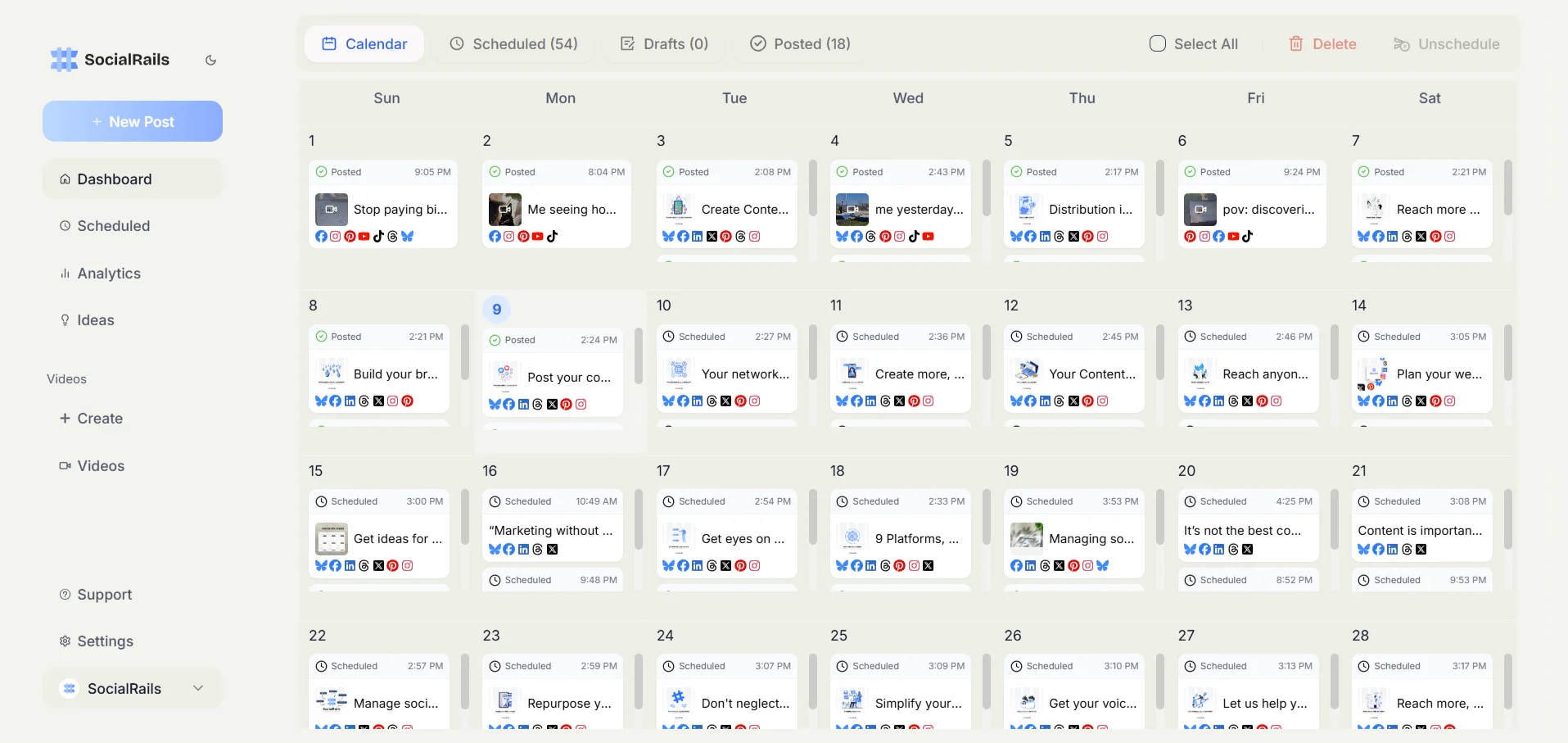
Does Posting More Often Hurt Your Reach?
This is the most common myth in frequency advice, so it is worth clearing up before anything else. You will often read that posting "too often" triggers a spam filter or an algorithm penalty that suppresses your reach. That is not how Instagram describes its own system.
Instagram head Adam Mosseri has said publicly that posting more does not cost you followers or reach. In his framing, the more you post, the more chances your content has to be discovered and shared. Each post is ranked on its own merits rather than your account being throttled for being active. For Reels specifically, Mosseri has pointed to signals like watch time, likes relative to reach, and sends per reach as what matters most, in other words, whether the content is good, not how frequently you publish.
So the real risk of posting a lot is not a hidden penalty. It is more practical:
- Quality drops. When you stretch to hit a number, average content sneaks in, and weak posts earn less engagement, which is what actually shapes how your next posts perform.
- You burn out. An unsustainable cadence is the single most common reason accounts go quiet for weeks, and inconsistency is far more damaging than posting "too much."
- Audience fatigue is real but slow. If several posts in a row underperform, that is your signal to slow down and raise quality, not evidence of a penalty.
The takeaway: do not post more just to game the algorithm, and do not hold back out of fear of a penalty that does not exist. Post as often as you can while keeping the quality high.
Frequency by Format: Feed, Reels, and Stories
Different formats live in different places on Instagram, so they tolerate different cadences.
Feed Posts (Photos and Carousels)
A starting range of 3 to 5 feed posts per week works for most accounts. Feed posts sit permanently on your profile grid and in followers' home feeds, so they carry more weight per post and reward higher production standards. Carousels are worth prioritizing here because they invite multiple swipes and give the ranking system more signals to work with.
There is no bonus for exceeding once per day, and nothing broke if you post twice in a day for a launch or event. Just make sure each post can stand on its own.
Reels
Reels are the format most likely to reach people who do not follow you yet, which is why they are worth leaning into. A practical range is 3 to 5 Reels per week, scaling up if you can keep them genuinely good. Because reach on Reels is driven by watch time and shares, a smaller number of strong Reels will almost always outperform a daily stream of filler. If you are planning ahead, our guide on how to schedule Instagram Reels walks through batching them so consistency does not depend on daily motivation.
Stories
Stories disappear after 24 hours and live in a separate tray, so they tolerate the highest frequency without cluttering anyone's feed. Posting on most days keeps you visible to your most engaged followers, and Instagram's guidance has pointed to a couple of Stories per day as a sensible habit. Use them for the lightweight, in-the-moment content that would feel like overposting in the feed: polls, questions, quick updates, and behind-the-scenes moments.
Frequency by Account Type
Your goals change how you should weight the formats above. These are starting points, not quotas.
Personal Accounts
Roughly 2 to 4 feed posts per week, a couple of Reels, and Stories when you have something to share. Focus on authenticity and only post when you have something worth sharing. Nobody expects a personal account to run like a media company.
Creators and Influencers
Creators benefit from a steady, visible presence because discovery is the whole game. Lean into Reels for reach, keep feed posts at 3 to 5 per week to anchor your grid, and use Stories most days to deepen the relationship with existing followers. Consistency is the currency here.
Business and Brand Accounts
For businesses, 3 to 5 feed posts per week plus regular Reels is plenty when the content is strong. Resist the urge to publish daily just to look active. Prioritize a mix of value-first content (education, entertainment, social proof) over constant promotion, and let your engagement data decide whether to push higher. A content calendar makes a sustainable cadence far easier to hold.
Consistency Beats Frequency
Here is the part most frequency guides skip. The variable that predicts growth is not how many times you post in a given week, it is whether you show up predictably over months. Large public analyses of Instagram posting behavior, including Buffer's study of more than two million posts, consistently land on the same conclusion: a steady, sustainable rhythm outperforms sporadic bursts of high volume.
Two practical reasons this holds:
- The algorithm rewards a track record. Regular engagement signals from your audience compound over time. A stop-start pattern resets that momentum every time you go quiet.
- Habits beat willpower. A cadence you can maintain without dreading it is one you will still be keeping a year from now. That longevity is what actually builds an audience.
So before you ask "can I post more," ask "can I keep this up for six months without the quality slipping." If the answer is no, dial it back. A sustainable 3 posts a week is a better strategy than an ambitious daily plan you abandon in February.
How to Find Your Rhythm in Instagram Insights
The ranges above are a starting line. Your real answer is in your own data. Instagram Insights (available on professional accounts, meaning Business or Creator) is free and is the only source that reflects your specific audience.
Run a simple four-week test instead of guessing:
- Weeks 1 to 2, set a baseline. Post at a comfortable, consistent cadence, for example 3 feed posts and a few Reels each week, and note the reach, engagement, and follow-through on each.
- Weeks 3 to 4, change one variable. Increase frequency and watch whether total reach grows or whether per-post engagement falls off. Compare like content with like content so you are measuring frequency, not luck.
- Read the trend, not a single post. Look at averages over the two-week blocks. One viral Reel or one flop should not drive your schedule.
- Lock in what worked, then leave it alone. Once you find a cadence where quality holds and engagement is steady, protect it. Chasing constant change confuses both your audience and your own read on the data.
While you are in Insights, check when your followers are most active and let that inform timing. For a deeper walkthrough, see our best time to post on Instagram guide, which pairs naturally with frequency: how often you post and when you post are two halves of the same schedule.
Signs You Are Posting Too Much
Instead of watching for a penalty that does not exist, watch your own numbers. These are the signals that you have pushed frequency past what your content quality can support:
- Per-post engagement is sliding even though your follower count is flat or growing.
- Reach per post is falling across several posts in a row, not just one.
- Story completion rates drop, meaning people tap away before the end.
- Unfollows tick up or you start seeing comments about posting too much.
If you see this pattern, the fix is almost never "post even more." Slow down, tighten quality, and let the averages recover. The opposite pattern, weeks of silence followed by a burst, is usually the bigger problem, because it teaches the algorithm and your audience that you are unreliable.
Common Frequency Mistakes
- Scaling up overnight. Jumping from one post a week to daily posting rarely sticks and usually drags quality down. Ramp gradually over a few weeks.
- Posting on autopilot without checking Insights. If you never look at how frequency affects your reach and engagement, you cannot optimize. Review your data every couple of weeks.
- Sacrificing quality to hit a number. A weak post published to keep a streak alive does more harm than skipping the day. Better content beats more content every time.
- Copying someone else's schedule. A full-time creator's cadence is not a template for a solo founder or a small brand. Match frequency to your capacity and your audience, not to an influencer's output.
- Ignoring the tools that make consistency easier. Native in-app scheduling (available to public professional accounts since March 2026) and third-party planners let you batch content so a steady rhythm does not depend on posting live every day.
Related Instagram Guides
- Best Time to Post on Instagram
- How to Schedule Instagram Reels
- Reels vs Feed Posts: Which Performs Better
- Instagram Reach vs Impressions Explained
- Instagram Business vs Personal Account
- Social Media Content Calendar Guide
Conclusion
There is no universal correct posting frequency on Instagram. The practical starting points are around 3 to 5 feed posts and 3 to 5 Reels per week, plus Stories on most days, but those are hypotheses to test, not rules. Posting more does not trigger a hidden penalty, so the real limits are your quality and your stamina. Show up consistently, keep the bar high, and let your own Insights, not a made-up number, tell you where your sweet spot is.
Frequently Asked Questions
How often should you post on Instagram?
There is no single magic number. A realistic starting point for most accounts is about 3 to 5 feed posts per week, 3 to 5 Reels per week, and Stories on most days. Treat these as a baseline to test against your own Instagram Insights, and prioritize a cadence you can sustain at high quality over hitting a specific number.
Does posting more often hurt your Instagram reach?
No. Instagram head Adam Mosseri has said publicly that posting more does not cost you reach or followers, and that each post is ranked on its own merits rather than your account being penalized for being active. The real risks of posting a lot are practical: quality dropping and creator burnout, not a hidden algorithm penalty.
How many times a week should you post on Instagram?
A practical baseline is around 3 to 5 feed posts per week for most accounts, plus a few Reels and near-daily Stories. What matters more than the exact number is consistency: a steady weekly rhythm you can maintain for months will outperform sporadic bursts of high-volume posting.
How often should you post Reels?
Around 3 to 5 Reels per week is a solid starting range, and you can scale up if you can keep the quality high. Reels are the format most likely to reach non-followers, and reach is driven by watch time and shares, so a few strong Reels will outperform a daily stream of filler.
How often should you post Instagram Stories?
Stories tolerate the highest frequency because they expire in 24 hours and sit in a separate tray, so posting on most days keeps you visible without cluttering anyone's feed. Instagram's guidance has pointed to a couple of Stories per day as a reasonable habit. Use them for polls, questions, quick updates, and behind-the-scenes moments.
Is it better to post daily or a few times a week?
For most accounts, posting a few high-quality times per week beats daily posting with average content. Consistency matters more than raw frequency, so pick a schedule you can realistically maintain for months rather than an ambitious daily plan you abandon after a few weeks.
How do I know if I'm posting too much on Instagram?
Watch your own metrics rather than looking for a penalty. Warning signs include per-post engagement sliding while your follower count is flat, reach falling across several posts in a row, dropping Story completion rates, and rising unfollows. If you see this pattern, slow down and raise quality rather than posting even more.
How do I find the right posting frequency for my account?
Run a four-week test in Instagram Insights. Set a consistent baseline for two weeks, then change one variable such as frequency for two weeks, and compare average reach and engagement over each block rather than reacting to a single post. Lock in the cadence where quality holds and engagement stays steady, and check Insights for when your followers are most active.
Ready to Optimize Your Instagram Strategy?
Consistency is far easier with the right tools. Try SocialRails to plan and schedule your feed posts, Reels, and Stories in one place, so you can hold a steady rhythm and use your analytics to dial in the frequency that works for your account.
Was this article helpful?
Let us know what you think!