

Marketing Implementation Plan: How to Execute Your Strategy (With Template)

A great marketing strategy means nothing without execution. A marketing implementation plan bridges your strategy and actual results by turning goals into tasks, assigning ownership, and setting deadlines.
What is a Marketing Implementation Plan?
A marketing implementation plan is a detailed action plan that outlines who does what, when, and with what resources to execute your marketing strategy. It's the tactical playbook that turns objectives into completed tasks.
Create content, post everywhere
Create captions, images, and videos with AI. Schedule to 9 platforms in seconds.
Start your free trial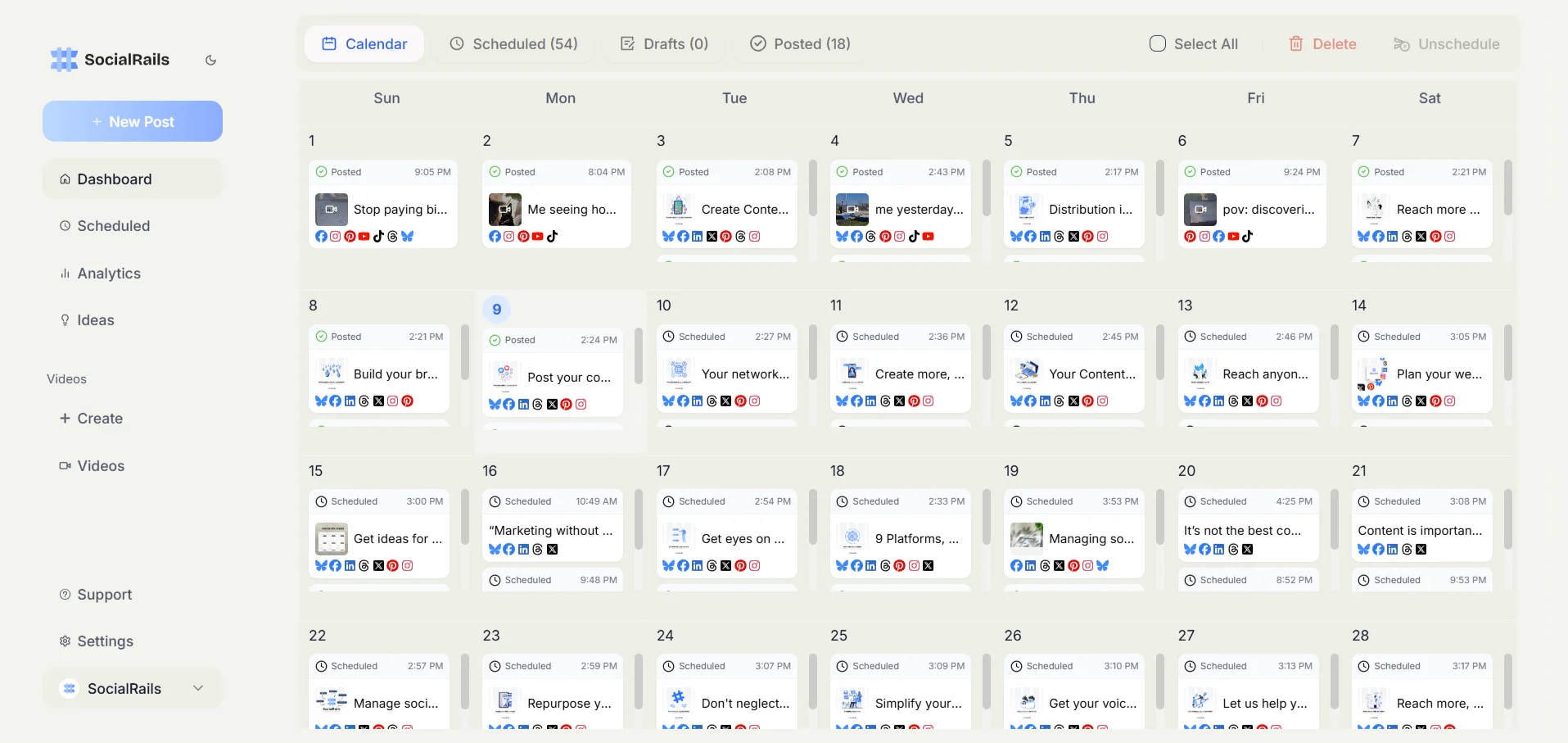
Strategy vs Plan vs Implementation
Most marketing fails at the implementation stage. Teams create ambitious strategies but never build the roadmap to execute them.
7 Steps to Build Your Implementation Plan
Step 1: Define Clear Objectives
Every implementation plan starts with specific, measurable goals. Vague objectives produce vague execution.
Turn vague goals into SMART goals:
Limit yourself to 3-5 objectives per quarter. More than that splits focus. For content-specific objectives, our content marketing goals guide breaks down 15 goal types with the metrics and targets that match each one.
Step 2: Break Strategy Into Tactical Actions
Take each objective and list every task required to achieve it.
Example: Objective = "Generate 200 MQLs per month from content"
Step 3: Assign Ownership
Every task needs one owner. Not a team. One person who is accountable.
Rule of thumb: If everyone owns it, no one owns it.
What's the #1 implementation mistake marketing teams make?
Step 4: Set Realistic Timelines
Map tasks to a calendar with clear deadlines. Account for dependencies, because some tasks can't start until others finish.
Sample Monthly Timeline:
Build in buffer time. Marketing tasks consistently take 20-30% longer than estimated.
Step 5: Allocate Budget and Resources
Map every task to a budget line item, including both hard costs and tool costs.
Step 6: Choose Your Tools
Pick tools that simplify execution:
Step 7: Build a Measurement Framework
Define how you'll track progress toward each objective. Our marketing ROI measurement guide covers attribution models, channel-specific ROI formulas, and dashboard setup so you can prove what's working.
Marketing Implementation Plan Template
Copy this template for your own plan:
Common Implementation Mistakes
1. No single owner per task When everyone owns a task, no one is accountable and tasks slip.
2. Unrealistic timelines Cramming a quarter's work into a month. Build in 20% buffer time.
3. Skipping the measurement step Without tracking, you won't know what's working until it's too late.
4. Too many priorities Five objectives is manageable. Fifteen is chaos. Ruthlessly prioritize.
5. Not reviewing weekly Implementation plans need weekly check-ins to review progress, remove blockers, and adjust timelines.
6. All planning, no doing The plan itself isn't the goal. Three months perfecting a plan is three months of zero execution.
How long should a marketing implementation plan typically cover?
Real Examples by Business Type
SaaS Company
- Objective: 500 free trial signups/month from organic
- Key tactics: 12 comparison blog posts, 2 product-led landing pages, 4 case studies, weekly LinkedIn posts. See our marketing campaign concept guide for developing the creative angle behind each campaign
- Timeline: 90 days
- Budget: $8,000/month
eCommerce Store
- Objective: 25% revenue increase from email marketing
- Key tactics: Abandoned cart sequence, post-purchase upsell, weekly newsletter, seasonal campaigns
- Timeline: 60 days
- Budget: $3,000/month
Local Business
- Objective: 50 new customer inquiries/month
- Key tactics: Google Business optimization, 4 local blog posts, weekly social posts, 10 customer reviews
- Timeline: 90 days
- Budget: $1,500/month
FAQ
What's the difference between a marketing plan and a marketing implementation plan? A marketing plan outlines your strategy and channels. An implementation plan specifies the tasks, owners, timelines, and budgets to execute that strategy.
How long should a marketing implementation plan cover? Most effective plans cover 90 days (one quarter). Annual plans are too long to stay accurate. Monthly plans are too short for strategic goals.
How often should I update the implementation plan? Review weekly for progress. Update task details as needed. Do a major revision at the end of each quarter.
Who should create the marketing implementation plan? The marketing manager or team lead, with input from everyone who will execute tasks. Each person should agree to their assignments and deadlines.
What if we don't have budget for tools? Start with free tools. SocialRails offers a free plan for social media scheduling. Google Analytics is free. Many project management tools have free tiers.
Related Resources
Was this article helpful?
Let us know what you think!