
Pinterest Influencer Marketing: Complete 2026 Guide with Campaign Strategies

Pinterest influencer marketing works differently than any other platform. On Instagram or TikTok, influencer content peaks within 48 hours and then disappears from feeds. On Pinterest, a single influencer pin can drive traffic and sales for months — sometimes years — because Pinterest functions as a visual search engine, not a social feed.
This makes the ROI math fundamentally different. You're not paying for a 24-hour spike of attention. You're investing in evergreen content that keeps working long after the campaign ends.
This guide covers how to find the right Pinterest creators, structure campaigns, optimize content for Pinterest search, and measure results properly.
Why Pinterest Is Different for Influencer Marketing
Create content, post everywhere
Create captions, images, and videos with AI. Schedule to 9 platforms in seconds.
Start your free trial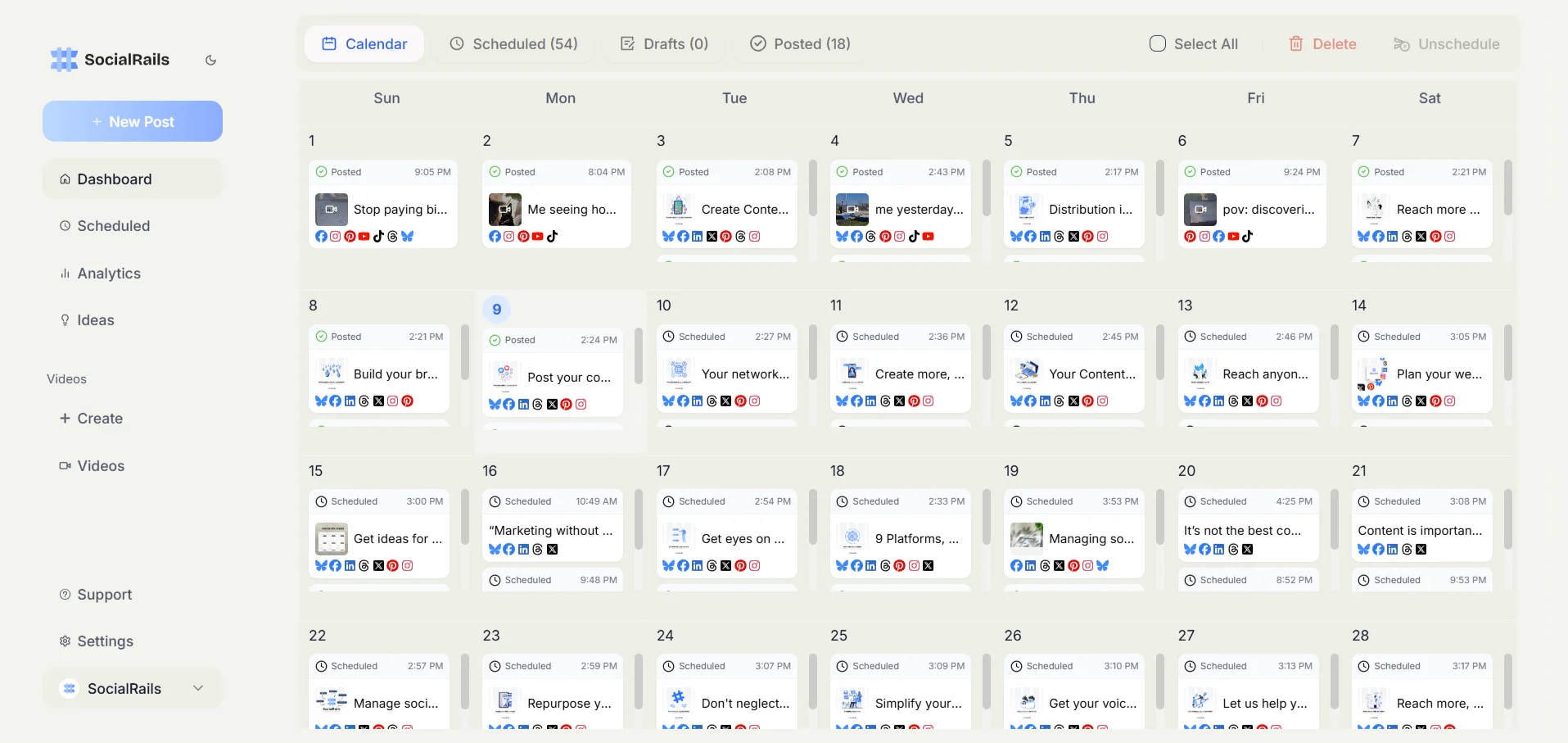
Users arrive with intent
Pinterest users aren't passively scrolling — they're actively searching for solutions, planning purchases, and saving products they want to buy. When someone searches "small bathroom renovation ideas" on Pinterest, they're likely planning a real project. This purchase-intent mindset means influencer recommendations carry more weight.
Content has a long lifespan
This is Pinterest's biggest advantage for influencer campaigns:
- A well-optimized pin can drive traffic for 6+ months after posting
- Evergreen content (recipes, tutorials, style guides) generates engagement indefinitely
- Seasonal pins resurface automatically each year
- Pinterest's search functionality means pins keep getting discovered through keyword searches
Compare this to Instagram where a post's useful life is 24–48 hours, or TikTok where most engagement happens within the first few days.
Content quality matters more than follower count
On Instagram, an influencer's reach is largely determined by their follower count. On Pinterest, it's determined by how well their content performs in search. A creator with 5,000 followers but strong Pinterest SEO skills can generate more traffic than someone with 100,000 followers who doesn't optimize for search.
This is why Pinterest uses monthly viewers as a key metric instead of followers — it reflects actual content reach and search visibility.
How Pinterest Compares to Instagram and TikTok for Influencer Marketing
Key insight: On Pinterest, content has to stand up on its own — it can't rely on the influencer's personality or celebrity the way Instagram content can. This means the quality and searchability of the content matters more than who posted it.
Types of Pinterest Influencers
By audience size
Nano creators (1K–10K followers)
- Cost range: $50–$200 per pin, or product exchange
- Best for: Testing partnerships, hyper-niche audiences
- Pinterest advantage: Can still reach large audiences through search if content is well-optimized
Micro creators (10K–100K followers)
- Cost range: $200–$1,000 per campaign
- Best for: Niche audiences with high engagement
- Pinterest advantage: Often the sweet spot — niche expertise + strong Pinterest SEO knowledge
Mid-tier creators (100K–500K followers)
- Cost range: $1,000–$3,000 per campaign
- Best for: Balanced reach with audience specificity
- Pinterest advantage: Established content libraries that your campaign content sits alongside
Large creators (500K+ followers)
- Cost range: $3,000–$10,000+ per campaign
- Best for: Major brand awareness pushes
- Pinterest advantage: Content gets distributed through Pinterest's recommendation engine
For most brands, micro and mid-tier creators offer the best ROI on Pinterest. Their audiences tend to be more niche and engaged, they often have stronger Pinterest SEO skills, and you can work with several for the cost of one large creator.
By niche
Food and recipe creators — Recipe content has one of the longest lifespans on Pinterest. A recipe pin can drive traffic for years. Look for creators who do original recipe development with strong food photography.
Home decor and interior design — Home content drives massive engagement as users plan renovations and decorating projects. Creators who show real rooms (not just staged shots) tend to get more saves.
Fashion and style — Outfit inspiration, capsule wardrobe guides, and seasonal lookbooks perform consistently well. Pinterest users actively plan their wardrobes here.
DIY and crafts — Tutorial content gets saved at high rates because users reference it when doing projects. Look for creators with clear step-by-step content.
Travel — Travel planning starts months in advance on Pinterest, giving influencer content a long runway. Destination guides and packing lists are perennial performers.
Wedding and events — Wedding content on Pinterest has sustained engagement throughout the planning cycle (often 12+ months). Bridal brands can get exceptional long-term value here.
Finding the Right Pinterest Influencers
What to look for
Monthly viewers over follower count. A creator with 5,000 followers and 500,000 monthly viewers (strong search visibility) will likely drive better results than one with 50,000 followers and 10,000 monthly viewers.
Key evaluation criteria:
- Monthly viewers — actual content reach
- Save rate — are people finding their content valuable enough to save?
- Content quality — clear images, readable text overlay, professional styling
- Pinterest SEO skills — do their pin descriptions include keywords? Are their board names search-friendly?
- Posting consistency — regular activity signals to the algorithm
- Niche alignment — their content topics should match your brand naturally
- Outbound clicks — do their pins actually drive traffic to websites?
Manual discovery methods
1. Search your target keywords on Pinterest Search for your product category or niche keywords. Note which pins rank at the top consistently. Click through to find the original creators. Creators who regularly appear in top search results have strong Pinterest SEO — exactly what you want in a partner.
2. Browse high-performing boards Find boards in your industry with large followings. Check who the contributors are. Review their individual profiles for content quality and engagement patterns.
3. Analyze competitor partnerships See who's creating content about your competitors' products. Look for influencers already featuring similar products in your category. Check branded hashtags for user-generated content in your niche.
4. Use Pinterest Trends Pinterest Trends shows rising search terms. Find creators who are already ranking for trending searches in your category — they understand what Pinterest's algorithm rewards. See our Pinterest Trends tool guide for a deep dive.
Influencer discovery tools
Several platforms offer Pinterest-specific creator search:
- GRIN — End-to-end influencer relationship management with Pinterest analytics integration, content rights management, and ROI tracking
- Upfluence — Cross-platform influencer search including Pinterest, with audience demographic analysis and campaign tracking
- Influencer Hero — Pinterest-specific creator database with monthly viewer metrics and contact information
- Collabstr — Marketplace with Pinterest creators offering transparent per-collaboration pricing, good for smaller budgets
- Pinterest's own tools — Check the Pinterest Business Partners page for platform-approved tools and agencies
Even with tools, always manually vet creators before reaching out. Review their last 30–90 days of content, check that their aesthetic aligns with your brand, and look at the quality of engagement (saves and clicks matter more than comments on Pinterest).
Pinterest Influencer Campaign Types
1. Product seeding campaigns
How it works: Send products to influencers for organic, authentic content Cost: Product cost + shipping Best for: Building awareness and generating authentic content with low risk
Typical deliverables:
- 3–5 high-quality pins featuring the product in lifestyle settings
- Honest review or usage tips
- Brand mention and link in pin descriptions
Tip: Product seeding works well for building relationships with creators you might want for paid campaigns later.
2. Sponsored pin campaigns
How it works: Pay creators to produce and publish specific content Cost: $200–$5,000+ depending on creator size and deliverables Best for: Driving traffic to specific product pages or promotions
Requirements:
- FTC-compliant disclosure (#ad, #sponsored, or Pinterest's paid partnership label)
- Specific content focus per your brief
- Link back to your website or landing page
- Content review process before posting
Pinterest's paid partnership tool: Creators can tag your brand in pins with a "paid partnership" label. As the brand, you can then promote those pins as ads — turning organic influencer content into paid reach. Important: the label must be added before publishing, not after.
Pin description enhancement: Help influencers create stronger pin copy with the Pinterest Text Formatter — they can format descriptions that highlight product benefits and CTAs within the 500-character limit.
3. Board collaboration campaigns
How it works: Create shared boards with influencers around a theme Cost: $300–$2,000 per board Best for: Building searchable content collections around your brand
Examples:
- "Cozy Fall Home Styling" (home decor brand + interior design influencers)
- "30-Minute Weeknight Dinners" (food brand + recipe creators)
- "Small Space Organization" (storage brand + home organization influencers)
Name collaborative boards with keyword-rich titles, write detailed descriptions, and seed the board with 10–20 relevant pins before inviting influencer contributors.
4. Affiliate partnerships
How it works: Creators earn commission on sales driven through their pins Cost: Commission on sales (typically 5–20%) Best for: Performance-based partnerships that align incentives
Many brands use a hybrid model: a smaller flat fee + affiliate commission. This ensures creators are fairly compensated for their time while also motivated to optimize for conversions.
Affiliate platforms that work well with Pinterest:
- Amazon Associates (for product brands)
- ShareASale, CJ Affiliate, Rakuten
- LTK (particularly strong for fashion and lifestyle)
- Brand-specific affiliate programs
Disclosure requirement: Influencers must clearly disclose affiliate relationships with "#ad" or "#affiliate" in pin descriptions per FTC guidelines.
5. Contest and giveaway campaigns
How it works: Partner with influencers to run Pinterest contests Cost: Prize value + influencer fee ($300–$2,000) Best for: Quick follower growth and engagement spikes
Optimizing Influencer Content for Pinterest Search
This is where most Pinterest influencer campaigns leave value on the table. Pinterest is a search engine — if influencer content isn't optimized for keywords, it won't get discovered beyond the initial post.
Keyword optimization for influencer pins
Work with influencers on keyword strategy. They often have good instincts for what their audience searches, and you can supplement with your own research.
Where to place keywords:
- Pin title — primary keyword in the first few words
- Pin description — natural keyword integration, 150–300 characters
- Board name — use the exact phrase people search for
- Board description — supporting keywords and context
- Text overlay on the image — Pinterest can read text in images
- Alt text — descriptive, keyword-inclusive image description
How to research Pinterest keywords:
- Use Pinterest's search bar autocomplete — type your topic and note the suggestions
- Check the colored guided search tiles that appear below search results
- Use Pinterest Trends for seasonal keyword timing
- Analyze top-ranking pins in your niche for language patterns
Long-tail keywords win on Pinterest. "Living room decor" is extremely competitive. "Cozy farmhouse living room decor on a budget" faces far less competition and attracts more qualified traffic.
Visual optimization
Image requirements for strong performance:
- Vertical orientation (2:3 ratio, ideally 1000×1500px)
- High resolution with good lighting
- Text overlay with clear value proposition (readable at thumbnail size)
- Lifestyle settings — products in use, not just product-on-white
- Consistent brand-appropriate color palette
What to avoid:
- Horizontal images (poor performance in the vertical feed)
- Excessive text overlay (Pinterest may flag as spam)
- Low-quality or blurry images
- Generic stock photo aesthetic
For detailed specifications, see our Pinterest pin size guide.
Planning Your Campaign Timeline
Campaign timeline template
6–8 weeks before launch:
- Identify and reach out to potential influencers
- Negotiate terms and sign contracts (see our Content Creator Contracts Guide for templates)
- Send creative briefs with guidelines, keyword suggestions, and examples
3–4 weeks before launch:
- Ship products to influencers
- Review and approve content concepts or drafts
- Set up UTM tracking links and unique promo codes per influencer
Launch:
- Monitor content publication
- Engage with influencer posts (save, comment)
- Repin influencer content to your brand boards
- Consider promoting top-performing influencer pins as ads
Post-campaign (ongoing):
- Track performance weekly for 3–6 months minimum
- Collect final deliverables and usage rights
- Identify top performers for future partnerships
Seasonal timing on Pinterest
Pinterest users plan ahead — significantly ahead. Time your influencer campaigns accordingly:
Launch influencer partnerships 2–3 months before you want to see peak traffic. This gives content time to get indexed by Pinterest's search engine and build momentum.
Giving Creative Briefs (Without Over-Controlling)
Successful Pinterest campaigns give creators freedom within boundaries.
Provide in your brief:
- Brand values and key messaging points
- Product information and benefits to highlight
- Visual style guidelines (colors, aesthetic references)
- Target keywords and hashtag suggestions
- Required links, UTM parameters, and tracking codes
- FTC disclosure requirements
- Deliverable specifics (number of pins, formats, timeline)
Let creators control:
- Pin design and creative direction
- Content angle and personal perspective
- Voice and style
- Board placement and organization
- How they integrate the product naturally
Why this balance matters: Creators understand what resonates with their audience and how Pinterest's algorithm works. Overly scripted content tends to perform worse because it doesn't feel authentic — and Pinterest users are particularly sensitive to content that feels like an ad rather than genuine inspiration.
Measuring Campaign Success
Pinterest-specific metrics that matter
Saves — The most important Pinterest metric. Saves indicate content is valuable enough for users to reference later. High save rates signal quality content that will keep performing over time.
Outbound clicks — Clicks from Pinterest to your website. This is your direct traffic metric and the clearest path to conversions.
Impressions — How many times pins appear in feeds, search results, or related pins. Indicates your content's visibility and SEO performance.
Engagement rate — Saves + clicks + closeups divided by impressions. Gives you a holistic view of content performance.
For a detailed walkthrough of Pinterest metrics, see our Pinterest analytics guide and our explainer on what Pinterest impressions mean.
Setting up conversion tracking
Direct attribution methods:
- UTM parameters — unique per influencer so you can attribute traffic in Google Analytics
- Unique promo codes — assign each influencer their own code to track sales
- Dedicated landing pages — create campaign-specific URLs for cleaner attribution
- Pinterest Tag — install the conversion pixel on your website for Pinterest-native tracking
The long-tail measurement problem (and opportunity)
This is where most brands get Pinterest influencer marketing wrong: they evaluate campaigns after 2–4 weeks, like they would on Instagram. On Pinterest, that misses most of the value.
Realistic performance timeline:
- Weeks 1–4: Initial traction building, content gets indexed
- Months 2–3: Pins gain search ranking and recommendation placement
- Months 4–6: Often the peak performance period
- Months 7–12+: Evergreen content continues driving traffic
Track Pinterest influencer campaigns for a minimum of 6 months to get an accurate picture of ROI. Many brands find that the true lifetime value of Pinterest influencer content is 3–5x what the first month's numbers suggest.
ROI calculation
Campaign ROI = (Revenue from Pinterest traffic - Total campaign cost) / Total campaign cost × 100
Include in campaign costs:
- Influencer fees and product seeding costs
- Internal time for campaign management
- Any advertising spend on promoted influencer pins
- Tool or platform subscription fees
Track revenue over time, not just during the campaign window. A campaign that looks like it broke even after month one may show strong positive ROI by month six.
Budget and Pricing Guide
Pinterest influencer rate ranges
These are general ranges — rates vary by niche, content complexity, and usage rights. Pinterest influencer rates tend to be lower than Instagram for equivalent audience sizes, partly because the market is less saturated.
Rate negotiation tips
- Offer product value in addition to (or instead of) cash for nano/micro creators
- Negotiate content usage rights upfront — being able to repurpose influencer content is worth paying more for
- Propose longer-term partnerships for better per-piece rates
- Include performance bonuses for exceeding traffic or sales targets
- Consider hybrid models (flat fee + affiliate commission) to align incentives
Budget allocation by business size
Small business ($500–$2,000/month):
- Partner with 2–4 nano or micro creators
- Mix of product seeding and small flat fees
- Focus on evergreen content that compounds over time
- Use affiliate structures where possible
Mid-size business ($2,000–$10,000/month):
- Work with 5–10 micro to mid-tier creators
- Combination of one-off campaigns and ongoing partnerships
- Seasonal + evergreen content mix
- Promote top-performing influencer pins as ads
Enterprise ($10,000+/month):
- Mix of mid-tier and large creators
- Dedicated campaign management
- Ambassador programs with long-term partnerships
- Full funnel strategy: awareness pins + shopping pins + promoted content
Common Mistakes to Avoid
Treating Pinterest like Instagram
Pinterest is a search engine, not a social feed. The metrics that matter are different (saves and outbound clicks, not likes), the content lifespan is different (months, not hours), and the content strategy is different (SEO-optimized and evergreen, not trendy and personality-driven).
Choosing influencers based only on follower count
A creator with 15K engaged followers in your exact niche — who ranks well in Pinterest search — will likely outperform a 500K-follower account with a broad, disengaged audience. Evaluate monthly viewers, save rates, and content quality first.
Giving vague creative briefs
"Just make something featuring our product" leads to off-brand, unoptimized content. Provide specific guidelines, keyword suggestions, and examples — but leave room for the creator's authentic voice.
Ignoring FTC disclosure
Missing #ad or #sponsored disclosures exposes both your brand and the influencer to legal risk. Require clear disclosure on all paid content. Use Pinterest's paid partnership label when available, and include disclosure in pin descriptions for all partnerships — including product gifting.
Measuring results too early
Evaluating a Pinterest campaign after 2 weeks is like pulling a plant out of the ground to check if the roots are growing. Give it at least 3–6 months. A pin that looks like a poor performer in week two might become your top traffic driver by month four.
Not repurposing influencer content
Negotiate usage rights upfront. Repurpose influencer-created content across your own Pinterest boards, website, email marketing, and other social channels. You've paid for the content — maximize the value.
Building Long-Term Influencer Relationships
The best Pinterest influencer partnerships aren't one-off campaigns — they're ongoing relationships where both sides benefit.
Find brand advocates first
Look for creators who already use or mention your products organically. These partnerships feel more authentic and produce better content because the enthusiasm is genuine.
Provide value beyond payment
- Give early access to new products before public launch
- Feature their content on your channels (with credit)
- Share their pins with your audience
- Provide professional tools or resources they can use
- Offer exclusive information about your brand's direction
Invest in long-term partnerships
Ongoing partnerships outperform one-off campaigns on Pinterest because:
- The creator builds deeper knowledge of your brand
- Their audience sees consistent, authentic advocacy
- Content library grows over time, compounding traffic
- Better rates through long-term agreements
- Stronger creative collaboration as the relationship matures
Frequently Asked Questions
What is Pinterest influencer marketing?
Pinterest influencer marketing involves partnering with Pinterest creators to promote products through pins, boards, and video content. It's effective because Pinterest users have high purchase intent and content has a lifespan of 6+ months, unlike other social platforms where content visibility drops within days.
How much do Pinterest influencers charge?
Rates vary by audience size: Nano creators (1K–10K followers) charge $50–$200 per pin, Micro creators (10K–100K) charge $200–$500, Mid-tier (100K–500K) charge $500–$1,500, and large creators (500K+) charge $1,500+ per pin. Many brands use hybrid models combining flat fees with affiliate commissions.
How do I find Pinterest influencers for my brand?
Search your target keywords on Pinterest and look for creators with consistently high-ranking content. Browse popular boards in your industry, analyze competitor partnerships, and use tools like GRIN, Upfluence, or Influencer Hero. Prioritize monthly viewers, save rates, and Pinterest SEO skills over raw follower count.
Why is Pinterest good for influencer marketing compared to Instagram?
Pinterest content has a 6+ month lifespan compared to Instagram's 24–48 hours. Users come with higher purchase intent, every pin can link directly to your website, and influencer rates tend to be lower. Pinterest is especially strong for e-commerce, home decor, food, fashion, and DIY brands.
Do Pinterest influencers need large followings to be effective?
No. Monthly viewers and Pinterest SEO performance matter more than follower count. A creator with 5,000 followers but strong search visibility can drive more traffic than one with 100,000 followers who doesn't optimize for Pinterest search. Focus on content quality, save rates, and keyword optimization skills.
How long does it take to see results from Pinterest influencer campaigns?
Initial engagement data appears within 1–2 weeks, but Pinterest content compounds over time. Full results should be measured over 3–6 months minimum. A pin that appears to underperform initially may become a top traffic driver by month three or four as it gains search ranking.
Do Pinterest influencers need to disclose sponsored content?
Yes. FTC guidelines require clear disclosure on all paid partnerships. Use Pinterest's paid partnership label when available, or include #ad or #sponsored in pin descriptions. This applies to both paid collaborations and free product partnerships.
What content types work best for Pinterest influencer campaigns?
Lifestyle photography showing products in real settings, step-by-step tutorials, before-and-after transformations, seasonal inspiration, and educational guides. Vertical images at 2:3 aspect ratio (1000×1500px) with text overlay perform best. Video pins (6–15 seconds) also drive strong engagement.
When should I launch seasonal Pinterest influencer campaigns?
Pinterest users plan 45–90 days ahead, so publish seasonal content 2–3 months before the event. Holiday content should go up in September–October, Valentine's Day in December–January, and summer content in March–April. Start influencer outreach 4–6 months ahead to allow time for agreements, content creation, and publishing.
Should I use micro or macro influencers for Pinterest?
For most brands, micro influencers (10K–100K followers) offer the best balance of cost, engagement, and conversion on Pinterest. Their niche audiences tend to be more engaged, they often have stronger Pinterest SEO skills, and you can diversify by working with several micro creators for the cost of one large influencer.
Related Guides
- Pinterest Marketing Strategy Guide — comprehensive Pinterest strategy
- Influencer Marketing ROI Guide — measuring influencer campaign returns
- Content Creator Contracts Guide — legal templates for partnerships
- Influencer Tracking Campaign Guide — attribution and measurement
- Pinterest Text Formatter — format pin descriptions
- Pinterest Hashtag Generator — find relevant hashtags
- Pinterest Tools — all Pinterest tools
Was this article helpful?
Let us know what you think!