

What Are Social Media Impressions? Definition, Examples & How to Track Them

TL;DR - Quick Answer
15 min readImpressions = total times your content was displayed
If you've looked at your social media analytics and wondered what impressions actually mean, you're not alone. Impressions appear in every platform's analytics, but they're often confused with reach and engagement.
This guide explains impressions in simple terms, shows you how they work on each platform in 2026, and helps you understand when this metric matters (and when it doesn't).
Quick answer: A social media impression is counted every time your content is displayed on a screen, including repeat views by the same person. Reach counts the unique people who saw it, and engagement counts the actions they took (likes, comments, shares, saves). So 1,000 impressions can come from just 300 people. Impressions measure visibility, not popularity, so always read them alongside reach and engagement.
Jump to a section:
- What are social media impressions?
- Impressions vs reach vs engagement
- Why impressions matter
- How impressions work on each platform
- What affects your impression count
- How to increase your impressions
- Tools to track impressions
- Frequently asked questions
Create content, post everywhere
Create captions, images, and videos with AI. Schedule to 9 platforms in seconds.
Start your free trial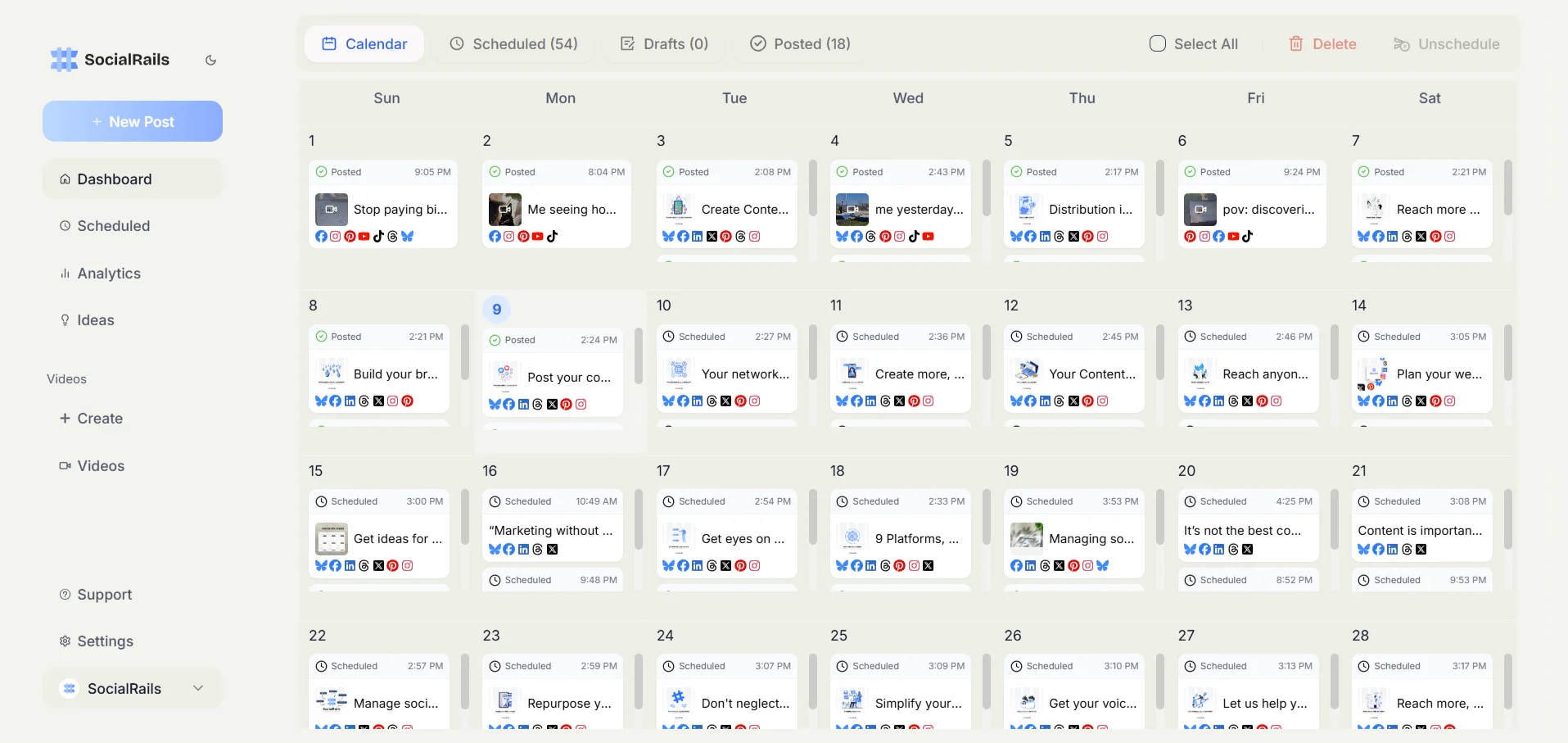
What Are Social Media Impressions?
Social media impressions measure how many times your content appears on someone's screen. Every time your post shows up in a feed, story, or set of search results, that counts as one impression.
Here's the key part: impressions count every single time your content is displayed, even to the same person multiple times.
Quick Example
- Sarah posts a photo on Instagram
- John sees it in his feed (1 impression)
- John refreshes and sees it again (2 impressions)
- John visits Sarah's profile and sees it there (3 impressions)
- Total impressions: 3 (even though only 1 person saw it)
Note that several platforms have started renaming this metric. Instagram now reports Views as its unified visibility metric across posts, Reels, and Stories, and X shows a public View count on every post. In most cases these newer "Views" labels are the same idea as impressions: a display counter, not a count of unique people.
Impressions vs Reach vs Engagement
This is where people get confused. Here's the simple breakdown:
Think of it this way: if your post has 1,000 impressions but only 300 reach, it means 300 people saw your post an average of 3.3 times each. Of those, engagement tells you how many actually did something about it.
The three metrics answer three different questions: reach asks "how many people?", impressions ask "how many times?", and engagement asks "did they care?". For a deeper split of the first two, see our Instagram reach vs impressions guide, and for the impressions-to-action side, our impressions vs engagement guide.
Why Impressions Matter
1. Measure Content Visibility
Impressions show how often your content appears in feeds. Higher impressions usually mean better algorithm distribution.
2. Calculate Engagement Rate
Many marketers calculate engagement rate using impressions:
Engagement Rate = (Likes + Comments + Shares + Saves) / Impressions x 100
You can run this automatically with our free engagement rate calculator instead of doing the math by hand.
3. Track Algorithm Performance
If your impressions suddenly drop, it might signal an algorithm change or declining content quality.
4. Budget Planning
For paid social campaigns, impressions help calculate cost per mille (CPM), the cost per 1,000 impressions.
How Impressions Work on Each Platform
Each platform counts and labels this metric slightly differently, and the labels have shifted over the last two years.
Instagram Impressions
Instagram now leads with Views in Insights, which replaced the older "Impressions" label as the standardized metric across content types.
- Feed posts: every time your post is displayed on screen while someone scrolls
- Stories: each time someone views your story frame
- Reels: every time your reel plays or appears in a feed
- Explore and search: when your content surfaces to non-followers
For the full breakdown, see our Instagram Insights guide.
Facebook Impressions
- News feed: when your post appears while someone scrolls
- Page visits: when someone views your Page
- Search: when your content appears in search results
- Suggested content: when Facebook recommends your post to non-followers
X (Twitter) Impressions
- Timeline: each time your post appears in someone's feed
- Search results: when your post shows up in search
- Profile visits: when someone views your profile timeline
- Reposts: when your post appears via someone else's repost
X now shows a public View count directly under every post. For a detailed impression breakdown, open a post's analytics (the bar-chart icon) or X Analytics if you have X Premium. The old analytics.twitter.com dashboard has been retired. If you want more of these views, see how to increase your Twitter impressions.
LinkedIn Impressions
- Feed: when your post appears in the LinkedIn feed
- Profile: when someone visits your profile
- Company Pages: when your organization's post is displayed
- Articles: each time your LinkedIn article is shown
TikTok Impressions
- For You feed: each time your video appears on the For You page
- Following feed: when followers see your content
- Profile views: when someone visits your profile
- Search and hashtag results: when your video surfaces to new viewers
TikTok analytics live inside a Business or Creator account (the older "TikTok Pro" label was retired), under the Analytics section in your settings.
What Affects Your Impression Count
Impression numbers vary widely based on several factors:
- Follower count: more followers generally means more impressions, but it's not linear
- Content quality: posts that get quick engagement tend to be shown more often
- Posting time: publishing when your audience is active increases initial impressions
- Hashtags and keywords: relevant tags can expose your content to non-followers
- Platform algorithm: each platform prioritizes different content types
- Content format: Reels, carousels, and short video often get more impressions than static images
How to Evaluate Your Impressions
For platform-specific numbers, see our social media benchmarks guide and our social media KPIs guide. Beyond those, focus on:
- Your own trends: are impressions growing, stable, or declining over time?
- Impressions-to-reach ratio: if impressions are much higher than reach, your content is being shown repeatedly to the same people
- Impressions-to-engagement ratio: high impressions with low engagement suggests content isn't resonating
A post with 1,000 impressions and 100 engagements is performing better than one with 10,000 impressions and 50 engagements.
How to Increase Your Impressions
1. Post When Your Audience Is Online
Check your analytics to find when your followers are most active. Posting during peak hours increases immediate visibility.
2. Use Relevant Hashtags
Research hashtags in your niche and mix popular ones with less competitive options.
3. Create Engaging Content
The algorithm shows content that gets quick engagement. Focus on:
- Eye-catching visuals
- Compelling captions
- Questions that spark comments
- Timely, relevant topics
4. Post Consistently
Regular posting keeps you visible in feeds. Reasonable starting cadences:
- Instagram: 1 post per day
- Facebook: 3 to 5 posts per week
- X (Twitter): 3 to 5 posts per day
- LinkedIn: 2 to 3 posts per week
- TikTok: 1 to 3 videos per day
5. Engage With Others
Comment on, like, and share other people's content. This increases your visibility and often leads to reciprocal engagement.
6. Cross-Promote Content
Share your content across multiple platforms to maximize impressions.
Common Impression Mistakes to Avoid
Focusing only on impression count. High impressions mean nothing without engagement. A post with 10,000 impressions and 5 likes isn't performing well.
Ignoring impression quality. Getting impressions from people outside your target audience won't help your business goals.
Comparing impressions across platforms. Each platform calculates impressions differently. Don't compare Instagram impressions directly to Facebook impressions.
Buying fake impressions. Artificial impressions from bots hurt your engagement rate and can get your account penalized.
Tools to Track Impressions
Native Platform Analytics
- Instagram Insights: built into Instagram Business and Creator accounts
- Facebook Page Insights: free analytics for Facebook Pages
- X Analytics: post-level analytics, with expanded data for X Premium
- LinkedIn Page Analytics: for LinkedIn company Pages
- TikTok Analytics: available in Business and Creator accounts
Third-Party Tools
- SocialRails: track impressions across all platforms in one dashboard
- Hootsuite: social media management with detailed analytics
- Sprout Social: professional social media analytics platform
- Later: visual content planner with impression tracking
Impressions in Your Marketing Strategy
Set Realistic Goals
- New accounts: focus on steady impression growth month over month
- Established accounts: maintain consistent impression levels while improving engagement rates
- Business accounts: balance impression growth with lead generation metrics
Use Impressions For
- Content performance comparison
- Algorithm health monitoring
- Reach planning for campaigns
- Engagement rate calculations
Don't Use Impressions For
- Direct ROI measurement
- Audience size estimation (use reach instead)
- Platform performance comparison
- Final success metrics (combine with other KPIs)
Key Takeaways
- Impressions = total times your content was displayed
- Different from reach, which counts unique viewers
- Some platforms now call this "Views" (Instagram, X), but the idea is the same display counter
- Important for measuring visibility, but should be combined with engagement metrics
- Platform-specific calculations mean numbers aren't directly comparable
- Quality content posted consistently at optimal times increases impressions naturally
Understanding impressions helps you make smarter decisions about your social media strategy. Focus on creating content that not only gets seen but also drives meaningful engagement with your audience.
Frequently Asked Questions
What's the difference between impressions and reach?
Are impressions or reach more important?
Why are my impressions higher than my follower count?
Do impressions count if someone scrolls past without looking?
Why does Instagram show Views instead of Impressions now?
What's a good impressions-to-engagement ratio?
Want to track your social media impressions more effectively? Try our free social media analytics tools to monitor your performance across all platforms in one place.
Was this article helpful?
Let us know what you think!