What is Promoted Content?
Promoted content is organic social media content that you pay to show to a larger audience. Instead of creating a separate advertisement, you take an existing post and pay the platform to display it to more people—including users who don't follow you.
Quick Definition
Promoted content = An organic post + paid distribution to reach more people
Different platforms use different terms: "Boost" (Facebook/Instagram), "Promote" (Twitter/X), "Sponsor" (LinkedIn)
Create content, post everywhere
Create captions, images, and videos with AI. Schedule to 9 platforms in seconds.
Start your free trial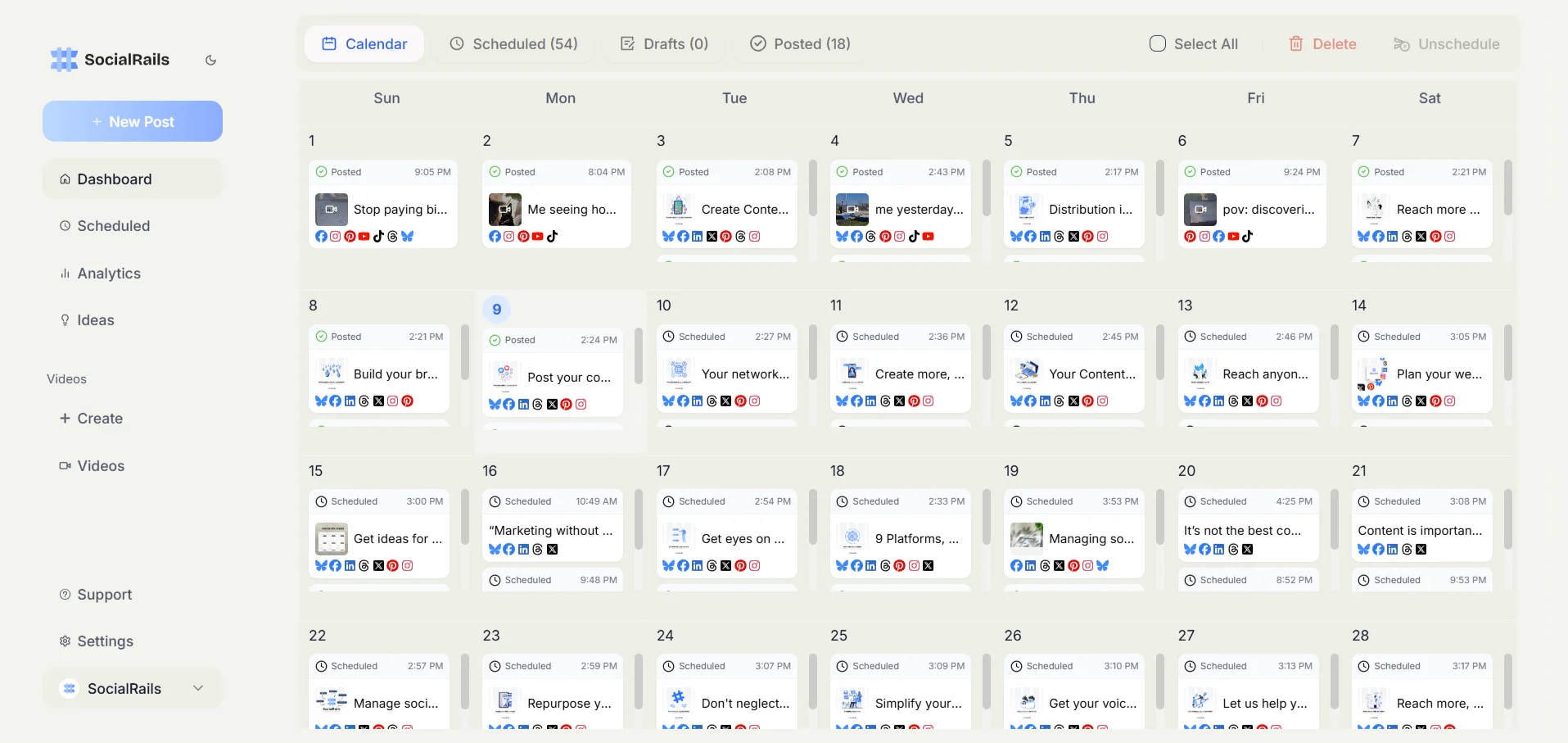
How Promoted Content Works
When you promote a post:
- You select an existing post from your profile
- You set targeting (who should see it: demographics, interests, location)
- You set a budget (how much you're willing to spend)
- You set duration (how long the promotion runs)
- The platform shows your post to people matching your targeting criteria
Your post appears in feeds just like organic content, but it reaches people beyond your followers.
Promoted Content vs. Sponsored Content vs. Boosted Posts
These terms are often confused. Here's the difference:
Key distinction: Promoted/boosted posts are your own content with paid reach. Sponsored content often involves partnerships with other creators or publishers.
Why Promote Content?
Organic reach is limited
Social platforms typically show your posts to a small percentage of your followers organically. Promotion extends your reach beyond this limit.
Test content performance
Promoting posts that already perform well organically can be more cost-effective than creating ads from scratch—you're building on content that resonates.
Reach new audiences
Promotion lets you target people who don't follow you but match your ideal audience demographics.
How to Promote on Each Platform
Instagram / Facebook (Meta)
How to promote:
- Go to an existing post
- Tap "Boost Post" (Instagram) or "Boost" (Facebook)
- Choose your goal (profile visits, website visits, messages)
- Set audience, budget, and duration
- Submit for review
Minimum budget: As low as $1/day, though $5-10/day is more practical for testing
How to promote:
- Go to your post
- Click "Boost" or use Campaign Manager for more options
- Set targeting (job titles, industries, company size)
- Set budget and duration
Note: LinkedIn advertising typically costs more per click than other platforms, but can be effective for B2B audiences.
TikTok
How to promote:
- Go to a video you want to promote
- Tap "Promote"
- Choose your goal (video views, website visits, followers)
- Set audience and budget
Best practice: Promote videos that already have some organic traction.
Twitter/X
How to promote:
- Go to your tweet
- Click "Promote"
- Set your target audience and budget
- Submit for review
Note on costs: Advertising costs vary significantly based on your industry, audience, competition, and content quality. Start with small test budgets to understand what works for your specific situation before scaling up.
Which Posts Should You Promote?
Good candidates for promotion:
- Posts with above-average engagement — if they're performing well organically, they may perform well when promoted
- Evergreen content — educational posts, tutorials, and how-to content that stays relevant
- Posts with clear calls-to-action — when you want to drive traffic or conversions
- Content aligned with your goals — brand awareness posts if you want reach, product posts if you want sales
Posts to avoid promoting:
- Posts with negative comments — promoting them amplifies the negativity
- Time-sensitive content (unless promoting immediately) — the content may be irrelevant by the time people see it
- Purely promotional content — ads promoting ads don't perform well
Measuring Promoted Content Success
Track these metrics to evaluate performance:
What counts as "good" performance varies by industry, audience, and platform. Compare your promoted posts against your own baselines rather than industry benchmarks.
Common Mistakes to Avoid
Promoting without a goal: Know what you want (awareness, traffic, sales) before promoting.
Targeting too broadly: Narrower, more specific audiences often perform better than broad ones.
Ignoring mobile: Most social media usage is on mobile devices. Ensure your content looks good on small screens.
Not testing: Try different audiences, budgets, and post types to learn what works for your specific situation.
Promoting too much content: Focus budget on your best performers rather than promoting everything.
Frequently Asked Questions
What's the difference between promoted content and ads?
Promoted content uses your existing organic posts and amplifies their reach through paid distribution. Traditional ads are created separately in an ads manager, designed specifically for advertising purposes. Promoted content often feels more natural since it's based on regular posts.
How much should I spend on promoting content?
Start with small test budgets ($5-20/day) to learn what works before scaling up. There's no universal "right" amount—it depends on your goals, industry, and audience. Test different budget levels and measure results to find what's cost-effective for your situation.
How long should I run a promoted post?
For most posts, 3-7 days is typical. This gives enough time to reach your audience multiple times without oversaturating. Time-sensitive content may need shorter durations, while evergreen content can run longer.
Can anyone see that my post is promoted?
Yes. Platforms are required to disclose when content is paid. Your promoted post will typically show a "Sponsored" or "Promoted" label, though this varies by platform.