
What Is a Social Media Aggregator?
A social media aggregator is a tool that collects, curates, and displays content from multiple social media platforms in a single unified feed or dashboard. It pulls posts, images, videos, and mentions from platforms like Instagram, Twitter, Facebook, TikTok, and LinkedIn into one centralized location.
Key Function: Automatically gather and display social content from multiple sources in one place.
Create content, post everywhere
Create captions, images, and videos with AI. Schedule to 9 platforms in seconds.
Start your free trial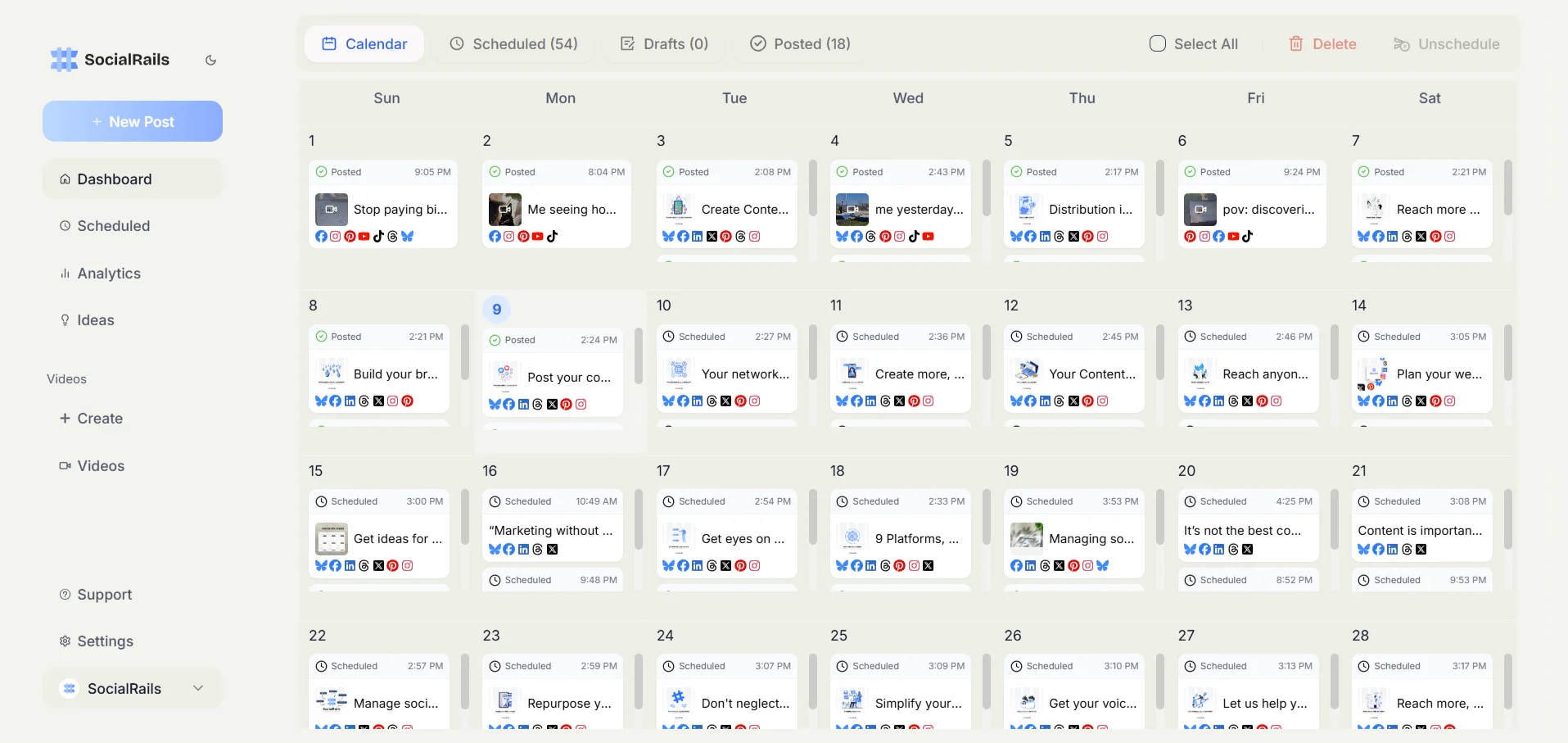
How Social Media Aggregators Work
Content Collection Process
- Connect accounts or hashtags - Link your social profiles or specify hashtags to monitor
- Automated pulling - The aggregator continuously fetches new content
- Content filtering - Remove spam, duplicates, or off-brand posts
- Display formatting - Content is formatted for your chosen display method
- Real-time updates - New posts appear automatically as they're published
Types of Content Aggregated
Common Uses for Social Media Aggregators
Event Displays
- Live social walls at conferences
- Wedding hashtag displays
- Concert and festival screens
- Trade show booths
- Sports event coverage
Website Integration
- Embedded social feeds on homepages
- Product pages with UGC
- Blog sidebars with recent posts
- Landing pages with social proof
- E-commerce galleries
Digital Signage
- Retail store displays
- Office lobby screens
- Restaurant menu boards
- Hotel lobby displays
- Campus information screens
Marketing Campaigns
- Hashtag campaign monitoring
- Contest entry collection
- Influencer content curation
- Brand awareness tracking
- Campaign performance visualization
Benefits of Using a Social Media Aggregator
Time Efficiency
Instead of manually checking multiple platforms, view all content in one dashboard. Save hours weekly on content monitoring and curation.
Increased Engagement
Display user-generated content to encourage more participation. When people see their posts featured, they're motivated to create more.
Social Proof
Showcase real customer posts and testimonials. Authentic content from real users builds trust faster than branded content.
Content Discovery
Find relevant content you might miss. Aggregators surface posts from hashtags, mentions, and conversations across the web.
Unified Analytics
Track performance across all platforms in one place. Compare engagement metrics without switching between multiple dashboards.
Top Social Media Aggregator Tools
For Website Embedding
For Event Displays
For Monitoring & Analytics
Setting Up a Social Media Aggregator
Step 1: Define Your Goals
- What content do you want to collect?
- Where will you display it?
- Who is your target audience?
- What moderation level do you need?
Step 2: Choose Your Sources
- Select platforms to aggregate from
- Define hashtags to track
- Connect brand accounts
- Set up keyword monitoring
Step 3: Configure Moderation
- Auto-approve trusted sources
- Set up spam filters
- Create approval workflows
- Block inappropriate content
Step 4: Design Your Display
- Choose layout style (grid, carousel, masonry)
- Match brand colors and fonts
- Set refresh frequency
- Optimize for display size
Step 5: Embed or Deploy
- Generate embed code for websites
- Set up digital signage connections
- Test on different devices
- Monitor performance
Content Moderation Best Practices
Automated Filtering
- Block posts with profanity
- Filter spam accounts
- Remove duplicate content
- Exclude competitor mentions
Manual Review
- Review flagged content quickly
- Approve high-quality UGC
- Remove off-brand posts
- Feature exceptional content
Legal Considerations
- Respect content ownership
- Obtain rights for commercial use
- Display attribution properly
- Follow platform terms of service
Social Media Aggregator vs. Social Media Management Tool
Note: Many tools like SocialRails combine both functions, offering content scheduling and aggregation features in one platform.
Measuring Aggregator Performance
Key Metrics to Track
Display Metrics:
- Impressions on embedded feeds
- Click-through rate to original posts
- Time spent viewing aggregated content
- Widget load times
Engagement Metrics:
- UGC submissions after display
- Hashtag usage growth
- New followers from embedded feeds
- Content sharing from widgets
Campaign Metrics:
- Contest entries collected
- Campaign hashtag reach
- Influencer content performance
- ROI on UGC campaigns
Common Aggregator Challenges
Content Quality Control
Problem: Low-quality or off-brand content appearing in feeds Solution: Set up robust moderation filters and manual approval for public displays
API Limitations
Problem: Platforms restrict how much content can be pulled Solution: Use aggregators with official API partnerships and multiple source options
Display Loading Speed
Problem: Aggregated feeds slow down website performance Solution: Use lazy loading, limit displayed posts, optimize image sizes
Privacy Concerns
Problem: Users may not want their content displayed Solution: Honor opt-out requests, clearly communicate usage, respect platform privacy settings
Social Media Aggregation for Different Industries
E-commerce
Display customer photos with products to increase conversion rates. UGC galleries on product pages help build trust and encourage purchases.
Hospitality
Show guest experiences at hotels and restaurants. Real traveler photos build trust better than stock photography.
Education
Aggregate campus life content for prospective students. Showcase student experiences and achievements.
Nonprofits
Collect and display supporter content to show community impact. Feature volunteer stories and event coverage.
Events
Create live social walls displaying attendee posts. Increase engagement and create FOMO for future events.
Future of Social Media Aggregation
Emerging Trends
- AI-powered curation - Smarter content selection based on quality and relevance
- Augmented reality displays - Interactive aggregated content in physical spaces
- Real-time translation - Auto-translate aggregated content for global audiences
- Sentiment filtering - Automatically surface positive content
Platform Changes to Watch
- Increasing API restrictions may limit aggregation options
- New platforms (Threads, Bluesky) require aggregator updates
- Video-first content requires better video handling
- Privacy regulations affect data collection methods
Related Terms
- Content Curation - Selecting and sharing relevant content
- User-Generated Content - Content created by customers
- Social Listening - Monitoring brand mentions
- Social Proof - Using social signals to build trust
- Brand Monitoring - Tracking brand mentions online