
10 Best User-Generated Content Campaigns and Their Real Numbers

User-generated content campaigns turn customers into your marketing team. The problem with almost every article on this subject, including the previous version of this one, is that the numbers in it are made up.
We rebuilt this page around a simple rule: every figure below is either traceable to a named source or explicitly marked as unverifiable. That removed most of the statistics you will see elsewhere. It also turned up something no other page on this query mentions: one of the ten campaigns everyone still cites as a model was shut down at the end of 2025.
Create content, post everywhere
Create captions, images, and videos with AI. Schedule to 9 platforms in seconds.
Start your free trial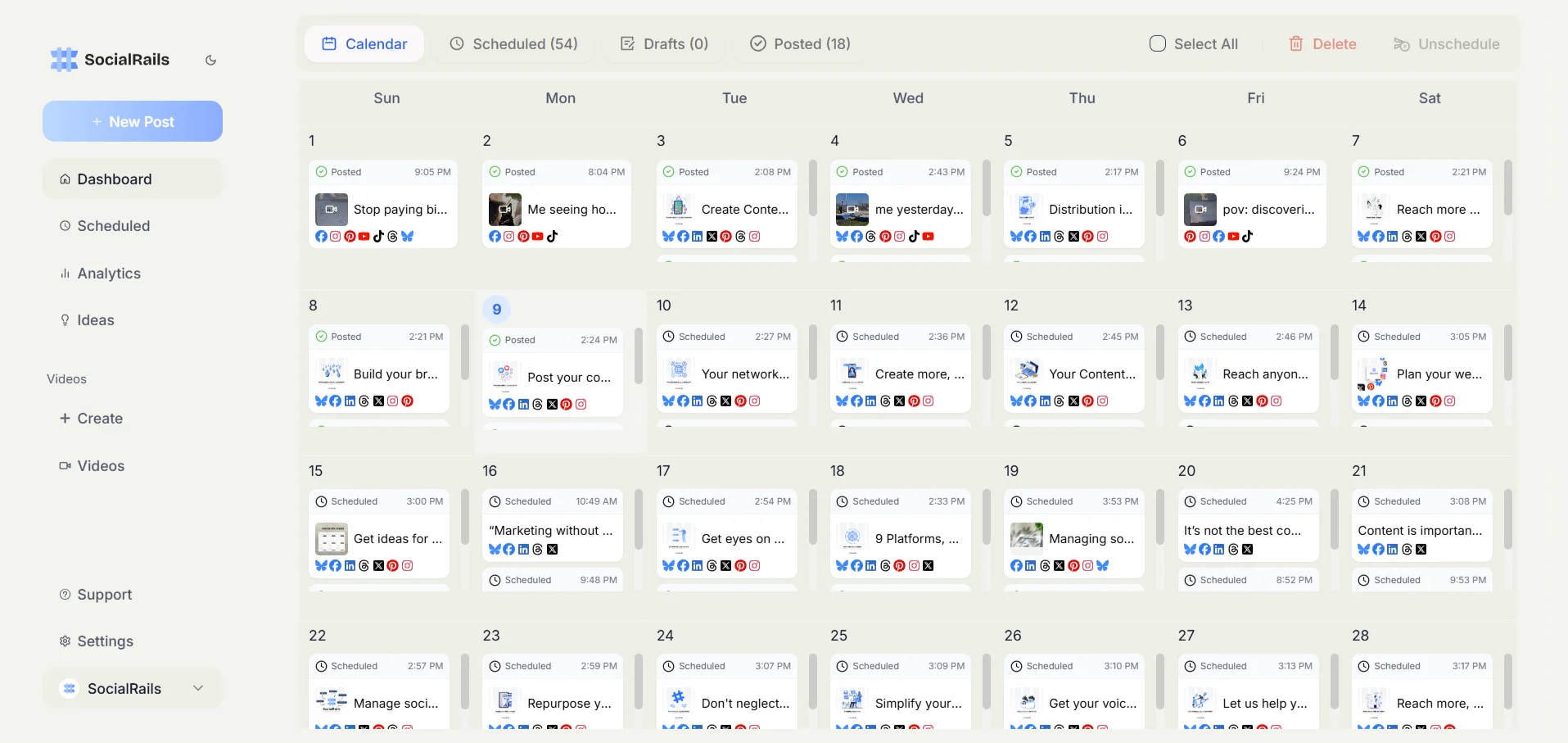
The 10 Campaigns at a Glance
Jump to: Why the stats are untrustworthy | Build your own | By platform | Measurement | Mistakes | Legal | Tools | FAQ
Why Most UGC Campaign Statistics Are Untrustworthy
Three failure modes account for nearly every wrong number in this category, and you can spot all three without leaving the page you are reading.
1. A real number gets attached to the wrong metric. The previous version of this page said Coca-Cola "gained 25 million Facebook followers" from Share a Coke. The real reported figure is roughly a billion Facebook impressions. Impressions became followers somewhere in the retelling. It also credited Apple with a "95% brand sentiment improvement"; the actual figure from Apple's agency, TBWA Media Arts Lab, is 95% positive mentions, which is a different thing entirely and is not an improvement over anything.
2. A figure from one year gets presented as current. The "120 million users shared Spotify Wrapped" number is from 2021 and has appeared under a "2024 results" heading on countless pages, including ours. The current figures are much larger and are further down this page.
3. A number simply gets invented. "35% conversion rate", "50% lower return rate", "2x customer lifetime value", "30% viewer increase from UGC exposure". These have no source at all. We removed every one of them rather than restate them.
Where a campaign has no published figures, this page says so instead of filling the gap.
1. Starbucks #WhiteCupContest
Mechanic. In April 2014, Starbucks asked customers to decorate a plain white cup, photograph it and post it to Twitter or Instagram with #WhiteCupContest. The winning design was produced as a limited edition reusable cup.
Documented: the contest drew nearly 4,000 entries in three weeks.
Not documented: the "40 million impressions", "12% increase in Instagram followers" and "sold out in 48 hours" that circulate with this case study. We could not trace any of them and have removed them.
Why it still gets studied: the barrier to entry was a pen and a cup a customer already had in their hand. Note that this is a 2014 campaign. It is a good illustration of a mechanic, not evidence of what a hashtag contest achieves in 2026.
2. GoPro Awards
Mechanic. GoPro pays users for footage it selects, across photos, raw clips and edited videos.
Documented: GoPro launched the Awards program in 2015 with a commitment of $5 million a year in payouts.
Read this before quoting a payout figure. Most articles publish a fixed schedule of "$500 for photos, $1,000 for raw clips, $5,000 for edited videos". That is not how the program works now. Amounts vary by individual challenge, and GoPro Subscribers are paid roughly double the non-subscriber rate for the same selection. Reported subscriber rates have included $500 for a selected photo and $1,000 for a video. Check GoPro's own Awards page for the current challenge before you plan around a number.
Why it works: it converts a content cost centre into a licensing deal. GoPro's customers own the camera already, so the marginal cost of the footage is a payout rather than a production budget, and paid-for footage carries the brand authenticity that a produced ad cannot buy.
3. Apple "Shot on iPhone"
Mechanic. Customer photos taken on iPhones, curated by Apple and placed on billboards, in print, in TV spots and in retail stores, gathered under #ShotOniPhone since 2015.
Documented by Apple: nothing. Apple has never published a single campaign metric for this. Every number you have read about it comes from a third party.
Third-party estimates, with the spread shown honestly: counts of #ShotOniPhone Instagram posts have been reported at 23.8 million, 26 million and 28.9 million depending on who measured and when. Apple's agency, TBWA Media Arts Lab, has cited roughly 6.5 billion media impressions, 24,000 opinion leaders reached and 95% positive mentions.
A three-way spread of five million posts between sources is the useful lesson here. Hashtag counts are estimates produced by tools with different access, not facts.
4. Coca-Cola "Share a Coke"
Mechanic. Replace the logo on the bottle with a first name, so that buying a Coke becomes finding a specific person's Coke, and photographing it becomes the natural next step.
Documented:
- A 2% increase in US sales, which reversed a decade of decline
- 998 million Twitter impressions
- More than 500,000 photos posted with #ShareaCoke
- More than 150 million personalized bottles sold, across 70+ countries
- 1.25 million additional teens tried Coke in the US during 2014
Corrected from our previous version: the "25 million Facebook followers gained" figure was wrong. Reported Facebook activity was on the order of a billion impressions. The "7% increase among young adults" had no source and has been replaced with the teen trial figure above, which does.
5. Airbnb #WeAccept
Mechanic. A values campaign built around a Super Bowl LI ad in February 2017, inviting users to share stories of acceptance and belonging.
Documented in Airbnb's own case study submission:
- More than 87 million earned impressions, which Airbnb described as its third largest earned-impressions driver of all time
- The video was viewed 19 million times and shared more than 100,000 times
- The number one advertiser hashtag on Twitter during the game, with more than 33,000 tweets in the first half, more than any other advertiser
- Facebook and Instagram content shared more than 90,000 times with 500,000+ likes
- 85% positive reaction on Airbnb's internal sentiment tracker
- A 13% increase in US and Canada site visitors the week after the game, and 7.2% across the following month
The commitment attached to it: Airbnb pledged to provide short-term housing for 100,000 people in need over five years, and $4 million to the International Rescue Committee over four years.
Every number our previous version published for this campaign was wrong, including a "15% increase in bookings from campaign participants" that does not exist and an "87,000 Instagram posts" figure that appears to be the 90,000 shares number, mangled.
6. LEGO Ideas
Mechanic. Fans submit set designs, the community votes, and LEGO reviews the ones that clear the threshold for possible production.
Documented on LEGO's own site:
- A Product Idea needs 10,000 supporters to be considered for production
- Creators receive 1% of the total net sales of a produced set
Those two numbers are the whole model, and they are stated by LEGO in plain text, which makes them the most reliable figures on this page.
Not documented: LEGO does not publish an Ideas member count or revenue for the Ideas line. The "1.5 million members" and "$100 million+ revenue" figures we previously carried are untraceable and have been removed.
7. Glossier
Mechanic. Customers photograph themselves using the products and recommend them to each other. Glossier's growth came from that loop rather than from paid acquisition.
Documented:
- Founder Emily Weiss has attributed roughly 70% of online sales and traffic to peer-to-peer referrals
- Glossier reached a $1.2 billion valuation in 2019 on a $100 million Series D led by Sequoia Capital
Not documented: "3 million+ posts tagged #GlossierPink" and "90% organic social content". Removed.
The caveat worth carrying: community-led growth got Glossier to a unicorn valuation and did not by itself keep it growing. Treat it as evidence that peer referral can build a brand, not that it can run one indefinitely.
8. Netflix Stranger Things Fan Art
Mechanic. There was no formal campaign. Fan art, cosplay, theory videos and reaction compilations appeared on their own, and Netflix amplified them.
Documented: nothing. There are no published figures for this. The "2 billion TikTok views", "500,000+ fan artworks" and "30% viewer increase from UGC exposure" that circulate, and that this page previously carried, have no source we could find.
We have kept the example because the lesson is real and does not need a number: the strongest UGC is often the kind you did not organise, and the job is recognising and amplifying it rather than commissioning it.
9. Spotify Wrapped
Mechanic. A personalised year-end data story, designed from the start to be screenshotted and posted.
Documented, for Wrapped 2025:
- 200 million engaged users in roughly 24 hours, against about 62 hours to reach the same mark in 2024, a 19% year-on-year increase
- Around 500 million shares, up 41% year on year, counting in-app shares, screenshots and downloads
- Spotify defines an "engaged user" as someone who viewed at least one story within Wrapped
- Growth was driven by the US, India, Indonesia, Japan, Colombia and Thailand
- 2025 added a "listening age" comparison and Wrapped Party, Spotify's first live multiplayer Wrapped feature
Corrected: the widely repeated "120 million users shared Wrapped" is the 2021 figure, and our page had it filed under "2024 results". The "21% app download increase" and "30% premium conversion spike" have no source and are gone.
Why it compounds: the share is the product. Every Wrapped story is different, which means posting it says something about the person posting rather than about Spotify. It briefly turns every listener into an Instagram influencer for their own music taste. The visual design does a lot of that work; our Gen Z aesthetic guide covers what makes a graphic get reposted by younger audiences.
10. Warby Parker Home Try-On
This is the one to read carefully, because the campaign no longer exists.
Mechanic. Launched in 2010: five frames shipped to your home for free, try them on, return what you do not want. The UGC came from customers photographing themselves in the frames and asking their networks which pair to keep.
Discontinued. On its Q2 2025 earnings call in August 2025, Warby Parker announced it would sunset Home Try-On by the end of 2025. The reasons given were that the store network had passed 300 locations, that most customers now live within about a 30-minute drive of one, and that shipping and returns costs made the program hard to justify once it had become redundant. It has been replaced by the stores and by the app's virtual try-on, which uses facial mapping.
Documented, from the 2021 IPO filing: Warby Parker described Home Try-On as "a viral brand awareness program that pays for itself" and said it had an exceptionally high conversion rate, without publishing the number.
Not documented: the "35% conversion rate", "50% lower return rate", "2x customer lifetime value" and "100,000+ try-on photos" that appear in nearly every article about this campaign, including our previous version.
The actual lesson, which is better than the one usually drawn: a UGC mechanic can be excellent and still have a finite life. Home Try-On existed because Warby Parker had no stores. Once it had 300, the program was competing with its own retail network. If you build a campaign around solving a gap in your business, expect to retire it when the gap closes.
How to Build Your Own UGC Campaign
1. Define what you are actually buying
UGC is not free. You are paying in prizes, in moderation time, in rights management, or in product. Decide which before you launch, and decide what you are buying with it: content volume, social proof for a product page, or reach. If you are starting from scratch, the fundamentals of campaign planning and how to develop a marketing campaign concept come first.
2. Choose the right incentive
The three campaigns on this page with the most durable results, GoPro, LEGO Ideas and Glossier, all pay participants in something concrete: cash, royalties, or referral credit. The hashtag contests are cheaper and their results were mostly one-off.
3. Make participation one step
Every campaign above that scaled required a single action the customer was already able to perform. Draw on the cup you are holding. Photograph the bottle with your name on it. Screenshot the thing the app just made for you. If your campaign needs a microsite, an account and an upload, you have built a form, not a campaign.
4. Sort the rights out before launch, not after
Covered in legal considerations below. This is the step most commonly skipped and the one that most often makes the content unusable.
To plan the posting schedule around a campaign, our content calendar generator will lay out the weeks, and our customer review reply generator helps with responding to the submissions once they start arriving.
Platform-Specific UGC Strategies
- Stories: behind-the-scenes, unboxing
- Reels: transformations, tutorials
- Posts: product styling, reviews
Set clear tagging rules for your campaign. Understand all Instagram tag types so participants tag your brand correctly.
TikTok
- Challenges: dance, transformation
- Duets: reactions, responses
- Trends: adapt popular formats
- Sounds: original audio creation
YouTube
- Reviews: detailed product analysis
- Tutorials: how-to content
- Shorts: quick tips
Measuring UGC Campaign Success
Track two groups separately, and do not let the first stand in for the second.
Participation metrics: submission volume, engagement rate, share rate, sentiment.
Business metrics: conversion rate, customer acquisition cost, return on investment, customer lifetime value.
The reason to keep them apart is on display throughout this page. Almost every impressive UGC number in circulation is a participation metric, because those are the ones that are easy to count and flattering to publish. Of the ten campaigns here, only Coca-Cola and Airbnb published anything connecting the campaign to business outcomes, and Warby Parker explicitly declined to publish its conversion rate in an SEC filing while calling it exceptional.
Common UGC Campaign Mistakes to Avoid
- A complicated submission process. Multiple steps kill participation.
- Unclear usage rights, which leaves you with content you cannot legally run.
- Ignoring negative UGC rather than responding to it.
- One format across every platform, when the platforms reward different things.
- Not engaging with participants, which ends the campaign the moment the prize is awarded.
- Believing the benchmark numbers. Most of the figures you would plan against, as this page shows, cannot be sourced.
Legal Considerations for UGC
Effective content moderation is essential for managing UGC campaigns and keeping submissions aligned with brand guidelines.
Rights management essentials:
- Get explicit permission before using anything in marketing
- State usage terms in the campaign rules, so entry grants the rights you need
- Credit creators
- Respect platform policies, which may restrict how entries can be collected
- Decide the compensation structure up front
A hashtag is not a licence. Posting with your hashtag does not, on its own, transfer any right to use someone's photograph in an advertisement.
Tools for Managing UGC Campaigns
- SocialRails to schedule and amplify UGC across platforms
- Sociamonials for a contest builder with photo and video submissions and landing pages (pricing)
- TINT for UGC aggregation and display
- Yotpo for reviews and visual UGC
- Stackla for UGC curation, now owned by Nosto, which acquired it in 2021
- Bazaarvoice for ratings and reviews
For running social media contests, Sociamonials specialises in sweepstakes, referral programs and UGC collection workflows. Compare Sociamonials alternatives if you need more general scheduling features. For referral-driven contests specifically, UpViral adds referral chain mechanics. Need contest graphics? PosterMyWall is a budget-friendly design tool.
Frequently Asked Questions
What is the best user-generated content campaign of all time?
By documented business results rather than by participation metrics, Coca-Cola's Share a Coke has the strongest case: a 2% increase in US sales that reversed a decade of decline, more than 150 million personalized bottles sold across more than 70 countries, and 998 million Twitter impressions. Airbnb's #WeAccept is the other campaign on this list that published outcome data, reporting more than 87 million earned impressions and a 13% rise in US and Canada site visitors in the week after its Super Bowl LI ad. Most other famous UGC campaigns have published only participation numbers, or nothing at all.
Is the Warby Parker Home Try-On program still running?
No. Warby Parker announced on its Q2 2025 earnings call in August 2025 that it would sunset Home Try-On by the end of 2025, and the program has since closed. It launched in 2010 and shipped five frames to a customer's home to try and return for free. Warby Parker said the store network had passed 300 locations, that most customers live within about a 30-minute drive of one, and that shipping and returns costs made the program hard to justify once it had become redundant. It has been replaced by the stores and by virtual try-on in the app. Any guide still recommending it as a live campaign to study has not been updated.
Why do UGC campaign statistics vary so much between articles?
Three reasons. A real figure gets attached to the wrong metric, as when Coca-Cola's roughly one billion Facebook impressions became 25 million Facebook followers in retellings. A figure from one year gets presented as current, as when Spotify Wrapped's 120 million shares from 2021 appear under a 2024 heading. Or a number is simply invented, which accounts for most conversion-rate and lifetime-value claims in this category. Hashtag counts also legitimately differ between measurement tools: reported #ShotOniPhone Instagram post counts range from 23.8 million to 28.9 million.
How much does GoPro pay for user-generated content?
It depends on the challenge, so the fixed schedule most articles publish is misleading. GoPro launched the Awards program in 2015 with a commitment of $5 million a year in payouts. Amounts vary by individual challenge, and GoPro Subscribers are paid roughly double the non-subscriber rate for the same selection, with reported subscriber rates including $500 for a selected photo and $1,000 for a video. Check GoPro's own Awards page for the current challenge rather than planning against a number from an article.
How does the LEGO Ideas royalty work?
LEGO states both numbers on its own site: a Product Idea needs 10,000 supporters from the fan community to be considered for production, and a creator whose idea becomes a set receives 1% of the total net sales of that product. LEGO does not publish member counts for the platform or revenue figures for the Ideas line, so any article quoting those is not sourcing them from LEGO.
Do I need legal permission to use customer-generated content?
Yes. Always obtain explicit permission before using UGC in marketing. A hashtag is not a licence: posting with your hashtag does not on its own transfer any right to use someone's photograph in an advertisement. The standard approach is to publish campaign terms stating how submitted content may be used, so that entering the campaign grants the rights you need. Sort this out before launch, because retrofitting permission across thousands of submissions is the step that most often makes collected content unusable.
How long should a UGC campaign run?
There is no published benchmark for this, and any specific week count you read is a rule of thumb rather than a finding. For reference, the Starbucks White Cup Contest ran for three weeks and drew nearly 4,000 entries. Time-boxed campaigns create urgency; ongoing programs such as GoPro Awards and LEGO Ideas work differently, because they pay participants and therefore do not depend on a deadline to sustain submissions.
What kind of incentive works best for UGC?
It depends on what you want the campaign to do, but there is a pattern in the campaigns with the most durable results. GoPro, LEGO Ideas and Glossier all pay participants in something concrete: cash payouts, a 1% royalty, and referral credit respectively. Hashtag contests that offer recognition alone are much cheaper and their results were mostly one-off. Recognition suits creative communities, discounts and free product suit transactional audiences, competition prizes suit competitive niches, and exclusive access suits loyal customers.
Related guides:
Was this article helpful?
Let us know what you think!