

Social Media for Financial Advisors: The Compliance Safe Strategy That Gets Clients

Social Media for Financial Advisors: The Compliance Safe Strategy That Gets Clients
Financial advisors leave revenue on the table because compliance concerns limit their social media efforts. Meanwhile, top performing advisors use proven, SEC compliant strategies to generate qualified leads monthly from social platforms without regulatory risk.
The difference? A strategic approach that balances education, engagement, and compliance. This guide reveals exactly how successful financial advisors build trust, demonstrate expertise, and attract high-net-worth clients through social media while staying fully compliant.
Create content, post everywhere
Create captions, images, and videos with AI. Schedule to 9 platforms in seconds.
Start your free trial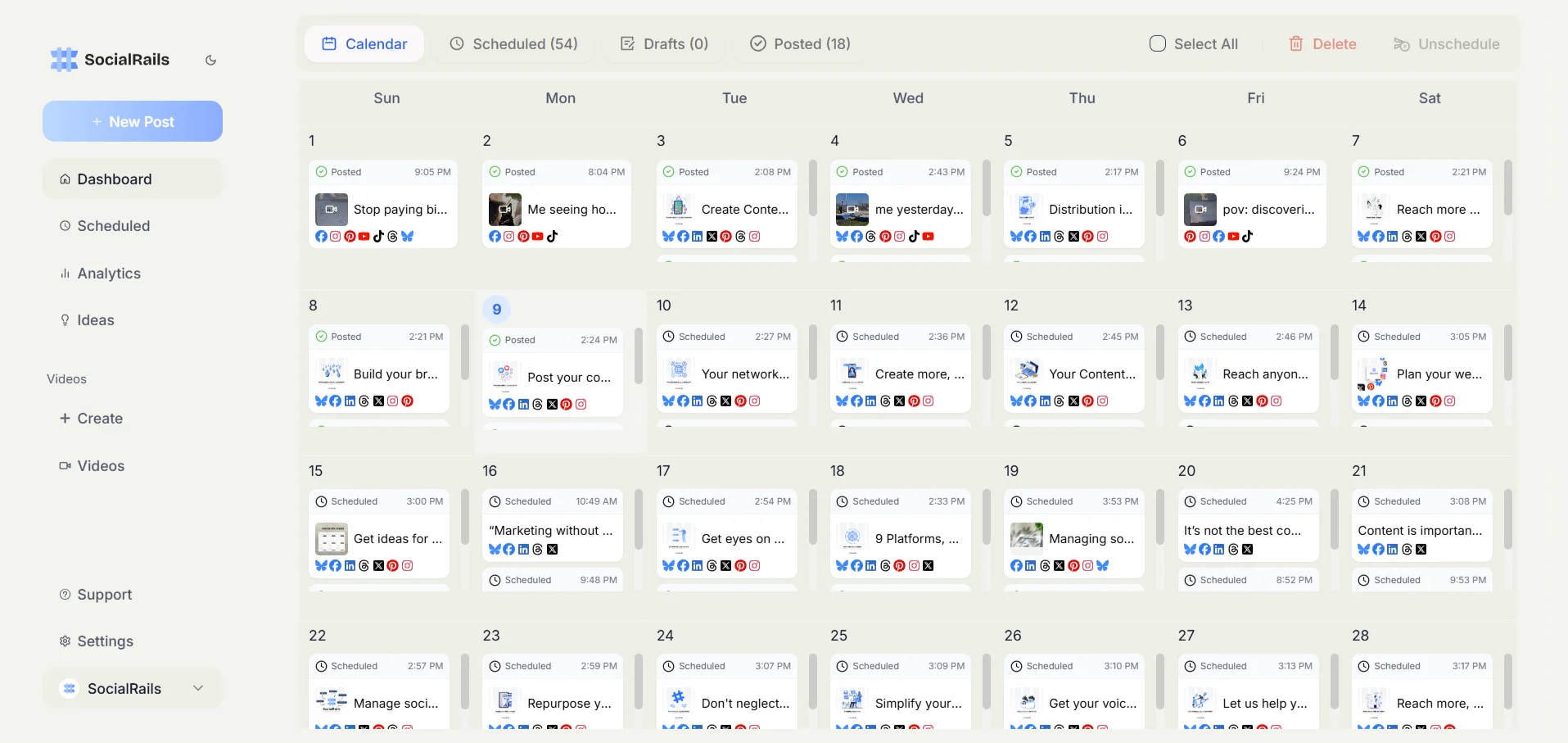
Why Financial Advisors Need Social Media
The Changing Client Acquisition Landscape
Traditional Referral Model is Declining:
- Most wealthy investors research advisors online before contact
- Many millennials distrust traditional financial advertising
- Many investors find advisors through social media or search
- Average age of first time investors has declined over the past decade
Social Media Performance:
- Financial advisors using social media often report more client referrals
- Many advisors attribute new clients directly to social media presence
- LinkedIn tends to generate more B2B leads than other platforms for financial services
- Average cost per lead from social media is often lower than traditional marketing
Client Expectations:
- Most investors expect their advisor to have an active online presence
- Many won't consider advisors without online content or reviews
- High net worth individuals often research advisors on LinkedIn before meetings
Your absence from social media isn't protecting you, it's making you invisible to the next generation of wealth. Learn effective financial services branding to position yourself competitively.
Compliance Fundamentals for Financial Advisor Social Media
Understanding the Regulatory Framework
Key Regulatory Bodies:
- SEC (Securities and Exchange Commission): Registered Investment Advisors (RIAs)
- FINRA (Financial Industry Regulatory Authority): Broker-dealers and representatives
- State regulators: State-registered advisors
- Your firm's compliance department: Additional internal rules
Core Compliance Principles:
1. All Content is Advertising
Any social media post, comment, or message is considered "advertising" under FINRA Rule 2210 and SEC Marketing Rule. This means:
- All content must be pre-approved or reviewed
- Claims must be substantiated
- Performance data requires specific disclosures
- Testimonials require compliance review
This is similar territory to pharma promotion under the FDA. If you want to see how another regulated industry runs MLR-style approval workflows, the pharmaceutical social media compliance playbook covers fair-balance templates, AE reporting, and tool stacks built specifically for review-heavy content.
2. Recordkeeping Requirements
You must maintain records of:
- All published posts for 3-6 years (depending on registration type)
- Comments on your posts
- Direct messages discussing business
- Third-party content you share or endorse
3. Supervision and Monitoring
Firms must:
- Establish written social media policies
- Review content before or after posting (depending on firm procedures)
- Monitor for violations
- Train advisors on compliant usage
What You CAN Post (Compliant Content)
Educational Content:
- General financial planning concepts
- Market commentary and economic insights
- Retirement planning basics
- Tax planning strategies (general, not personalized advice)
- Estate planning considerations
- Financial literacy topics
Thought Leadership:
- Industry news and analysis
- Personal finance philosophy
- Book recommendations
- Speaking engagements and media appearances
- Awards and credentials (with proper context)
Business Information:
- Services offered
- Office locations and hours
- Team member introductions
- Community involvement
- Content downloads (with compliance-approved language)
Client Engagement:
- Congratulations on life events (general)
- Thank you posts
- Educational responses to questions
- Event announcements and recaps
What You CANNOT Post (High-Risk Content)
Avoid These Without Compliance Pre-Approval:
- Specific investment recommendations: "Buy XYZ stock now"
- Performance claims: "I beat the market by 15%" without full disclosures
- Client testimonials: Unless meeting strict testimonial rules
- Guarantees or promises: "I'll double your retirement savings"
- Personalized advice in public: Specific recommendations in comments
- Promissory language: "We will get you to your goals"
- Comparative performance: Without required disclosures
- Third-party rankings: "Ranked #1 advisor" without substantiation
Social Media-Specific Risks:
- Liking client posts about investment performance
- Commenting on client success publicly
- Sharing client testimonials without disclosures
- Responding to detailed financial questions in comments
- Endorsing specific products or strategies
- Using prohibited terms ("guaranteed," "safe," "no-risk")
Learn about social media compliance requirements across industries. For compliance updates, use our Cyber Compliance Update to Social Summary tool to simplify regulatory changes into shareable content.
Platform Selection for Financial Advisors
Best Social Media Platforms for Advisors
LinkedIn: The Top Priority
Why LinkedIn Works:
- Professional context: Users expect business content
- Decision-maker access: C-suite and high-net-worth audience
- Credibility signals: Professional profile, endorsements, recommendations
- Content longevity: Posts remain visible longer than Twitter/Facebook
- Lead generation tools: Direct message capabilities, company pages
LinkedIn Compliance Advantages:
- Professional tone reduces risk
- Less volatile than Twitter political conversations
- Lower volume of comments to monitor
- Built-in professional credibility markers
Best Content for LinkedIn:
- Weekly financial planning insights (300-500 words)
- Market commentary articles
- Client success principles (not specific testimonials)
- Speaking engagements and thought leadership
- Team spotlights and firm updates
Facebook: Local Community Building
Why Facebook Still Matters:
- Local reach: Excellent for community-based practices
- Life event targeting: Engagement announcements, new homes, retirements
- Groups: Community building and education
- Facebook Business Page: Establish credibility and collect reviews
Best Content for Facebook:
- Community involvement photos
- Office updates and team news
- Educational videos (short, 2-3 minutes)
- Event announcements (webinars, workshops)
- General financial literacy tips
Compliance Caution on Facebook:
- Higher volume of comments requiring monitoring
- Greater risk of friends/clients leaving testimonials
- More casual environment increases compliance risk
- Strict separation needed between personal and professional pages
Twitter/X: Real-Time Thought Leadership
Why Twitter Works for Some Advisors:
- Real-time market commentary
- Thought leadership in finance community
- Media and speaking opportunities
- Industry networking
Compliance Risks:
- Character limits can create misleading statements
- Fast-moving platform difficult to monitor
- Higher risk of off-the-cuff statements
- Political/controversial topics more common
Best Practices:
- Stick to educational content only
- Link to longer-form content with full disclosures
- Avoid engaging in controversial debates
- Use for industry networking more than client acquisition
YouTube: Educational Video Content
Why YouTube:
- Demonstrate expertise: Show, don't just tell
- SEO benefits: Videos rank in Google search
- Longer format: Explain complex concepts thoroughly
- Trust building: Face-to-face connection
Best Content:
- "How to" financial planning tutorials
- Market update videos
- Retirement planning explainers
- Tax strategy overviews
- Common financial mistakes series
Instagram: For Younger Client Acquisition
Why Instagram (Selectively):
- Reach millennial and Gen Z investors
- Visual storytelling
- Behind-the-scenes humanization
- Short-form educational content
Best Content:
- Financial literacy infographics
- Money tips carousel posts
- Quick explainer videos (under 60 seconds)
- Team culture and office life
Platform Priority Framework:
Tier 1 (Must Have):
- LinkedIn: 60% of effort
- Company website blog: 20% of effort
Tier 2 (Should Have):
- YouTube: 10% of effort
- Facebook Business Page: 10% of effort
Tier 3 (Nice to Have):
- Twitter/X: If you enjoy real-time commentary
- Instagram: If targeting under-40 investors
Focus on mastering 1-2 platforms before expanding. Quality over quantity prevents compliance issues and builds deeper audience relationships.
Content Strategy for Financial Advisors
The Education-First Content Framework
90/10 Rule:
- 90% Educational content: No ask, pure value
- 10% Promotional content: Services, offerings, events
Content Pillars for Financial Advisors:
Pillar 1: Financial Planning Basics
- Retirement planning fundamentals
- 401(k) contribution strategies
- Roth vs. Traditional IRA explanations
- Social Security optimization
- Estate planning essentials
- Tax-efficient investing basics
Pillar 2: Market Commentary
- Economic trends analysis
- Sector performance insights
- Interest rate impacts
- Inflation considerations
- Market volatility education
- Long-term investing perspective
Pillar 3: Life Stage Planning
- First-time homebuyer considerations
- Marriage and finances
- Planning for children's education
- Career transitions and finances
- Divorce financial planning
- Retirement transition strategies
Pillar 4: Wealth Management Insights
- Diversification principles
- Risk management strategies
- Multi-generational wealth planning
- Charitable giving strategies
- Executive compensation planning
- Business owner financial strategies
Pillar 5: Behavioral Finance
- Emotional investing pitfalls
- Decision-making biases
- Market timing myths
- Long-term thinking principles
- Financial discipline strategies
- Common investor mistakes
Compliant Content Templates
Template 1: The Educational Insight
[Hook: Surprising statistic or common misconception]

Many people believe [common myth], but the reality is quite different.

[2-3 paragraphs explaining the truth]

[Key takeaway]

What questions do you have about [topic]? Happy to address general questions in the comments.

[Required disclosures if needed]
Template 2: Market Commentary
[Current market event or trend]

Here's what this means from a financial planning perspective:

1. [First insight]
2. [Second insight]
3. [Third insight]

The key is staying focused on long-term goals rather than short-term noise.

This is general commentary, not personalized advice. Consult with your financial advisor about your specific situation.
Template 3: Life Stage Planning
Approaching [life milestone]? Here are [number] financial considerations:

✓ [Consideration 1]
✓ [Consideration 2]
✓ [Consideration 3]
✓ [Consideration 4]

[Brief explanation of each]

These are general considerations. Everyone's situation is unique—work with a qualified advisor for personalized guidance.
Template 4: Myth Busting
❌ MYTH: [Common financial misconception]

✅ REALITY: [The truth]

[2-3 paragraphs explaining why the myth persists and what to do instead]

Have you heard this myth before? What other money myths should we address?
Use content planning tools to organize your compliant content calendar efficiently.
Creating Compliant Social Media Posts
The Pre-Approval Workflow
Step 1: Draft Content
- Write posts in advance
- Include any links, images, or videos
- Note any statistics or claims (source required)
- Flag any borderline compliance language
Step 2: Internal Review
- Self-review against compliance checklist
- Remove prohibited language
- Add required disclosures
- Verify all claims are substantiated
Step 3: Compliance Submission
- Submit through firm's compliance platform
- Include all supporting documentation
- Note intended publication date/platform
- Attach any third-party content being shared
Step 4: Approval and Archiving
- Wait for compliance approval before posting
- Make any requested edits
- Archive approved version with approval date
- Schedule post or publish immediately
Step 5: Monitoring
- Monitor comments for questions requiring response
- Flag any testimonials or endorsements for compliance
- Archive significant interactions
- Report any concerning activity
Compliance Checklist for Every Post:
✅ Before Posting, Verify:
- ☐ No specific investment recommendations
- ☐ No performance claims (or full disclosures included)
- ☐ No guarantees or promises
- ☐ No personalized advice in public comments
- ☐ All statistics sourced and substantiated
- ☐ Required disclosures included
- ☐ Content reviewed/approved per firm policy
- ☐ Archived for recordkeeping
- ☐ Monitoring plan in place for comments
Disclosure Requirements
Common Required Disclosures:
Investment Advice Disclaimer:
"This content is for informational purposes only and should not be considered personalized investment advice. Please consult with a qualified financial advisor before making investment decisions."
Performance Data Disclosure (if showing any performance):
"Past performance is not indicative of future results. Individual client performance may vary. See [link to full disclosures] for important information regarding performance calculations and methodology."
Testimonial Disclosure (if compliant testimonials used):
"Client testimonial provided voluntarily without compensation. Results may not be representative of all clients' experiences. See [link] for important information about testimonials."
General Business Disclosure:
"[Firm Name] is a registered investment advisor. Registration does not imply a certain level of skill or training. For additional information about our firm and services, see our Form ADV Part 2A at [link]."
Where to Place Disclosures:
- LinkedIn/Facebook posts: At bottom of post text
- Videos: Verbally and in video description
- Images/Infographics: In image footer or caption
- Twitter: Link to full disclosure page (character limits)
Handling Comments and Messages
Responding to Public Comments:
Safe Responses:
- "Great question! I'll DM you to discuss your specific situation."
- "Thanks for reading! This is general information—everyone's situation is different."
- "That's a common concern. Let's schedule a call to review your particular circumstances."
- "I appreciate the question. The answer depends on your individual tax situation, goals, and timeline. Happy to discuss in more detail privately."
Avoid in Public Comments:
- Specific investment recommendations
- Personalized tax advice
- Performance projections
- Detailed strategy recommendations
- Anything you wouldn't want regulators reading
Testimonial Management:
If a client posts: "Best advisor ever! Made us so much money!"
Do NOT:
- Like the comment
- Respond with agreement
- Share or amplify the comment
DO:
- Archive the comment for compliance
- Report to compliance department
- Consider private message: "Thank you for the kind words! I'm glad we're working well together. For compliance reasons, I can't respond publicly to testimonials, but I truly appreciate your trust."
Direct Message Guidelines:
- Treat DMs as business communication (archived and reviewable)
- Don't provide specific investment advice via DM
- Use DMs to schedule calls/meetings
- Move substantive conversations to compliant channels (phone, email, meeting)
Learn effective community management strategies while maintaining compliance.
Lead Generation Strategies
Compliant Client Acquisition Tactics
Strategy 1: Educational Content Offers
Create valuable downloadable resources:
- "Retirement Planning Checklist for [Specific Profession]"
- "Tax-Efficient Investing Guide for High Earners"
- "Estate Planning Essentials Workbook"
- "College Funding Strategies for Parents"
- "Executive Compensation Optimization Guide"
Compliant Lead Magnet Process:
- Create content (compliance pre-approved)
- Gate content behind email capture
- Add required disclosures to download page
- Follow up with educational email series
- Offer consultation for personalized advice
Strategy 2: LinkedIn Outreach
Compliant LinkedIn Connection Strategy:
- Connect with people in target demographics (geography, profession, life stage)
- Send personalized (not templated) connection requests
- Provide value in first message (share relevant article)
- Build relationship over time with educational content
- Offer free consultation after establishing rapport
LinkedIn Message Template:
Hi [Name],

I noticed we're both in [geographic area/industry] and thought I'd connect. I work with [target client description] on [specific planning area].

I recently wrote an article on [relevant topic] that might be interesting given your [role/situation]: [link]

Happy to connect and share insights on [topic area] anytime.

Best,
[Your Name]
Strategy 3: Webinars and Virtual Events
Compliant Webinar Topics:
- "Retirement Planning Strategies for [Profession]"
- "Tax-Smart Investing in a Changing Environment"
- "Social Security Optimization Workshop"
- "Women and Wealth: Financial Planning Essentials"
- "Business Owner Financial Strategies"
Promotion Strategy:
- Organic LinkedIn posts (3-4 times before event)
- Email invitation to existing network
- LinkedIn event page
- Facebook event (if using platform)
- Post-event content (key takeaways, recording)
Post-Webinar Follow-up:
- Automated email with recording and resources
- Personal outreach to engaged attendees
- Offer individual consultation
- Add to educational email nurture sequence
Strategy 4: Local SEO + Social Integration
Optimize for "[City] Financial Advisor" Searches:
- Complete Google Business Profile
- Post Google Business updates weekly
- Share social content to Google Business Profile
- Encourage client reviews (compliantly)
- Local LinkedIn activity (engage with local business community)
Strategy 5: Referral Activation
Social Media Referral Tactics:
- Post about ideal client characteristics (subtly)
- Share success stories (compliant, anonymized)
- Educate network on what you do best
- Make referral process easy and clear
- Thank referral sources publicly (when appropriate)
Compliant Referral Post Template:
I love working with [ideal client description] on [specific planning challenge].

If you know someone who's [life stage/situation] and could benefit from a conversation about [topic], I'm happy to offer a complimentary planning consultation.

Feel free to share my contact information or make an introduction.
Social Media Marketing for Different Advisor Types
Strategies by Niche
For Retirement-Focused Advisors:
- Primary platform: Facebook (older demographic)
- Content focus: Social Security, Medicare, Required Minimum Distributions, pension strategies
- Lead magnets: Retirement readiness checklists, Social Security guides
- Local community engagement: Senior center partnerships, retirement community events
For Millennial/Gen Z Investor Advisors:
- Primary platforms: Instagram, TikTok (for very young investors), LinkedIn
- Content focus: Student loan strategies, first-time home buying, 401(k) basics, investing fundamentals
- Lead magnets: Budgeting templates, investment starter guides, debt payoff calculators
- Engagement style: More casual, relatable, less jargon
For High-Net-Worth Advisors:
- Primary platform: LinkedIn
- Content focus: Tax optimization, estate planning, charitable giving, executive compensation, multi-generational wealth
- Lead magnets: Tax strategy guides, estate planning checklists, trust fundamentals
- Positioning: Thought leadership, exclusive insights, high-touch service signals
For Business Owner Advisors:
- Primary platforms: LinkedIn, local business Facebook groups
- Content focus: Succession planning, business valuation, retirement plan options (SEP, Solo 401k), exit strategies
- Lead magnets: Business owner financial checklist, succession planning guide
- Networking: Active in local business chambers, industry associations
For Women-Focused Advisors:
- Primary platforms: LinkedIn, Facebook, Instagram
- Content focus: Financial independence, career transitions, divorce financial planning, longevity planning
- Lead magnets: Women's financial empowerment guides, career transition checklists
- Community building: Women's networking groups, professional women's organizations
Use audience analytics to understand your ideal client demographics and refine targeting.
Measuring Social Media Success
Key Performance Indicators for Advisors
Awareness Metrics:
- Follower growth rate: Net new followers month-over-month
- Impressions: How many people see your content
- Reach: Unique people who saw your content
- Profile views: How many people visit your profile
Engagement Metrics:
- Engagement rate: (Likes + Comments + Shares) / Reach
- Comment quality: Are people asking thoughtful questions?
- Share rate: How often content is shared
- Click-through rate: Link clicks from posts
Lead Generation Metrics:
- Website traffic from social: Google Analytics by social source
- Contact form submissions: From social traffic
- Consultation requests: Directly attributable to social
- Email list growth: From social lead magnets
- Connection requests: LinkedIn inbound connections
Client Acquisition Metrics:
- New clients from social media: Direct attribution
- Social-assisted conversions: Touchpoint in journey
- Assets under management from social leads: Revenue impact
- Client acquisition cost: Social spend / new clients
Benchmark Targets:
- LinkedIn engagement rate: 2-5% (excellent), 1-2% (good)
- Facebook engagement rate: 1-3% (excellent), 0.5-1% (good)
- Monthly lead generation: 5-10 qualified leads
- Conversion rate (lead to client): 10-20%
- Client acquisition cost: Under $2,000 for $500K+ client
Monthly Reporting Template:
| Metric | This Month | Last Month | Change |
|---|---|---|---|
| LinkedIn Followers | [Current] | [Previous] | [+/-%] |
| Post Engagement Rate | [Current %] | [Previous %] | [+/-] |
| Website Visits (Social) | [Current] | [Previous] | [+/-%] |
| Consultation Requests | [Current] | [Previous] | [+/-%] |
| New Clients (Social-Sourced) | [Current] | [Previous] | [+/-%] |
Learn to track marketing ROI to demonstrate social media value to your practice.
Tools and Resources for Financial Advisors
Recommended Social Media Tools
Compliance and Archiving:
- Smarsh: Social media archiving and supervision
- Actiance (Smarsh): Compliance monitoring and archiving
- Hearsay Systems: Financial services-specific social media compliance platform
- Proofpoint (formerly Socialware): Social media compliance and archiving
Content Planning and Scheduling:
- SocialRails: Cross-platform scheduling and analytics
- Hootsuite: Multi-platform management (has compliance features)
- Buffer: Simple scheduling and analytics
- Sprout Social: Advanced analytics and team collaboration
Content Creation:
- Canva: Easy graphic design templates
- Lumen5: Turn blog posts into videos
- Descript: Video editing with transcription
- Grammarly: Writing clarity and grammar
Financial Advisor Content Generators (Free):
- Accounting FAQ to Educational Posts: Turn common client questions into engaging social content
- Tax Rule Change Explainer: Simplify tax updates into plain English posts
- Financial Report to Client-Friendly Posts: Transform complex reports into shareable content
- B2B Finance Social Generator: Create LinkedIn posts, thought leadership, and client trust content for B2B financial services
Analytics and Tracking:
- Google Analytics: Website traffic from social
- LinkedIn Analytics: Native platform insights
- Facebook Insights: Page and post performance
- Metricool: Cross-platform analytics dashboard
Content Ideas and Research:
- AnswerThePublic: Find questions people ask about financial topics
- BuzzSumo: Discover top-performing financial content
- Google Trends: Trending financial topics
- Feedly: Curate industry news and insights
Common Mistakes Financial Advisors Make
What Kills Social Media Success
Mistake 1: Analysis Paralysis
The Problem: Overthinking compliance kills execution. Advisors draft posts but never publish due to fear.
The Fix: Establish clear compliance workflows. Create pre-approved content templates. Work with compliance to understand boundaries. Start conservative and expand as confidence grows.
Mistake 2: Selling Instead of Educating
The Problem: Every post is "Schedule a consultation!" or "We can help with that!" Pure promotion has zero engagement.
The Fix: Follow the 90/10 rule. Build authority through education first. Earn the right to sell by providing massive value upfront.
Mistake 3: Inconsistent Posting
The Problem: Post actively for two weeks, then silence for three months. Inconsistency kills audience building.
The Fix: Commit to minimum viable consistency: 2 LinkedIn posts per week, or 1 video per week, or 3 Facebook posts per week. Quality over quantity, but consistency over perfection.
Mistake 4: Ignoring Engagement
The Problem: Post content but never respond to comments or questions. One-way broadcast fails to build relationships.
The Fix: Block 15 minutes daily for engagement. Respond to every comment (compliantly). Ask questions to encourage interaction. Build community, not audience.
Mistake 5: Wrong Platform Focus
The Problem: Spending 80% of effort on Instagram when target clients are 60-year-old retirees on Facebook.
The Fix: Match platform to target demographic. LinkedIn for professionals and HNW. Facebook for local and retirees. Instagram for under-40 investors.
Mistake 6: No Clear Call-to-Action
The Problem: Educational content without next steps. Readers don't know how to engage further.
The Fix: Every 4-5 educational posts, include soft CTA: "Questions about [topic]? Schedule a complimentary consultation to discuss your situation." Clear, low-pressure, compliant.
Mistake 7: Not Tracking Results
The Problem: Can't prove ROI or identify what's working. Compliance sees social media as risk with no reward.
The Fix: Track metrics monthly. Document client acquisition sources. Calculate ROI (leads, consultations, clients). Use data to optimize and justify continued investment.
Frequently Asked Questions
Can financial advisors use social media?
Yes, financial advisors can use social media. Both SEC-registered advisors (RIAs) and FINRA-registered advisors (broker-dealers) can maintain social media presences with proper compliance procedures. All content is considered advertising and must comply with relevant regulations, be archived, and follow firm-specific compliance policies. Most firms require pre-approval or post-review of social media content.
What is the best social media platform for financial advisors?
LinkedIn is the best social media platform for most financial advisors. It offers professional context, decision-maker access, credibility signals, and generates 277% more leads than Facebook or Twitter for financial services. LinkedIn's audience skews toward professionals, business owners, and high-net-worth individuals—ideal for most advisory practices. Facebook works well for local community building and reaching retirees.
How often should financial advisors post on social media?
Financial advisors should post 2-3 times per week on their primary platform (typically LinkedIn) for optimal engagement without overwhelming compliance review processes. This frequency maintains visibility, demonstrates expertise consistently, and is sustainable long-term. Quality and compliance trump quantity—better to post twice weekly with solid, compliant content than daily with rushed, risky posts.
Do financial advisors need compliance approval for social media posts?
Yes, most financial advisors need compliance approval for social media posts. Firms typically require pre-approval (review before posting) or post-review (publish then review within set timeframe, usually 24 hours). The specific process depends on your firm's written supervisory procedures. Independent RIAs may have more flexibility but still must maintain compliant processes and recordkeeping. All posts must be archived for 3-6 years depending on registration type.
Can financial advisors share client testimonials on social media?
Financial advisors can share client testimonials under the SEC's new Marketing Rule (effective November 2022), but strict conditions apply. Testimonials require disclosures about potential conflicts, cannot be cherry-picked to be misleading, and you must reasonably believe they represent likely client experiences. Firms must have written policies for obtaining and using testimonials. FINRA-registered advisors face additional restrictions. Always get compliance pre-approval before using testimonials.
What should financial advisors post on social media?
Financial advisors should post educational content focused on financial planning concepts, market commentary, life stage planning guidance, behavioral finance insights, and retirement strategies. Safe topics include: retirement planning basics, tax-efficient investing principles, estate planning considerations, Social Security optimization, and financial literacy. Avoid specific investment recommendations, performance claims without full disclosures, guarantees, and personalized advice in public forums.
How do financial advisors get clients from social media?
Financial advisors generate clients from social media through: (1) Educational content that demonstrates expertise and builds trust, (2) Lead magnets like retirement checklists or planning guides that capture contact information, (3) Compliant LinkedIn outreach to target demographics, (4) Hosting educational webinars promoted through social channels, (5) Optimizing for local search combined with social presence, and (6) Activating referral network through social engagement. The process is educational content → lead capture → consultation → client conversion.
What are the compliance risks of social media for financial advisors?
Main compliance risks include: posting specific investment recommendations without proper disclosures, making performance claims without required disclaimers, providing personalized advice in public comments, failing to archive posts and communications, endorsing client testimonials publicly, using prohibited language (guaranteed, safe, no-risk), and inadequate supervision of third-party comments. Violations can result in regulatory fines, censures, and reputational damage. Proper written policies, training, and pre-approval processes mitigate these risks.
Ready to build your compliant social media presence? Use SocialRails to schedule content, track performance, and maintain consistency across platforms. Learn more about B2B social media strategy, social media for accounting firms, and compliance best practices to grow your advisory practice safely.
Was this article helpful?
Let us know what you think!