

Financial Services Branding: Stand Out in a Sea of Corporate Sameness

Be honest: Can you tell the difference between most banks?
They all have the same blue logos, the same stock photos of happy families, the same meaningless taglines like "Your trusted partner in financial success."
Here's the brutal truth: 89% of financial brands are completely interchangeable. They look the same, sound the same, and promise the same things.
And that's exactly why the 11% who dare to be different win massive market share.
If you're a bank, credit union, financial advisor, insurance company, or FinTech startup struggling to differentiate, this guide will show you how to build a brand people actually remember—and choose.
Create content, post everywhere
Create captions, images, and videos with AI. Schedule to 9 platforms in seconds.
Start your free trial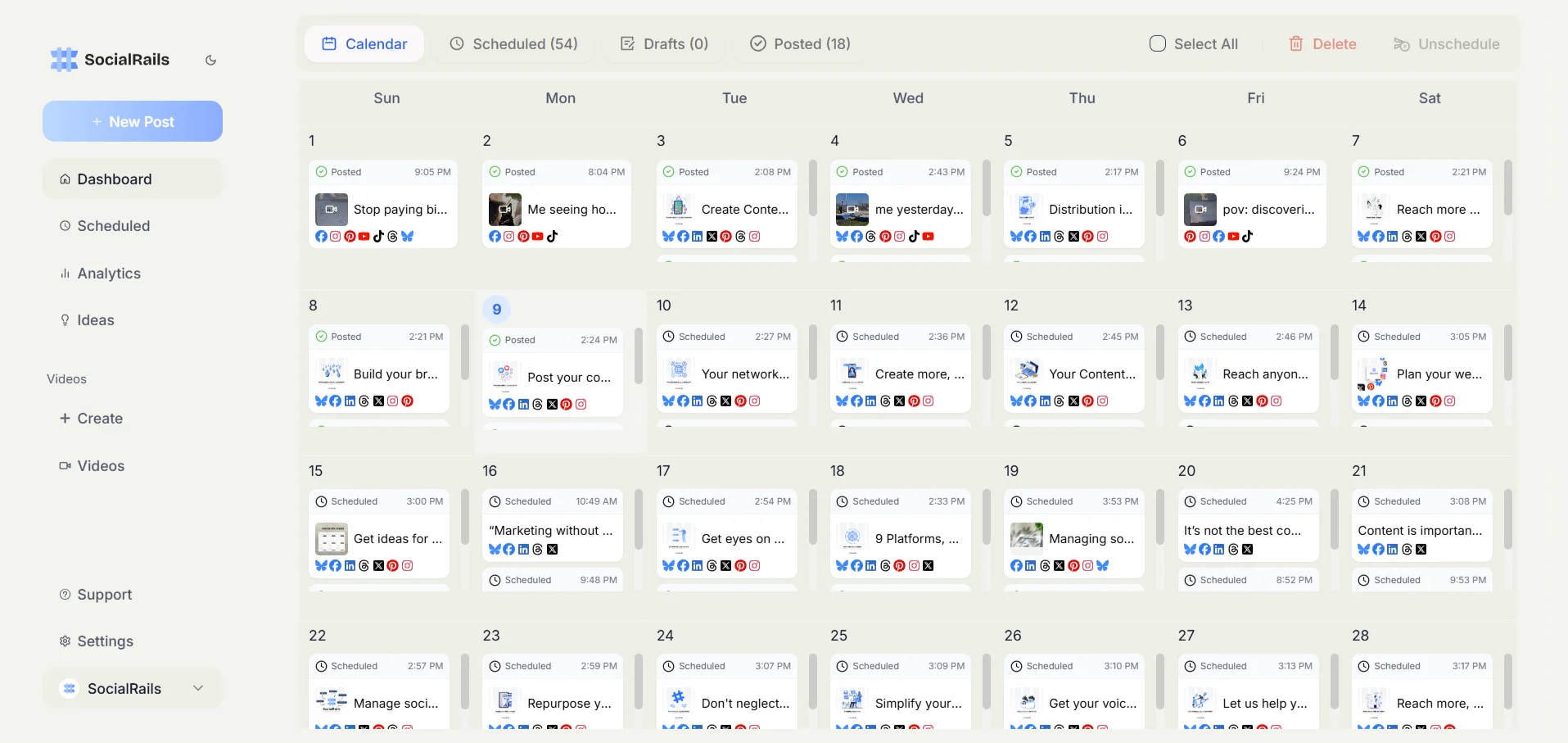
Why Financial Branding Is Harder (And More Important) Than Other Industries
⚠️ The Financial Services Branding Challenge
You're fighting an uphill battle:
- • Low trust: Only 29% of Americans trust financial institutions
- • Heavy regulation: Compliance limits what you can say/show
- • Commoditized services: Every bank offers checking accounts
- • High switching costs: Customers stay out of inertia, not loyalty
- • Complex products: Hard to differentiate mortgages or investment accounts
Result: Most financial brands play it safe—and disappear into the noise.
But here's the opportunity:
When everyone zigs, you zag. When every competitor plays it safe with corporate blandness, your distinct brand becomes impossible to ignore.
The brands winning right now:
- Chime (challenger bank): Fun, approachable, mobile-first
- Ally Bank: Straightforward, no-fee positioning
- Charles Schwab: Education-first, empowerment messaging
- Vanguard: Low-cost index funds as a core identity
What do they have in common? A clear point of view and the courage to be different.
The Financial Branding Framework That Works
Stop trying to appeal to everyone. Start owning something specific.
The 5-Pillar Financial Brand Strategy
1. Who You Serve (Get Specific)
Stop trying to be "for everyone." Pick your niche and own it.
Example: Navy Federal Credit Union = Military families exclusively
2. What Makes You Different (Your Unique Value)
The ONE thing you do better or differently than anyone else.
Example: Simple Bank = Budgeting built into every account
3. How You Sound (Brand Voice)
Are you formal or friendly? Technical or simple? Corporate or rebellious?
Example: Robinhood = Casual, empowering, anti-establishment tone
4. How You Look (Visual Identity)
Colors, typography, imagery that reinforce your positioning.
Example: Acorns = Green (growth), playful illustrations, approachable design
5. How You Prove It (Customer Experience)
Every touchpoint should reinforce your brand promise.
Example: Zappos (before Capital One acquired) = Legendary customer service = Brand differentiator
The key: All 5 pillars must align. A "simple banking" brand with a confusing website loses instantly.
Pillar 1: Who You Serve (The Power of Niching Down)
Trying to serve everyone means you connect with no one.
The Niche Selection Framework
Ask yourself:
🎯 Find Your Focus
- Who do we serve best right now? Look at your happiest, most profitable customers.
- Who has an underserved need? What gap exists in the market?
- Who can we reach efficiently? Where can you dominate vs. big competitors?
- Who shares our values? Cultural fit drives loyalty.
Winning niche examples:
Demographic Niches
- • Millennials/Gen Z (Chime, Cash App)
- • Small business owners (Novo, Relay)
- • Freelancers/gig workers (Found, Lili)
- • Immigrants (Remitly, Wise)
- • Veterans (USAA, Navy Federal)
- • Women investors (Ellevest)
Product/Service Niches
- • High-yield savings only (Marcus, CIT Bank)
- • Crypto-focused banking (Gemini, BlockFi)
- • Sustainable investing (Aspiration, OpenInvest)
- • No-fee banking (Ally, Discover)
- • Micro-investing (Acorns, Stash)
- • Business expense management (Brex, Ramp)
The mistake: "We serve individuals AND small businesses AND corporations..."
The fix: Pick one. Dominate it. Expand later.
Case Study: How Chime Dominated by Niching
What they did:
- Target: Millennials/Gen Z tired of traditional banking fees
- Positioning: "Banking that has your back" (vs. predatory fees)
- Product: No overdraft fees, early direct deposit, simple mobile app
- Marketing: Social media-first, relatable language, transparent pricing
Result:
- 13+ million customers in 5 years
- Valued at $25 billion
- Became the fastest-growing bank in America
The lesson: Serving everyone = serving no one. Chime picked a generation, spoke their language, and won.
Pillar 2: What Makes You Different (Finding Your Unique Value)
"We offer great service and competitive rates" = What every financial brand says.
The Differentiation Audit
Answer these honestly:
Brand Differentiation Exercise
- □ Could a competitor say the exact same thing we say? (If yes, it's not unique)
- □ Would our customers describe us differently than our competitors? (Ask them!)
- □ Do we have a feature/benefit NO competitor offers?
- □ Is there a customer segment we serve better than anyone?
- □ Do we have a different philosophy or approach to financial services?
If you can't answer "yes" to at least 2 of these, you have a differentiation problem.
Ways to differentiate in financial services:
💰 Pricing/Fee Structure
Be radically different on cost.
Example: Vanguard's low-cost index funds vs. expensive actively managed funds
⚡ Speed/Convenience
Make banking faster and easier.
Example: PayPal's instant transfers vs. 3-5 day ACH
📚 Education First
Teach before you sell.
Example: NerdWallet built trust through education, then monetized
🎯 Specialized Expertise
Be THE expert for a specific need.
Example: Laurel Road = Student loan refinancing for healthcare professionals
🌍 Values-Driven
Align with customer values.
Example: Aspiration = Plant a tree for every purchase, carbon-neutral banking
🤝 Community
Build belonging, not just banking.
Example: Credit unions = Member ownership, local community focus
The test: Can you fill in this blank in 10 words or less?
"We're the only [financial service] that [unique value] for [specific audience]."
Good examples:
- "We're the only bank that pays you 2 days early for Gen Z workers." (Chime)
- "We're the only investment platform built exclusively for women." (Ellevest)
- "We're the only credit union serving military families worldwide." (Navy Federal)
Bad examples:
- "We offer great service and competitive rates." (So does everyone)
- "Your trusted financial partner." (Meaningless fluff)
Create content, post everywhere
Create captions, images, and videos with AI. Schedule to 9 platforms in seconds.
Start your free trialPillar 3: How You Sound (Brand Voice & Messaging)
Financial services language is painfully corporate. That's your opportunity.
The Brand Voice Spectrum
Where do you fall?
| Voice Dimension | Corporate (Traditional) | Casual (Modern) |
|---|---|---|
| Tone | Formal, serious, authoritative | Friendly, conversational, approachable |
| Language | Industry jargon, complex terms | Plain English, simple explanations |
| Personality | Professional, buttoned-up | Relatable, human, even humorous |
| Example | "Optimize your portfolio allocation" | "Grow your money smarter" |
Who should sound corporate: Private wealth management, institutional banking, compliance-heavy sectors
Who can sound casual: Consumer banking, FinTech, credit unions, financial advisors for millennials
The mistake: Trying to sound "professional" by being boring and robotic
The fix: Professional ≠ Impersonal. You can be trustworthy AND human.
Voice Comparison: Say the Same Thing Better
Topic: Overdraft fees
❌ Corporate/Boring:
"Our institution has implemented a comprehensive overdraft protection program to assist account holders in managing their financial obligations."
✅ Human/Clear:
"We've got your back if you accidentally overspend. No $35 fees—just a heads up and time to fix it."
Topic: Investment advice
❌ Jargon-Heavy:
"We leverage sophisticated algorithmic portfolio optimization to maximize risk-adjusted returns across diversified asset classes."
✅ Plain English:
"We use smart technology to grow your money while keeping your risk in check."
Topic: Opening an account
❌ Complicated:
"To initiate the account establishment process, please complete the requisite documentation and provide verification of identity."
✅ Simple:
"Ready to get started? It takes 5 minutes—just grab your ID and let's go."
See the difference? Same information, way more human.
Creating Your Brand Voice Guide
The 3-Word Method:
Pick 3 adjectives that define how you want to sound:
Example: Chime
- Friendly
- Transparent
- Empowering
Example: Charles Schwab
- Educational
- Trustworthy
- Empowering
Example: Goldman Sachs
- Authoritative
- Exclusive
- Sophisticated
Your turn: What 3 words define YOUR brand voice?
Voice Application Exercise
Take this sentence: "We offer competitive interest rates on savings accounts."
Rewrite it using YOUR 3 brand voice words. See how different it sounds?
Friendly + Transparent + Empowering = "Earn more on your savings—no tricks, just better rates."
Pillar 4: How You Look (Visual Identity)
Financial brands default to blue. Be braver.
The Visual Brand Strategy
Color psychology in finance:
Blue (Trust)
Chase, AmEx, Citi, Capital One
Why: Reliable, stable, professional
Risk: Blends in with everyone
Green (Growth/Money)
TD Bank, Fidelity, Acorns
Why: Prosperity, growth, optimism
Note: Common but less than blue
Purple/Orange/Other
Ally (purple), Discover (orange)
Why: Stand out, modern, distinctive
Benefit: Instant differentiation
The choice:
- Blue = Safe, trusted, but forgettable
- Different color = Memorable, but requires stronger execution elsewhere
My recommendation: If you're going blue, make sure EVERYTHING else about your brand is distinctive. Otherwise, pick a different color.
Logo & Visual System
Logo types in finance:
-
Wordmark (just the name)
- Examples: Goldman Sachs, Barclays
- Pro: Professional, timeless
- Con: Needs strong typography to stand out
-
Symbol + Wordmark (icon + name)
- Examples: Chase (square), Bank of America (flag)
- Pro: Most common, versatile
- Con: Hard to make symbol meaningful
-
Abstract/Modern (geometric shapes)
- Examples: Mastercard (circles), Stripe (slashes)
- Pro: Modern, scalable
- Con: Can feel generic if not executed well
Logo mistakes to avoid:
- ❌ Generic bank column/building imagery
- ❌ Cliché handshake or rising graph icons
- ❌ Overly complex designs that don't scale down
- ❌ Trendy styles that'll look dated in 2 years
What works:
- ✅ Simple, memorable, scalable
- ✅ Works in black & white
- ✅ Looks good at app icon size (crucial for digital banking)
- ✅ Reflects your positioning
Imagery & Photography
The stock photo problem:
Every financial brand uses the same stock photos:
- Smiling mixed-race couple looking at laptop
- Senior couple walking on beach
- Young person checking phone while drinking coffee
- Business handshake in office
The fix:
Option 1: Custom Photography
Hire a photographer. Shoot real customers (with permission) or employees in YOUR locations.
Cost: $2,000-10,000. Worth it for differentiation.
Option 2: Illustrations/Graphics
Skip photos entirely. Use illustrations, icons, or abstract graphics.
Examples: Chime, Stripe, Revolut (all use custom illustrations)
Option 3: Data Visualization
Show information visually. Charts, graphs, infographics that educate.
Examples: Visual Capitalist, Morningstar, Personal Capital
The rule: If you're using stock photos, so is your competitor. Invest in original visuals.
Create content, post everywhere
Create captions, images, and videos with AI. Schedule to 9 platforms in seconds.
Start your free trialPillar 5: How You Prove It (Brand Experience)
Your brand is what you DO, not what you SAY.
Every Touchpoint Matters
Map your customer journey and audit the brand experience:
| Touchpoint | Brand Question | Does It Deliver? |
|---|---|---|
| Website | Easy to navigate? Reflects brand voice? | □ Yes □ No |
| Mobile App | Intuitive? Fast? On-brand design? | □ Yes □ No |
| Customer Service | Helpful? Speaks in brand voice? | □ Yes □ No |
| Branch/Office | Modern? Welcoming? Clean? | □ Yes □ No |
| Emails/Communications | Clear? On-brand? Valuable? | □ Yes □ No |
| Social Media | Engaging? Consistent? Authentic? | □ Yes □ No |
The rule: Every "No" is a brand promise broken.
The Brand Experience Audit
Ask your customers:
- "How would you describe our brand in 3 words?"
- "What makes us different from other [banks/advisors/etc.]?"
- "What's the best part of working with us?"
- "What's the most frustrating part?"
Compare their answers to YOUR brand positioning.
If there's a gap: Your brand isn't being experienced the way you think it is.
Building a Financial Brand from Scratch (Step-by-Step)
New bank, credit union, FinTech, or advisory firm? Here's your playbook:
Phase 1: Strategy (Weeks 1-4)
Week 1: Audience Research
- Define your ideal customer (demographics, needs, pain points)
- Interview 10-20 potential customers
- Analyze competitor positioning
- Identify market gaps
Week 2: Positioning
- Choose your niche
- Define your unique value
- Draft positioning statement
- Test with focus group
Week 3: Brand Voice
- Select 3 brand voice attributes
- Write voice guidelines
- Create message examples (website copy, social posts, emails)
- Test internally for alignment
Week 4: Visual Direction
- Mood board creation
- Color palette selection
- Typography choices
- Imagery style guide
Phase 2: Design (Weeks 5-8)
Week 5-6: Logo & Identity
- Logo design (3 concepts)
- Refine winning concept
- Create variations (full logo, icon, monogram)
- Build brand style guide
Week 7: Marketing Collateral
- Business cards
- Letterhead/templates
- Presentation deck template
- Social media templates
Week 8: Digital Assets
- Website wireframes
- App UI mockups (if applicable)
- Email templates
- Digital ad formats
Phase 3: Launch (Weeks 9-12)
Week 9-10: Website Build
- Develop website on brand
- Write all copy in brand voice
- Optimize for mobile
- Add brand messaging throughout
Week 11: Pre-Launch Marketing
- Set up social media profiles
- Create launch content calendar
- Build email list
- Plan launch campaign
Week 12: Launch & Monitor
- Go live
- Monitor customer feedback
- Track brand perception
- Adjust based on real-world response
Budget estimate:
- DIY: $5,000-15,000 (freelance designers, templates)
- Professional: $25,000-75,000 (branding agency)
- Enterprise: $100,000+ (full rebrand with research)
Financial Marketing Tactics That Reinforce Your Brand
Brand isn't just visual. It's how you show up everywhere.
Content Marketing for Financial Brands
Educational content wins in finance:
What to Create
- • Blog posts answering common questions
- • Video explainers (compound interest, 401k basics)
- • Calculators (mortgage, retirement, savings)
- • Guides/ebooks (First-time homebuyer guide)
- • Market updates and analysis
- • Financial planning templates
Where to Publish
- • Your website/blog (SEO benefit)
- • YouTube (2nd largest search engine)
- • LinkedIn (B2B credibility)
- • Email newsletter (owned audience)
- • TikTok (yes, financial education is huge here)
- • Guest posts on finance sites
The goal: Be the helpful expert, not the salesy bank.
Example brands doing this well:
- NerdWallet (comparison + education)
- The Motley Fool (investment education)
- Ramit Sethi/I Will Teach You To Be Rich (personal finance)
Social Media for Financial Services
What works (and what doesn't):
✅ Do:
- Educational tips and insights
- Behind-the-scenes team content
- Customer success stories (with permission)
- Market commentary (if it fits your brand)
- Interactive content (polls, Q&As)
- Community building
❌ Don't:
- Hard sales pitches
- Stock market predictions (compliance risk)
- Overly promotional content
- Ignoring comments/messages
- Posting inconsistently
Platform recommendations:
- LinkedIn: Best for B2B, wealth management, advisors
- Instagram: Good for consumer banking, FinTech, younger audiences
- Twitter/X: Market commentary, thought leadership, real-time updates
- YouTube: Long-form education, explainer videos
- TikTok: Younger demo, financial literacy content (growing fast)
- Facebook: Community building, local credit unions/banks
Related: Social Media Strategy Guide
Financial Content Creation Tools:
- Turn client FAQs into posts: Accounting FAQ to Educational Posts
- Simplify tax changes: Tax Rule Change Explainer
- Make reports shareable: Financial Report to Client-Friendly Posts
- Communicate compliance updates: Cyber Compliance Update to Social Summary
- B2B financial services content: B2B Finance Social Generator for fintech, CFO services, and financial B2B companies
Building Trust Through Transparency
Financial customers are skeptical. Combat it with radical transparency:
What to be transparent about:
- Fees: Show all costs upfront, no hidden charges
- Performance: Share real results (within compliance limits)
- Process: Explain how things work behind the scenes
- Mistakes: Own errors publicly, explain how you'll fix them
- Values: Be clear about what you stand for
Example: Ally Bank
- No hidden fees (clearly stated everywhere)
- Straight talk guarantee (no fine print tricks)
- Customer-first policies (clear explanations)
Result: Became a top online bank despite being late to market.
Create content, post everywhere
Create captions, images, and videos with AI. Schedule to 9 platforms in seconds.
Start your free trialRebranding an Existing Financial Institution
Already established but need a refresh? Here's how:
When to Rebrand
Good reasons:
- Merger/acquisition (need unified brand)
- Major strategy shift (new target market)
- Outdated brand hurting growth
- Competitive disadvantage (you blend in completely)
- Expansion into new services
Bad reasons:
- CEO just wants something new
- Bored with current brand
- Chasing trends
- Copying a competitor
The Rebrand Process
Phase 1: Research (Don't skip this!)
- Customer perception study (how are you seen now?)
- Employee feedback (internal brand ambassadors)
- Competitive analysis (where do you fit?)
- Market opportunity assessment
Phase 2: Strategy
- Redefine positioning if needed
- Clarify target audience
- Update brand voice/messaging
- Set rebrand goals (measurable)
Phase 3: Design
- Logo refresh or redesign
- Update visual system
- Create new templates
- Redesign customer touchpoints
Phase 4: Rollout
- Internal launch (get employees excited first!)
- Customer communication (explain why the change)
- Phased implementation (website → branches → materials)
- Monitor and adjust
Rebrand timeline: 6-12 months for full implementation
Cost: $50,000-$500,000+ depending on size and scope
Compliance Without Killing Your Brand
Regulations are real. Boring branding isn't required.
How to Stay Compliant AND Interesting
The myth: "Compliance requires corporate, boring language."
The truth: Compliance requires accuracy and disclosures. It doesn't require boring.
Examples:
❌ Boring + Compliant:
"This product may involve risk. Past performance does not guarantee future results. Consult a financial advisor. See disclosures."
✅ Interesting + Compliant:
"Investing means taking smart risks to grow your wealth. We'll guide you, but remember: markets go up and down, and past wins don't predict the future. Let's talk about what makes sense for YOU. [Disclosures link]"
Same information. Way more human.
Working with Compliance Teams
Tips:
- Involve them early: Don't design everything, then ask for approval
- Educate them on brand: Help compliance understand brand goals
- Provide examples: Show compliant-but-engaging content from competitors
- Compromise strategically: Pick battles that matter most
- Document approvals: Get sign-off in writing to avoid re-work
The goal: Compliance as a partner, not a roadblock.
Measuring Financial Brand Success
Track these metrics:
Brand Awareness
- • Brand recall surveys
- • Direct/organic traffic
- • Social media reach
- • Search volume for brand name
Brand Perception
- • Net Promoter Score (NPS)
- • Customer satisfaction (CSAT)
- • Online reviews/ratings
- • Social sentiment analysis
Brand Impact
- • Customer acquisition cost
- • Lifetime customer value
- • Referral rate
- • Premium pricing ability
The ultimate measure: Do customers choose you AND pay a premium for the experience?
Your 30-Day Financial Branding Sprint
Ready to transform your brand? Here's your action plan:
Week 1: Audit & Research
- ✅ Survey 20 customers: "Describe our brand in 3 words"
- ✅ Analyze top 5 competitors' branding
- ✅ Review all customer touchpoints for consistency
- ✅ Identify biggest brand gaps
Week 2: Define Your Positioning
- ✅ Choose your specific niche/audience
- ✅ Write your unique value proposition
- ✅ Select 3 brand voice attributes
- ✅ Draft positioning statement
Week 3: Visual & Voice Refresh
- ✅ Update website homepage messaging
- ✅ Refresh social media bios
- ✅ Create brand voice guide for team
- ✅ Design templates (social posts, emails)
Week 4: Launch & Measure
- ✅ Announce any brand changes to customers
- ✅ Train staff on new brand messaging
- ✅ Set up tracking for brand metrics
- ✅ Schedule quarterly brand audits
What to Do Right Now
Today (30 minutes):
- Google your brand name. What shows up? Is it on-brand?
- Ask 3 customers: "What makes us different?"
- Review your homepage. Does it clearly state who you serve and why you're different?
This week:
- Audit your top 3 competitors' branding
- Define your niche (who you serve best)
- Write your unique value proposition in one sentence
This month:
- Create brand voice guidelines
- Update your website messaging
- Start consistent content marketing
Remember: Branding isn't a one-time project. It's an ongoing commitment to showing up distinctly and consistently.
Related Resources
- Social Media for Accounting Firms - Social strategy for professional finance
- Brand Communication Strategy - Craft your messaging
- Social Media Campaign Examples - Campaign inspiration
- Content Marketing Strategy - Build authority
- Brand Equity Guide - Measure your brand value
Create content, post everywhere
Create captions, images, and videos with AI. Schedule to 9 platforms in seconds.
Start your free trialThe truth about financial services branding: The best products don't always win. The best BRANDS win.
Stop blending in with every other blue logo and corporate tagline. Build a brand people remember, trust, and choose.
Your competitors are boring. That's your biggest advantage.
Was this article helpful?
Let us know what you think!