

Healthcare Social Media Marketing: HIPAA-Compliant Strategy Guide (2026)

77% of patients research healthcare providers online before booking.
Social media is often where they decide whether to trust you.
But healthcare social media marketing comes with challenges other industries don't face: HIPAA compliance, patient privacy, and the need to build credibility without being salesy.
This guide covers everything you need to run effective, compliant social media for healthcare organizations.
Create content, post everywhere
Create captions, images, and videos with AI. Schedule to 9 platforms in seconds.
Start your free trial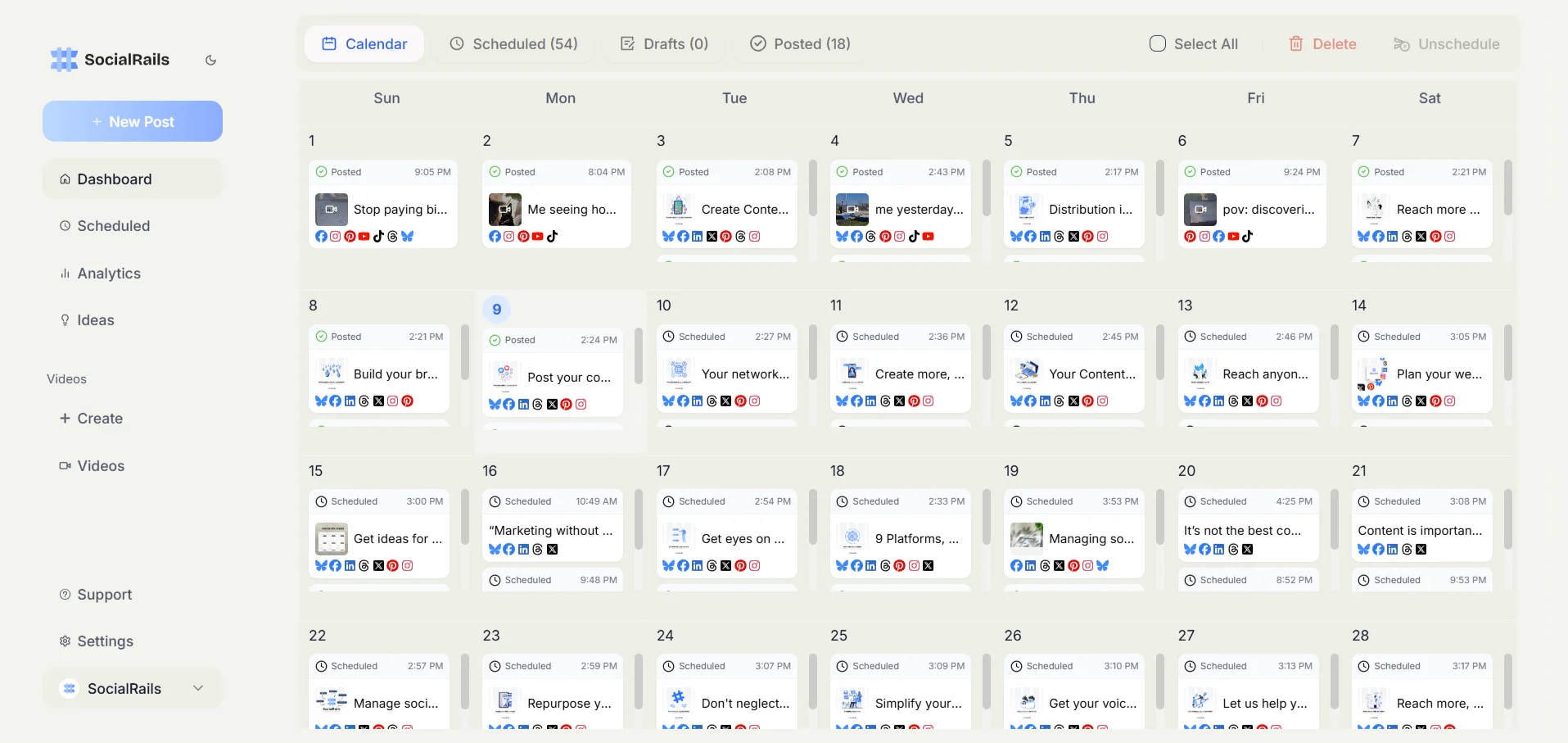
Why Healthcare Needs Social Media Marketing
Patients expect it. They check your Facebook before calling. They read Google reviews. They want to see the faces behind the practice.
Your competitors are there. The practice down the street is posting educational content and building trust with your potential patients.
It builds trust at scale. One helpful post can reach thousands. One patient testimonial (with consent) can influence hundreds of decisions.
It humanizes healthcare. Patients are nervous about medical care. Social media lets them see your team, your office, your approach before they walk in.
HIPAA Compliance: The Non-Negotiables
Before anything else, understand what you cannot do.
Never Share Without Written Authorization
- Patient names or any identifying information
- Photos of patients (even if faces aren't visible)
- Treatment details or outcomes
- Appointment information
- Before/after photos without signed consent
- Screenshots of patient messages or reviews
The penalty: $100 to $50,000 per violation, up to $1.5 million per year for repeat violations.
HIPAA Social Media Checklist
The Comment Trap
A patient comments: "Thank you Dr. Smith for my knee surgery! Best experience ever!"
Wrong response: "So glad your knee surgery went well! Thanks for choosing us!"
This confirms they're a patient AND references their treatment. Both are violations—even though they shared first.
Correct response: "Thank you for the kind words! We appreciate you taking the time to share. If you'd like to discuss further, please call our office."
This acknowledges them without confirming the patient relationship or treatment.
Platform Selection for Healthcare
You don't need to be everywhere. Pick 1-2 platforms and do them well.
Best for: Community building, local reach, older demographics, patient reviews
Content that works:
- Health education posts
- Practice updates and announcements
- Staff introductions
- Community event promotion
- Live Q&A sessions
Why it matters: Facebook is still where most patients look for local healthcare providers. Your Facebook page often ranks in Google search results.
Best for: Visual content, younger patients, behind-the-scenes, cosmetic/dental practices
Content that works:
- Office and equipment tours
- Staff spotlights and day-in-the-life content
- Educational carousels
- Before/after transformations (with consent)
- Reels explaining procedures
Why it matters: Instagram builds emotional connection. Patients see your team as real people, not just white coats.
Best for: B2B healthcare, recruiting, professional reputation, hospital systems
Content that works:
- Thought leadership from physicians
- Industry insights and trends
- Recruitment posts
- Research and innovation updates
- Professional achievements
Why it matters: LinkedIn establishes credibility with referring physicians, potential employees, and business partners.
YouTube
Best for: Procedure explanations, virtual tours, patient education
Content that works:
- "What to expect" procedure videos
- Physician introductions
- Facility tours
- Patient testimonials (with consent)
- Health education series
Why it matters: Video builds trust faster than any other medium. Patients can see and hear from providers before their first visit.
TikTok
Best for: Younger demographics, myth-busting, making healthcare approachable
Content that works:
- Quick health tips
- Medical myth debunking
- Day-in-the-life content
- Trending audio with healthcare twist
- Behind-the-scenes moments
Why it matters: TikTok reaches demographics that may not engage with traditional healthcare marketing.
Content Strategy for Healthcare
The 4 Content Pillars
Balance your content across these categories:
Educational Content Ideas
General health tips:
- Seasonal health advice (flu prevention, summer safety)
- Nutrition and wellness tips
- Exercise and movement guidance
- Mental health awareness
- Sleep hygiene tips
Procedure education:
- "What to expect during [procedure]"
- "How to prepare for your [type] appointment"
- "Recovery timeline for [procedure]"
- "Questions to ask your doctor about [topic]"
Myth-busting:
- Common misconceptions about conditions
- "Does [popular belief] actually work?"
- Evidence-based answers to trending health questions
Trust Building Content Ideas
Staff spotlights:
- Meet the team posts
- Physician credentials and specialties
- Staff anniversaries and achievements
- Behind-the-scenes of daily work
Credibility markers:
- Awards and recognitions
- New technology or equipment
- Continuing education and certifications
- Research participation
Patient stories (with consent):
- Written testimonials
- Video testimonials
- Before/after transformations
- Recovery journey highlights
Community Content Ideas
Local connection:
- Sponsoring local events
- Health fairs and screenings
- School and community partnerships
- Supporting local causes
Health observances:
- Awareness months (Heart Health, Breast Cancer, etc.)
- National health days
- Seasonal health reminders
Content by Practice Type
Primary Care / Family Medicine
- "5 ways to boost your immune system this winter"
- "What happens during an annual physical"
- "When to see a doctor vs. wait it out"
- Preventive care reminders
- Vaccination information
- Chronic disease management tips
Dental Practices
- "What actually happens during a root canal"
- Smile transformations (before/after with consent)
- "Are you brushing correctly?"
- Technology showcases (digital X-rays, etc.)
- Kids' dental health tips
- Cosmetic dentistry options explained
Specialty Practices
- "When to see a [specialist] vs. primary care"
- Condition-specific education
- Treatment option comparisons
- Latest research and innovations
- Case studies (anonymized or with consent)
Hospitals and Health Systems
- Service line spotlights
- Physician introductions
- Community health initiatives
- Emergency preparedness information
- Innovation and research updates
- Employee recognition
Social Media Templates for Healthcare
Educational Post Template
[Emoji] Did you know?

[Surprising fact or statistic about health topic]

Here's what you should know:

✓ [Key point 1]
✓ [Key point 2]
✓ [Key point 3]

Have questions? Drop them in the comments or call us at [phone number].

#HealthTips #[Specialty] #[Location]Healthcare
Staff Spotlight Template
Meet [Name], our [Title]! 👋

[Name] has been with [Practice Name] for [X] years, specializing in [area of expertise].

Fun fact: When not caring for patients, [he/she] enjoys [hobby or interest].

We're grateful to have [him/her] on our team!

#MeetTheTeam #[Location]Healthcare
Health Observance Template
[Month] is [Awareness Month]! [Relevant emoji]

[Statistic about the condition/cause]

Here's how you can [take action/get involved/protect yourself]:

→ [Action item 1]
→ [Action item 2]
→ [Action item 3]

[Call to action - schedule screening, learn more, etc.]

#[AwarenessMonth] #HealthAwareness
New Service/Technology Template
Exciting news! [Emoji]

We're now offering [new service/technology] at [Practice Name].

What this means for you:
• [Benefit 1]
• [Benefit 2]
• [Benefit 3]

Interested in learning more? Call [number] or click the link in our bio.

#[PracticeName] #[Service] #Healthcare
Responding to Reviews
Reviews require careful handling in healthcare due to HIPAA.
Responding to Positive Reviews
Template:
Thank you for sharing your experience! We're so glad you
had a positive visit. Your feedback means a lot to our
entire team.
Do:
- Express gratitude
- Keep it brief and professional
- Respond within 24-48 hours
Don't:
- Reference their specific treatment
- Confirm they're a patient
- Use their name in a way that confirms the relationship
Responding to Negative Reviews
Template:
We're sorry to hear about your experience. We take all
feedback seriously and want to make this right. Please
contact our patient relations team at [phone] so we can
address your concerns directly.
Do:
- Acknowledge their frustration
- Offer to resolve privately
- Provide a direct contact
- Respond professionally regardless of tone
Don't:
- Get defensive
- Share any medical details—even to defend yourself
- Confirm or deny they're a patient
- Argue in public comments
When Patients Share Medical Details in Reviews
Patients can share their own health information. HIPAA restricts providers, not patients.
If a patient describes their treatment in detail:
- You still cannot confirm or add to those details
- Respond with the standard template
- Move the conversation offline
Paid Advertising for Healthcare
Facebook and Instagram Ads
Effective for:
- Local awareness campaigns
- Promoting specific services
- Event registration
- Recruitment
Targeting options:
- Geographic radius (5-25 miles typical)
- Age and demographics
- Interests (health, wellness, fitness)
- Life events (new movers, new parents)
Note: Facebook restricts health-related targeting to protect privacy. You cannot target by specific conditions.
Ad types that work:
- Video introducing providers
- Carousel showcasing services
- Event promotion
- Testimonial-based ads (with consent)
Google Ads
Effective for:
- "Doctor near me" searches
- Procedure-specific searches
- Urgent care/same-day needs
- New patient acquisition
Keywords to target:
- "[Specialty] near me"
- "[Specialty] in [city]"
- "[Procedure] cost"
- "Best [specialty] [location]"
Healthcare Social Media Management
Daily Tasks
- Monitor and respond to comments
- Check for new reviews
- Answer direct messages
- Watch for any compliance issues
Weekly Tasks
- Post scheduled content (3-5 posts per week minimum)
- Review analytics and engagement
- Identify trending topics to address
- Plan next week's content
Monthly Tasks
- Review overall performance metrics
- Audit content for compliance
- Update content calendar
- Check competitor activity
Quarterly Tasks
- Full compliance audit
- Social media policy review
- Team training refresh
- Strategy evaluation and adjustment
Crisis Management for Healthcare
Types of Social Media Crises
- Patient complaints - Negative reviews, public accusations
- Data breaches - Security incidents requiring disclosure
- Misinformation - False claims about your practice
- Staff issues - Employee behavior problems
- Public health events - Outbreaks, emergencies
Response Framework
Immediate (0-1 hour):
- Assess the situation
- Pause scheduled posts if needed
- Gather facts internally
- Do not respond publicly until you have accurate information
Short-term (1-24 hours):
- Issue appropriate statement
- Respond to direct inquiries
- Monitor sentiment and spread
- Keep leadership informed
Ongoing:
- Provide updates as situation develops
- Document everything
- Conduct post-crisis review
- Update policies as needed
Measuring Success
Key Metrics to Track
Attribution: Connecting Social to Appointments
On intake forms: Add "How did you hear about us?" with social media options.
Tracking codes: Use unique phone numbers or URLs for social campaigns.
Ask directly: Train front desk to ask new patients where they found you.
Implementation Checklist
Before You Start
- Create written social media policy
- Train all staff on HIPAA and social media
- Develop patient consent forms for content use
- Select 1-2 platforms to focus on
- Set up business accounts properly
- Assign roles and responsibilities
Content Setup
- Define your content pillars and mix
- Create content calendar template
- Prepare 30 days of content
- Develop templates for common post types
- Establish approval workflow
- Schedule content in advance
Ongoing Operations
- Monitor comments and messages daily
- Respond to reviews within 48 hours
- Post consistently (minimum 3x/week)
- Review analytics weekly
- Audit compliance monthly
- Refresh strategy quarterly
Common Healthcare Social Media Mistakes
Mistake 1: Ignoring Social Media Entirely
"We're healthcare, we don't need social media."
Reality: Your patients are on social media. Your competitors are on social media. Your reputation exists there whether you participate or not.
Mistake 2: Over-Promoting Services
Every post is "Book now!" or "Call today!"
Reality: Social media is for building relationships, not constant sales. Follow the 80/20 rule—80% value, 20% promotion.
Mistake 3: Responding to Reviews Without HIPAA Training
Staff replies confirming patient relationships or discussing treatments.
Reality: One wrong response can mean thousands in fines. Train everyone who touches social media.
Mistake 4: Inconsistent Posting
Posting daily for a week, then nothing for a month.
Reality: Consistency builds trust. Three posts per week, every week, beats 20 posts one week and zero the next.
Mistake 5: Ignoring Negative Feedback
Hoping bad reviews will disappear if you don't acknowledge them.
Reality: Future patients read negative reviews AND your responses. A professional response can actually improve perception.
Frequently Asked Questions
Is social media marketing worth it for healthcare?
Yes. Patients research providers online before booking. A strong social media presence builds trust, improves your reputation, and helps you compete for patients.
How often should healthcare organizations post on social media?
Minimum 3 times per week for consistent visibility. More frequent posting (daily) can work if you have quality content and resources to manage it.
Can we share patient photos on social media?
Only with written, signed consent that specifically authorizes social media use. General photography consent may not be sufficient—check with your compliance officer.
How do we handle negative reviews about our practice?
Respond professionally without confirming the patient relationship or discussing any medical details. Acknowledge their concern and invite them to contact you privately to resolve.
Should we delete negative comments on our social media?
Generally no. Deleting can backfire and make you look like you're hiding something. Only delete comments that are spam, contain hate speech, or violate your community guidelines.
What's the biggest HIPAA risk on social media?
Confirming patient relationships. Even a simple "Thanks for being our patient!" in response to a comment is a violation if the person didn't explicitly share that information first.
Start Your Healthcare Social Media Strategy
Healthcare social media marketing works when you balance patient engagement with compliance.
Focus on:
- HIPAA compliance in every interaction
- Educational content that builds trust
- Consistent posting on 1-2 platforms
- Professional responses to all reviews
- Measuring what matters to your practice
Done right, social media becomes one of your most effective tools for attracting and retaining patients.
For dental-specific campaigns, see our Dental Social Media Campaigns guide.
Related Specialty Playbooks
- Pharmaceutical Social Media Marketing (Compliance Playbook) - FDA, EMA, MLR workflow, and AE reporting
- Chiropractic Social Media Marketing - Patient acquisition for chiropractors
- 75 Optometry Social Media Posts - Ready-to-post templates for eye care practices
- Orthodontist Social Media Marketing - Visual transformation content
- Audiology Practice Marketing Guide
- Medical Practice Marketing Guide
- Veterinary Social Media Marketing
- Massage Therapy Social Media Marketing
Need help managing healthcare social media? SocialRails helps you schedule content, monitor reviews, and stay compliant—all from one dashboard.
Was this article helpful?
Let us know what you think!