
LinkedIn Introduction Message Templates That Fit the Character Limit (2026)

Quick answer: A connection request note is capped at 200 characters on a free account and 300 characters on Premium, and a free account can only attach a note to a handful of requests per month. Most template lists ignore this, so their "templates" do not fit in the box. Every note template below is counted, and the count is printed next to it.
Jump to: Templates - The real limits - Notes under 200 characters - Longer messages and InMail - What makes one work - Following up - Mistakes - FAQ
Quick Answer: Six Notes That Fit
Each of these is written to land under 200 characters once the placeholders are filled, so it works on a free account. Counts are for the filled example, not the bracketed skeleton.
1. Reacting to something they published
Hi [Name], your post on [topic] changed how my team handles [thing]. I run [role] at [company]. Would love to follow your work, and happy to share what we tried if it is useful.
Filled example (188 characters): "Hi Priya, your post on async standups changed how my team handles handoffs. I run ops at a 30-person SaaS. Would love to follow your work, and happy to share what we tried if it is useful."
2. Shared former colleague
Hi [Name], we both worked with [Mutual] at [Company]. I am moving into [field] and your path from [old role] to [new role] is the one I keep coming back to. Would like to connect.
Filled example (172 characters): "Hi Sam, we both worked with Dana at Northline. I am moving into product marketing and your path from support to PMM is the one I keep coming back to. Would like to connect."
3. Met at an event
Hi [Name], great meeting you at [Event]. Your point about [topic] stuck with me. Connecting so I can keep up with what you are building.
Filled example (139 characters): "Hi Alex, great meeting you at SaaStr. Your point about pricing tiers stuck with me. Connecting so I can keep up with what you are building."
4. You applied for a role on their team
Hi [Name], I applied for [Role] at [Company] and saw you lead that team. I spent [X years] on [relevant thing]. Connecting in case a face on the application helps.
Filled example (179 characters): "Hi Jordan, I applied for the data analyst role at Kestrel and saw you lead that team. I spent four years on retail forecasting. Connecting in case a face on the application helps."
5. Same school or former employer
Hi [Name], fellow [School] alum. Saw you are at [Company] working on [area], which is where I am headed. Would like to connect with other [School] people in [industry].
Filled example (162 characters): "Hi Rae, fellow Purdue alum. Saw you are at Vantiq working on grid analytics, which is where I am headed. Would like to connect with other Purdue people in energy."
6. Business development, without the pitch
Hi [Name], saw [Company] just [news]. We work with similar teams on [problem]. Not pitching, just curious whether that is on your list this year.
Filled example (171 characters): "Hi Chris, saw Bellweather just opened a Berlin office. We work with similar teams on payroll compliance. Not pitching, just curious whether that is on your list this year."
Paste any of these into our LinkedIn character counter after you fill the placeholders. Names, company names, and job titles are what blow the budget, and a long company name can add 20 characters on its own.
Create content, post everywhere
Create captions, images, and videos with AI. Schedule to 9 platforms in seconds.
Start your free trial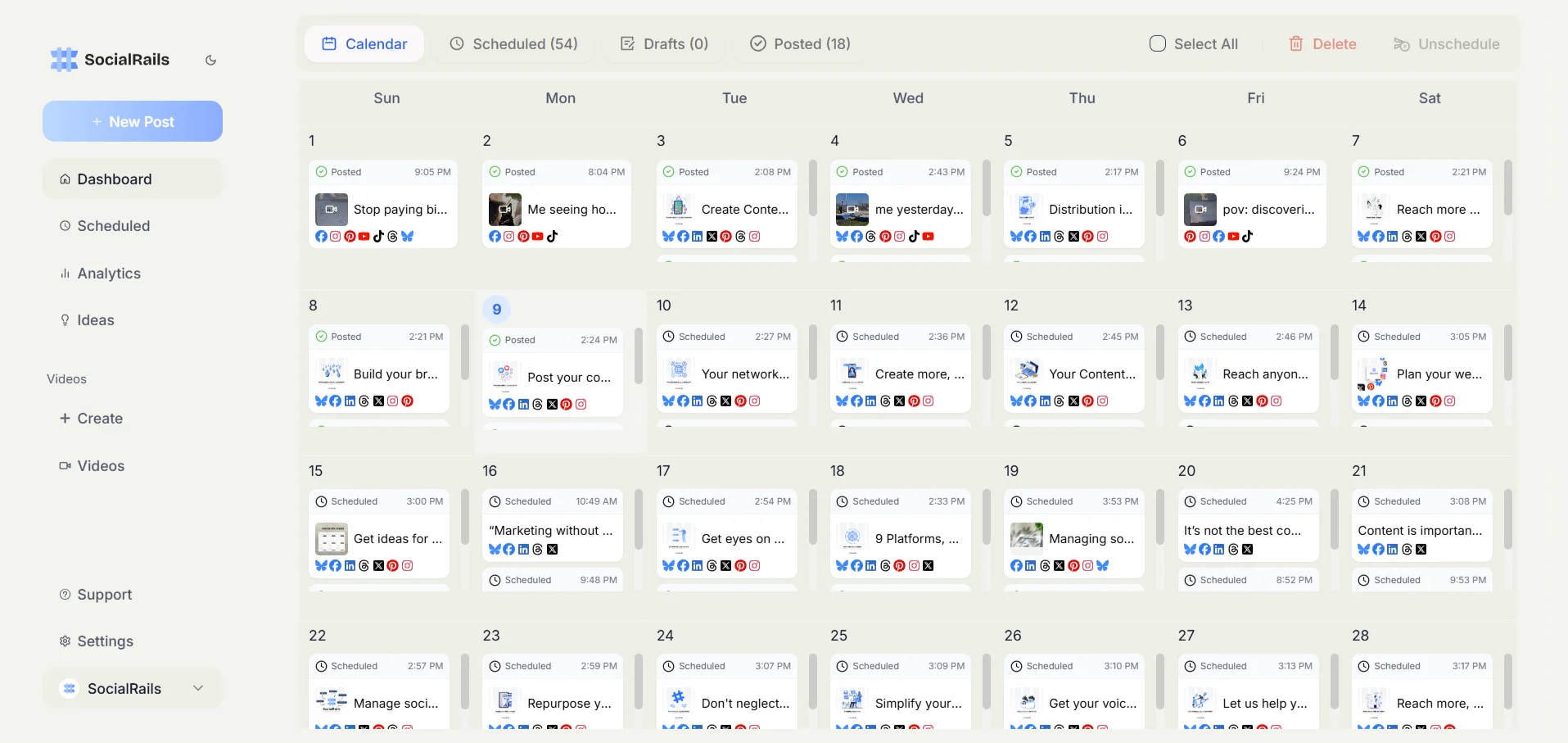
LinkedIn's Real Message Limits
This is the table the rest of the internet gets wrong. Every figure below was read directly from a LinkedIn Help article, and the article is linked so you can check it yourself.
LinkedIn's own help center contradicts itself on the monthly note limit
Two live LinkedIn Help pages give different numbers for how many personalized notes a free account gets per month:
- Personalize invitations to connect (a563153): "You can add a personalized message to up to three connection requests per month."
- Invitation limit reached (a550555): "Basic and free LinkedIn members can include a personalized message to five connection requests per month."
- Differences between InMail Messages and personalized invitations (a6239760) also says five.
We are not going to pretend to know which one your account enforces. The practical takeaway is the same either way: on a free account you get somewhere between three and five personalized notes a month, so a note is a scarce resource. Spend them on the people who actually matter and send plain requests to everyone else. Premium removes the monthly cap and raises the character ceiling to 300.
You have a free LinkedIn account. How long can your connection request note be?
Connection Request Notes That Fit in 200 Characters
The 200-character budget forces a specific shape. There is room for exactly three things:
- One concrete detail about them. A post, a talk, a shared employer, a mutual contact. Roughly 60 to 90 characters.
- One line on who you are. Role and context, nothing more. Roughly 40 to 60 characters.
- A reason to accept. Not an ask. Roughly 30 to 50 characters.
What does not fit: a greeting paragraph, your career history, a pitch, a calendar link, or a question that needs a considered answer. If your draft has any of those, it belongs in a message after they accept, not in the note.
Counting rules that catch people out: spaces, line breaks, punctuation, and emoji all count. A line break costs at least one character, so a note formatted as three short paragraphs wastes budget on whitespace. Write notes as one block.
If you are drafting several at once, our LinkedIn character counter checks them against the same limits, and the LinkedIn post character limits guide covers the limits on the rest of the platform.
Longer Templates for Messages and InMail
Once someone accepts, you are messaging a 1st-degree connection and the note limit no longer applies. If they have not accepted, reaching them requires InMail, which is a paid feature with a 2,000-character body.
After they accept, before you ask for anything
Hi [Name], thanks for connecting. I meant what I said about [the thing you referenced]. No ask here, I just wanted to say it properly rather than in 200 characters.
If [topic] is ever something you want to compare notes on, I am around.
Asking for advice on a career move
Hi [Name], thanks for accepting. I am [role] at [company] and looking at moving into [field]. You made a similar move from [old role] to [new role], which is why I reached out.
Two questions if you have five minutes: what did you underestimate about the switch, and what would you skip if you did it again? A two-line answer is plenty, and I am happy to take it to a call if that is easier.
InMail to someone you are not connected to
Subject lines are capped at 200 characters, but short ones are what fit on a phone. Keep the subject to a few words and put the substance in the body.
Subject: Question about [specific thing]
Hi [Name], I am [role] at [company]. I saw [specific, verifiable detail about them or their company].
We work on [problem] with teams in a similar position. I am not asking for a meeting yet, I am asking whether [problem] is actually on your roadmap this year, because if it is not, I will leave you alone.
Either answer is useful to me. Thanks for reading.
Two InMail mechanics worth knowing before you write one. LinkedIn Help states that you cannot send another InMail to the same member until they respond to your first one (a543695), so there is no such thing as an InMail follow-up sequence. The same article states that an InMail accepted, declined, or responded to within 90 days is credited back, which means a message that provokes any reply, including "not interested," costs you nothing. Credit allotments per plan are in our InMail costs and credits guide, and plan prices are in the LinkedIn Premium pricing guide.
The free exception: if someone has Open Profile enabled, anyone can message them without a connection and without spending a credit. LinkedIn Help a541684 states this, and also notes that free accounts can send only a limited number of Open Profile messages each month, without giving a number.
What Makes an Introduction Work
We are not going to quote acceptance-rate or reply-rate percentages. The numbers circulating in outreach blog posts trace back to vendor marketing rather than to any published study, and they vary enormously by industry, seniority, and how warm the contact already is. What follows is craft advice, not measurement.
Be specific enough that the note could only have been sent to them. "I work in the same industry" could be sent to fifty thousand people. "Your point about pricing tiers at SaaStr" could not. Specificity is the one thing in a note a recipient cannot skim past.
Give them a reason that is about them, not about you. "I want to learn from you" is about you. "I tried the thing you described and it worked, happy to tell you how" is about them.
Make the ask smaller than you want it to be. A question that can be answered in two lines gets answered. A request for a thirty-minute call from a stranger usually does not.
Sound like a person. "I am reaching out to explore potential synergies" tells the recipient a template is on the other end. "There might be some overlap between what our teams are working on" says the same thing and does not.
Do not automate it. LinkedIn Help a551012 is explicit: "If you send an excessive number of invitations and we suspect the use of an automation tool, we may suspend or restrict your account," and it asks members to disable any third-party application or browser extension that copies data from or automates activity on LinkedIn. That is why this page recommends no connection-request automation tool at all. Scheduling your own posts is a different thing and is allowed; see how to schedule LinkedIn posts.
Following Up Without Getting Restricted
If they accept but do not reply, send one message and then stop. Something short that references the original note and gives them an easy out works better than a nudge:
Hi [Name], thanks for connecting. If [topic] is worth a short conversation at some point, I would enjoy it. If not, no problem at all, glad to be connected either way.
If they never accept, do not send a second request. LinkedIn Help a551012 states that invitations left pending or marked as spam are themselves a reason accounts get restricted, and that after you withdraw an invitation you cannot re-invite the same person for up to three weeks. Engage with their public posts instead and try again much later with a different angle.
If you are already restricted, the same article says most restrictions lift automatically within about a week, withdrawing pending invitations does not remove the restriction, you cannot buy your way out, and LinkedIn Support will not shorten the wait. There is nothing to do but stop sending.
Mistakes That Get Requests Ignored
The default request. "I'd like to add you to my professional network on LinkedIn" gives no reason to accept. But note the tension with the monthly cap: on a free account you cannot personalize everything. Decide who is worth a note before you start clicking.
The note that does not fit. Anything pasted from a template list that runs past 200 characters will either be refused by the box or silently cut. Count first.
The immediate pitch. A sales message inside a connection request asks a stranger to evaluate a vendor before they have decided whether to accept you.
The life story. Three paragraphs will not fit in the note at all, and after they accept, a wall of biography still puts the focus on you.
The vague compliment. "I'm really impressed by your profile" with no specifics reads as a mail merge, because it usually is one.
The vague ask. "Pick your brain sometime" makes the recipient do the work of deciding what you want. Name the topic and the time commitment.
Frequently Asked Questions
How long can a LinkedIn connection request note be?
200 characters on a free account and 300 characters on Premium, according to LinkedIn Help article a6239760. Spaces, punctuation, line breaks, and emoji all count toward the limit.
How many personalized connection requests can a free account send per month?
LinkedIn's own help center gives two different answers. Article a563153 says three per month, while articles a550555 and a6239760 say five per month. Either way it is a small number, so save notes for the people who matter. Premium accounts have no monthly cap on personalized notes.
How many characters can an InMail be?
LinkedIn Help states a 200-character subject line and a 2,000-character body for InMail sent from a Premium account, and a 1,900-character body for InMail sent from Recruiter. InMail requires a paid plan.
Can I follow up on an InMail that got no reply?
No. LinkedIn Help states that you cannot send another InMail to a member until they respond to the first one, so InMail follow-up sequences are not possible. LinkedIn does send the recipient an automatic reminder within three days.
How many connection requests can I send per week?
LinkedIn does not publish a number. Its help article on invitation restrictions describes the behaviours that trigger a restriction, sending many invitations in a short time and accumulating ignored or pending invitations, but it never states a weekly figure. The commonly cited "100 per week" comes from third-party outreach vendors, not from LinkedIn.
Should I send a note with every connection request?
You cannot, on a free account. LinkedIn caps free accounts at three to five personalized notes per month depending on which of its help articles you read. Choose the contacts where context genuinely changes the decision to accept, and send plain requests to people who will recognise your name anyway.
Sources
- LinkedIn Help: Personalize invitations to connect (a563153)
- LinkedIn Help: Differences between InMail messages and personalized invitations (a6239760)
- LinkedIn Help: Invitation limit reached (a550555)
- LinkedIn Help: Types of restrictions for sending invitations (a551012)
- LinkedIn Help: Send an InMail message (a546814)
- LinkedIn Help: InMail character limits, Recruiter (a411986)
- LinkedIn Help: InMail message credits and renewal process (a543695)
- LinkedIn Help: Manage your Open Profile settings (a541684)
- LinkedIn Help: Network size limit (a567364)
All limits above were read directly from these pages in July 2026.
Related LinkedIn Guides
- LinkedIn Post Character Limits - every other character cap on the platform
- LinkedIn InMail Costs and Credits - credits per plan and how refunds work
- LinkedIn Premium Pricing - what the 300-character note actually costs
- Best Hashtags for LinkedIn - for the posts people will find you through
Free LinkedIn Tools
- LinkedIn Character Counter - count a note before you paste it
- LinkedIn Headline Generator - the headline recipients see next to your request
- LinkedIn Post Generator - create posts
- LinkedIn Caption Generator - write captions
Was this article helpful?
Let us know what you think!