

Message Matrix: What It Is, How to Build One, and Free Template

A messaging matrix maps what you say, to whom, and where. It keeps your entire team (marketing, sales, social media, support) saying the same thing in a way that resonates with each specific audience.
Without one, you get inconsistent messaging, off-brand social posts, and sales decks that contradict your website.
Create content, post everywhere
Create captions, images, and videos with AI. Schedule to 9 platforms in seconds.
Start your free trial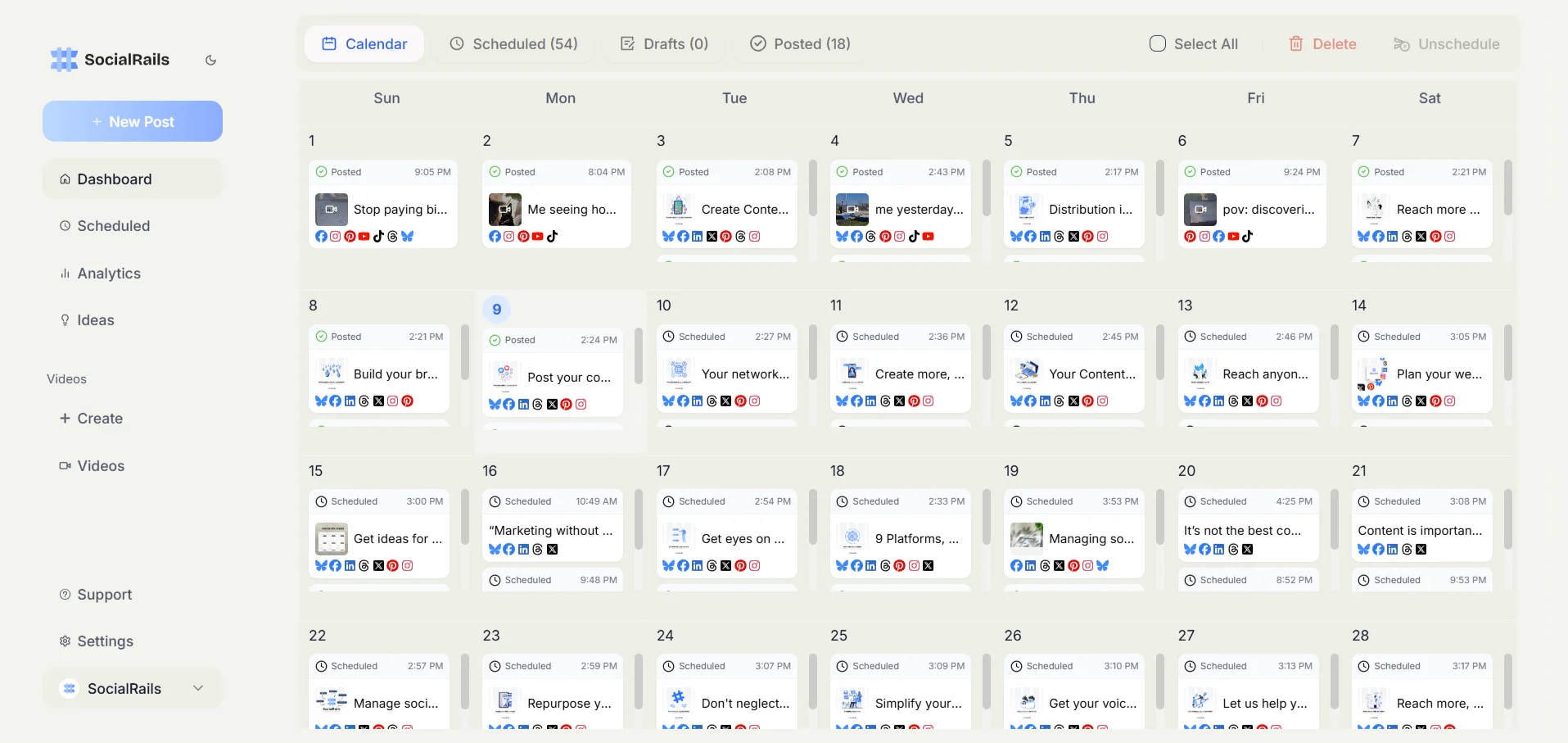
What Is a Messaging Matrix?
A messaging matrix (also called a messaging framework or message map) is a structured grid that organizes your brand's key messages by:
- Audience segment, who you're speaking to
- Pain points, what problems they have
- Value proposition, how you solve those problems
- Key messages, the specific statements that communicate your value
- Proof points, evidence that backs up each message
- Channel adaptation, how the message changes by platform
Think of it as a translation guide built on your brand pillars. The core message stays the same, but the wording adapts to each audience and channel.
A messaging matrix primarily organizes your brand messages by...
Why You Need One
Consistency, everyone on your team uses the same core messages, whether they're writing a LinkedIn post, a sales email, or a landing page. Your brand voice stays intact everywhere.
Speed, new team members, freelancers, and agencies can get on-message immediately without guessing.
Clarity, forces you to articulate exactly who you serve, what problems you solve, and why you're different.
Alignment, marketing, sales, product, and support all speak the same language.
How to Build a Messaging Matrix
Step 1: Define Your Audience Segments
List 2-4 primary audience segments. Be specific.
Example for a social media management tool:
- Segment 1: Small business owners (1-10 employees)
- Segment 2: Social media managers at agencies
- Segment 3: Marketing directors at mid-size companies
Step 2: Identify Pain Points per Segment
Each segment has different problems. Map them.
Step 3: Write Key Messages per Segment
For each segment, write 2-3 core messages that address their pain points.
Small business owners:
- "Post consistently without spending hours on content"
- "Look professional on social media even without a marketing team"
Agency managers:
- "Manage all client accounts from one dashboard"
- "Cut reporting time in half with automated analytics"
Marketing directors:
- "See social media ROI in real numbers, not vanity metrics"
- "Keep your team's messaging on-brand across every platform"
Step 4: Add Proof Points
Back up each message with evidence.
Step 5: Adapt by Channel
The same message sounds different on LinkedIn vs Instagram vs a sales call.
How many audience segments should you start with?
Messaging Matrix Template
Here's a simple grid you can copy:
Use our brand messaging framework generator to auto-generate a starting point, then refine with your team.
Common Mistakes
Too many segments. Start with 2-3. Trying to address 8 segments at once results in generic messaging.
Corporate jargon. If your key message includes phrases like "drive cross-functional alignment" or "maximize value creation," rewrite it in plain language.
No proof points. Messages without evidence are just claims. Back everything up.
Set it and forget it. Review your matrix quarterly. Markets shift, products evolve, and messaging should evolve with them.
Same message everywhere. The core idea stays consistent, but the words should adapt to each platform and audience. A LinkedIn post shouldn't read like a billboard.
Which of these is the biggest red flag in a messaging matrix?
How to Use Your Messaging Matrix
- Onboarding, give it to every new marketer, writer, and agency partner
- Content creation, reference it before writing any social media post, blog, or ad
- Campaign planning, align 360 campaign themes to your key messages
- Sales enablement, sales teams use it for consistent pitch language
- Brand voice audits, evaluate existing content against the matrix
Conclusion
A messaging matrix is the single most useful brand document most companies never create. It takes a few hours to build and saves hundreds of hours of misaligned, inconsistent, off-brand communication. Build one, share it with your team, and update it every quarter.
Build your brand messaging with our brand messaging framework generator, brand voice generator, and brand statement generator.
Was this article helpful?
Let us know what you think!