

Pinterest Trends Tool: How to Find What's Trending on Pinterest

Quick Pinterest Trends Guide
What it is: Pinterest Trends is Pinterest's own free trend research tool. You can browse the public view at trends.pinterest.com, and unlock the full filters and audience data when you are signed in to a Pinterest business account.
What it shows: normalized search interest for the past 24 months, trending searches, related terms, and demographic breakdowns by age, gender, and interest.
The one thing most guides miss: Pinterest has an unusually long seasonal lead time. People plan on Pinterest weeks before they buy or do the thing, so you want your Pins live 45 to 60 days before a trend peaks, not during it.
Where it works: the tool is built for the US, UK, and Canada. Some data is still in testing and limited to certain regions.
On this page:
- What the Pinterest Trends tool shows in 2026
- How to read a Pinterest trend curve
- The seasonal lead time workflow
- Which countries the tool covers
- Keyword research vs trend spotting
- Turning trends into a content plan
- Free and paid trend research tools
- Measuring trend content performance
- Frequently asked questions
Create content, post everywhere
Create captions, images, and videos with AI. Schedule to 9 platforms in seconds.
Start your free trial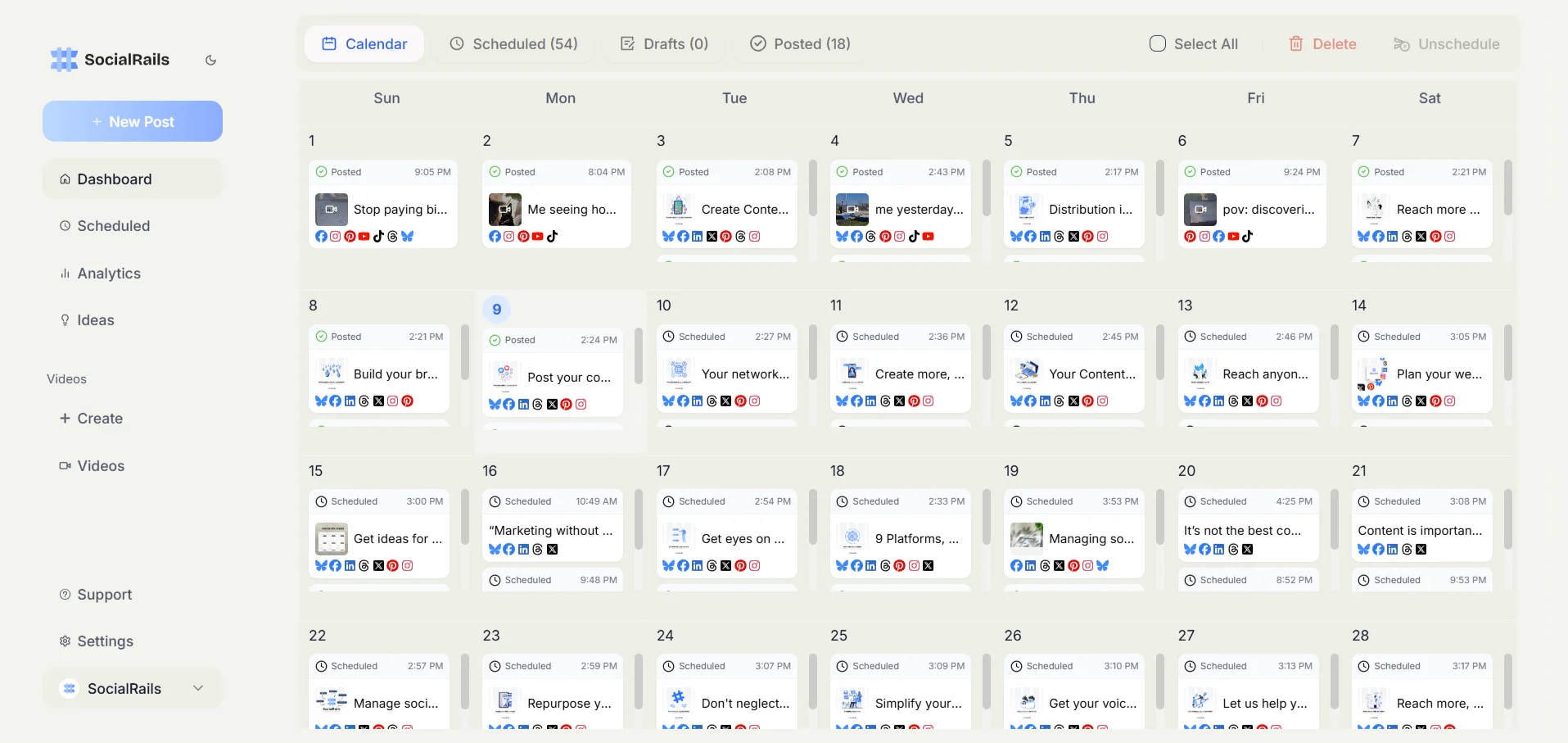
What the Pinterest Trends tool shows in 2026
The Pinterest Trends tool lives at trends.pinterest.com. The public page lets anyone browse top and seasonal trends without logging in. When you sign in to a business account and open the menu under "Analyze performance," you get the full version with filters and audience data.
Here is what you can actually pull from it today:
- Search interest over the past 24 months. Each keyword is plotted on a graph. Volume is normalized, so the highest point in the window is indexed to 100 and everything else is shown relative to that peak. You are reading relative popularity, not raw search counts.
- Keyword comparison. You can put up to four keywords on the same graph to see which one is climbing and which is flat or fading.
- Filters. Narrow results by region, age, gender, interest, and trend type. This is where the tool becomes genuinely useful for niche planning rather than generic browsing.
- Related terms. Each trend surfaces related searches, which is how you find the long tail keywords to put in your Pin titles and descriptions.
- Audience trends. With a business account you can see what your own audience has been searching in the past 90 days, refreshed daily.
- Editors' Picks and seasonal moments. Curated trends tied to upcoming events and cultural moments, plus trend predictions where Pinterest has published them.
One note on access: the tool is desktop focused. Mobile viewing is limited, so plan to do your research on a computer.
How to read a Pinterest trend curve
The graph is the whole point, so learn to read the shape rather than just the number.
- Peak (indexed to 100). The tallest point in the 24 month window. Everything is measured against it. A term at 40 is running at roughly 40 percent of its own busiest moment.
- Seasonal repeats. Many Pinterest topics rise and fall on the same calendar every year. If you see two matching humps 12 months apart, you are looking at a reliable seasonal pattern you can plan around.
- The early climb. A line moving up off its baseline is the signal to act. By the time a term is near 100, the search is already crowded with content.
- Flat or declining. A term drifting sideways or down is not worth building a fresh content push around unless it is evergreen for your niche.
The practical read: you are hunting for terms that are early in their annual climb, not terms that are already at their peak.
The seasonal lead time workflow
This is the part competitors gloss over, and it is the real reason to use the tool at all. Pinterest behaves less like a live social feed and more like a planning surface. A saved Pin keeps getting discovered for weeks or months, and users search for a season well before it arrives. That gap is your opportunity.
A repeatable workflow:
- Look back, not just forward. Open a seasonal keyword and study last year's curve. Find the calendar date where the line started climbing off its baseline.
- Watch for the 25 to 30 percent mark. When a seasonal term climbs to roughly a quarter to a third of its peak, that early rise is your cue to start publishing. You are getting in before the crowd.
- Publish 45 to 60 days ahead of the peak. Give the Pin time to be indexed, saved, and redistributed before demand tops out. Posting during the peak is posting late.
- Keep pinning through the season. Do not publish once and stop. Add fresh Pins steadily so the topic keeps getting surfaced while interest is high.
- Reuse next year. Because these curves repeat, this year's winning topics become next year's calendar. Save the dates.
If you want to line this planning up with the days and times your audience is most active, pair it with our guide to the best times to post on Pinterest.
Which countries the tool covers
The Pinterest Trends tool is built primarily for three markets: the United States, the United Kingdom, and Canada. The country selector and the richest data center on those regions.
Some features, including certain shopping and category trend views, are still in testing and only available in select regions. If you market outside the US, UK, or Canada, treat Pinterest Trends as a directional signal rather than a precise local read, and cross check it with:
- Google Trends for broader geographic coverage and longer history.
- Pinterest search autocomplete, which suggests popular queries in your own market.
- Your own Pinterest Analytics, which reflects your actual audience wherever they are.
Keyword research vs trend spotting
These are two different jobs, and the tool does both if you use it deliberately.
- Trend spotting is asking "what is rising right now that I should get ahead of." You browse top trends, watch the curves, and pick topics on their early climb.
- Keyword research is asking "which exact words should I put in this Pin." You type your topic, read the related terms, and compare a few phrasings to see which one carries more interest.
Do both in one sitting. Spot the trend, then mine the related terms so the Pin you publish uses the language people are actually searching. For a deeper look at fitting those keywords into titles and descriptions, see our Pinterest best practices guide.
Turning trends into a content plan
A trend is only useful once it becomes a scheduled Pin. A simple way to convert:
- Pick two or three rising terms per month that fit your niche, based on the early climb rule above.
- Map each to a Pin format that suits it: a how to for a DIY trend, a recipe collection for a food trend, a gift guide for a seasonal shopping trend, a room or outfit inspiration set for home and fashion.
- Batch the creation so you have several Pins per topic rather than one, then space them out across the climb.
- Write with the related terms you pulled, putting the strongest phrasing in the Pin title and a natural version in the description.
- Schedule ahead so the Pins publish across the 45 to 60 day runway instead of all at once.
If you are still setting up, our guides on how to create a Pinterest business account and how to get more views on Pinterest cover the foundations that make trend content actually land.
Free and paid trend research tools
You do not need a paid stack to do this well.
Free options:
- Pinterest Trends at trends.pinterest.com, the source of truth for what is rising on the platform.
- Google Trends for wider geography and longer history.
- Pinterest Analytics for your own audience signals.
- Pinterest search autocomplete for quick keyword ideas as you type.
- PinTool for researching Pinterest keywords and content angles before you move into creation and scheduling. The free plan covers a few keyword searches a day.
Paid and scheduling tools add convenience rather than better trend data. Schedulers and analytics suites help you batch, queue, and measure Pins across the runway you plan out in Pinterest Trends. SocialRails fits here: it helps you schedule the Pins you plan from your trend research and track how they perform, alongside your other social channels.
For the full landscape, including how the schedulers compare, see our best Pinterest scheduler tools guide.
Measuring trend content performance
Once your trend Pins are live, judge them against the metrics that matter on Pinterest:
- Impressions show how far a Pin is being distributed.
- Saves are the strongest signal that people find the content worth keeping.
- Outbound clicks track traffic to your site.
- Pin clicks and engagements show close up interest.
Compare your trend Pins against your evergreen Pins so you can tell whether chasing a given trend actually paid off, and repeat what worked next season. Our walkthrough on how to read Pinterest Analytics explains where each of these numbers lives and how to interpret them.
Related Pinterest guides
Strategy and growth:
Planning and content:
Exploring other platforms:
Frequently asked questions
How do I access the Pinterest Trends tool?
Go to trends.pinterest.com from a desktop browser to see the public view for free. Sign in to a Pinterest business account and open Pinterest Trends under Analyze performance to unlock the full filters and your own audience data. The tool is desktop focused, so mobile viewing is limited.
How far back does Pinterest Trends data go?
Pinterest Trends shows normalized search interest for the past 24 months. Volume is indexed so the highest point in that window equals 100, and every other point is shown relative to that peak. You are reading relative popularity over two years, not raw search counts or real time data.
How far in advance should I plan content based on Pinterest trends?
Aim to publish 45 to 60 days before a trend peaks. Pinterest has a long seasonal lead time because people plan there well ahead of the moment. A useful signal is to start pinning when a seasonal keyword climbs to roughly 25 to 30 percent of its peak on the way up, rather than waiting until it is near 100 and the search is already crowded.
Which countries is the Pinterest Trends tool available in?
The tool is built primarily for the United States, the United Kingdom, and Canada, which have the richest data. Some shopping and category trend features are still in testing and limited to select regions. If you market elsewhere, use Pinterest Trends as a directional signal and cross check with Google Trends, Pinterest search autocomplete, and your own Pinterest Analytics.
How is Pinterest Trends different from Google Trends?
Pinterest Trends reflects searches on Pinterest specifically, which skews toward visual, planning, and inspiration seeking behavior like recipes, DIY, home, and fashion. Google Trends covers broader web search, wider geography, and longer history. Use Pinterest Trends to plan Pins and Google Trends to sanity check demand in markets Pinterest does not cover well.
Can I compare multiple keywords in Pinterest Trends?
Yes. You can plot up to four keywords on the same graph to see which is climbing and which is flat or fading. This is the fastest way to choose between different phrasings for a Pin title or to decide which of several related topics to prioritize.
Does Pinterest Trends show real time data?
No. The main trend graphs show the past 24 months with some delay, so they are for planning rather than reacting. The one closer to live source is the audience trends view in a business account, which shows what your own followers searched in the past 90 days and refreshes daily.
How do I turn a Pinterest trend into published content?
Pick two or three rising terms that fit your niche, pull their related terms for keywords, create several Pins per topic in the right format, and schedule them to publish across the 45 to 60 day runway before the peak. Then compare the results against your evergreen Pins in Pinterest Analytics so you know what to repeat next season.
Ready to act on what you find in Pinterest Trends? SocialRails helps you schedule your Pins across the seasonal runway and track how they perform, alongside every other platform you post to.
Was this article helpful?
Let us know what you think!