
Social Media Accessibility: Complete Guide to Inclusive Content (2026)

Social Media Accessibility: How to Make Your Content Inclusive
Making social media content accessible means ensuring people with disabilities can perceive, understand, and interact with your posts. This includes people who are blind or low-vision, deaf or hard of hearing, have motor disabilities, or have cognitive and learning disabilities.
Accessible content also benefits people without disabilities — captions help anyone watching video in a noisy environment, alt text improves SEO, and clear writing helps non-native speakers understand your message.
This guide covers what you need to know to create accessible social media content, organized by content type and platform.
Create content, post everywhere
Create captions, images, and videos with AI. Schedule to 9 platforms in seconds.
Start your free trial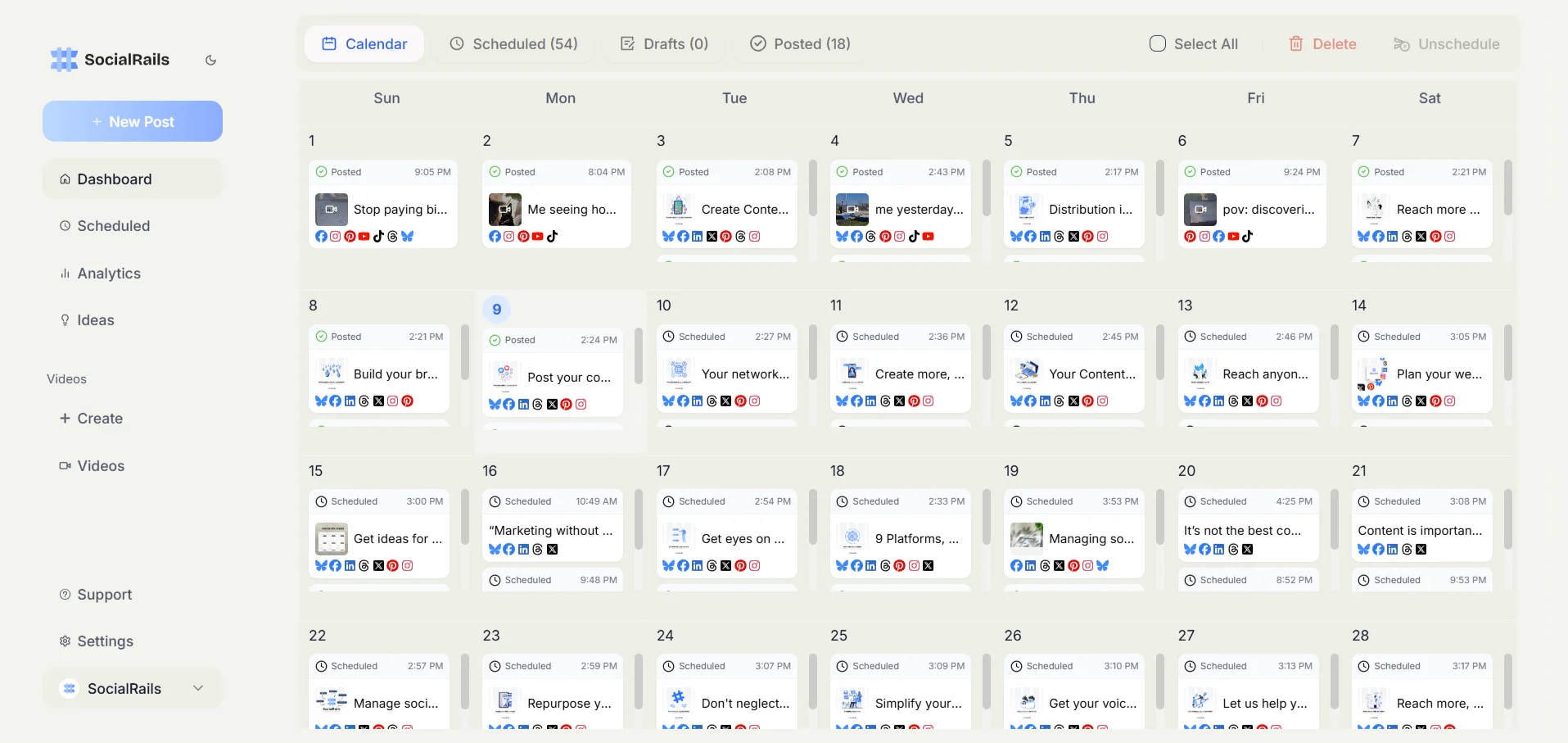
Why Accessibility Matters
The Audience You're Missing
According to the World Health Organization, an estimated 1.3 billion people — about 16% of the global population — experience significant disability. When your social media content isn't accessible, you're excluding a substantial portion of potential customers, followers, and community members.
Beyond the numbers, accessible content is simply better content. Captions make videos understandable in more contexts. Descriptive text makes images more searchable. Clear formatting makes posts easier for everyone to read.
Legal Requirements in 2026
Accessibility isn't just a best practice — it's increasingly a legal requirement:
- ADA Title II (April 2026 deadline): State and local government entities with 50,000+ population must meet WCAG 2.1 Level AA for web content and social media. Smaller entities have until April 2027.
- ADA Title III: Courts have increasingly applied ADA requirements to digital content from businesses, including social media.
- Section 508: Federal agencies and contractors must meet accessibility standards.
- European Accessibility Act (June 2025): EU requirements for digital products and services.
- AODA (Canada): Accessibility for Ontarians with Disabilities Act requirements.
The trend is clear: accessibility standards are tightening, and social media content is increasingly included in these requirements.
The Business Case
- Expanded reach — your content reaches more people, including the disability community and their networks
- Better SEO — alt text, captions, and transcripts give search engines more content to index
- Improved engagement — accessible content is easier for everyone to consume, leading to higher completion and interaction rates
- Reduced legal risk — proactive accessibility reduces potential for complaints and lawsuits
- Brand reputation — inclusive practices build trust and loyalty
WCAG Standards: What You Need to Know
The Web Content Accessibility Guidelines (WCAG) 2.1 provide the foundation for digital accessibility. While WCAG was designed for websites, its principles apply directly to social media content.
The Four Principles
Perceivable — Content must be presentable in ways users can perceive
- Provide text alternatives for images (alt text)
- Add captions for video and audio content
- Use sufficient color contrast
- Don't rely on color alone to convey information
Operable — Interactive elements must work for all users
- All functionality should be accessible via keyboard
- Give users enough time to read and interact
- Avoid content that could cause seizures (rapid flashing)
Understandable — Content must be readable and predictable
- Use clear, plain language
- Organize content logically
- Be consistent in formatting and structure
Robust — Content should work with assistive technologies
- Use proper semantic structure
- Test with screen readers
- Ensure content works across different devices and platforms
Conformance Levels
- Level A: Minimum accessibility — addresses the most critical barriers
- Level AA: The standard target for most organizations (required by most regulations)
- Level AAA: Highest level — often impractical for all content but appropriate for critical communications
For social media, aim for Level AA compliance as your baseline.
Accessibility by Content Type
Images and Graphics
Alt text is the most important accessibility feature for images. It's the text description that screen readers read aloud to users who can't see the image.
How to write effective alt text:
- Describe what's in the image and why it matters in context
- Be specific: "Team celebrating new office opening with champagne" is better than "Group of people"
- Include text that appears in the image — if your graphic has a headline, include it in the alt text
- Keep it concise but complete — aim for one to two sentences
- For decorative images that don't convey information, mark them as decorative (empty alt text)
- Don't start with "Image of" or "Photo of" — screen readers already announce it's an image
Color and contrast for graphics:
- Maintain a minimum 4.5:1 contrast ratio between text and background (WCAG AA standard)
- Don't use color as the only way to convey information — add labels, patterns, or icons
- Use tools like the WebAIM Contrast Checker to verify contrast ratios
- Choose readable fonts at sufficient sizes, especially for text within images
Infographics and data visualizations:
- Provide the data in text form (in the caption or a linked document)
- Use patterns or textures in addition to color in charts
- Include a descriptive alt text summary of the key takeaway
Video Content
Captions are essential for video accessibility. They benefit deaf and hard-of-hearing viewers, people watching without sound, non-native speakers, and anyone in a sound-sensitive environment.
Caption best practices:
- Use accurate captions — auto-generated captions are a starting point but always need manual review
- Include speaker identification when multiple people speak
- Note relevant sound effects and music ("[applause]", "[upbeat music]")
- Sync captions accurately with the audio
- Use readable formatting — white text on a semi-transparent dark background works well
Audio descriptions:
- For videos where important visual information isn't described in the dialogue, add audio descriptions
- This is especially important for tutorials, demonstrations, and content where visuals carry meaning
Transcripts:
- Provide full text transcripts for video and audio content
- Transcripts benefit SEO, users with slow connections, and people who prefer reading
- Include speaker names, dialogue, and descriptions of relevant visual or audio elements
Written Content (Posts, Captions, Threads)
Plain language:
- Write at a level your audience can easily understand
- Use short sentences and paragraphs
- Define jargon or technical terms
- Use active voice when possible
- Break up long content with headings and bullet points
Hashtags:
- Use CamelCase for multi-word hashtags: #SocialMediaAccessibility instead of #socialmediaaccessibility
- Screen readers attempt to read hashtags as words — CamelCase makes them pronounceable
- Place hashtags at the end of your post so they don't interrupt the main message
- Limit the number of hashtags — excessive hashtags create noise for screen reader users
Emojis:
- Use emojis sparingly — screen readers read each emoji's description aloud
- Don't use emojis as bullet points or to replace words
- A line of 10 clapping emojis reads as "clapping hands, clapping hands, clapping hands..." — one or two is enough
- Place emojis at the end of text, not in the middle
Links:
- Use descriptive link text: "Read our accessibility guide" instead of "Click here"
- Avoid raw URLs in posts when possible — they're not meaningful to screen readers
Stories and Ephemeral Content
- Add captions or text overlays to all Story videos
- Use high-contrast text on Story backgrounds
- Don't use rapidly flashing animations or strobe effects
- Avoid putting critical information only in Stories where it disappears after 24 hours
Platform-Specific Accessibility Features
- Custom alt text: When posting, tap "Advanced Settings" → "Write Alt Text" to add descriptions
- Auto-generated alt text: Instagram generates basic descriptions, but custom alt text is always better
- Caption stickers: Add auto-captions to Reels and Stories
- Text sizing: Use readable font sizes in graphics and Stories
- Alt text editor: Click on an image after uploading → "Edit" → "Alternative Text"
- Auto-captions: Available for video uploads and Live streams (review for accuracy)
- Keyboard navigation: Facebook supports keyboard navigation and screen readers
- Automatic image descriptions: Facebook generates basic descriptions for uploaded images
X (Twitter)
- Image descriptions: Up to 1,000 characters per image — enable in Settings → Accessibility → "Compose image descriptions"
- Alt text badge: X shows an "ALT" badge on images with descriptions, encouraging the practice
- Video captions: Upload .SRT caption files with videos
- Thread structure: Number your threads clearly (1/, 2/, 3/) for easier navigation
- Alt text for images: Available when uploading images to posts and articles
- Video captions: Upload .SRT files or use LinkedIn's auto-caption feature
- Document accessibility: Ensure uploaded PDFs and slides are accessible (use proper heading structure, alt text)
- Article formatting: Use heading levels properly in LinkedIn articles for screen reader navigation
YouTube
- Auto-captions: Available in many languages, but always review and correct errors
- Manual captions: Upload .SRT or .SBV caption files for accurate captions
- Audio descriptions: Upload a separate audio description track
- Transcripts: Add full transcripts in the video description
- Chapters: Use timestamps to create chapters for easier navigation
TikTok
- Auto-captions: Built-in auto-caption feature for videos
- Text-to-speech: Built-in TTS for on-screen text
- Text overlays: Use readable fonts and sizes with good contrast
- Photo descriptions: Add descriptions to photo posts
Accessibility Quick-Start Checklist
If you're starting from scratch, implement these five things first:
- Add alt text to every image — describe what's in the image and why it matters
- Caption every video — use auto-captions as a starting point, then review for accuracy
- Use CamelCase hashtags — #AccessibleContent not #accessiblecontent
- Check color contrast — maintain 4.5:1 ratio for text on images
- Write in plain language — short sentences, clear structure, no jargon without explanation
These five actions address the most common accessibility barriers in social media content.
Testing Your Content for Accessibility
Manual Testing
- Screen reader testing: Use VoiceOver (Mac/iOS), TalkBack (Android), or NVDA (Windows, free) to listen to how your content is read aloud
- Keyboard testing: Navigate your content using only Tab, Enter, and arrow keys
- Zoom testing: Increase text size to 200% and check if content remains readable
- Muted testing: Watch your videos on mute — can you understand the content from captions alone?
Automated Testing Tools
- WAVE (wave.webaim.org) — browser extension for accessibility checking
- axe DevTools — browser extension for automated accessibility testing
- WebAIM Contrast Checker — verify color contrast ratios
- Lighthouse (built into Chrome DevTools) — includes accessibility auditing
- Pa11y — command-line accessibility testing for developers
User Testing
Automated tools catch many issues, but nothing replaces testing with actual users:
- Include people with disabilities in your content review process
- Seek feedback from the disability community
- Partner with disability advocacy organizations for regular audits
- Act on feedback — testing without follow-through is meaningless
Building Accessibility Into Your Workflow
Content Creation Process
- Planning: Consider accessibility requirements before creating content (what alt text will you need? Will this video need captions?)
- Creation: Build accessibility features during content creation, not after
- Review: Check all accessibility elements (alt text, captions, contrast, structure)
- Publish: Verify accessibility features are preserved during publishing
- Monitor: Check for feedback about accessibility issues after publishing
Team Training
- Train every content creator on basic accessibility practices
- Include accessibility in your content style guide
- Add accessibility checks to your approval workflow
- Designate an accessibility lead who stays current on standards and requirements
- Review and update practices quarterly
Accessibility Policy
Create a simple accessibility statement that covers:
- Your commitment to accessible content
- The standards you follow (WCAG 2.1 Level AA)
- How to report accessibility issues
- Your timeline for addressing reported issues
Common Accessibility Mistakes
Mistake: Using images of text instead of actual text Screen readers can't read text in images. If you must use text in images, include all the text in the alt text or caption.
Mistake: Auto-generated captions without review Auto-captions are frequently inaccurate, especially with names, technical terms, and accents. Always review and correct them.
Mistake: Relying on color alone "Click the green button" means nothing to someone who can't see color. Use labels, icons, or patterns alongside color.
Mistake: Skipping alt text on "decorative" images If an image adds value to your post, it needs alt text. Only truly decorative images (backgrounds, dividers) should be marked as decorative.
Mistake: Emoji overload A screen reader reads "fire emoji, fire emoji, fire emoji, 100 emoji, 100 emoji" — which ruins the reading experience. Use emojis purposefully and sparingly.
Mistake: Ignoring cognitive accessibility Accessibility isn't just about vision and hearing. Break up long content, use clear headings, define acronyms, and avoid unnecessarily complex language.
Frequently Asked Questions
Why is social media accessibility important?
About 16% of the global population — 1.3 billion people — experience significant disability. Making your content accessible reaches this audience and their networks. Accessible content also benefits everyone: captions help in noisy environments, alt text improves SEO, and clear writing helps non-native speakers.
What are the most important accessibility features to implement first?
Start with alt text for all images, captions for all videos, CamelCase hashtags for screen reader readability, sufficient color contrast (4.5:1 ratio), and clear plain language. These five practices address the most common barriers.
How do I write good alt text for social media?
Describe what's in the image and why it matters. Be specific and concise — one to two sentences. Include any text in the image. Don't start with "Image of" since screen readers already announce it as an image.
Do I need to add captions to all my videos?
Yes. Captions are essential for deaf and hard-of-hearing viewers, and they benefit anyone watching without sound. Most platforms offer auto-captioning, but always review for accuracy — auto-captions frequently miss names, technical terms, and accented speech.
Is there legal risk if my social media isn't accessible?
Yes. ADA Title II requires government entities to meet WCAG 2.1 Level AA by April 2026. Courts increasingly apply ADA Title III to digital business content. The European Accessibility Act took effect in 2025. Proactive accessibility reduces legal exposure.
What is WCAG and what level should I target?
WCAG (Web Content Accessibility Guidelines) is the international standard for digital accessibility. Level AA is the recommended target and the level required by most regulations. It covers alt text, captions, color contrast, keyboard navigation, and content structure.
How does accessibility improve SEO?
Alt text gives search engines text descriptions of images. Captions and transcripts provide indexable text from video content. Proper heading structure helps search engines understand content organization. These practices align directly with SEO best practices.
How much extra time does accessible content creation take?
Once built into your workflow, it adds minimal time. Writing alt text takes 30-60 seconds per image. Reviewing auto-captions takes a few minutes per video. The biggest investment is the initial training and workflow setup.
Can I test my content accessibility myself?
Yes. Use free tools like WAVE browser extension, WebAIM Contrast Checker, and NVDA (free screen reader for Windows). Watch your videos on mute to check captions. But also include people with disabilities in your testing when possible.
What's the difference between captions and subtitles?
Captions include all audio information — dialogue, sound effects, music cues, and speaker identification. Subtitles only include dialogue for viewers who can hear but don't understand the language. For accessibility, you need captions.
Related Resources
Accessibility is an ongoing practice, not a one-time project. Start with the quick-start checklist above, build accessibility into your content workflow, and improve over time as your understanding deepens and platform features evolve.
Was this article helpful?
Let us know what you think!