
What Is Conversion Rate?
Conversion rate is the percentage of people who take a desired action after interacting with your content. In social media marketing, this could mean:
- Making a purchase
- Signing up for a newsletter
- Downloading a resource
- Filling out a contact form
- Booking a consultation
The formula:
Conversion Rate = (Number of Conversions ÷ Total Visitors) × 100
Example: If 2,000 people visit your website from Instagram and 60 make a purchase, your conversion rate is:
(60 ÷ 2,000) × 100 = 3%
Try our free tool: Conversion Rate Calculator - Calculate your conversion rate instantly.
Why Conversion Rate Matters
Measures actual business impact
Followers and likes don't pay bills. Conversion rate shows how effectively your social media efforts translate into real business results.
Helps you focus on what works
When you know which content, platforms, or campaigns convert best, you can allocate time and budget more effectively.
Essential for calculating ROI
You can't measure return on investment without knowing your conversion rate. This metric connects social media activity to revenue.
Guides content strategy
Understanding what converts helps you create more content that drives action, not just engagement.
Types of social media conversions
Lead generation conversions
Track your lead generation costs with our guide on CPL (Cost Per Lead).
Email sign-ups, Newsletter subscriptions from social media
Create content, post everywhere
Create captions, images, and videos with AI. Schedule to 9 platforms in seconds.
Start your free trial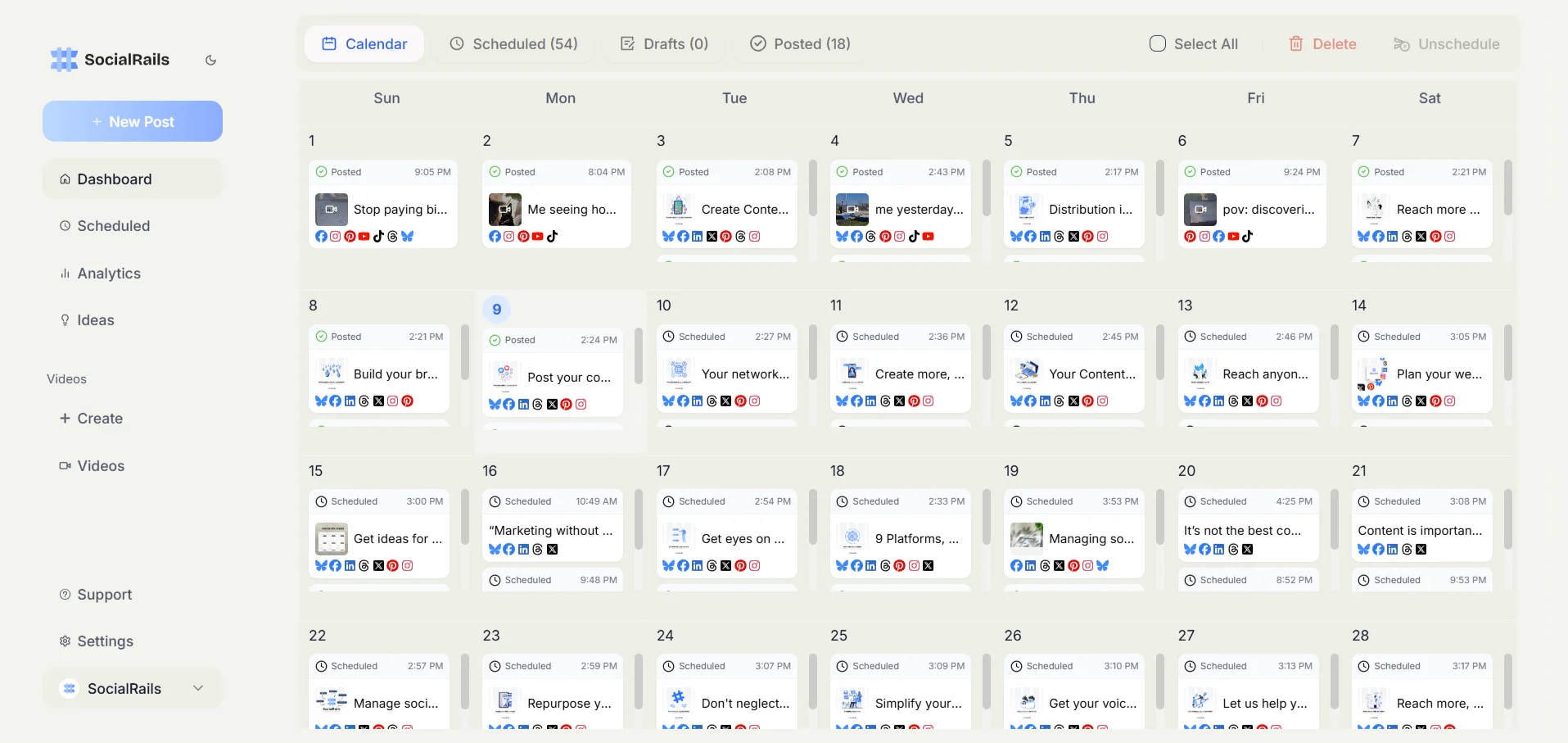
Content downloads, Ebooks, guides, or resources downloaded
Demo requests, Product demonstration requests
Contact form submissions, Inquiry forms completed
Sales conversions
Direct purchases, Products bought directly from social media
Quote requests, Sales inquiries for custom services
Appointment bookings, Service appointments scheduled
Phone calls, Business calls generated from social media
Premium sales, High-ticket conversions for expensive products or services
Engagement conversions
Website visits, Traffic driven to your website
Video completions, Full video views
Social sharing, Content shared by followers
Follow-through actions, Completing multi-step processes
Calculating conversion rates
Basic conversion rate formula
Conversions ÷ Total Visitors × 100 = Conversion Rate %
Example: 50 conversions ÷ 1,000 visitors × 100 = 5% conversion rate
Platform-specific calculations
Instagram conversion rate, Actions taken ÷ Profile visits × 100
Facebook conversion rate, Conversions ÷ Link clicks × 100
LinkedIn conversion rate, Actions ÷ Content views × 100
Twitter conversion rate, Conversions ÷ Link clicks × 100
Improving conversion rates
Targeting prospects who are actively ready to buy dramatically increases conversion rates. Master intent-based marketing strategies to identify and convert high-intent buyers.
Clear calls-to-action
Specific instructions, Tell people exactly what you want them to do
Action-oriented language, Use verbs that encourage immediate action
Visible placement, Make CTAs easy to find and click
Single focus, One clear action per post
Value proposition clarity
Benefit emphasis, Clearly communicate what's in it for them
Problem solving, Address specific customer pain points
Social proof, Include testimonials and success stories
Urgency creation, Limited-time offers or scarcity messaging
Landing page optimization
Message matching, Consistent messaging from social media to landing page
Mobile optimization, Make sure pages work well on mobile devices
Load speed, Fast-loading pages reduce abandonment
Form simplification, Minimize required fields for conversions
What's a Good Conversion Rate?
Conversion rates vary significantly by industry, platform, and conversion type. Here are general ranges to consider:
Important: These are general ranges, not targets. Your conversion rate depends on factors like your industry, price point, audience quality, and how you define "conversion." A 1% conversion rate selling $5,000 products is excellent; the same rate for a free newsletter signup may indicate problems.
5 Ways to Improve Your Conversion Rate
1. Clear calls-to-action
Tell people exactly what you want them to do. Use action words like "Download," "Sign up," "Get started." One clear CTA per post works better than multiple options.
2. Match your landing page to your post
If your social post promises a "free guide to Instagram marketing," the landing page should deliver exactly that—immediately. Any disconnect kills conversions.
3. Reduce friction
Every additional form field or step reduces conversions. Ask only for essential information. Make the conversion process as simple as possible.
4. Add social proof
Testimonials, reviews, customer counts, and case studies build trust. People convert when they see others have done so successfully.
5. Test and iterate
Try different headlines, images, CTAs, and landing pages. Small changes can significantly impact conversion rates over time.
Related Metrics to Track
- Click-through rate (CTR): Percentage of people who click your link
- Cost per conversion: How much you spend to get each conversion
- Conversion value: Revenue generated per conversion
- Landing page bounce rate: People who leave without taking action
Frequently Asked Questions
How do you calculate social media conversion rate?
Divide the number of conversions by the total number of visitors from social media, then multiply by 100. For example: 50 purchases from 2,000 social media visitors = (50 ÷ 2,000) × 100 = 2.5% conversion rate.
What's the difference between conversion rate and engagement rate?
Engagement rate measures interactions (likes, comments, shares) with your content. Conversion rate measures actions that directly impact your business (purchases, sign-ups, downloads). You can have high engagement and low conversions, or vice versa.
Which social media platform has the highest conversion rate?
It varies by business and audience. Facebook and Instagram tend to have higher purchase conversion rates due to shopping features. LinkedIn often converts better for B2B lead generation. Test to find what works for your specific business.
How can I track conversions from social media?
Use UTM parameters on your links to track traffic sources in Google Analytics. Install platform pixels (Meta Pixel, TikTok Pixel) to track conversions from ads. Most social platforms also provide native conversion tracking for business accounts.
Calculate Your Conversion Rate
Use our free Conversion Rate Calculator to quickly calculate and analyze your social media conversion rates.