What is Cross-Posting?
Cross-posting means sharing the same or similar content across multiple social media platforms. The goal is to reach different audiences on different platforms without creating entirely new content each time. If you're running this across several accounts at once, the how to manage multiple social media accounts playbook shows the batching workflow that makes it sustainable.
Create content, post everywhere
Create captions, images, and videos with AI. Schedule to 9 platforms in seconds.
Start your free trial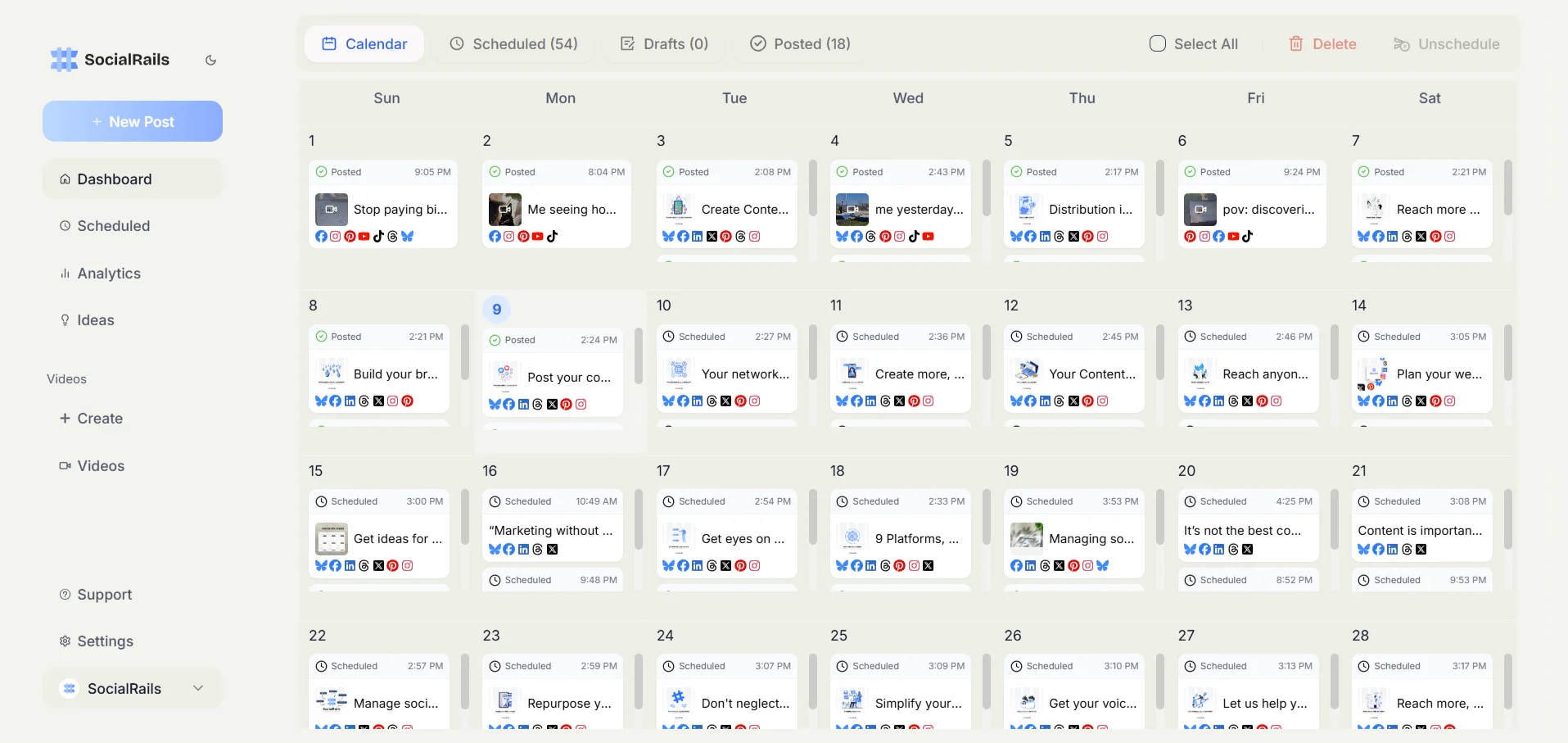
Important distinction: Cross-posting is not copy-pasting. Effective cross-posting requires adapting your content to fit each platform's format, audience expectations, and technical requirements.
Quick Summary
Why Cross-Posting Makes Sense
The Math
The average social media user is active on approximately 6-7 different platforms monthly. Your followers on Instagram likely don't overlap much with your LinkedIn connections or TikTok audience.
Cross-posting allows you to:
- Reach more people without creating entirely new content
- Save time on content production
- Maintain consistency in your messaging across platforms
- Reduce risk if one platform's algorithm changes
What Cross-Posting Is Not
Cross-posting is not:
- Posting identical content everywhere at the same time
- Ignoring platform-specific features
- Using the same hashtags across all platforms
- Automating everything without review
Platform-by-Platform Adaptation Guide
Each platform has different requirements. Here's what you need to know:
Best formats: 4:5 or 1:1 images, 9:16 Reels Caption limits: 2,200 characters Links: Not clickable in feed captions (use bio link or Stories) Hashtags: 3-10 relevant hashtags work well Best performing content: Carousels, Reels with trending audio, Stories
Adaptation tips:
- Resize horizontal content to 4:5 or square
- Move links to bio or use Story link stickers
- Add hashtags in caption or first comment
- Use native features like Reels, Stories, and carousels
TikTok
Best formats: 9:16 vertical video Caption limits: 4,000 characters Links: Only in bio (unless you have 1,000+ followers) Hashtags: 3-5 hashtags, include trending ones when relevant Best performing content: Short-form video with hooks in first 3 seconds
Adaptation tips:
- Reformat horizontal videos to vertical (crop or add backgrounds)
- Hook viewers immediately - TikTok users scroll fast
- Use trending sounds when they fit your content
- Keep videos under 60 seconds for best reach
Best formats: 1:1 or 4:5 images, native video, PDF carousels Caption limits: 3,000 characters Links: Clickable (but may reduce reach if in post) Hashtags: 3-5 professional hashtags Best performing content: Personal stories, industry insights, PDF carousels
Adaptation tips:
- Adjust tone to be more professional
- Lead with insights or questions rather than promotional content
- Upload carousels as PDF documents (LinkedIn doesn't have native carousel support)
- Put links in comments instead of main post for better reach
Best formats: 1.91:1, 1:1, or 4:5 images and video Caption limits: 63,206 characters (but keep it readable) Links: Clickable and can generate previews Hashtags: 1-3 hashtags (less important than other platforms) Best performing content: Native video, Groups discussions, link posts
Adaptation tips:
- Longer captions work better here than on Instagram
- Link posts can perform well
- Consider posting to relevant Groups
- Facebook's algorithm currently favors Reels and native video
X (Twitter)
Best formats: 16:9 or 1:1 images, native video Caption limits: 280 characters (free), 25,000 characters (Premium) Links: Clickable Hashtags: 1-2 max Best performing content: Threads, replies to trending topics, quick takes
Adaptation tips:
- Condense your message significantly
- Turn long-form content into threads
- Quote tweet rather than just repost
- Engage with trending conversations when relevant
Universal Image Sizes for Cross-Posting
These sizes work across most platforms:
Hashtag Strategy by Platform
Do not copy-paste the same hashtag set across platforms. Each platform has different hashtag cultures and search behaviors.
Best Posting Times by Platform
These are general guidelines based on when users are typically most active. Your specific audience may differ, so use your analytics to refine these:
Stagger Your Posts
If you're posting the same content across platforms, don't publish everything at the same time. This looks automated and misses optimal timing windows.
Example schedule for one piece of content:
- 8 AM: LinkedIn
- 11 AM: Instagram
- 2 PM: Facebook
- 7 PM: TikTok
Common Cross-Posting Mistakes
1. Posting Identical Content Everywhere
The problem: Each platform has different audiences with different expectations. The fix: Adjust your caption style, length, hashtags, and format for each platform.
2. Including Non-Functional Elements
The problem: Instagram captions with clickable links (links don't work in Instagram captions), TikTok posts referencing "swipe up" (TikTok doesn't have this feature). The fix: Review each post before publishing to ensure all elements work on that platform.
3. Same Hashtags Everywhere
The problem: Hashtag culture and effectiveness varies dramatically by platform. The fix: Research and use platform-specific hashtags.
4. Ignoring Platform Tone
The problem: LinkedIn is professional, TikTok is casual. Using the same tone everywhere feels off. The fix: Adjust your writing style to match the platform.
5. Leaving in Watermarks
The problem: TikTok watermarks on Instagram Reels (or vice versa) signal that you're just recycling content. The fix: Save original files or use tools to remove watermarks.
6. Posting at the Same Time
The problem: Misses optimal timing and looks automated. The fix: Stagger posts across several hours.
How to Cross-Post Efficiently: Step-by-Step
Step 1: Create Your Core Content
Start with one strong piece of content. This could be:
- A blog post
- A video
- An infographic
- A photo with a story
Step 2: Identify Platform Destinations
Choose 3-4 platforms where your target audience is active. You don't need to be everywhere.
Step 3: Adapt the Format
Resize images, adjust video dimensions, and edit length as needed for each platform.
Step 4: Rewrite Captions
Write platform-appropriate captions:
- LinkedIn: Professional, insight-focused, can be longer
- Instagram: Visual-focused, conversational, include hashtags
- TikTok: Casual, hook-driven, trending hashtags
- X: Concise, punchy, 1-2 hashtags max
- Facebook: Story-driven, can include links
Step 5: Schedule Strategically
Use a scheduling tool to post at optimal times for each platform. Space posts out across the day.
Step 6: Engage After Posting
Cross-posting saves time on content creation, not engagement. Respond to comments on each platform.
When to Automate (and When Not To)
Good Candidates for Automation
- Evergreen content
- Educational posts and tips
- Regular content series
- Posts requiring no real-time relevance
Keep Manual
- Trending topic responses
- Crisis communication
- Content requiring immediate replies
- Live content and Stories
Cross-Posting Checklist
Before you publish, check that your post:
- Uses the correct image/video dimensions for this platform
- Has a platform-appropriate caption length and tone
- Contains working links (or removes non-working ones)
- Includes platform-specific hashtags
- Has no watermarks from other platforms
- Is scheduled for an optimal time for this platform
- Doesn't duplicate another recent post on the same platform
Frequently Asked Questions
Will cross-posting hurt my reach?
Bad cross-posting can hurt reach. If you post identical content with visible automation artifacts (like TikTok watermarks on Instagram or broken links), platforms may limit your visibility. Properly adapted content performs just as well as native content.
How many platforms should I cross-post to?
Focus on 3-4 platforms where your audience is most active. It's better to post consistently on a few platforms than sporadically on many. Choose platforms based on where your target audience spends time, not just where you personally prefer.
Should I use the same hashtags on every platform?
No. Each platform has different hashtag cultures. Instagram and TikTok benefit from hashtags, while X works best with 1-2 hashtags, and LinkedIn prefers professional industry hashtags. Research what works on each platform.
How much time between posts on different platforms?
Space posts by at least 2-4 hours. This ensures you're hitting optimal times for each platform and doesn't make your posting look automated. Some content strategists spread posts across an entire day.
Do algorithms penalize cross-posted content?
Platforms don't directly penalize cross-posted content. However, they may reduce reach for content with watermarks from other platforms (like TikTok watermarks on Instagram Reels) or content that doesn't use native features.
Related Resources
- Content Repurposing - Turn one piece of content into multiple formats
- Social Media Scheduling - Plan and automate your posting schedule
- Instagram Hashtag Strategy - Hashtag strategies for Instagram
- TikTok Marketing Guide - Get started on TikTok