
What is Distribution Strategy?
A distribution strategy is your plan for how customers will access and buy your product.
It answers: Which channels? Direct or through partners? How many outlets?
The 4 Types
Create content, post everywhere
Create captions, images, and videos with AI. Schedule to 9 platforms in seconds.
Start your free trial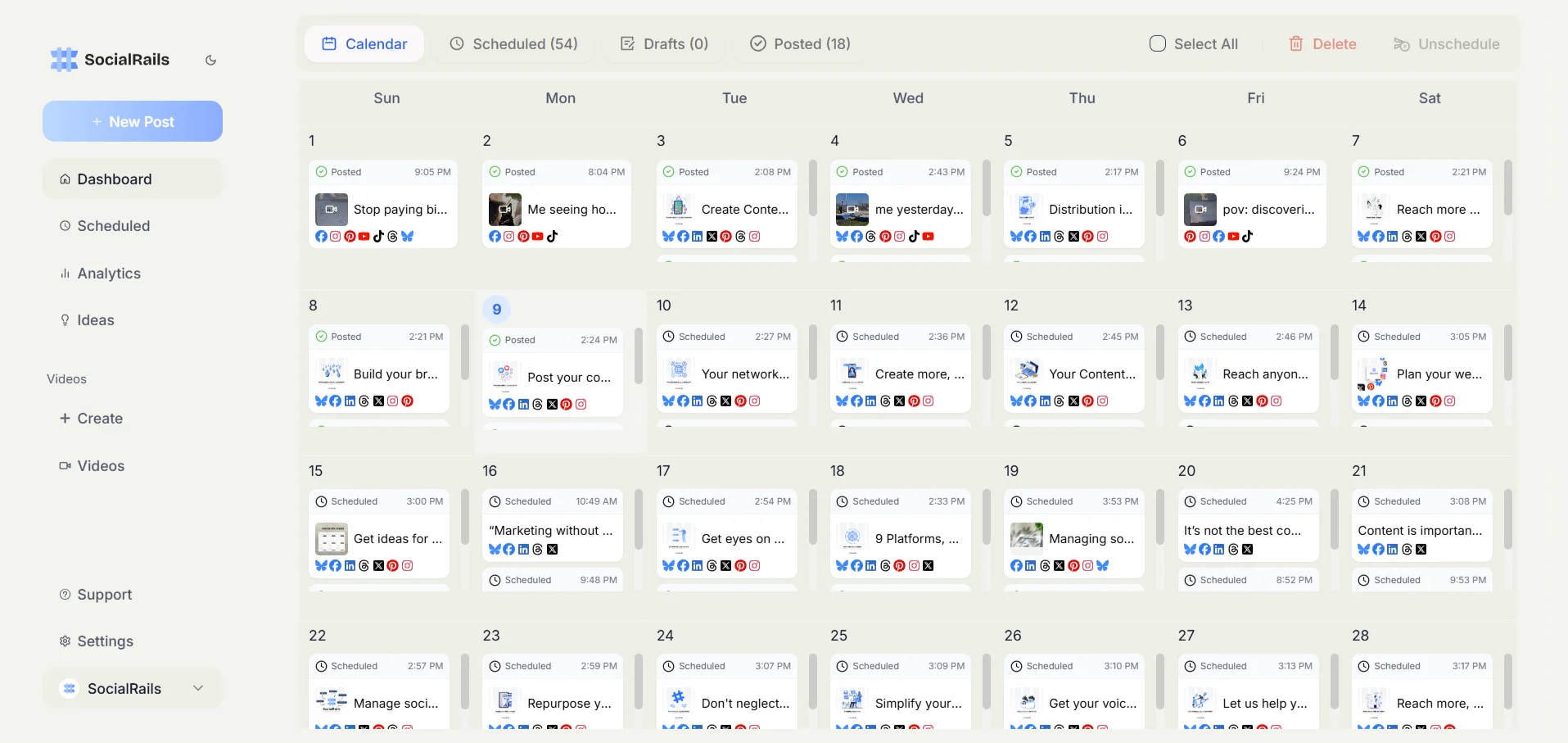
Intensive Distribution
Put your product in as many places as possible.
Best for:
- Convenience goods (snacks, beverages)
- Low-cost, impulse purchases
- Products where availability drives sales
Example: Coca-Cola in every store, restaurant, vending machine, gas station.
Trade-off: Maximum reach, but less control over how products are presented.
Selective Distribution
Choose retailers that match your brand positioning.
Best for:
- Electronics, apparel
- Products needing some service
- Mid-range pricing
Example: Apple products at Apple Stores, Apple.com, and Best Buy, not dollar stores.
Trade-off: Brand control, but limited reach.
A premium skincare brand wants to maintain its luxury image. Which distribution strategy fits best?
Exclusive Distribution
One distributor per market or territory.
Best for:
- Luxury goods
- Complex products needing specialist sales
- Franchise models
Example: Rolex through authorized dealers only. Tesla direct only.
Trade-off: Maximum control, smallest reach.
Direct Distribution
Sell straight to customers, no middleman.
Best for:
- Digital products
- High-margin goods
- Brands wanting customer data
Examples:
- Apple Stores and Apple.com
- D2C brands (Warby Parker, Glossier)
- SaaS companies
- Your own website
Trade-off: Higher margins and control, but you build all infrastructure.
How to Build a Distribution Strategy
Step 1: Know your customer
Where do they shop? Online or in-store? Price-sensitive or convenience-focused?
Step 2: Match your product
- Perishable goods: Fast, short channels
- Complex products: Expert sellers
- Luxury goods: Selective or exclusive
- Digital products: Direct
Step 3: Calculate economics
Direct keeps more margin. Partners provide reach.
A new DTC brand wants to maximize profit margins. Which channel gives the highest margin?
Step 4: Start focused
Launch with 1-2 channels. Perfect execution there before expanding.
Step 5: Monitor and adjust
Track sales, margin, and customer acquisition cost by channel. Double down on winners.
Real Examples
Nike's Hybrid Strategy
- Nike.com (direct, highest margin)
- Nike stores (direct, brand experience)
- Foot Locker (retail partner, reach)
- Amazon (marketplace, volume)
Different channels serve different purposes.
Apple's Selective Strategy
- Apple Stores (premium experience)
- Apple.com (direct)
- Best Buy (authorized retail)
- Carriers (iPhone distribution)
No discount retailers. Controlled presentation everywhere.
Dollar Shave Club's Direct Strategy
- Website only (at launch)
- Complete margin control
- Direct customer relationship
- Customer data ownership
Later expanded to retail after building brand.
Channel Conflict
When your channels compete against each other.
Common problems:
- Your website undercuts retail partners
- Multiple partners compete in same area
- Partners complain about your direct sales
Solutions:
- Minimum advertised price (MAP) policies
- Channel-specific products
- Clear territory assignments
- Communicate with partners early
Digital Distribution
E-commerce Options
Social Commerce
Platforms becoming sales channels:
- Instagram Shopping
- TikTok Shop
- Facebook Marketplace
- Pinterest Shopping
For content distribution, see our content distribution guide.
You're launching a product. Best approach for distribution strategy?
Key Metrics
Common Mistakes
1. Expanding too fast Master one channel before adding more.
2. Ignoring channel conflict Plan for conflicts before they happen.
3. Copying competitors blindly Their strategy may not fit your product or brand.
4. Neglecting partners Partners need training, materials, and communication.
5. Static strategy Markets change. Review annually.
FAQ
What is a distribution strategy?
A plan for how customers access and buy your product, including which channels, what intensity, and how to manage channel relationships.
What are the 4 types?
Intensive (everywhere), Selective (chosen retailers), Exclusive (one per market), and Direct (no intermediaries).
Example?
Apple uses selective distribution: Apple Stores, Apple.com, Best Buy, and carriers, but not discount retailers.
Distribution channel strategy vs distribution strategy?
Distribution channel strategy focuses specifically on selecting and managing intermediaries. Distribution strategy is broader, covering all go-to-market decisions.
Further Reading
Strategy & Case Studies:
- Harvard Business Review: Go-to-Market Strategy - Strategic frameworks
- First Round Review: Distribution - Startup distribution insights
D2C & E-commerce:
- Shopify: DTC Strategy Guide - Building direct channels
- Modern Retail - DTC brand news and analysis
Wholesale & Retail:
- Retail Dive - Retail industry news
- Faire - Wholesale marketplace for independent retailers
Brand Examples to Study:
- Nike's Direct Strategy - How Nike balances D2C with wholesale
- Warby Parker - D2C eyewear pioneer
- Glossier - D2C beauty brand approach