

The 80/20 Rule in Marketing: How to Apply Pareto Principle to Your Strategy

Quick Answer: The 80/20 Rule
The principle: 80% of your results come from 20% of your efforts.
In marketing: A few posts, channels, or customers drive most of your success. Find them. Double down.
Create content, post everywhere
Create captions, images, and videos with AI. Schedule to 9 platforms in seconds.
Start your free trial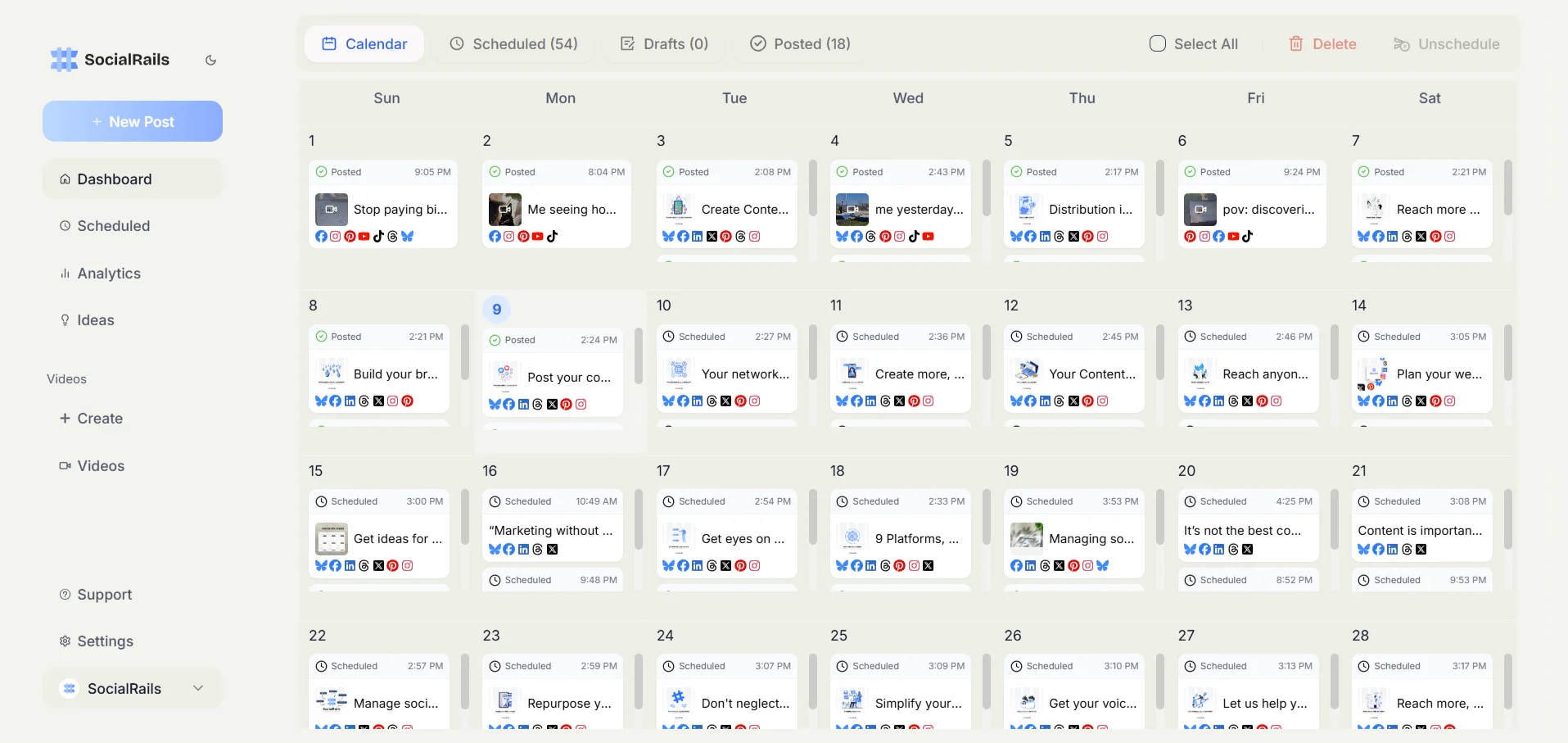
What It Means for Marketing
Common 80/20 Patterns
Content
20% of posts drive 80% of traffic
Customers
20% of customers generate 80% of revenue
Social Media
20% of posts get 80% of engagement
Ads
20% of keywords drive 80% of conversions
Most businesses waste resources on activities that produce minimal results while underinvesting in what actually works.
You have 100 blog posts. How many are probably driving most of your traffic?
💡 Tip: Think carefully before selecting your answer!
How to Find Your 20%
Step 1: Audit Your Data
Step 2: Sort by Results
Pull your last 100 posts, customers, or campaigns. Sort by results (traffic, revenue, engagement). The top 20 are your winners.
Step 3: Find Patterns
Look at your winners and ask:
You found your top 20% of content. What's the next step?
💡 Tip: Think carefully before selecting your answer!
80/20 for Content Strategy
Finding High-Impact Content
- Export all content analytics
- Sort by traffic or conversions
- Identify top 20% of pieces
- Analyze what they have in common
Example finding: "Our top posts are all how-to guides about Instagram, 1500-2000 words, with numbered steps."
Action: Create more how-to guides about Instagram with numbered steps.
Reallocate Your Time
Your top blog post is 2 years old but still drives traffic. What do you do?
💡 Tip: Think carefully before selecting your answer!
80/20 for Social Media
What Typically Works
- Educational carousels
- Personal stories
- Controversial takes
- Behind-the-scenes
- User-generated content
What Typically Underperforms
- Generic quotes
- Over-polished content
- Pure promotional posts
- Forced trend participation
Social Media 80/20 Action
Audit Last 100 Posts
Find your top 20 by engagement
Document Patterns
Format, topic, timing, hooks
80% Proven Formats
Post what you know works
20% Experiments
Test new ideas occasionally
80/20 for Paid Advertising
Find Your Winners
Optimize Spend
Action 1: Pause bottom 50% of keywords (save budget) Action 2: Increase spend on top 20% (scale what works) Action 3: Test variations of winners (improve performance) Action 4: Cut poor-performing audiences (reduce waste)
You're running 10 ad creatives. 2 of them drive 80% of conversions. What do you do?
💡 Tip: Think carefully before selecting your answer!
80/20 for Email Marketing
Segment Your List
Focus Your Efforts
High-impact: Personalized campaigns to engaged subscribers Low-impact: Mass broadcasts to cold lists
The 80/20 Content Mix
Many marketers apply 80/20 to their content ratio:
80% Value Content:
- Educational posts
- Tips and how-tos
- Entertainment
- Engagement posts
20% Promotional Content:
- Product announcements
- Sales and offers
- Direct CTAs
Why does the 80/20 content mix work?
💡 Tip: Think carefully before selecting your answer!
Common 80/20 Mistakes
Mistakes to Avoid
Too Rigid
Don't eliminate ALL low performers—some build brand
Never Re-evaluating
Your 20% changes over time—audit quarterly
No Experiments
Keep 10-20% for testing new ideas
Wrong Metrics
Optimize for revenue, not vanity metrics
4-Week Implementation Plan
Quick Wins to Start Today
- Find your top 3 blog posts → Update and promote them
- Identify best social format → Create more of it
- Find top revenue channel → Increase investment
- Profile top 10 customers → Find more like them
- Stop your lowest-performing activity → Reallocate that time
How often should you re-evaluate your 80/20?
💡 Tip: Think carefully before selecting your answer!
Signs It's Working
- More results with less effort
- Higher ROI on marketing spend
- Clearer strategic focus
- Less overwhelm, more impact
Related Guides
Was this article helpful?
Let us know what you think!