
Facebook Affiliate Marketing Campaign Strategy: Setup & Promotion Guide (2026)

Quick answer: Yes, you can run affiliate marketing campaigns with Facebook ads — but you need a compliant funnel. Never direct link to affiliate offers. Build value-first landing pages, collect emails, then promote products through email sequences. This guide covers the full campaign strategy from setup to scaling.
Create content, post everywhere
Create captions, images, and videos with AI. Schedule to 9 platforms in seconds.
Start your free trial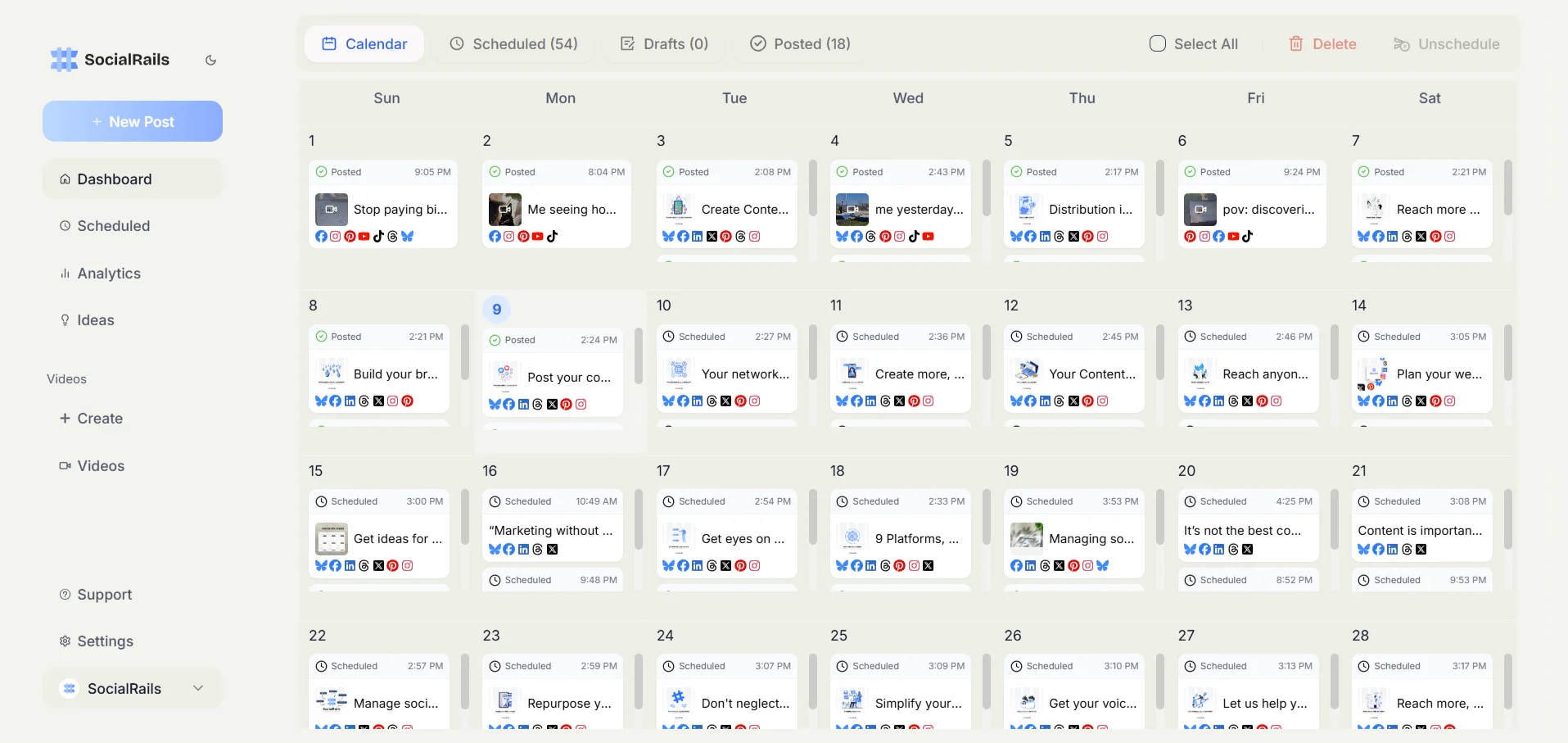
Can You Do Affiliate Marketing With Facebook Ads?
Yes, but Meta has strict policies. Understanding what's allowed — and what gets you banned — is the first step in any Facebook affiliate marketing campaign strategy.
Meta Ads Policy for Affiliate Marketing & Direct Linking
Meta's advertising policies don't ban affiliate marketing outright, but they impose requirements that make direct linking impractical. Here's what the policy means in practice:
Why direct linking doesn't work: When you send Facebook ad traffic directly to a merchant's affiliate link, you don't own the landing page. Meta can't verify the destination, the affiliate redirect looks suspicious to their automated review, and you have no control over the merchant's page content. This consistently triggers ad rejections and account restrictions.
The compliant alternative: Own every step between the ad click and the affiliate link. Your ad links to your landing page, your landing page provides value and captures emails, and your email sequence recommends the product with proper disclosure.
You want to promote an affiliate product. What should your Facebook ad link to?
💡 Tip: Think carefully before selecting your answer!
Facebook Affiliate Marketing Campaign Strategy
Here's the step-by-step campaign strategy that works in 2026. The core principle: you're building an audience asset (your email list) that you own, then monetizing through email — not through direct ad-to-offer funnels.
Step 1: Choose Your Niche and Offer
Pick a niche where:
- The affiliate product solves a clear problem
- You can create genuinely useful content around it
- Facebook's policies don't heavily restrict the topic (avoid health supplements, weight loss, and make-money-online when starting)
- The commission justifies your ad spend
Step 2: Build Your Landing Page
Your landing page is the bridge between your ad and your email list. It needs to stand on its own as valuable content.
Landing page types that work:
Page requirements checklist:
- Original, valuable content that stands alone without the affiliate link
- Clear affiliate disclosure near the top ("This page contains affiliate links")
- Your own domain (not a free subdomain)
- Privacy policy and terms of service
- Real contact information
- Fast loading speed (under 3 seconds)
- Mobile-responsive design
Step 3: Set Up Your Email Sequence
This is where the actual affiliate promotion happens — in email, not on Facebook.
- Welcome email (immediate): Deliver the promised value (guide, checklist, etc.)
- Value email 1 (day 2): Share a useful tip related to the niche
- Value email 2 (day 4): Share another insight or case study
- Soft pitch (day 5): Introduce the product naturally within helpful content
- Direct recommendation (day 7): Your honest review with affiliate link
- Follow-up (day 10): Address common objections, share your experience
Step 4: Set Up Your Facebook Campaign
This is the campaign setup that brings it all together.
Campaign Setup
Choose Your Objective
You're new to Facebook affiliate ads. Which campaign objective should you start with?
💡 Tip: Think carefully before selecting your answer!
Targeting Strategy
Start broad, then refine based on data.
Layer 1: Interest targeting (start here)
- Product-related interests
- Competitor brands and tools
- Related behaviors and job titles
Layer 2: Lookalike audiences (once you have data)
- 1% lookalike of your email subscribers
- 1% lookalike of landing page visitors
- 1% lookalike of buyers (if you track them)
Layer 3: Retargeting (highest ROI)
- People who visited your landing page but didn't opt in
- People who watched 50%+ of your video ads
- Email subscribers who haven't purchased yet
Audience Ideas by Niche
Promotion Strategies That Work
Beyond the basic funnel, here are specific Facebook affiliate marketing promotion strategies that perform well in 2026:
Strategy 1: The Content-First Approach
Run ads to genuinely helpful blog content. The content includes a natural product recommendation with your affiliate link, plus an email opt-in for a related lead magnet.
Why it works: The ad promotes content, not a product. This looks natural to Meta's review system and provides real value to users. Lower ad costs, higher trust.
Strategy 2: The Video Review Funnel
Create a video reviewing or demonstrating the product. Run it as a video ad. Retarget people who watched 50%+ with a lead magnet ad.
Why it works: Video builds trust faster than text. People who watch most of your video are pre-qualified. Retargeting warm audiences is cheaper and converts better.
Strategy 3: The Comparison Angle
Create comparison content (Product A vs. B vs. C) targeting people in the research phase. Your ad targets competitor-brand interests.
Why it works: People searching for comparisons have high purchase intent. Your content helps them decide — and your affiliate link is a natural fit.
Strategy 4: The Problem-Solution Approach
Identify a specific pain point your audience has. Create content that addresses it. The affiliate product is part of the solution.
Why it works: You're leading with the problem, not the product. This feels helpful rather than salesy, and it passes Meta's policy review easily because the content has standalone value.
Strategy 5: The Lead Magnet Funnel
Offer a free resource (checklist, template, mini-course) related to the affiliate product's niche. Build your email list, then promote through email sequences.
Why it works: Lowest policy risk. Your ad promotes a free resource — nothing commercial. All affiliate promotion happens via email where you have full control.
Budget Guidelines
Testing Phase (Week 1-2)
- Start: $20-50/day
- Test 3-5 ad variations (different headlines, images, copy angles)
- Run each variation for minimum 3-4 days before judging
- Kill ads with CTR below 1% after sufficient data
- Keep ads with low cost-per-lead
Optimization Phase (Week 3-4)
- Double down on winning ad variations
- Test new audiences with proven creative
- Aim for cost-per-lead that makes your funnel profitable
- Calculate: if your affiliate commission is $50 and 5% of leads buy, you need leads under $2.50 to break even
Scaling Phase (Month 2+)
- Increase budget by 20-30% every 2-3 days (not all at once)
- Add lookalike audiences based on your best leads
- Create new ad variations to prevent creative fatigue
- Expand to new geographic regions if applicable
- Monitor CPA closely — costs typically rise when scaling
Ad Creative That Converts
Image Ads
- Lifestyle shots showing the product in real use (not stock photos)
- Screenshots or screen recordings for software products
- Real testimonials with the person's name and photo (with permission)
- Simple, clean graphics with a clear message
Video Ads
- Product demonstrations or walkthroughs
- Personal reviews sharing your genuine experience
- Tutorial snippets showing how to solve a problem
- Keep under 60 seconds for feed, 15 seconds for stories
Ad Copy Framework
- Hook: Start with a relatable problem or question
- Value: Share your genuine insight or experience
- Solution: Introduce the product naturally
- CTA: Drive to your landing page (not an affiliate link)
Before writing your ad copy, check the Facebook ad character limits for each format so nothing gets truncated.
Copy Examples
Which ad copy is policy-compliant?
💡 Tip: Think carefully before selecting your answer!
Tracking Affiliate Sales
The Challenge
You don't own the merchant's checkout, so end-to-end tracking is inherently imperfect. Accept this and optimize for the metrics you can track.
What You Can Track
Key Performance Metrics
Avoiding Account Bans
Account restrictions are the biggest risk in Facebook affiliate marketing. Prevention is far easier than recovery.
Account Hygiene
- Use a verified Business Manager account (not a personal ad account)
- Add payment methods gradually — don't add 5 cards on day one
- Complete all verification steps (business verification, domain verification)
- Don't share ad accounts or pixels between unrelated businesses
- Warm up new accounts with small budgets before scaling
Content Compliance
- Re-read Meta's advertising standards before launching
- Avoid anything in Meta's prohibited or restricted categories
- Use honest, factual messaging — no hype, no guarantees
- Include affiliate disclosures on every landing page
- Don't use personal attributes in targeting language ("Are you overweight?")
Technical Compliance
- Never use URL shorteners (bit.ly, etc.) in ads
- Don't change your landing page domain frequently
- Make sure your ad copy matches your landing page content
- No cloaking — Meta's crawler must see the same page your visitors see
- No auto-redirects from your landing page to external sites
If Your Account Gets Restricted
- Don't panic — and don't immediately create a new account (this makes things worse)
- Check your support inbox for the specific violation
- Fix the issue on your landing page or ad before appealing
- Submit one clear, professional appeal explaining what you fixed
- Wait for review (can take days to weeks)
- While waiting, focus on organic traffic and email marketing
Best Niches for Facebook Affiliate Marketing
Lower Risk (Start Here)
Higher Risk (More Experience Needed)
You're choosing your first affiliate niche for Facebook ads. Which is safest?
💡 Tip: Think carefully before selecting your answer!
Sample Funnels (Step by Step)
Funnel 1: Blog Post → Email → Affiliate
Flow: Ad → Blog Post → Lead Magnet Pop-up → Email Sequence → Affiliate Offer
- Facebook ad promotes a genuinely helpful blog post (e.g., "5 tools every freelancer needs")
- Blog post provides real value — not thin content around affiliate links
- Exit-intent or scroll-triggered pop-up offers a related lead magnet
- 5-7 email sequence delivers additional value and builds trust
- Email 5-7 includes natural product recommendation with affiliate link
Best for: Content-heavy niches like software, business tools, education
Funnel 2: Video → Retarget → Lead Magnet
Flow: Video Ad → Retarget Viewers → Lead Magnet Ad → Email Sequence → Offer
- Run a video ad reviewing or demonstrating a product (no direct CTA to buy)
- Build a custom audience of people who watched 50%+ of the video
- Retarget that warm audience with a lead magnet ad
- Email sequence converts leads into affiliate sales
Best for: Products that benefit from demonstration (software, tools, gadgets)
Funnel 3: Comparison Landing Page
Flow: Ad → Comparison Page → Email Opt-in → Recommendation Email
- Ad targets people researching a product category ("best project management tools")
- Landing page compares 3-5 options with honest pros and cons
- Page includes email opt-in for a more detailed comparison PDF
- Email delivers the PDF with your top recommendation and affiliate link
Best for: Competitive niches with multiple products (hosting, CRM, email marketing tools)
Scaling Winners
When to Scale
- Positive ROI for 3+ consecutive days (not just one good day)
- Cost per acquisition is sustainable against your commission
- You've tested at least 3 ad variations and know what works
- Your landing page conversion rate is stable
- Your email sequence is converting leads to sales
How to Scale Without Breaking Performance
- Increase budget gradually — 20-30% every 2-3 days, never double overnight
- Expand audiences — Add lookalikes of your best-performing custom audiences
- Add new creative — Fresh ad variations prevent creative fatigue
- Test new angles — Different pain points, different product benefits
- Expand geography — If your offer works internationally, test new regions
- Duplicate campaigns — Run the same targeting with different creative in separate campaigns
Related Resources
Facebook Advertising:
- Facebook Business Manager Guide
- Facebook Ad Library Guide
- Facebook CPM Benchmarks
- Best Times to Post on Facebook
- Facebook SEO Guide
Affiliate Marketing:
- Best High Paying Affiliate Programs
- Affiliate vs Influencer Marketing
- Pinterest Affiliate Marketing Guide
Conversion Optimization:
Free Tools:
- Affiliate Commission Calculator
- Conversion Rate Calculator
- Facebook Post Generator
- CPM Calculator
FAQ
Can I direct link to affiliate offers on Facebook ads?
No. Direct linking to affiliate offers violates Meta's advertising policies. Your ad must point to a landing page you own with original, valuable content. The landing page can then link to the affiliate offer with proper disclosure. This is true in 2026 and has been consistent Meta policy for years.
What is Meta's policy on affiliate marketing and direct linking?
Meta doesn't ban affiliate marketing, but their policies require that your ad links to a functional landing page you own. The page must provide standalone value, not just redirect to a merchant. You must disclose affiliate relationships, avoid misleading claims, and never use cloaking or deceptive redirects. Direct linking — where your ad URL is an affiliate link pointing to someone else's site — violates the requirement to own your destination page.
How much should I spend testing Facebook ads for affiliate marketing?
Start with $20-50/day. Plan $300-500 total for initial testing across 3-5 ad variations before expecting to find a profitable combination. Don't judge ads until they've run for at least 3-4 days with sufficient impressions.
What are the best Facebook affiliate marketing promotion strategies?
The most effective strategies in 2026 are: (1) content-first approach where you promote helpful blog posts with embedded affiliate offers, (2) video review funnels where you retarget engaged viewers, (3) comparison landing pages targeting people in the research phase, (4) lead magnet funnels where all affiliate promotion happens through email. The common thread is providing real value before any product pitch.
What niches work best for Facebook affiliate marketing?
Software/SaaS, education, finance tools, and hobby niches have the lowest policy risk and work well for beginners. Avoid health supplements, weight loss, and make-money-online niches when starting — these face heavy scrutiny from Meta's review system.
How do I track affiliate conversions from Facebook ads?
Track email signups as your primary metric since you control that data. Use UTM parameters and affiliate sub-IDs on your links to attribute sales to specific campaigns. Set up the Meta Conversions API (CAPI) for better on-site tracking. Accept that end-to-end attribution will be imperfect since you don't control the merchant checkout.
Why did my Facebook ad account get banned for affiliate marketing?
Common reasons: direct linking to affiliate offers (no owned landing page), misleading claims or income guarantees, cloaking or redirect tactics, landing page content that doesn't match the ad, or promoting products in restricted categories. Check your support inbox for the specific violation before appealing.
Do I need to disclose affiliate relationships in Facebook ads?
Yes. The FTC requires clear disclosure on any page where you earn commissions from recommendations. Include language like "This page contains affiliate links — I may earn a commission if you purchase through them" near the top of your landing page. This is also a best practice for maintaining trust with your audience.
Can I run Facebook ads for affiliate marketing in 2026?
Yes. Facebook (Meta) ads remain a viable channel for affiliate marketing in 2026. The key is compliance: own your landing page, provide genuine value, never direct link, and avoid misleading claims. The most successful affiliate marketers use Facebook ads to build email lists, then monetize through email sequences rather than trying to drive direct sales.
Was this article helpful?
Let us know what you think!