

Pinterest Affiliate Marketing in 2026: Rules, Setup and What Actually Works

Quick answer
Affiliate links are allowed on Pinterest. You can put a full affiliate URL directly on a Pin, or link to a blog post that contains affiliate links. Four rules matter:
- Disclose. Pinterest's commercial content policy requires you to be transparent about the commercial nature of your content. Use a plain disclosure plus
#adin the description, or apply Pinterest's paid partnership label. - Link directly. Pinterest does not support certain redirects and URL shorteners. If your link is blocked, edit the Pin and use the full destination URL.
- Do not bulk-pin. Pinterest's guidelines specifically prohibit creating affiliate Pins "repetitively or in large volumes", using fake accounts to save your affiliate links, or asking others to save your affiliate Pins in a quid pro quo.
- Add something. The policy asks that affiliate content be original and add unique value, not just a reposted product photo.
You do not need a business account to pin an affiliate link, but you do need one for Pinterest Analytics, ads, and the new Amazon Storefront linking tool.
Jump to: What Pinterest allows and bans | How to disclose affiliate links | Setting up your account | Amazon Storefront linking | Choosing affiliate programs | Building pins that get clicks | The blog bridge method | Tracking performance | Common mistakes | What you can realistically expect to earn | Frequently asked questions
Create content, post everywhere
Create captions, images, and videos with AI. Schedule to 9 platforms in seconds.
Start your free trial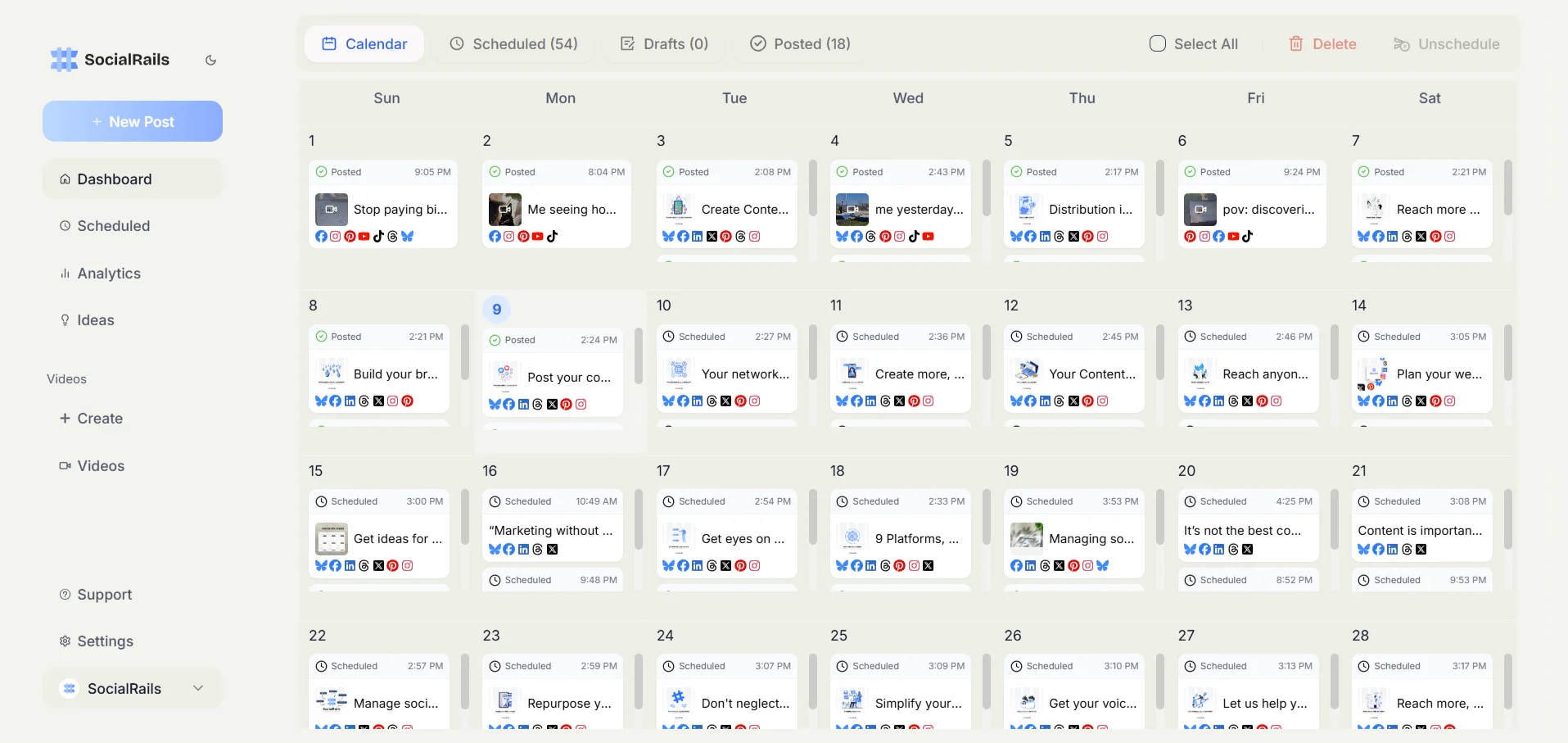
What Pinterest allows and bans
Pinterest banned direct affiliate links in 2015 and re-allowed them in 2016. That history still shows up in a lot of older advice. The rules that apply now live in Pinterest's Commercial and branded content guidelines.
Allowed:
- Direct affiliate links on a Pin, including Amazon Associates links
- Affiliate links inside a blog post that a Pin links to
- Affiliate links from networks such as Awin, CJ Affiliate, Rakuten Advertising, Impact, LTK and ClickBank
- Affiliate disclosure in the Pin description
Not allowed:
- Creating affiliate Pins repetitively or in large volumes (this is treated as spam)
- Using fake accounts to create or save your affiliate links
- Asking other people to save your affiliate Pins in a quid pro quo, or to create Pins carrying your affiliate identifier
- Hiding the commercial nature of the content
- Links to categories Pinterest prohibits generally, such as weapons and tobacco
On link shorteners: Pinterest's own wording is that "some shortener services are not currently supported on Pinterest" and that if a Pin's link is blocked you can edit it. Pinterest also advises linking directly to the source because certain redirects and shorteners are not allowed. It is not an automatic ban, it is a blocked link, but the practical advice is the same: paste the full affiliate URL rather than a bit.ly or a cloaked redirect.
Since May 2023 there is no separate "Idea Pin" format. Pinterest merged Idea Pins and standard Pins into a single Pin format, and every Pin can now carry a link, use any aspect ratio, and be edited after publishing. Any guide telling you that multi-page Pins cannot have clickable links is describing a format that no longer exists.
How to disclose affiliate links
Two separate obligations apply: Pinterest's policy, and the US FTC's Endorsement Guides if you are reaching a US audience.
On the Pin. Put the disclosure in the description, near the start, in plain language. Pinterest also offers a paid partnership label you can apply to commercial content.
This post contains affiliate links. If you buy through them I may earn a commission, at no extra cost to you. #ad
On the landing page. If the Pin sends people to your blog, disclose above the first affiliate link, not in the footer. Amazon Associates additionally requires the statement "As an Amazon Associate I earn from qualifying purchases."
Where disclosures should go:
- Pin description, before the reader has to tap "more"
- The landing page, above the first affiliate link
- Optionally the Pin image itself, if there is room
The FTC's guidance for creators is in Disclosures 101 for Social Media Influencers. Enforcement is real but it targets sustained, deceptive practice rather than one missing hashtag. For scale, the statutory maximum civil penalty under the relevant FTC Act provisions is $53,088 per violation, a figure the FTC set in 2025 and carried into 2026 because the 2025 CPI data needed for the annual adjustment was never published.
Setting up your account
A personal account can pin affiliate links. A business account is worth having anyway:
- Pinterest Analytics, including outbound click data
- Access to Pinterest Ads
- Claimed website, so your Pins are attributed to your domain
- Required for Amazon Storefront linking
Convert or create one at business.pinterest.com, then claim your website. Our Pinterest business account setup guide walks through the whole flow.
About Rich Pins. Rich Pins pull extra metadata (price, availability, article details) from Open Graph tags on your site. You no longer apply for them or run a validator: Pinterest retired the Rich Pin validator at developers.pinterest.com and the process is now automatic once valid Open Graph or schema.org metadata exists on your pages. If a guide tells you to submit a URL to the validator, it predates that change.
Amazon Storefront linking
On 10 June 2026 Pinterest launched Amazon Storefront linking. If you connect your Amazon Storefront to your Pinterest account, your affiliate information is applied automatically whenever you tag an eligible Amazon product, so you no longer paste tagged URLs by hand. Your Storefront handle also appears on your Pinterest profile.
Per Pinterest's help article, you need:
- A Pinterest business account
- Participation in the Amazon Influencer Program, in compliance with Amazon's policies
- An existing Amazon Storefront
Pinterest matches the Storefront to your Pinterest account's country setting, so you cannot manually pick which regional storefront gets linked. Pinterest has said Storefront linking will extend to other partners, without naming them or giving a date.
Choosing affiliate programs
Ignore anyone quoting you "average monthly earnings" per niche. Nobody publishes that data. What you can compare is commission rate, cookie window and average order value, all of which each program states publicly.
Practical filter: pick two or three programs in one niche, then judge them on your own earnings per click after 60 to 90 days rather than on headline commission rates. A 4% commission on a $300 product beats 30% on a $12 one.
For a wider comparison across networks, see our high paying affiliate programs roundup.
Building pins that get clicks
Pinterest publishes its creative specs. The current recommendations:
- Static Pins: 2:3 aspect ratio, 1000 x 1500 pixels, PNG or JPEG
- Video Pins: square (1:1) or vertical (2:3, 4:5, 9:16); minimum 4 seconds, maximum 15 minutes, with 6 to 15 seconds recommended; up to 2GB, MP4, MOV or M4V
Beyond the specs, what tends to work for affiliate content:
- A specific promise in the image text. "Small kitchen storage under $50" outperforms "products I love" because it matches how people search on Pinterest.
- Lifestyle photography over cut-out product shots. Show the product in a room, on a person, in use.
- Roundups over single products. A Pin promising ten options gives the reader a reason to click through rather than judging the product from the thumbnail.
- Captions on video. Most Pinterest video is watched without sound.
- Consistent fonts and palette, so your Pins are recognisable in a feed.
Check the affiliate program's terms before reusing brand photography. Amazon in particular restricts how its images and content may be used, especially in paid advertising, so read the Associates Program Policies rather than assuming.
Descriptions should read like a helpful caption, not a keyword dump: what the product is, who it suits, one concrete detail, then the disclosure. Pinterest's character limits are worth knowing before you write, because the description truncates in the feed.
On volume: you will see advice to publish 15 to 25 Pins a day. Pinterest's own commercial guidelines prohibit creating affiliate Pins "repetitively or in large volumes", so treat that advice as risky for affiliate content specifically. A steady cadence of a few genuinely different Pins per day, with affiliate Pins a minority of them, is the safer pattern. A Pinterest scheduler makes that cadence maintainable.
The blog bridge method
Instead of pointing a Pin at the merchant, point it at your own article that reviews or rounds up the products, with the affiliate links inside.
Why it usually beats direct linking:
- You control the page, so a merchant changing its URL structure does not break every Pin you have ever made
- You get space to justify the recommendation, which is what actually moves someone from click to purchase
- The page can also rank in Google, so the same work earns twice
- You can capture email addresses
- It sidesteps programs whose terms restrict direct linking from social platforms
The tradeoff is an extra click, so the article has to deliver on the Pin's promise immediately. If the Pin says "ten storage bins under $50", the list should be the first thing on the page.
If you also run paid traffic, our Facebook Ads for affiliate marketing guide covers the equivalent rules on Meta, which are stricter.
Tracking performance
Pinterest Analytics reports impressions, saves, pin clicks and outbound clicks. That tells you which Pins earn attention. It does not tell you which ones earn money, so you need to join it to affiliate data.
Set up, in order:
- Add UTM parameters to the destination URL on every affiliate Pin, for example
?utm_source=pinterest&utm_medium=pin&utm_campaign=kitchen-roundup. This is allowed and does not conflict with the "no shorteners" guidance because you are not redirecting. - Check your affiliate dashboard for conversions and earnings per click. Most networks let you create sub-IDs or tracking IDs per traffic source; Amazon Associates calls these tracking IDs.
- Install the Pinterest tag on your site if you use the blog bridge, so you can see the full path from Pin to purchase.
- Review monthly, not daily. Pinterest distribution builds slowly and cookie windows lag the click.
The one number worth optimising is earnings per click: total commissions divided by outbound clicks. It collapses commission rate, cookie window and audience fit into a single figure you can compare across programs. Our guide to reading Pinterest Analytics covers where each metric lives.
Common mistakes
Cloaked and shortened links. Pinterest does not support certain shorteners and redirects, and the link will simply be blocked. Use the full URL.
No disclosure, or a disclosure below the fold. Both the Pinterest policy and the FTC guidance ask for it to be obvious, which means before the reader has to expand the description.
Publishing affiliate Pins in bulk. This is the single clearest prohibition in Pinterest's commercial guidelines. Volume tactics that work for general content are explicitly not allowed for affiliate content.
Assuming every program has the same rules. Cookie windows range from 24 hours to months. Some programs forbid direct linking from social platforms. Some restrict image reuse. Read each agreement once and keep notes.
Promoting things you have never used. Generic copy assembled from the product page reads like it, and Pinterest's guidelines ask for content that adds unique value. If you have not used the product, say what your recommendation is based on.
Following advice written for the 2015 to 2022 era. Direct links were banned then re-allowed, Idea Pins came and went, the Rich Pin validator was retired, and Pinterest's Creator Rewards programme closed on 30 November 2022. Check the date on anything you read, including this page.
What you can realistically expect to earn
There is no credible published figure for what the average Pinterest affiliate earns. Any guide quoting one has invented it. What can be said honestly:
- Pinterest says more than half of its users come to the platform to shop, and that it sees over 80 billion searches a month. Commercial intent is genuinely high.
- Pinterest reported 631 million monthly active users in its Q1 2026 results, so reach is not the constraint.
- Pins keep getting distributed for months after publication, so revenue tends to lag effort by a quarter or more rather than tracking it week to week.
Rather than a projection, run the arithmetic on your own numbers once you have 30 to 60 days of data:
Monthly outbound clicks x conversion rate x average commission = monthly commission
Every one of those three inputs is specific to your niche, your programs and your audience. Fill them in from your own affiliate dashboard. Anyone handing you all three as benchmarks is guessing.
For a broader look at Pinterest monetisation beyond affiliate links, see can you monetize Pinterest and our guide to selling products on Pinterest. For platform level context, our Pinterest facts and statistics page collects the sourced numbers.
Frequently asked questions
Is affiliate marketing allowed on Pinterest?
Yes. Pinterest's commercial and branded content guidelines permit affiliate links on Pins and in Pin descriptions, provided you are transparent about the commercial nature of the content and do not create affiliate Pins repetitively or in large volumes. Pinterest banned direct affiliate links in 2015 but reversed that in 2016.
Do I need a Pinterest business account for affiliate marketing?
No. Pinterest does not require a business account to post affiliate links. You do need one for Pinterest Analytics, Pinterest Ads, and to connect an Amazon Storefront, so most people converting to a business account do it for the tooling rather than for compliance.
Can I use shortened or cloaked affiliate links on Pinterest?
No. Pinterest states that some shortener services are not supported and that certain redirects are not allowed, so the link may simply be blocked. Paste the full affiliate URL. Adding UTM parameters to that URL is fine.
Do Idea Pins still exist and can they have links?
Idea Pins no longer exist as a separate format. Pinterest merged them with standard Pins in May 2023, and all Pins can now carry a link, use any aspect ratio and be edited after publishing.
How do I connect my Amazon Storefront to Pinterest?
Pinterest launched Amazon Storefront linking on 10 June 2026. You need a Pinterest business account, an Amazon Storefront, and membership of the Amazon Influencer Program. Link it from your Pinterest business settings, then your affiliate information is applied automatically when you tag eligible Amazon products.
Do I still need to validate Rich Pins?
No. Pinterest retired its Rich Pin validator. Rich Pins are now generated automatically from the Open Graph or schema.org metadata already on your pages, so there is nothing to submit.
Do I need a blog for Pinterest affiliate marketing?
No, you can link a Pin straight to a merchant. A blog in between gives you a stable URL you control, room to justify the recommendation, a second traffic channel from search, and compliance with programs that restrict direct linking from social platforms.
How much can you earn from Pinterest affiliate marketing?
There is no reliable published average, and any specific figure you see quoted is unsourced. Earnings are the product of your outbound clicks, your conversion rate and your average commission, all of which vary enormously by niche and program. Measure your own earnings per click after 60 to 90 days instead of trusting a benchmark.
Was this article helpful?
Let us know what you think!