

Canadian Social Media Platforms & Trends 2026: Complete Guide

Canada has unique social media habits. Different platform preferences, bilingual audiences, and distinct content trends.
Here's what marketers need to know about reaching Canadian audiences.
TL;DR: Canadian Social Media at a Glance
- How connected: Roughly 33 million Canadians use social media, about 82% of the population (DataReportal, early 2026), similar reach to the US.
- Biggest platforms: YouTube has the broadest reach, followed closely by Facebook, then Instagram, TikTok and LinkedIn. Facebook still counts the largest raw user base (mid-30 millions of accounts).
- TikTok status (2026): The app stays fully available in Canada. In January 2026 the Federal Court set aside the government's 2024 order to wind down TikTok's Canadian corporate offices, so its operations continue under new commitments on data and minors. Over 14 million Canadians use it.
- Canadian-made apps: Hootsuite (Vancouver) and Wattpad (Toronto) are still operating; Kik (Waterloo) still runs under MediaLab; Bitmoji (Toronto) lives inside Snapchat.
- The Quebec factor: Around 8.5 million people, mostly French-speaking. Plan separate Quebec-French content, not translated European French.
Jump to: Usage overview - Popular platforms - Canadian-made apps - Quebec marketing - Trends - Best times to post - Regulations - FAQ
Create content, post everywhere
Create captions, images, and videos with AI. Schedule to 9 platforms in seconds.
Start your free trial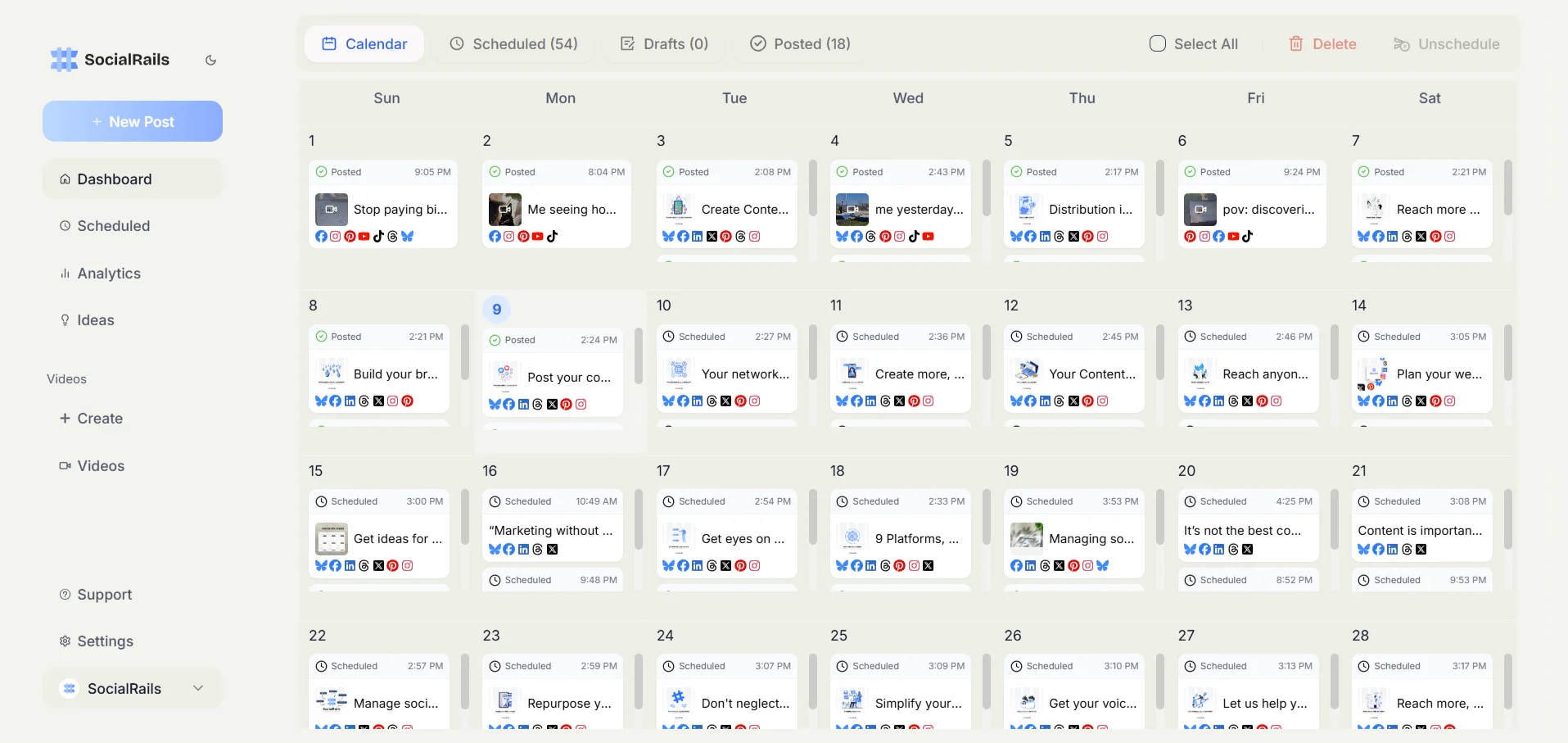
Social Media Usage in Canada: Overview
Canadians are highly connected, with usage patterns similar to the US. Social media penetration sits near 82% of the population (DataReportal, Digital 2026: Canada). YouTube reaches the widest audience, while Facebook still holds the largest raw account base. Figures are round estimates that shift between sources, so treat them as ranges rather than precise counts.
Most Popular Platforms in Canada
1. YouTube (Most Used)
YouTube is the most-used platform in Canada across all age groups.
Canadian YouTube notes:
- Dominant platform with broad reach
- English and French content consumption
- Strong preference for educational content
- High podcast and long-form video engagement
Marketing tip: YouTube ads perform well in Canada. Consider bilingual campaigns for Quebec reach.
2. Facebook (Second Most Used)
Still the largest social network in Canada despite declining among younger users.
Canadian Facebook trends:
- Older demographics (35+) most active
- Facebook Marketplace heavily used
- Community groups drive engagement
- French-language groups popular in Quebec
Marketing tip: Facebook Groups work exceptionally well for Canadian local businesses.
3. Instagram
Strong with 18-44 demographics. Shopping features gaining traction.
Canadian Instagram notes:
- Popular among younger adults
- Reels adoption growing
- Influencer marketing popular
- E-commerce integration increasing
4. TikTok
Fastest-growing platform in Canada, especially strong with Gen Z, with more than 14 million Canadian users.
Is TikTok banned in Canada? (2026 status): No. The app has always stayed available to Canadian users. In November 2024 the federal government ordered TikTok's Canadian corporate entity to wind down its offices over national-security concerns tied to parent company ByteDance, but that order never restricted the app itself. In January 2026 the Federal Court set aside the wind-down order on consent of both sides, so TikTok's Canadian operations continue under new commitments around data protection and safeguards for minors. Marketing on TikTok in Canada carries no unusual access risk today.
Canadian TikTok trends:
- CanTok (Canadian TikTok) community
- Bilingual creators gaining followers
- Canadian humor/culture content performs well
- Local business discovery increasing
For a broader breakdown of where each network fits, see our guide to the types of social media platforms.
5. LinkedIn
Strong professional network usage in Canada.
Canadian LinkedIn notes:
- Large Canadian member base
- High engagement in tech, finance, energy sectors
- French content underserved (opportunity)
- B2B marketing performs well
Which social media platform has the highest usage rate among Canadians?
Platform Usage by Age in Canada
Key insight: Facebook skews older in Canada. TikTok and Instagram are more popular with younger users.
Canadian-Made Social Platforms
Hootsuite (Vancouver)
While not a social network, Hootsuite is Canada's biggest social media success story.
- Founded: 2008 in Vancouver
- Users: 18+ million worldwide
- What it does: Social media management platform
Kik (Waterloo)
Canadian messaging app that was popular with teens.
- Founded: 2009 in Waterloo, Ontario
- Was one of the largest messaging apps globally at its peak
- Status: Still operating. Acquired by MediaLab in 2019 after a planned shutdown was reversed, and the app remains active in 2026 (the earlier Kin cryptocurrency project was separate)
Wattpad (Toronto)
Social storytelling platform with significant global reach.
- Founded: 2006 in Toronto
- What it does: User-generated stories and fanfiction
- Acquired by Naver (South Korea) in 2021
Bitmoji (Toronto)
Personal emoji creator, now owned by Snap.
- Founded: 2007 in Toronto (as Bitstrips)
- Acquired by Snapchat in 2016
- Integrated into Snapchat as Bitmoji
Other Canadian Tech
While not social platforms, these Canadian companies shape social media:
- Shopify (Ottawa): Powers social commerce
- Lightspeed (Montreal): Retail + social integration
- Real (Toronto): Mental health social platform
The Bilingual Factor: Marketing in Quebec
Quebec Social Media Differences
Quebec (8.5 million people) has distinct social media patterns:
Bilingual Marketing Tips
Do:
- Create French versions of campaigns for Quebec
- Use Quebec French, not European French
- Partner with Quebec-based influencers
- Respect cultural differences in content
Don't:
- Use Google Translate for French content
- Assume English campaigns will work in Quebec
- Ignore Quebec holidays and events
- Use the same influencers for both markets
You're launching a social media campaign targeting all of Canada. What should you do about Quebec?
Canadian Social Media Trends
1. Privacy-First Attitude
Canadians are more privacy-conscious than Americans. They:
- Read privacy policies more often
- Delete apps over privacy concerns
- Support stronger data regulations
- Prefer platforms with clear privacy controls
Marketing implication: Be transparent about data use. Respect privacy preferences.
2. Local Community Focus
Canadian social media users engage heavily with:
- Local news and events
- Community Facebook groups
- Regional influencers
- Canadian-made products
Marketing implication: Emphasize local presence. "Canadian-owned" resonates.
3. Bilingual Content Consumption
Many Canadians consume content in both languages:
- A significant portion of Canadians are bilingual (English/French)
- Bilingual users follow creators in both languages
- Code-switching content performs well in some markets
4. Environmental Consciousness
Canadian audiences respond to:
- Sustainability messaging
- Eco-friendly brands
- Climate content
- Corporate responsibility
Marketing implication: Highlight environmental efforts authentically.
Best Times to Post for Canadian Audiences
Time Zone Considerations
Canada spans 6 time zones. Target based on your audience location:
General Best Times (EST)
Tip: If targeting both coasts, 12pm EST catches both morning BC and afternoon Ontario. Juggling six time zones by hand is painful, so a social media scheduler that queues posts per time zone saves hours.
Canadian Influencer Marketing
Top Canadian Influencer Categories
- Lifestyle/Fashion - Toronto and Vancouver-based
- Gaming - Strong Canadian gaming community
- Comedy - Canadian humor translates well
- Fitness - Growing category
- Food - Regional cuisines, multicultural content
Finding Canadian Influencers
Platforms to search:
- Instagram (location: Canada)
- TikTok (CanTok hashtag)
- YouTube (Canadian channels)
- Creator marketplaces (filter by country)
Canadian Influencer Rates
Rates in Canadian dollars. Quebec French creators may command premiums due to scarcity.
Creators weighing where to invest their own time often compare payouts across networks. Our breakdown of which social media platform pays the most gives useful context for negotiating Canadian influencer deals.
Regulations Affecting Social Media in Canada
Key Regulations
CASL (Canada's Anti-Spam Legislation):
- Affects email marketing and some social messaging
- Requires consent for commercial electronic messages
- Penalties up to $10 million
PIPEDA (Privacy Law):
- Governs how businesses collect/use personal data
- Affects targeting and data collection
- Requires consent for data use
Bill C-18 (News Compensation):
- Affects news sharing on social platforms
- Meta blocked news in Canada in 2023
- Impacts content strategy for news-related content
Advertising Standards
The Ad Standards Canada guidelines apply to social media:
- Influencer partnerships must be disclosed
- Health claims need substantiation
- Comparative advertising rules apply
- Children's advertising restrictions
An influencer in Canada promotes your product without disclosing it's sponsored. Who's responsible?
Canada vs US: Key Differences for Marketers
Common mistakes:
- Using US spelling in Canadian content
- Ignoring Canadian holidays (Thanksgiving in October, Victoria Day)
- Assuming US influencers resonate in Canada
- Pricing in USD without CAD option
Quick Action Plan for Canadian Market
Week 1: Research
- Identify which provinces matter most for your business
- Research Canadian competitors' social presence
- Determine if Quebec (French) market is relevant
Week 2: Localize
- Adjust spelling to Canadian English
- Create French content if targeting Quebec
- Update pricing to CAD
- Review cultural references
Week 3: Launch
- Post during Canadian time zones
- Engage with Canadian accounts
- Consider Canadian influencer partnerships
- Monitor performance by region
Frequently Asked Questions
What is the most popular social media platform in Canada?
Is TikTok banned in Canada in 2026?
How many Canadians use social media?
Are there any Canadian-made social media apps?
Do I need separate French content to market in Quebec?
What regulations affect social media marketing in Canada?
Related Resources
Social Media by Country:
Platform Guides:
Marketing Strategy:
Was this article helpful?
Let us know what you think!