

Social Media Demographics 2026: User Statistics by Age, Gender and Platform

Most demographics articles quote numbers without saying where they came from or when they were measured. This one names the source and the fieldwork date for every figure, because a demographic statistic without a date is worthless.
Two sources do most of the work below. Pew Research Center surveyed 5,022 US adults between 5 February and 18 June 2025 and published the results in November 2025, which is the best available read on the US market. DataReportal tracks global advertising reach, updated April 2026. Where a figure comes from a company's own quarterly reporting, that is noted.
The short version
Jump to: How to read these numbers | Platform size | US usage by age | Instagram | Pinterest | TikTok | Gender | Education and income | Regions | FAQ
Create content, post everywhere
Create captions, images, and videos with AI. Schedule to 9 platforms in seconds.
Start your free trial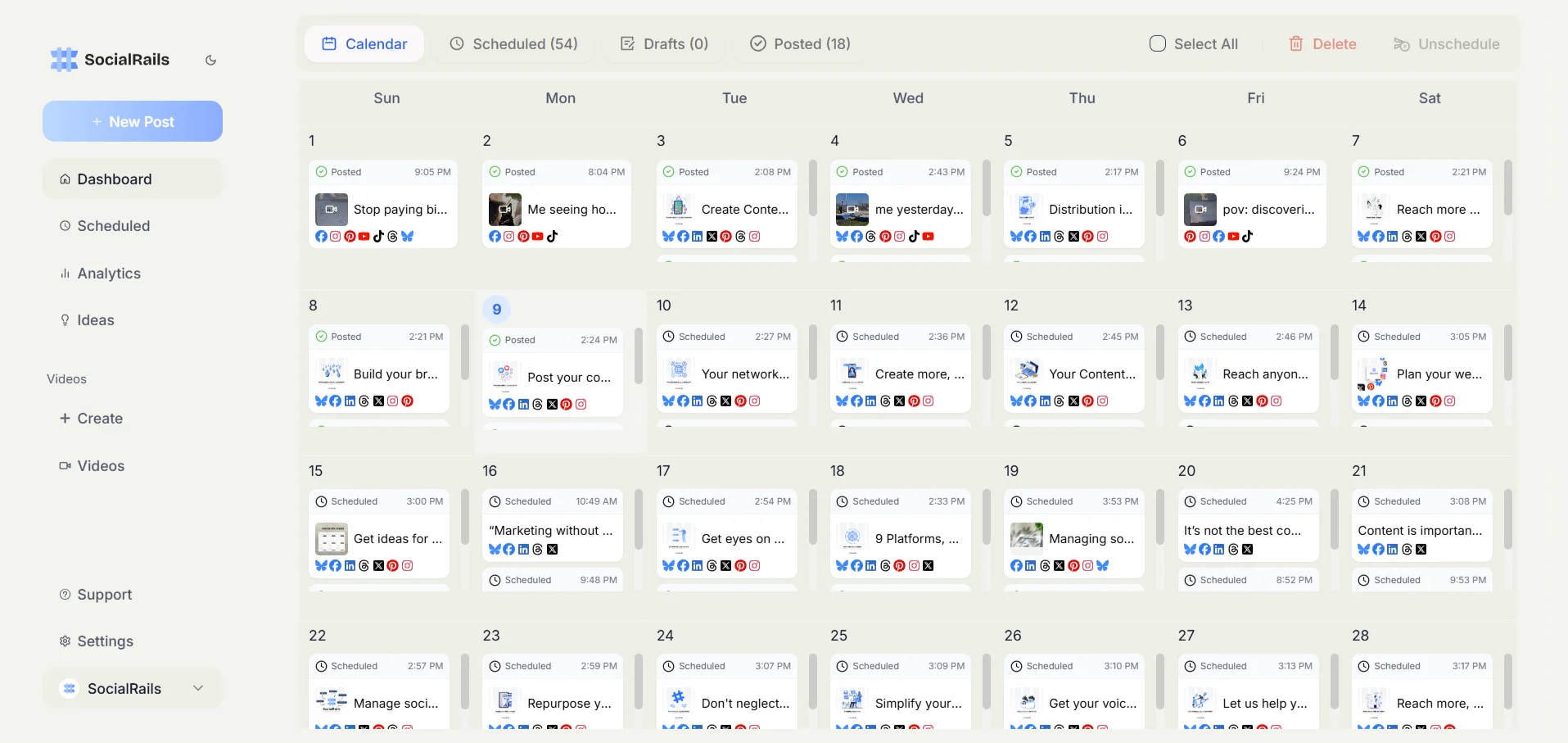
How to read these numbers
This trips up almost everyone, and getting it wrong will send your ad budget to the wrong place.
Adoption rate answers "what share of this group uses the platform?" Pew's numbers are adoption rates. When Pew says 80% of 18 to 29 year olds use Instagram, that is 80% of that age bracket, not 80% of Instagram.
Audience composition answers "what share of this platform's users are in this group?" When you read that Pinterest is 70% female, that is composition. It describes Pinterest's user base, not how many women use Pinterest.
The two can point in opposite directions. A platform can be majority-female by composition while being used by a minority of women overall, simply because it is small. Ad platforms target on composition. Reach planning depends on adoption. Check which one a statistic is before you build a strategy on it.
One more caution: global figures and US figures are not interchangeable. Facebook looks like a declining platform in US commentary and remains the largest social platform on earth by advertising reach. Both are true.
How big each platform actually is
Global scale, most recent available reporting:
Two notes on comparability. Advertising reach is not the same as monthly active users. It is the audience a platform tells advertisers it can reach, it excludes under-18s in most markets, and it is generally the more conservative figure to plan against. Reddit reports daily rather than monthly actives, so its number is not comparable to the rest of the table and looks far smaller than its actual audience.
Total social media identities passed 5.79 billion in April 2026, up about 5.4% year on year, per DataReportal. Identities are not people: the average user holds accounts on several platforms, so this number overstates the human audience.
US adult usage by age
This is the table most people are actually looking for. Share of US adults in each age bracket who say they ever use the platform, from Pew Research Center fieldwork between February and June 2025.
Figures are rounded from Pew's published tables. Pew did not report Pinterest or LinkedIn in the same 2025 release, so no figure for those two is given here rather than an invented one. Check Pew's social media fact sheet for the current full set.
What the table actually tells you:
- YouTube is the only platform with no weak age bracket. Even among over-65s it reaches roughly two thirds. If reach across all ages is the goal, nothing else competes.
- Facebook peaks at 30 to 49, not at 65+. The "Facebook is for old people" shorthand is wrong. It is the platform with the flattest age curve after YouTube, and it is the only one a majority of over-65s use.
- Instagram falls off a cliff after 49. 80% at 18 to 29 down to 19% at 65+ is the steepest drop of any large platform.
- Reddit is far more mainstream among under-30s than its reputation suggests, at 48%, ahead of X in every bracket.
- Snapchat is the most age-concentrated, more than half of under-30s and almost nobody over 64.
Instagram demographics
The direct answer to "what age group uses Instagram the most": 18 to 29 year olds. 80% of US adults in that bracket use Instagram, against 62% of 30 to 49s, 40% of 50 to 64s and 19% of over-65s (Pew, 2025).
That makes Instagram the strongest single platform for reaching adults under 35, and a poor primary choice for anything aimed at over-55s.
Other things worth knowing:
- Gender: in the US, 55% of women use Instagram against 44% of men (Pew, 2025). That is a real skew but a mild one, nothing like Pinterest's.
- Global scale: roughly 1.99 billion advertising reach, fourth largest globally (DataReportal, April 2026).
- The 30 to 49 bracket is the underrated one. At 62% it is only modestly behind under-30s, and it carries far more spending power. Campaigns that treat Instagram as a Gen Z channel routinely leave that audience unaddressed.
Pinterest demographics
Pinterest is the most demographically distinctive major platform, which is exactly why it works when it works.
- Gender: roughly 70% of Pinterest's global users are women, the most skewed composition among major platforms. Note this is composition, not adoption.
- Age within that: women aged 18 to 24 are the single largest slice of the global audience, at roughly a fifth of it, and Gen Z is Pinterest's fastest growing segment. The old picture of Pinterest as a platform for 35+ mothers is out of date.
- Scale: about 631 million monthly active users in Q1 2026, a record for the platform and up around 11% year on year (Pinterest's own reporting).
- Intent: Pinterest users arrive planning purchases rather than browsing socially, which is why it converts well in home, food, fashion, beauty and DIY categories despite being far smaller than Instagram.
For a deeper cut, see our Pinterest facts and statistics guide.
TikTok demographics
- US adoption: 37% of adults overall, 63% of 18 to 29s, 44% of 30 to 49s, 30% of 50 to 64s, 12% of over-65s (Pew, 2025).
- The aging-up story is real but overstated. TikTok's 30 to 49 bracket at 44% is substantial, and the platform is no longer a teen-only channel. It still has the second steepest age curve after Snapchat.
- Gender in the US: 42% of women use TikTok against 30% of men (Pew, 2025).
- Global scale: about 2.21 billion advertising reach, third largest (DataReportal, April 2026).
Our TikTok age demographics guide breaks the platform down bracket by bracket.
Usage by gender
US adoption rates by gender, from Pew's 2025 survey. Read these as "share of men who use it" against "share of women who use it".
The pattern is consistent: the visual and community platforms skew female in adoption, while the discussion and news platforms skew male. Facebook's 15 point gap is the largest of the six, which surprises people who assume Facebook is demographically neutral.
Pinterest is not in Pew's 2025 table, but its composition is well established at roughly 70% female globally, making it the most skewed platform in the set by a wide margin.
Usage by education and income
US adults, Pew 2025.
By education:
By household income:
Two things stand out. Facebook is the most demographically neutral platform in the set, within a point or two across every income band, which is why it remains the default for broad local advertising. And TikTok and Instagram move in opposite directions as income rises: Instagram climbs from 41% to 60%, TikTok falls from 42% to 30%. If you sell a premium product, that gap should decide your channel split.
Regional patterns
Platform dominance varies more by region than by any demographic variable.
- North America: YouTube and Facebook lead on reach, Instagram leads on engagement among under-35s, LinkedIn dominates B2B.
- Europe: WhatsApp is the messaging default in most markets, alongside Facebook and Instagram. Regional platforms persist, including VK in Russia and Xing in the German-speaking market.
- Asia-Pacific: the least Western-platform-dependent region. China runs on WeChat, Weibo and Douyin. India leans on WhatsApp, Instagram and ShareChat. Japan runs on LINE. Southeast Asia is Facebook and TikTok heavy.
- Latin America: WhatsApp and Facebook dominate, with Instagram and TikTok growing. Note that Taringa, long cited as Argentina's home-grown network, shut down permanently in March 2024. Any guide still listing it as a regional option is out of date.
What this actually changes about targeting
- Match the platform to the age you need, not the age you like. Under 30 means Instagram, TikTok, Snapchat or Reddit. Over 50 means Facebook and YouTube. There is no clever workaround for a platform your audience is not on.
- Layer, do not stack. Age alone is a blunt instrument. Combining a bracket with an interest or behaviour signal consistently outperforms broad age targeting.
- Test brackets in real increments. A 25 to 34 audience behaves differently from 35 to 44 on every platform in this article.
- Re-check annually. Every figure here carries a date for a reason. Adoption rates move several points a year, and platform-level shifts, such as Reddit overtaking Snapchat among US adults, happen quietly.
Demographic data tells you where people are. Understanding why they behave differently on each platform needs qualitative and quantitative marketing intelligence together. From there, use Facebook Lookalike Audiences to extend a segment that already works, and adapt your social media calls to action per platform. For LinkedIn outreach, see our LinkedIn introduction message guide. To track how segments respond, our sentiment analysis explainer covers the basics, and the scheduled posts viewer helps keep a posting cadence organised.
Create content, post everywhere
Create captions, images, and videos with AI. Schedule to 9 platforms in seconds.
Start your free trialFAQ
What age group uses Instagram the most?
What percentage of Pinterest users are women?
Which social media platform reaches the most US adults?
Which platforms are most popular with Gen Z?
How do social media demographics vary by income?
Which platforms skew male?
Which platforms do people over 65 use?
How often should demographic figures be rechecked?
Want to reach the right audience on social media? SocialRails schedules and analyses content across every platform in this guide.
Was this article helpful?
Let us know what you think!