

How to Get More Views on Instagram: What Actually Works in 2026

Short answer: a "view" on Instagram no longer means what most guides still say it means. Since Meta's April 2025 metrics change, a view is counted every time your content is displayed or starts playing, replays and repeat appearances included, across every format. It replaced both impressions and Reel plays. So "more views" is now mostly a question of being distributed to more people more often, plus how often each of them sees or replays the thing. The signals that decide distribution are the ones Instagram publishes in its own ranking explainer: the viewer's activity, the viewer's history of interacting with you, information about the post, and information about you. Nobody outside Instagram knows the weights, and any page that hands you percentages invented them.
Jump to: What counts as a view | What Instagram documents | Reels views | Story views | Feed post views | Why your views dropped | Myths | FAQ
Create content, post everywhere
Create captions, images, and videos with AI. Schedule to 9 platforms in seconds.
Start your free trial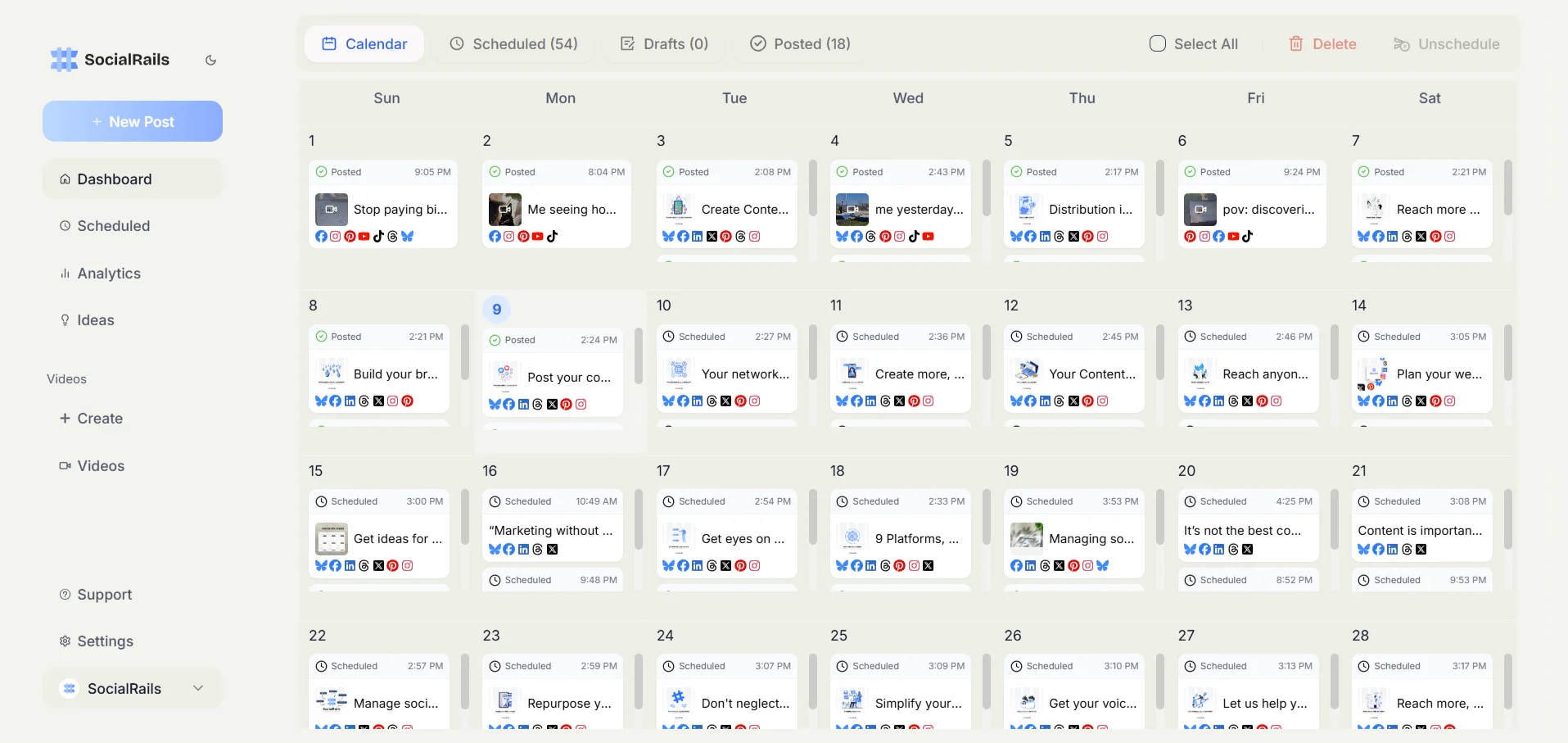
What Counts as a View in 2026
Meta announced on its developer blog in January 2025 that Views would become the single primary metric on Instagram, gave partners roughly 90 days notice, and switched the API over on 21 April 2025. Impressions and Reel plays were retired in the process.
Sourcing note: Meta's original announcement post no longer returns readable content when fetched, so the definitions above are stated as they were published consistently by the analytics platforms that had to rewire against the API change (Brandwatch, Sprinklr, Emplifi, Iconosquare and others). Treat them as consistently reported rather than quoted verbatim from Meta.
Three practical consequences, and they matter more than any tip further down this page:
- Views are not people any more. Reach is the people number: unique accounts. Views can rise while reach is flat, which just means the same audience watched twice. Compare the two before you celebrate. Our reach vs impressions guide covers how the two diverge.
- The old "3 seconds equals a view" rule is gone. That threshold belonged to the retired video-views metric. Any guide that still states it is describing 2024.
- You cannot compare today's numbers to your pre-April-2025 numbers. They are two different metrics sharing one axis label. A step change in your chart around April 2025 is the metric switching, not your content collapsing.
Your Reel's views jumped but reach barely moved. What most likely happened?
💡 Tip: Think carefully before selecting your answer!
What Instagram Actually Documents About Ranking
Instagram publishes one ranking explainer covering Feed, Stories, Explore, Reels and Search. It is the only first-party description of how distribution gets decided, and it is short. Here is what it names, in the order it presents them.
For Reels specifically, Instagram says it predicts "how likely you are to reshare a reel, watch a reel all the way through, like it, and go to the audio page."
Two things follow, and both are more useful than a tip list:
- Most of it is about the viewer, not you. Three of the four Reels signals describe the person scrolling. You cannot optimise those directly. What you influence is the fourth one, "information about the reel", and whether the people who already interact with you keep doing it.
- There are no numbers, anywhere. Instagram says there are "thousands" of signals and gives a rough ordering. It has never published a weight for any of them. So when a guide tells you saves are worth three likes, or that watch time is 40% of the score, that figure was invented.
Separately from the written explainer, Adam Mosseri has repeatedly pointed creators at three numbers rather than the raw view count: watch time, likes per reach, and sends per reach. That guidance comes from his own video posts rather than from Instagram's documentation, so treat it as the head of Instagram saying what he looks at, not as a published ranking formula.
How to Get More Views on Reels
Reels have the widest documented distribution of any format, because Explore and the Reels tab both serve content from accounts you do not follow. That is the checkable part. Specific multipliers ("Reels get 3x the views") are not.
Earn the watch-through. Instagram states plainly that it predicts whether you will watch a reel all the way through. So the useful work is at the front and in the middle: cut dead air before the first frame that matters, then cut anywhere your own retention graph shows people leaving. Open the reel, tap Insights, and read the retention curve. A cliff in the first second is a hook problem. A steady slide is a pacing problem. There is no correct reel length, only the length yours stays interesting for.
Make it worth sending. A send puts your reel in front of someone who does not follow you, in a context (a DM from a friend) that carries far more weight than an algorithmic recommendation. It is also one of the three numbers Mosseri names. Content people forward tends to be specific rather than general: about a particular situation someone recognises, or useful enough to be worth the nudge.
Write for Search too. Instagram's explainer treats Search as its own ranked surface. Your caption text and your on-screen text are what Search has to work with, so describe the thing in plain words somewhere.
Hashtags: five is the ceiling now. On 18 December 2025 Instagram announced it was rolling out a cap of five hashtags per post or reel, down from 30, saying fewer and more targeted tags perform better than many generic ones. Instagram had already removed the ability to follow hashtags in December 2024. Between those two changes, hashtags are a small categorisation signal, not a distribution strategy. Advice to use 20 or 30 is not merely outdated, it describes something the app will not let you do. See choosing the right Instagram hashtags for how to pick five that earn their place.
Audio: pick what fits. Instagram names "go to the audio page" as one of the actions it predicts, which is not the same as a reach bonus for trending sounds. The trending-audio boost is folklore Instagram has never documented. Original audio is fine, and for talking-head content it is usually better.
Timing: use your own data, not an article's. Instagram Insights shows when your followers are on the app under Total followers, then Most active times. Any universal "post at 9am" claim is the average of other people's audiences. Treat published windows as a hypothesis and replace them with your own within a few weeks. Our best times to post Instagram Reels guide explains how to run that test properly.
How to Get More Story Views
Stories are the surface where Instagram's documentation lines up most neatly with practical advice. The three signals it names, viewing history, engagement history and closeness, are all measured on the viewer's relationship with you. Nothing about Stories is discovery.
- Give people something to respond to. Polls, questions, quizzes and sliders all produce a lightweight interaction that feeds engagement history. Which sticker performs best depends entirely on your audience, so test yours. Anyone ranking stickers for you in a fixed order is guessing.
- Reply to DMs. A back-and-forth conversation is the most direct closeness signal available, and Story replies are the cheapest place to start one.
- Post at a rhythm you can keep. There is no documented penalty for posting a lot of Stories and no documented reward for hitting a specific count. See our Instagram posting frequency guide for what is and is not established here.
- Do not expect Stories to find new people. They are ranked for accounts that already follow you. If your goal is reach beyond your followers, that job belongs to Reels.
One habit worth dropping: resharing your own feed post to your Story to boost its reach. In April 2026 Mosseri addressed this directly, saying you can share your own post to Stories "but it's not going to meaningfully change your reach overall, because Feed generally gets more reach than Stories anyway." Reshare when it adds context. Do not reshare expecting a distribution bump.
For the rest of the format, our Instagram Stories best practices guide goes deeper on sticker mechanics.
How to Get More Views on Feed Posts
Feed posts, meaning photos and carousels, count a view every time they are displayed, repeat appearances included. That makes the view count noisier than it looks and makes reach the honest denominator for anything you want to measure.
Instagram's documented Feed signals are led by the viewer's own activity and their interaction history with you, which is a polite way of saying feed distribution is mostly determined by how your existing audience already behaves toward you. What is left in your control:
- The first image carries the post. It is the only thing most people evaluate.
- The first caption line is the second decision point. It is the only line shown before "more".
- Carousels give you more than one thing worth stopping on, and more surface area for a save. You will read elsewhere that Instagram deliberately re-shows a carousel with a different cover slide if you skipped it. That claim circulates widely and is not in Instagram's ranking explainer, so treat it as unconfirmed. Build carousels because multiple slides carry more, not because of an undocumented second chance. Our Instagram carousel posts guide covers the format properly, including the five-hashtag cap.
- Saves and sends are worth designing for. A save means the content is worth returning to. A send means it is worth passing on. Both are hard to fake, and both are the sort of "information about the post" that travels.
If your posts are not appearing for anyone at all, that is a different problem: see Instagram posts not showing.
Why Your Views Dropped
Work through this in order. The first row catches more cases than people expect.
Two honest caveats. Instagram adjusts ranking continuously and publishes no changelog, so "it changed for everyone this week" is sometimes the true answer and is never provable from your own account. And there is no documented recovery period, no reset, and no posting streak that restores reach: claims that a specific number of weeks of daily posting will fix it are made up. If you suspect a restriction rather than a slump, our Instagram bans and restrictions guide explains what Account Status actually shows.
Myths That Waste Your Time
Growth advice for this query is unusually full of confident numbers. Here is the status of the popular ones.
If a page gives you a percentage for how much any signal is worth, that is the tell. Instagram has never published one. The same pattern shows up in Instagram followers list order, where invented percentage weights get repeated across dozens of guides for an algorithm that was never documented at all.
Tools and Insights Worth Using
Almost everything you need is first-party:
- Insights for Views, Reach and follower active times. Our Instagram Insights guide walks through the panels.
- The per-reel retention graph, the only place you can see where people leave.
- Account Status, which tells you whether your content is eligible for recommendation.
Third-party schedulers help with cadence rather than reach. Later and Hootsuite are common starting points, and SocialRails handles creation plus scheduling in one place.
Check your engagement rate against your reach with our free engagement rate calculator.
Frequently Asked Questions
What counts as a view on Instagram in 2026?
A view is counted each time your content is displayed or starts playing. For Reels and video that includes replays and automatic loops, so one person can generate several views. For photos, carousels and Stories it counts each time the content appears on screen, including repeat appearances. This definition replaced both impressions and Reel plays when Meta switched the metric over on 21 April 2025. Reach, not views, is the count of unique accounts.
Why did my Instagram views drop suddenly?
Check four things in order. First, whether your comparison spans April 2025, because views replaced impressions and plays then and the two are not comparable. Second, whether reach also dropped or only views: if reach is flat, you lost replays rather than distribution. Third, Settings then Account Status, which states directly whether your content is eligible to be recommended. Fourth, whether a recent burst of new followers has different interests from your usual audience. Instagram changes ranking continuously without publishing a changelog, so a platform-wide shift is sometimes the real answer and is not provable from your own account.
How many hashtags should I use on Instagram in 2026?
Up to five, because that is the cap. On 18 December 2025 Instagram announced it was rolling out a limit of five hashtags per post or reel, down from 30, saying fewer and more targeted tags perform better. Advice to use 20 or 30 hashtags now describes a version of the app that is being retired. Instagram also removed the ability to follow hashtags in December 2024, so hashtags mostly categorise your content for search and recommendations rather than distribute it.
Does posting more often reduce your reach on Instagram?
No. This is one of the most repeated myths on the platform, and Adam Mosseri has said the opposite: the more you post, the more people you are likely to reach. His caveat is about you rather than the algorithm, that posting more should not come at the cost of your creativity or wellbeing. There is no documented penalty for frequency.
Does posting time affect Instagram views?
Posting when your audience is on the app gives your content its first chance in front of people already inclined to engage, which is real. What is not real is a universal best hour. Instagram Insights shows your own audience's active times under Total followers, then Most active times. Published "best time to post" tables are averages of other people's audiences, so use them only as a starting hypothesis and replace them with your own data.
Does resharing my feed post to my Story get me more views?
Not meaningfully. In April 2026 Mosseri addressed this directly, saying you can share your own post to your Stories, but it will not meaningfully change your reach overall because Feed generally gets more reach than Stories anyway. Reshare when the Story adds context or a reason to look. Do not do it expecting extra distribution.
Why are my Reels getting low views?
Open the reel, tap Insights and read the retention graph before changing anything else. A sharp drop in the first second means the opening is not holding people. A gradual slide means the middle drags. Beyond retention, the things Instagram itself names for Reels are the viewer's own activity and their history of interacting with you, so a reel shown to the wrong audience underperforms regardless of quality. Also confirm in Settings, then Account Status, that your content is eligible for recommendation.
How do I increase Instagram Story views?
Instagram documents three Story signals: how often someone views your Stories, how often they engage with them, and overall closeness to you. All three are about your existing followers, because Stories are not a discovery surface. Practically that means giving people something to interact with, replying to the DMs that come back, and posting at a cadence you can keep. If you want reach beyond your followers, that is a job for Reels, not Stories.
Related Resources
Instagram formats and reach:
- Instagram Reach vs Impressions
- Instagram Reels vs Posts
- Instagram Stories Best Practices
- Instagram Carousel Posts Guide
Growth and diagnostics:
- Instagram Insights Guide
- How to Get More Instagram Likes
- Instagram Posting Frequency Guide
- Instagram Posts Not Showing
- Instagram Bans and Restrictions
- Best Instagram Hashtags
Free tools:
- Engagement Rate Calculator
- Instagram Caption Generator
- Instagram Content Calendar Template
- Instagram Growth Strategy Generator
Create content, post everywhere
Create captions, images, and videos with AI. Schedule to 9 platforms in seconds.
Start your free trialWas this article helpful?
Let us know what you think!