

20 Instagram Ad Patterns That Work, and Why (2026)

The best Instagram ads don't look like ads. Below are twenty ad patterns, one per section, broken down into the structure that makes each work and what to change to apply it yourself.
How to read the brand names. Each pattern is labelled with a brand strongly associated with it, because that makes the pattern memorable and easy to picture. These are archetypes, not transcriptions of specific campaigns: we are not claiming to reproduce a particular ad that ran on a particular date, and we do not quote performance figures for them, because ad-level results are not public. If you want verified creative from a specific advertiser, the Meta Ad Library is the only authoritative source, and it is free. Search any brand to see the ads it is currently running.
Jump to: Format specs | Feed | Stories | Reels | Carousel | Collection | Ad copy | What makes ads work | Mistakes | FAQ
Create content, post everywhere
Create captions, images, and videos with AI. Schedule to 9 platforms in seconds.
Start your free trial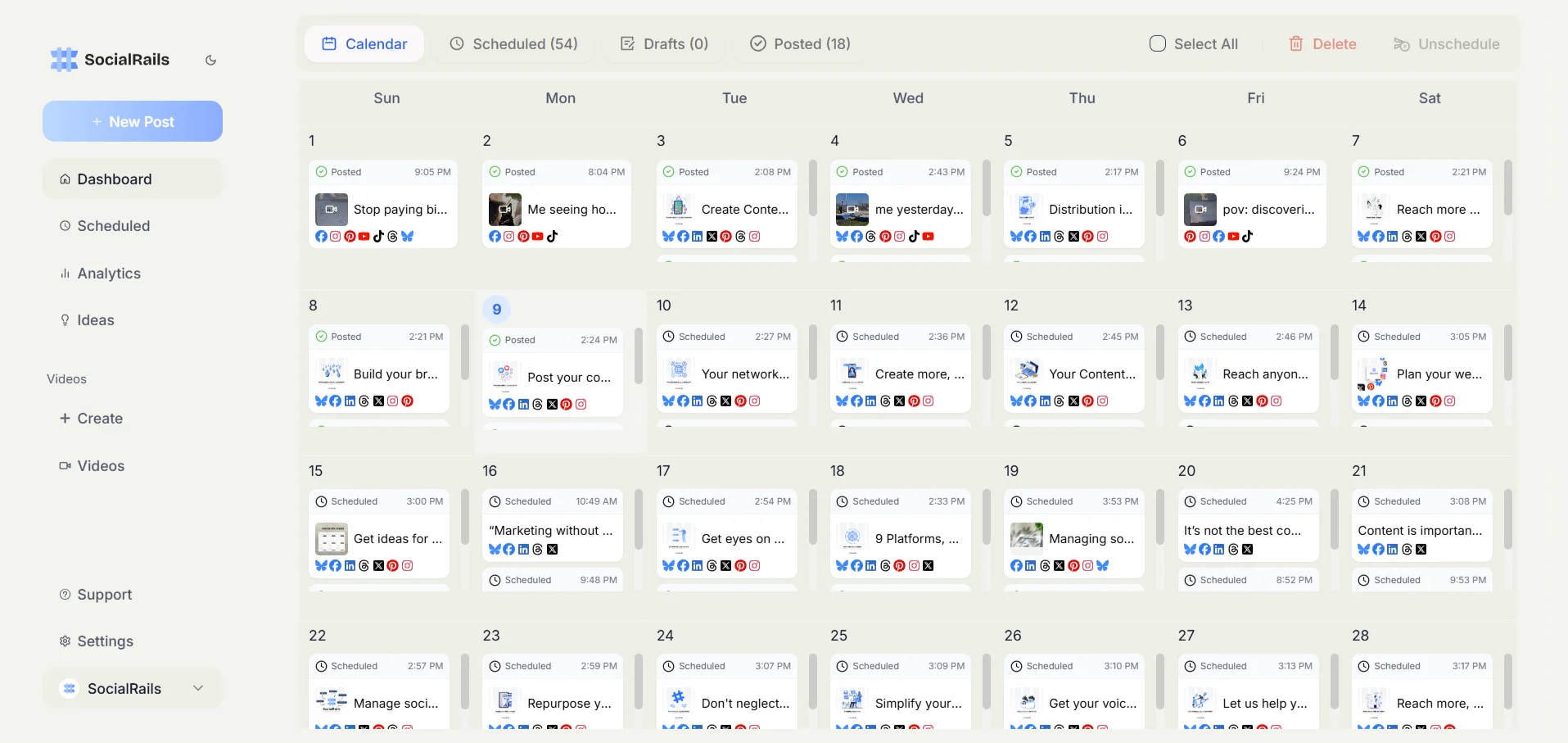
Instagram Ad Formats Overview
The length column is what performs, not a technical cap. Meta's own limits are far higher than anything you should actually run, so treating them as targets is a mistake. Carousel ads remain capped at 10 cards, which is worth noting because organic Instagram carousels went up to 20 in August 2024 and the two limits are frequently confused.
One retired feature to watch for. Instagram removed the swipe-up gesture from Stories in August 2021 and replaced it with the link sticker. Any guide still telling you to write "swipe up" in Stories creative is describing a version of Instagram that has not existed for five years. The replacement is also better: swipe-up was gated behind a follower threshold, while the link sticker is available to everyone.
Feed Ad Examples
Single Image Ads
Example 1: Glossier - Minimal Product Focus
What works:
- Clean, bright background
- Product as hero with no distractions
- Simple copy: "Your new everyday essential"
- Clear CTA: "Shop Now"
Why it converts: Glossier uses their signature aesthetic consistently. The minimal design stands out in busy feeds, and the product is instantly recognizable.
Apply this:
- Use consistent brand colors
- Remove unnecessary elements
- Let the product speak for itself
- Match copy length to visual simplicity
Example 2: Nike - Lifestyle/Aspirational
What works:
- Action shot showing product in use
- Emotional appeal (achievement, performance)
- Short, punchy headline
- Brand recognition without heavy branding
Why it converts: Nike sells the feeling, not just the product. The image shows what's possible, making viewers want to be part of that story.
Apply this:
- Show products in real-world context
- Connect to customer aspirations
- Use action imagery when relevant
- Let lifestyle sell the product
Example 3: Airbnb - User-Generated Style
What works:
- Authentic-looking photo (not obviously stock)
- Travel destination as hero
- Caption that sparks curiosity
- Subtle branding
Why it converts: The ad blends into organic content. It feels like a friend sharing a travel photo, not a company selling accommodation.
Apply this:
- Use authentic, non-polished imagery
- Feature destinations/outcomes over products
- Write captions that feel personal
- Prioritize "thumb-stopping" visuals
Video Feed Ads
Example 4: Dollar Shave Club - Problem/Solution
Structure:
- Hook (0-3 sec): "Tired of expensive razors?"
- Problem agitation (3-10 sec): Show frustration
- Solution intro (10-20 sec): Product reveal
- Benefits (20-40 sec): Demo key features
- CTA (40-45 sec): "Try for $1"
Why it converts: The hook addresses a universal pain point immediately. The solution feels inevitable, and the low-risk offer removes barriers.
Example 5: Headspace - Emotional Storytelling
Structure:
- Relatable scenario: Person stressed at work
- Transformation: Same person using app
- Outcome: Calm, peaceful state
- Soft CTA: "Start your journey"
Why it converts: Headspace shows the transformation, not features. Viewers see themselves in the "before" and want the "after."
Example 6: Duolingo - Entertainment First
Structure:
- Meme-style opening
- Character-driven humor
- Unexpected twist
- Product tie-in at end
- Subtle CTA
Why it converts: Duolingo's ads are so entertaining that people actually seek them out. The humor builds affinity before any sales message appears.
What makes Instagram video ads most effective?
Stories Ad Examples
Direct Response Stories
Example 7: Fashion Nova - Flash Sale
Elements:
- Bold text: "50% OFF"
- Countdown sticker
- Product showcase (quick cuts)
- Link sticker with a short, imperative label
- Urgency copy: "Today only"
Why it converts: Creates FOMO with time pressure. The fast editing matches Stories' quick consumption pattern. Clear value proposition (50% off) removes hesitation.
Example 8: Calm - Lead Generation
Elements:
- Serene video background
- Simple question: "Can't sleep?"
- Offer framed as low-commitment
- Link sticker placed where the thumb already rests
- Short social-proof overlay
Why it converts: Targets a specific pain point (insomnia) with immediate solution. The calm aesthetic demonstrates the product benefit.
Interactive Stories
Example 9: Spotify - Poll Ad
Format: Poll sticker
Question: "What's your workout vibe?" Options: "High energy" / "Steady pace"
Follow-up: Personalized playlist recommendation
Why it converts: Engagement through interaction. Users who answer feel invested and are more likely to take the next action.
Example 10: Netflix - Quiz Ad
Format: Quiz sticker
"Which show matches your mood?" A) Need a laugh B) Want thrills C) Feeling romantic
Result: Show recommendation with "Watch Now"
Why it converts: Gamification increases engagement. Personalized result feels tailored rather than generic advertising.
Reels Ad Examples
Trending Format Ads
Example 11: Fenty Beauty - Tutorial Trend
Format: "Get Ready With Me" trend
Structure:
- Trending audio
- Quick makeup application
- Product callouts
- Before/after reveal
- Shop link at end
Why it converts: Leverages existing trending format. Feels native to Reels, not like an ad. Demonstrates product in action.
Example 12: Gymshark - Transformation
Format: Transition trend
Structure:
- Regular clothes → Gym clothes transition
- Trending audio
- Aspirational but relatable creator
- Product tag overlay
Why it converts: Uses popular transition format. Shows product context. Creator relatability drives connection.
Educational Reels
Example 13: Canva - Quick Tip
Format: Design hack
Structure:
- Hook: "Design hack you need"
- Quick tutorial (3 steps)
- Impressive result
- "Try it free" CTA
Why it converts: Provides genuine value. Viewers save and share, extending reach organically. Demonstrates product capability.
Which Instagram ad format typically gets the BEST reach?
Example 14: Notion - Productivity Hack
Format: How-to
Structure:
- Problem: Messy to-do lists
- Solution: Notion template
- Quick walkthrough
- Template link CTA
Why it converts: Solves real problem. Template offer provides immediate value. Shows product without hard selling.
Carousel Ad Examples
Product Showcase Carousel
Example 15: ASOS - Outfit Carousel
Card structure:
- Full outfit shot
- Top close-up + price
- Bottom close-up + price
- Accessories + prices
- Shop the look CTA
Why it converts: Breaks outfit into shoppable components. Each swipe reveals new purchase opportunity. Creates complete shopping experience in-feed.
Story Carousel
Example 16: Mailchimp - Educational Series
Card structure:
- Hook: "5 email mistakes killing your open rates"
- Mistake 1 + fix
- Mistake 2 + fix
- Mistake 3 + fix
- "Get our full guide" CTA
Why it converts: Each card provides standalone value. Progressive disclosure keeps users swiping. Natural lead-in to guide download.
Before/After Carousel
Example 17: Olaplex - Results Showcase
Card structure:
- "Real results" intro
- Before (damaged hair)
- After (healthy hair)
- Product shot
- Shop CTA
Why it converts: Visual proof is compelling. Before/after format is immediately understood. Real results build trust.
Feature Carousel
Example 18: Slack - Product Features
Card structure:
- "Your team's command center"
- Feature 1: Channels
- Feature 2: Integrations
- Feature 3: Search
- Free trial CTA
Why it converts: Explains complex product simply. Each card is digestible. Builds value before asking for action.
Collection Ad Examples
Example 19: IKEA - Room Inspiration
Format: Hero image + product catalog
Hero: Styled living room Products: Sofa, lamp, rug, coffee table (tagged)
Why it converts: Inspiration-first approach. Products feel like solutions, not sales. Easy "shop the room" experience.
Example 20: Sephora - Beauty Edit
Format: Hero video + product grid
Hero: Makeup tutorial video Products: Each product used in tutorial
Why it converts: Tutorial creates desire. Products immediately shoppable. Reduces friction from inspiration to purchase.
Ad Copy Examples That Convert
Hook Formulas
Question hooks:
- "Still [doing old thing]?"
- "What if you could [desired outcome]?"
- "Know what [successful people] do differently?"
Statement hooks:
- "This changes everything."
- "The [product] that broke the internet"
- "Warning: Highly addictive"
Number hooks:
- "3 reasons you need this"
- "10,000+ 5-star reviews"
- "Sold out 7 times"
Body Copy Patterns
Problem-Solution:
"[Problem statement]. [Product] is the solution. [Key benefit]."
Example: "Dry skin ruining your makeup? Our Hydra Serum is the answer. 24-hour moisture without the grease."
Social Proof:
"[Number] people can't be wrong. [Product] is the [category leader] for [target audience]."
Example: "2 million happy subscribers can't be wrong. FreshBox is the meal kit busy professionals actually stick with."
Scarcity:
"Limited drop. [Number] pieces. Once they're gone, they're gone."
Example: "Limited drop. 500 pieces. Our best-selling jacket is back in new colors. Once they're gone, they're gone."
CTA Examples
Soft CTAs:
- "Learn more"
- "See how it works"
- "Explore"
Medium CTAs:
- "Get started"
- "Try free"
- "Shop now"
Urgent CTAs:
- "Claim your spot"
- "Don't miss out"
- "Get yours before they're gone"
A Carousel ad performs best when showing...
What Makes Instagram Ads Effective
1. Native Feel
Best-performing ads blend into organic content.
Tactics:
- Match platform aesthetics
- Use trending formats
- Avoid overly polished production
- Feature real people over models
2. Immediate Value
Viewers decide in 1-3 seconds whether to engage.
Tactics:
- Lead with benefit or hook
- Show transformation early
- Make value proposition clear instantly
- Don't save the best for last
3. Emotional Connection
People buy on emotion, justify with logic.
Tactics:
- Show desired outcome state
- Use relatable scenarios
- Feature aspirational but attainable lifestyle
- Address fears and desires
4. Clear Path Forward
Every ad needs obvious next step.
Tactics:
- Single, clear CTA
- Remove competing actions
- Match CTA to funnel stage
- Make action feel easy
5. Mobile Optimization
The vast majority of Instagram browsing happens on phones.
Tactics:
- Design for vertical (9:16)
- Use large, readable text
- Ensure tap targets are accessible
- Test on actual mobile devices
Creating Effective Instagram Ads: Framework
Step 1: Define Objective
- Awareness: Entertaining, shareable content
- Consideration: Educational, value-driven content
- Conversion: Direct offer, clear CTA
Step 2: Choose Format
Match format to objective and content:
- Complex story → Carousel or video
- Single product → Feed image or Collection
- Urgency/promotion → Stories
- Entertainment → Reels
Step 3: Script Your Hook
Write 5+ hook options:
- Question that targets pain point
- Bold statement or claim
- Curiosity gap
- Social proof lead
- Unexpected or contrarian opening
Step 4: Build Creative
Image ads:
- Hero product or lifestyle shot
- Text overlay (optional, brief)
- Brand elements (logo, colors)
Video ads:
- Hook (0-3 seconds)
- Value/story (3-25 seconds)
- CTA (final 5 seconds)
Step 5: Write Copy
- Primary text: 125 characters visible (write full copy, but front-load)
- Headline: 40 characters max
- CTA button: Match to objective
Step 6: Test Variations
Create 3-5 variations:
- Different hooks
- Different visuals
- Different CTAs
- Different copy angles
Common Instagram Ad Mistakes
Visual Mistakes
- Heavy text on the image. Note that Meta's old 20% text rule was dropped in September 2020 and is no longer a rejection reason, so ads will not be blocked for it. Text-heavy creative still tends to be served less efficiently, so the advice survives the rule
- Low-resolution images
- Inconsistent branding
- Boring first frame (video)
- Not optimized for mobile
Copy Mistakes
- Burying the hook
- Too long for placement
- No clear CTA
- Feature-focused instead of benefit-focused
- Generic, non-specific claims
Targeting Mistakes
- Audience too broad
- Audience too narrow
- Not using Custom/Lookalike Audiences
- Ignoring placement optimization
- Not testing audiences
Strategy Mistakes
- Expecting immediate conversions
- Not retargeting
- Only running one ad variation
- Inconsistent testing
- Ignoring performance data
FAQ
What type of Instagram ad converts best?
How much should I spend on Instagram ads?
Why are my Instagram ads not converting?
How do I find competitor Instagram ads?
What's the ideal Instagram video ad length?
Do Instagram Stories ads still use swipe up?
Related Resources:
- Instagram Analytics Guide
- Instagram Marketing Strategies
- Instagram Carousel Posts Guide
- Instagram Image Sizes Guide
- How to Boost Instagram Posts
- Instagram Promotion Costs
Related Tools:
Ready to create better Instagram ads? Try SocialRails for scheduling, analytics, and content management.
Create content, post everywhere
Create captions, images, and videos with AI. Schedule to 9 platforms in seconds.
Start your free trialWas this article helpful?
Let us know what you think!