
Instagram Filters in 2026: What Still Exists After Meta Spark Shut Down

Short answer: "Instagram filter" means three different things, and they are in different states.
- Built-in photo and video filters (Clarendon, Juno, Gingham, Lark, Valencia, Ludwig and the rest of the classic set) are alive and unchanged. You apply them on the editing screen after you tap Next. Tap a filter twice to get a 0 to 100 strength slider.
- Meta's own AR camera effects are alive. They sit in the effects tray in the Stories and Reels camera.
- Third-party AR effects, the face filters and branded effects built by outside creators, no longer exist on Instagram. Meta closed the Meta Spark platform on 14 January 2025 and those effects were removed from Instagram, Facebook and Messenger that day. You cannot create or publish a custom Instagram filter any more. There is no replacement tool.
If you landed here from a guide that told you to download Spark AR Studio, that advice is roughly eighteen months out of date.
Jump to: The three kinds of filter - What Meta removed and when - Built-in photo filters - Seasonal picks - Picking by content type - Stories and Reels effects - Does filtering change engagement - Building a consistent look - FAQ
The Three Things People Call an Instagram Filter
Almost every problem readers have with this topic comes from collapsing three separate features into one word. They live in different parts of the app, they do different things, and only one of them was affected by the 2025 shutdown.
The practical consequence: if someone tells you "Instagram deleted the filters," they are talking about the third column, not the first. Clarendon did not go anywhere.
Create content, post everywhere
Create captions, images, and videos with AI. Schedule to 9 platforms in seconds.
Start your free trial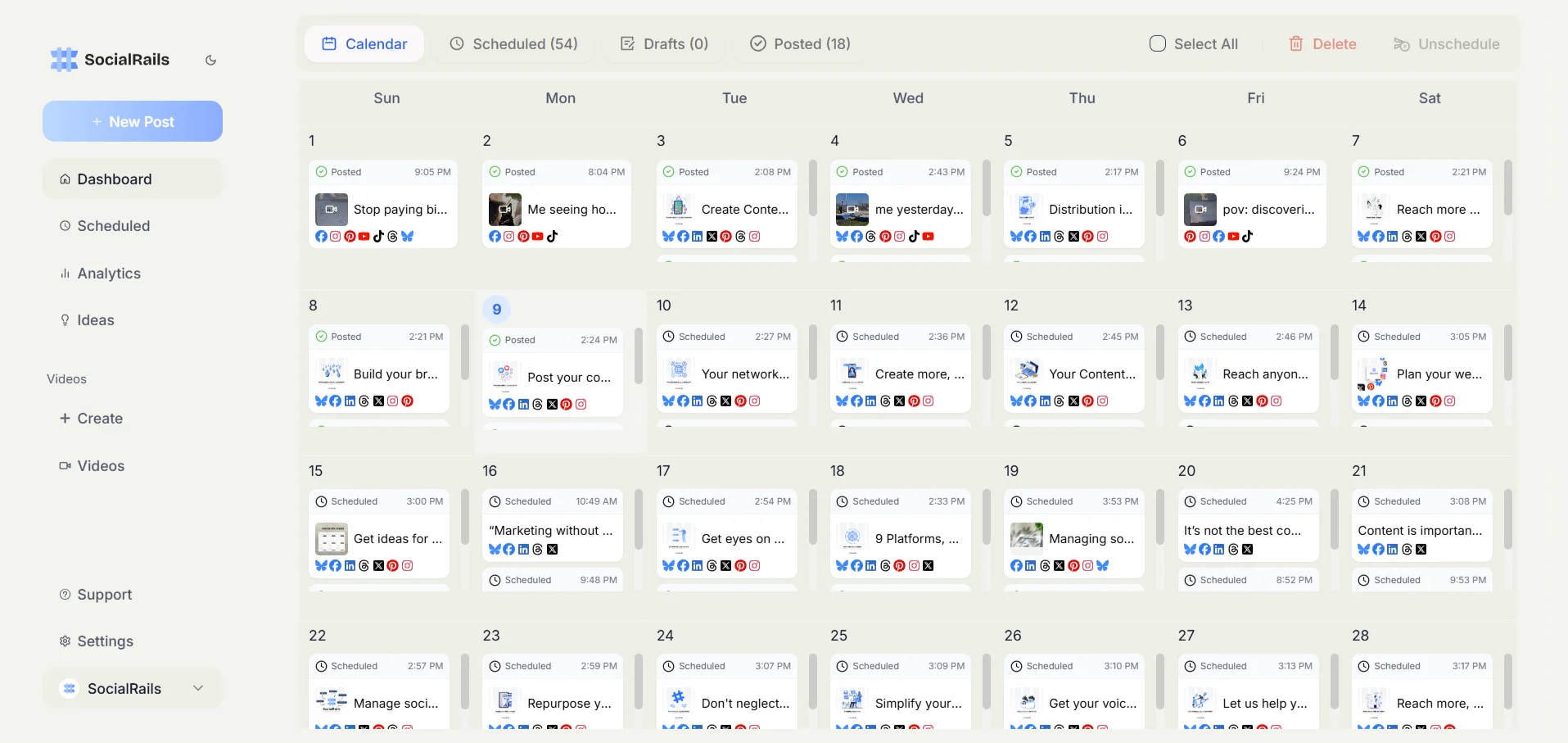
What Meta Removed and When
This is the part almost no competing guide has updated, so it is worth being precise about the dates.
August 2024. Meta announced it was ending the Meta Spark platform, the toolchain formerly known as Spark AR Studio, which third-party creators and brands used to build AR effects for Instagram, Facebook and Messenger. Meta's own announcement said the change was "effective Tuesday, January 14, 2025" and that users could keep using third-party Spark tools and AR effects "across our Family of Apps until January 14, 2025."
14 January 2025. The shutdown took effect. Meta Spark Studio, Meta Spark Player and Meta Spark Hub stopped accepting logins, and third-party AR effects stopped appearing in the Instagram, Facebook and Messenger cameras. Effects that brands and creators had spent years building simply vanished from the tray.
What survived. Meta was explicit that this applied to outside creators only. Its announcement states that "AR Effects owned by Meta will continue to be available to our users across our Family of Apps." That is exactly what happened: the effects tray still works, it is just stocked entirely by Meta now, and it is noticeably thinner than it was in 2024.
What did not get replaced. There is no successor product for publishing custom AR effects to Instagram. Meta did release a standalone mobile video editing app, Edits, in April 2025, but that is an editor for making videos, not a way to build camera effects other people can use.
Two related pieces of stale advice you will still see repeated. "Swipe up" in Stories has been retired for years and replaced by the link sticker, so any tutorial telling you to swipe up on a filter promo is old. And "swipe to the end of the camera reel and tap Browse Effects to find creator filters" describes a gallery of third-party effects that no longer has third-party effects in it.
Instagram Built-In Photo Filters
These are the originals, and they are the ones most people actually mean. They are applied after capture, on the editing screen you reach by tapping Next, and they do nothing but recolor the image.
How to apply one properly
- Select or shoot your photo or video, then tap Next.
- Scroll the filter carousel along the bottom and tap a filter to preview it.
- Tap the same filter a second time. A strength slider from 0 to 100 appears. This is the single most useful control on the screen and most people never find it.
- Set it somewhere around 50 to 70 rather than leaving it at full strength.
- Switch to the manual adjustments and fine tune from there.
The manual sliders that sit alongside the filters are Brightness, Contrast, Structure, Warmth, Saturation, Color, Fade, Highlights, Shadows, Vignette, Tilt Shift and Sharpen. Worth knowing what is not in that list, because plenty of guides invent tools Instagram does not have: there is no grain slider, no clarity slider and no HDR toggle in the Instagram editor. Structure is the closest thing to clarity, and it is the one to reach for when a shot looks flat rather than reaching for more saturation.
A note on the "most popular filter" claim. You will see confident lists ranking Instagram filters by usage share, often with a specific percentage attached to Clarendon. Instagram does not publish per-filter usage data, so those numbers have no traceable source. Clarendon is widely cited as the most used filter and that is plausible given it is first in the carousel, but treat any figure attached to it as invented.
Seasonal Filter Picks
These are editorial recommendations, not Instagram guidance, and they are starting points rather than rules. Every one of these filters still exists.
The common failure is stacking: warm filter, then Warmth up, then Saturation up. Pick the filter or the manual warmth, not both at full strength. Snow is the classic trap, because Instagram's brighter filters will happily blow out the highlights on a white scene, which is why Winter benefits from pulling the filter strength down further than any other season.
Picking a Filter by Content Type
Portraits. Keep it light. Aden and Juno are forgiving on skin. The failure mode is a heavy filter shifting skin tone toward orange or grey. Instagram has no dedicated "Portrait" filter, despite what several guides claim.
Food. Valencia for warm and appetizing, Juno for clean and modern. Raise Structure rather than Saturation, because texture is what makes food look good and saturation is what makes it look fake.
Landscape and scenery. Lark for bright open skies, Hudson when you want the shot to feel cold. Adjust to the weather rather than to a preset habit.
Products. Minimal or nothing. Color accuracy matters more than mood, and a filtered product shot is a returns problem waiting to happen. If you want atmosphere, get it from the styling and the light, not the grade.
You're posting a product photo of your new lipstick line. Which filter approach is best?
💡 Tip: Think carefully before selecting your answer!
Effects in Stories and Reels Today
The effects tray still exists. What changed is who fills it.
What you will find: Meta-made face effects, color washes, animated overlays, transitions and interactive effects that respond to movement. Meta has continued adding first-party video effects to the in-app camera and Reels editor.
What you will not find: effects made by creators, agencies or brands. That includes the entire category of branded campaign filters, the "which X are you" spinner effects, the elaborate beauty filters that outside developers built, and most location-themed effects. Those were overwhelmingly third-party and they were removed on 14 January 2025.
What this means if you were planning a branded filter campaign: that channel is closed. There is no paid tier, no partner program and no workaround. Budget that was going to a custom AR effect is better spent on Reels production, since a strong first frame and a well cut opening three seconds do more for reach than an effect nobody can find.
Finding what is still there: open the Stories or Reels camera, browse the effects tray, and save the ones you want by tapping the save icon so they appear in your own list. Effects still get discovered the same way they always did, by tapping the effect name on someone else's Reel and trying it, which now works reliably because every effect you encounter is Meta's and is not going to be deleted out from under you.
Does Filtering Change Engagement
Here is the honest version, because this is where most filter guides invent numbers.
There is exactly one widely cited academic study. Bakhshi, Shamma, Kennedy and Gilbert published "Why We Filter Our Photos and How It Impacts Engagement" at ICWSM in 2015. Its abstract reports that "filtered photos are 21% more likely to be viewed and 45% more likely to be commented on by consumers of photographs," from an analysis of "a corpus of 7.6 million Flickr photos." It also found that filters raising warmth, exposure and contrast performed best.
Three caveats that usually get dropped when this stat is recycled:
- It is from 2015. It predates Reels, predates the current ranking system, and predates the shift in taste away from heavy filtering.
- It measured Flickr, not Instagram. The photo-sharing behaviour of Flickr users in 2015 is not obviously transferable.
- It is about filtered versus unfiltered, not about which filter. It offers no support for "use Clarendon and get 21% more views."
So: a light, consistent grade probably helps, mostly because it makes a feed look intentional. Any page quoting a precise 2026 engagement lift per filter has made it up. Track it yourself instead. Post comparable content with and without your house grade over a few weeks and read the saves and shares, which respond to how a post looks far more than likes do.
Building a Consistent Look
With custom AR effects gone, a repeatable editing recipe is the only "custom filter" available to you. Write it down as three lines:
- Base filter and strength. For example: Juno at 60, Aden at 50 for anything with skin in it.
- Adjustment deltas. For example: Structure +10, Warmth +5, Shadows +8. Same numbers every time.
- What you never do. For example: never above 70 strength, never two filters, never Saturation above +15.
Two or three filters, applied consistently, is the sweet spot. One filter breaks the moment the lighting changes; a new filter every post makes the grid look like it belongs to several different accounts.
If you want more control than Instagram's sliders offer, edit outside the app and upload the finished file with no Instagram filter applied. That is also how most accounts with an obviously distinctive look actually do it, and it survives any future change Meta makes to the in-app editor.
Frequently Asked Questions
Can I still create my own Instagram filter?
Not as an AR camera effect. Meta shut the Meta Spark platform (formerly Spark AR Studio) on 14 January 2025, and third-party AR effects were removed from Instagram, Facebook and Messenger on that date. There is no replacement tool for publishing custom camera effects to Instagram. What you can still do is build a repeatable look yourself: pick one of Instagram's built-in filters, drop its strength to roughly 50 to 70 percent, note the adjustment slider values you use, and reapply the same recipe every time. Third-party editors such as Lightroom presets or VSCO can also produce a house look that you export and then post unfiltered.
Why did my favorite Instagram filter suddenly disappear?
If it was a face filter or AR camera effect made by a creator or a brand, it is gone permanently. Meta removed all third-party AR effects on 14 January 2025 when it closed the Meta Spark platform. Meta's own effects were not affected and are still in the camera. If the filter that vanished was a classic photo filter like Clarendon or Juno, check that you are looking at the filter carousel on the editing screen after tapping Next, not the camera effects tray, because those are two different features in two different places.
What kinds of Instagram filters still exist in 2026?
Three things get called a filter, and only two of them still have a wide selection. Built-in photo and video filters (Clarendon, Juno, Gingham, Lark, Valencia and the rest of the classic set) are applied on the editing screen after you tap Next, and they are all still there. Meta's own AR camera effects are still in the effects tray in Stories and Reels. Third-party AR effects made by outside creators no longer exist on Instagram.
What are the best Instagram filters for autumn photos?
Ludwig, Valencia and Amaro all push warm golds and reds, which suits foliage and low autumn light. Rise lifts a dull overcast shot without turning it grey, and Gingham gives a muted, faded look if you want something quieter. These are editorial picks, not Instagram recommendations. Whichever you choose, drop the strength slider rather than applying the filter at full force, and nudge Warmth up a little instead of stacking a second filter.
How do I change how strong an Instagram filter is?
Tap the filter once to apply it, then tap the same filter a second time. A strength slider appears, running from 0 to 100. Most filters look far more natural somewhere in the 50 to 70 range than at the default. Below the filter carousel you will also find manual sliders, including Brightness, Contrast, Structure, Warmth, Saturation, Color, Fade, Highlights, Shadows, Vignette, Tilt Shift and Sharpen, which you can layer on top of a reduced-strength filter.
What is the difference between an Instagram filter and an effect?
A filter is a color grade baked into a still photo or a video after you shoot it. You choose it on the editing screen after tapping Next, and it changes tone, contrast and saturation only. An effect is augmented reality applied live through the camera before or during capture, so it can track your face, add objects to the scene or react to movement. Effects live in the camera tray in Stories and Reels. Since January 2025 the effects tray contains only effects Meta itself made.
Do filters actually get you more engagement?
The only well known study on this is Bakhshi, Shamma, Kennedy and Gilbert, 'Why We Filter Our Photos and How It Impacts Engagement', published at ICWSM in 2015. Its abstract reports that 'filtered photos are 21% more likely to be viewed and 45% more likely to be commented on', based on a corpus of 7.6 million Flickr photos. Treat that carefully: it is more than a decade old, it measured Flickr rather than Instagram, and it predates Reels and the modern ranking system entirely. Anyone quoting a precise engagement lift for Instagram filters today is almost certainly recycling this paper without saying so.
Should I use the same filter on every post?
Pick two or three and rotate between them rather than committing to one. A single filter applied to every subject fails as soon as the lighting changes, and a different filter on every post makes the grid look assembled by different people. The practical version is a short written recipe: which filters you allow, what strength you apply them at, and which adjustment sliders you touch.
Related Reading
- Instagram Carousel Posts: Complete Guide - Carousels now run to 20 slides, and a consistent grade across the slides is what makes them read as one post.
- How to Get More Views on Instagram - What the ranking signals actually are, and which popular tips are folklore.
- How to Share a Reel to Your Story - Getting a graded Reel in front of your existing followers.
- Aesthetic Instagram Highlight Name Ideas - The other half of a consistent profile.
- Free Instagram Tools - Bio generators, caption helpers and other free utilities.
Planning your Instagram content in advance? Try SocialRails to schedule posts, Reels and Stories from one calendar.
Was this article helpful?
Let us know what you think!