

The Overlap Between AI Careers and Social Media Automation

TL;DR - Quick Answer
11 min readHybrid roles are emerging. Automation-driven platforms are creating roles that combine technical fluency with social accountability.
Artificial intelligence is no longer a background technology. It is shaping how people work, create value, and build long-term professional relevance. Nowhere is this more visible than in the evolution of modern digital marketing workflows, where automation tools increasingly rely on machine learning rather than static rules.
Create content, post everywhere
Create captions, images, and videos with AI. Schedule to 9 platforms in seconds.
Start your free trial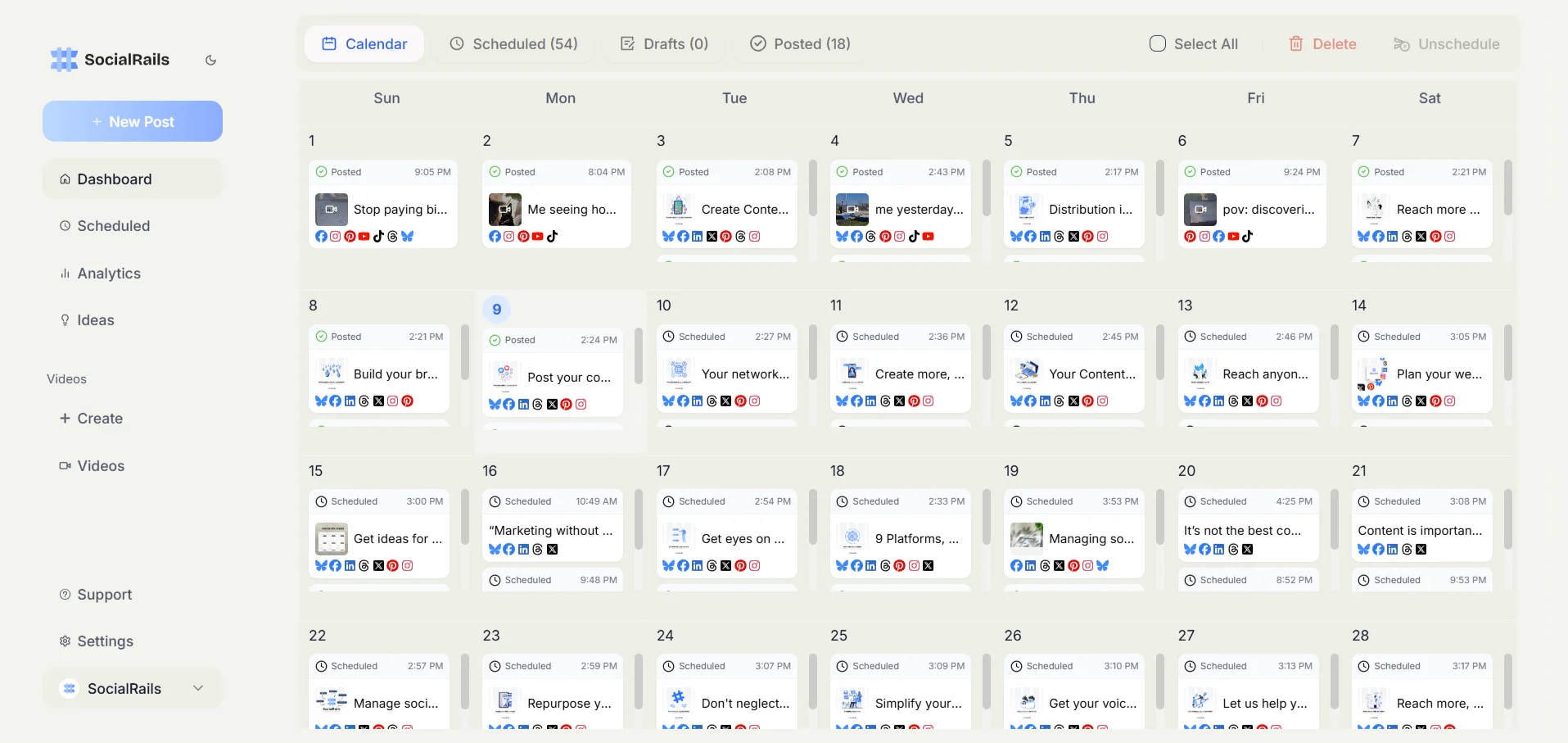
This shift has created a practical intersection between technical expertise and content-driven platforms, changing both career paths and organizational structures.

As companies scale their online presence, they face a dual challenge: maintaining human authenticity while operating at machine speed. This tension has led to new roles, responsibilities, and decision frameworks that sit between engineering, analytics, and communication. Understanding this overlap is essential for professionals who want to remain employable as automation becomes the norm rather than the exception.
Why Career Paths and Automation Are Converging
AI-driven tools are no longer isolated inside research teams or enterprise data labs. They are embedded in everyday platforms that manage publishing schedules, audience segmentation, and performance analysis. As a result, AI careers increasingly demand familiarity with applied automation rather than abstract model design.
This convergence is driven by three structural forces:
- Businesses need repeatable systems that can adapt in real time to user behavior
- Platforms must comply with evolving trust and quality standards imposed by search engines and regulators
- Professionals are expected to bridge technical understanding with ethical and social responsibility
The outcome is a new professional layer that translates between the vast capabilities that AI offers and how people intend to use this enormous potential to their advantage.
How Automation Is Reshaping Professional Skill Sets
The rise of social media automation has accelerated the demand for hybrid skill profiles. These roles are neither purely technical nor purely creative, but operationally capable in both.
Key changes in skill expectations include:
- Understanding automated decision-making — Professionals are expected to understand how automated systems make decisions so they can audit, correct, or override outputs when necessary. This includes knowing where AI bias, repetition, or hallucinations can likely occur.
- Connecting data to narrative — Teams increasingly value individuals who can connect data signals to narrative outcomes, ensuring that automation enhances rather than replaces human judgment.
- Cross-platform fluency — Career progression now favors those who can work across tools, platforms, and governance frameworks rather than specializing in a single interface.
These expectations reflect a broader shift from getting things done to making the entire system work properly to reach the desired goals.
Practical Roles Emerging at the Intersection
Many professionals entering the field do not start as machine learning engineers. Instead, they come from a wide range of fields—marketing, communications, or analytics backgrounds—and then gradually specialize. Those interested in AI careers often find that automation tools offer a low-barrier entry point to develop applied expertise. Detailed overviews of these pathways can be found online when exploring AI careers, which typically outline how roles such as AI trainers and data evaluators translate across industries.
Common roles include:
- Automation strategists who design content workflows that balance efficiency with industry compliance and organizational identity
- AI trainers and evaluators who test and refine model outputs using case studies and real-world engagement data instead of machine learning benchmarks
- Governance-focused specialists who ensure automated publishing aligns with platform rules, search quality standards, and consumer protection expectations
These roles exist because automation without oversight quickly becomes a liability.
Designing Responsible Automation Workflows
Effective automation is not about publishing more content. It is about publishing the right content, at the right time, with measurable value. This requires a people-first approach grounded in system design rather than shortcuts.
Actionable workflow principles include:
- Define human review checkpoints that intervene before automation causes reputational or compliance risk. These checkpoints should be documented and measurable.
- Use performance feedback loops to retrain or adjust automated outputs based on real audience behavior, not internal metrics.
- Separate ideation, generation, and distribution layers so that automation supports creativity instead of suppressing it.
These practices help professionals remain accountable even as systems scale.
Maintaining Originality and Trust at Scale
One of the biggest challenges in automation-heavy environments is avoiding content homogenization. Platforms and search engines increasingly reward originality, context, and experiential value.
This is where understanding techniques for making AI-generated content unique becomes operationally important rather than optional. Originality is no longer a creative preference—it is a distribution requirement.
To protect trust and visibility:
- Professionals must ensure that automated systems learn from diverse data sources and avoid overfitting to past performance alone
- Content outputs should be evaluated for informational gain, not just syntactic variation
- Teams should document the rationale for automation decisions to create transparency for audits and future optimization
Trust is built through repeatable accountability, not claims of innovation.
Tool Selection as a Career Signal
The tools professionals choose signal how they think about automation. Sophisticated teams prefer platforms that expose logic and allow human intervention over black-box systems.
Evaluating an original content creation tool is not just a procurement task—it is a strategic decision that shapes how skills develop internally. Tools that encourage thoughtful planning foster better long-term outcomes than those optimized only for speed.
Key evaluation criteria include:
- Whether the platform allows granular control over tone, cadence, and audience segmentation
- How performance data is surfaced and whether it supports learning rather than just reporting
- The extent to which automation workflows can be adapted as organizational goals evolve
Career resilience often mirrors tool literacy.
Sociological and Data-Science Perspective on Automation
Recent research highlights the broader implications of automation on professional identity and labor markets. The 2025 Stanford AI Index Report shows that organizations adopting AI systems most successfully are those that invest in human oversight roles alongside deployment, rather than eliminating them outright. This finding underscores the social value of hybrid expertise and supports the emergence of governance-focused positions in organizations.
From a sociological perspective, automation does not eliminate work—it redistributes responsibility. Data science reinforces this by showing that systems without human calibration degrade in performance over time due to shifting user behavior and platform incentives.
Financial and Organizational Implications
Automation changes cost structures as much as workflows. While tools reduce marginal publishing costs, they increase the value of strategic oversight and risk management.
Organizations leveraging automation with AI content generation effectively tend to reinvest savings into higher-quality analysis, experimentation, and training rather than pure volume expansion.
This creates financial incentives for professionals who can:
- Quantify the return on automation investments beyond short-term engagement metrics
- Align automated output with revenue, retention, or brand equity goals
- Communicate the value of automation to non-technical stakeholders in clear economic terms
Financial literacy is becoming part of technical credibility.
Long-Term Career Sustainability
The overlap between automation platforms and professional development is not temporary. As systems become more capable, the human role shifts upward, not outward.
Professionals who thrive in this environment focus on:
- Understanding how automated systems influence behavior, attention, and trust
- Building transferable frameworks rather than tool-specific routines
- Staying informed about regulatory, ethical, and platform-level changes that affect automation boundaries
This mindset transforms automation from being a threat into becoming a multiplier.

Related Guides
- Social Media Copywriting Tips
- B2B Marketing Funnel Guide
- Digital Marketing Channels
- Influencer Collaboration Guide
Key Takeaways
- Hybrid roles are emerging. Automation-driven platforms are creating roles that combine technical fluency with social accountability.
- System design matters. Sustainable career growth depends on understanding system design, not just output generation.
- Trust is a competency. Originality, governance, and accountability are becoming core professional skills alongside efficiency.
- Oversight creates value. Organizations and individuals who invest in oversight skills benefit most from scalable automation systems.
Was this article helpful?
Let us know what you think!