
Social Media Platforms List 2026: The Real, Current Directory

Most "top 100 social media platforms" lists are padded with sites that shut down years ago and user counts that were never real. This guide is different: every platform below is verified as operating in 2026, sizes are given as approximate ranges from named sources, and there is a dedicated section on the platforms that died or were renamed so you do not waste time on ghosts.
For a conceptual breakdown of how these categories work, see our guide on which generation uses social media most. For managing several of them at once, see the best social media schedulers.
TL;DR
- Real, currently operating platforms worth knowing in 2026 number in the dozens, not a padded hundred. This directory lists roughly 90 real ones by category.
- The biggest platforms by users are Facebook, YouTube, WhatsApp, Instagram, and TikTok, each measured in the billions. Exact figures vary by source and by whether you count monthly active users, registered members, or monthly visitors.
- User counts here are approximate and sourced (mainly DataReportal Digital 2026 plus company reports). Treat any single precise number with caution.
- Several platforms people still list are gone or renamed: Google+, Vine, Periscope, Mixer, IGTV, Orkut, and Ello among them. BeReal still runs but is now owned by Voodoo. Clubhouse survives but pivoted to a small voice app. See the died or renamed section.
On this page
- The biggest global platforms
- Messaging and chat apps
- Video and live streaming platforms
- Professional and business networks
- Community, discussion and forum platforms
- Visual, creative and portfolio platforms
- Regional and international platforms
- Dating and interest based social apps
- Alternative and decentralized networks
- Platforms that died or were renamed
- How to choose the right platforms
- Frequently asked questions
Create content, post everywhere
Create captions, images, and videos with AI. Schedule to 9 platforms in seconds.
Start your free trial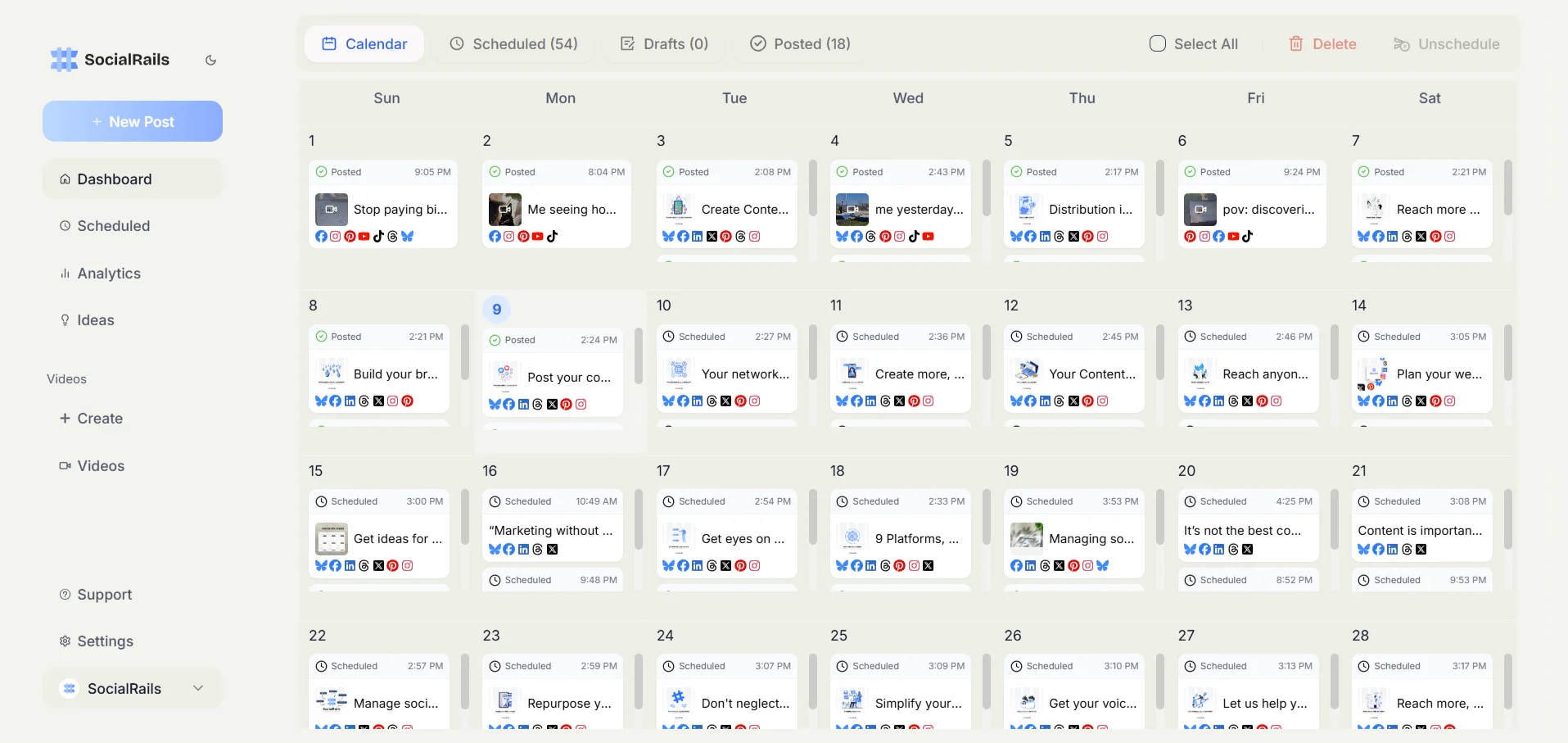
The biggest global platforms
These are the highest reach platforms in 2026. Figures are approximate and mix different metrics, so read the note under the table before quoting any number.
Source note: figures draw mainly on DataReportal's Digital 2026 reports and each company's own disclosures. Different sources measure different things (monthly active users, registered accounts, advertising reach, or monthly visitors), and platforms often report the most flattering metric. Use these as rough magnitudes, not exact headcounts.
Messaging and chat apps
Messaging apps are where the largest audiences actually spend time. Many double as social platforms through channels, status updates, and communities.
- WhatsApp: global messaging leader, roughly 2.5 to 3 billion users, strong in India, Brazil, Europe, and much of the Global South.
- Facebook Messenger: hundreds of millions of users, tightly integrated with Facebook.
- Telegram: around 1 billion monthly users, known for large public channels and bots.
- WeChat: the dominant app in China, combining chat, payments, and mini-programs.
- Signal: privacy-first encrypted messaging, tens of millions of users, popular with journalists and security-minded users.
- Line: leading messenger in Japan, Taiwan, and Thailand.
- KakaoTalk: dominant in South Korea, near-universal in that market.
- Viber: still widely used across Eastern Europe and parts of Asia.
- Discord: voice, video, and text servers, originally gaming and now used by communities of every kind, hundreds of millions of registered users.
- Slack and Microsoft Teams: workplace messaging rather than social networks, but central to how professionals communicate.
Video and live streaming platforms
- YouTube: the default video platform, both long-form and Shorts.
- TikTok: short-form video and one of the strongest discovery engines online.
- Twitch: the leading live streaming platform for gaming, plus "just chatting" and creative streams.
- Kick: a newer streaming competitor to Twitch with creator-friendly revenue splits.
- Rumble: video platform positioned as an alternative to YouTube.
- Vimeo: higher-quality hosting aimed at creators and businesses rather than mass social feeds.
- Dailymotion: video sharing with a stronger European footprint.
- Bilibili: major Chinese video community, popular with younger audiences and anime and gaming fans.
- Niconico: long-running Japanese video platform known for on-screen comments.
- Odysee: blockchain-based video sharing built on the LBRY protocol.
- BitChute: decentralized video hosting.
Professional and business networks
- LinkedIn: the dominant professional network, over a billion registered members, used for hiring, B2B marketing, and thought leadership.
- Xing: professional networking focused on German-speaking Europe.
- Behance: Adobe-owned portfolio network for creative professionals.
- Dribbble: design portfolios, inspiration, and hiring.
- GitHub: code hosting that functions as a social network for developers through profiles, stars, and followers.
- Stack Overflow: question-and-answer community for programmers.
- ResearchGate: networking and paper sharing for academics and researchers.
- Academia.edu: another academic paper-sharing network.
- Wellfound (formerly AngelList Talent): startup jobs and founder networking.
- Product Hunt: launch platform and community for new tech products.
- Fishbowl: professional discussions, often anonymous, by industry.
- Blind: anonymous workplace community with verified company emails, popular in tech.
- Glassdoor: company reviews, salaries, and job listings.
Community, discussion and forum platforms
- Reddit: one of the largest discussion sites on the web, organized into subreddits.
- Quora: question-and-answer platform.
- Discord: community servers spanning far beyond gaming.
- Nextdoor: neighborhood-based social network for local discussion.
- Tumblr: microblogging and fandom communities, now owned by Automattic.
- Substack: newsletters plus a social layer (Notes) for writers and readers.
- Hacker News: tech and startup news and discussion run by Y Combinator.
- Stack Exchange: a network of topic-specific Q&A communities.
- Lemmy: open-source, federated link-aggregation similar in spirit to Reddit.
- Digg: the classic aggregator, relaunched under new ownership.
Visual, creative and portfolio platforms
- Instagram: the largest visual-first social network.
- Pinterest: visual discovery and planning, strong for lifestyle, DIY, and commerce. If it is not the right fit, see our Pinterest alternatives guide.
- DeviantArt: long-running art community.
- ArtStation: portfolio platform for game, film, and concept artists.
- Cara: an artist-focused network that grew as a response to AI-art concerns.
- Flickr: photo sharing and photography community.
- 500px: photography showcase and licensing.
- VSCO: photo editing plus a lower-pressure sharing community.
- SmugMug: photo hosting and sales for professionals (it also owns Flickr).
- Unsplash: free stock photography with a contributor community.
Regional and international platforms
- WeChat, Weibo, QQ, and Qzone: the core of China's social landscape (microblogging, messaging, and profiles).
- Douyin: the Chinese version of TikTok, run separately by ByteDance.
- Kuaishou: another major Chinese short-video platform.
- Xiaohongshu (RED / Little Red Book): lifestyle, reviews, and social commerce in China, increasingly influential abroad.
- Bilibili: Chinese video community (also listed under video).
- VK (VKontakte) and Odnoklassniki: leading networks in Russia and Russian-speaking regions.
- Line, KakaoTalk, and Viber: regional messaging leaders in Asia and Eastern Europe.
- Zalo: the dominant messaging and social app in Vietnam.
- ShareChat and Moj: India-focused platforms for regional-language content and short video.
- Naver Band and Cafe: group and community platforms popular in South Korea.
Dating and interest based social apps
Dating apps and interest-based networks are social platforms too, often with dedicated, highly engaged audiences.
- Tinder: the largest dating app by reach, swipe-based matching.
- Bumble: dating where women message first, plus BFF and networking modes.
- Hinge: relationship-focused dating with prompt-based profiles.
- Grindr: dating and social networking for gay, bi, trans, and queer people.
- HER: dating and community for LGBTQ+ women and non-binary people.
- OkCupid, Match, and eHarmony: established dating services aimed at longer-term matching.
- Coffee Meets Bagel and Feeld: curated and interest-specific dating apps.
- Meetup: organizing in-person interest groups and events.
- Foursquare and Swarm: location check-ins and local discovery.
- Yelp: local business reviews and discovery.
- Strava: social fitness network for runners and cyclists.
- Letterboxd: social network for film lovers, logging and reviewing movies.
- Goodreads: social network for readers, tracking and reviewing books.
- Untappd: social app for logging and rating beers.
- Last.fm: music tracking and recommendations.
Alternative and decentralized networks
Many of these grew as reactions to changes at the larger platforms. Sizes are smaller and shift quickly.
- Mastodon: open-source, federated microblogging across independent servers.
- Bluesky: decentralized text network built on the AT Protocol, tens of millions of users.
- Threads: Meta's text network, large but tied to Instagram accounts.
- Nostr: a protocol (used by clients like Damus and Primal) for censorship-resistant social posting.
- Farcaster (with clients such as Warpcast): a decentralized social protocol popular in crypto circles.
- Truth Social: microblogging platform associated with Donald Trump.
- Gab and Gettr: alternative networks marketed around free-speech positioning.
- Minds: crypto-incentivized, open-source social network.
- Spoutible and Spill: newer text networks that emerged after upheaval at X.
- Diaspora: one of the original federated, privacy-focused networks, still running quietly.
Platforms that died or were renamed
This is the section most listicles skip, and it is where a lot of "top 100" articles quietly lie by listing dead sites as if they were current. Here is the honest status of platforms people still mention:
- Google+: shut down for consumers in April 2019.
- Vine: closed by Twitter in 2017. Its successor Byte (later Clash) also shut down.
- Periscope: Twitter's live-streaming app, discontinued in March 2021.
- Musical.ly: merged into TikTok in 2018 and no longer exists as a separate app.
- Mixer: Microsoft's game-streaming service, shut down in 2020 and folded toward Facebook Gaming.
- IGTV: discontinued in 2022. Its long-form video was merged into regular Instagram video and Reels.
- Spotify Greenroom / Spotify Live: the standalone live-audio app shut down on April 30, 2023.
- Orkut: Google's network, hugely popular in Brazil and India, shut down in 2014.
- Friendster: an early social pioneer, gone as a social network in 2011 and fully closed in 2015.
- Bebo: repeatedly shut down and relaunched, never regaining relevance.
- Ello: the "anti-Facebook" of 2014, went dark in 2023 and its archives are gone.
- MySpace: technically still online but effectively a music-nostalgia archive, not an active social network.
- Yik Yak, Peach, and Path: earlier buzzy apps that shut down (Path in 2018, Peach effectively abandoned, Yik Yak revived and then wound down again).
- Google My Business: not dead but renamed. It is now Google Business Profile, managed through Search and Maps.
Two important "not dead, but changed" cases:
- BeReal: still operating, but acquired by mobile-games company Voodoo for a reported 500 million euros in June 2024. It is no longer an independent startup.
- Clubhouse: still exists, but the 2021 audio-room boom collapsed. It pivoted to a small voice-messaging app for friends and is a fraction of its former size.
- Parler: shut down in April 2023 after the platform changed hands, then relaunched in 2024 under new ownership.
How to choose the right platforms
You do not need to be on 90 platforms. You need to be on the two or three where your audience actually is and where you can post consistently.
- Start with audience, not features. Figure out where your specific customers or readers already spend time. B2B skews to LinkedIn; visual and lifestyle brands lean Instagram, Pinterest, and TikTok; local businesses benefit from Google Business Profile, Facebook, and Nextdoor.
- Match the format to your strengths. If you can shoot short video, TikTok, Reels, and YouTube Shorts compound quickly. If you write well, LinkedIn, X, Threads, and Substack reward that.
- Pick a primary and a secondary. Master one platform, add a second, and only expand when the first two are running smoothly.
- Reuse content across platforms. Repurpose one idea into several formats rather than creating from scratch for each network. A scheduler makes this manageable.
- Reassess yearly. The list above will change. Verify a platform is still active and still has your audience before investing in it, exactly the mistake the dead-platform listicles make.
For region-specific choices, see our Canadian social media platforms guide.
Frequently asked questions
How many social media platforms are there in 2026?
What is the biggest social media platform?
Are the user numbers in this guide exact?
Which social media platforms have shut down?
Is BeReal still around?
How many platforms should a business actually use?
What are the fastest-growing alternative platforms in 2026?
Was this article helpful?
Let us know what you think!