
LinkedIn Pulse 2026: Complete Guide to LinkedIn Articles

LinkedIn Pulse was LinkedIn's publishing brand. It is now folded into LinkedIn as Articles, and the Pulse name survives mostly in old URLs and in what people still type into Google.
Here is what the format actually gives you, with the numbers checked rather than repeated.
Create content, post everywhere
Create captions, images, and videos with AI. Schedule to 9 platforms in seconds.
Start your free trial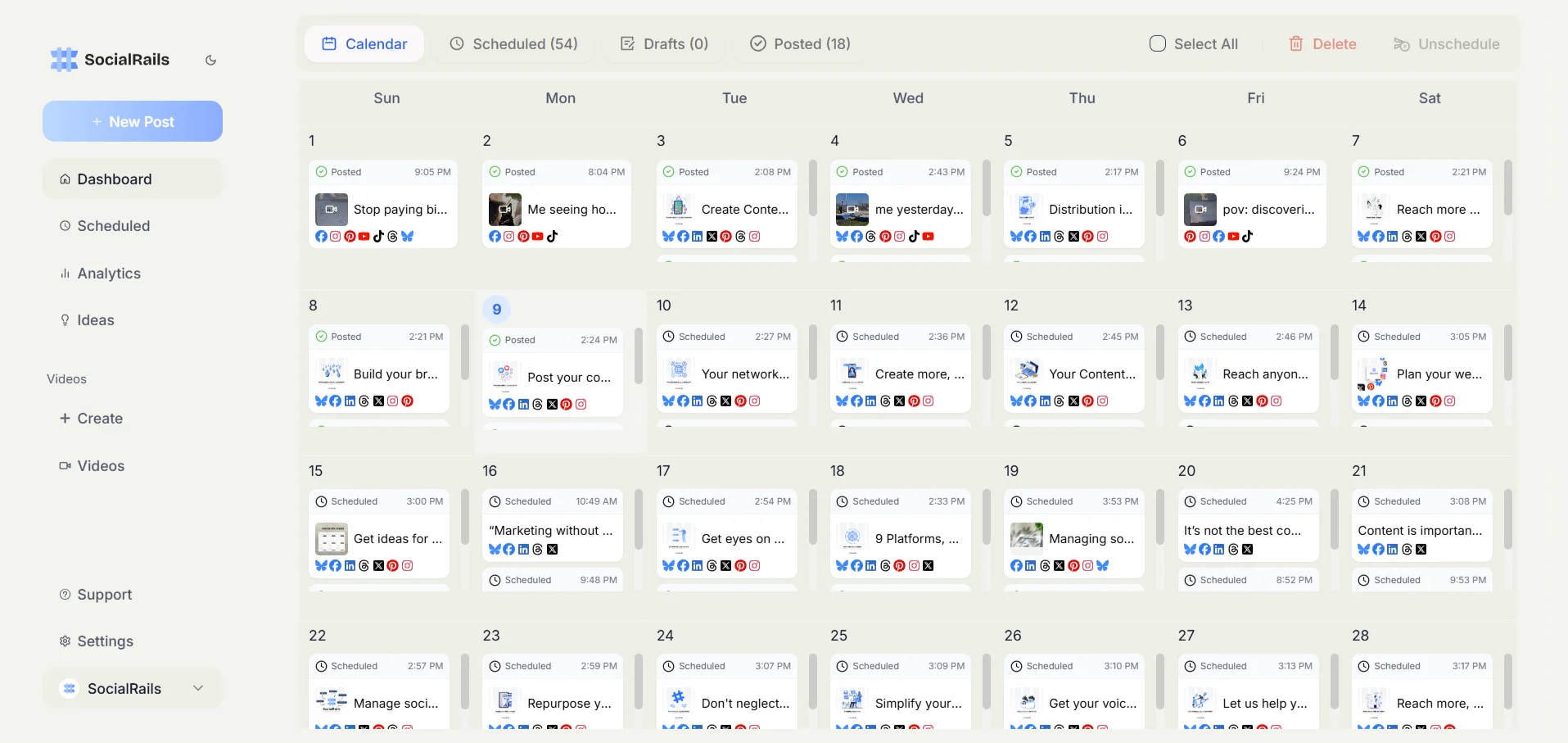
Quick Answer: What Is LinkedIn Pulse?
"LinkedIn Pulse" and "LinkedIn Articles" are the same thing. Pulse is the retired name.
The timeline gets garbled in most write-ups, so for the record: Pulse started life as an independent news-reading app, LinkedIn acquired it in 2013, LinkedIn opened its publishing platform to all members in February 2014 under the Pulse brand, the original standalone Pulse app was retired at the end of 2015, and the separate Pulse experience was discontinued on 31 May 2017. When you click "Write article" today, you are using what used to be Pulse.
LinkedIn Posts vs LinkedIn Articles
Three of those rows are wrong in most guides on this topic, including in an earlier version of this one, so they are worth stating plainly:
Articles are not unlimited. The body caps at roughly 110,000 characters, about 18,000 words. Sources disagree between about 110,000 and 125,000 because LinkedIn does not publish the number prominently, but it is a ceiling, not "no limit". The headline caps at 100 characters.
Posts are not invisible to Google. The old rule was that only Articles got indexed. Since roughly 2023 to 2024 Google has been indexing and ranking public LinkedIn posts as well, alongside public content from Reddit, X and Instagram. Posts set to connections-only are still not indexed. Articles remain the more reliable choice for search, because they have their own URL and a blog-like structure, but "posts are not indexed" is no longer true and choosing your format on that basis will mislead you.
Posts can be edited whenever you like. There is no 24-hour window. You can fix a post minutes or years later, LinkedIn does not notify anyone that you edited it, editing does not republish it or push it back to the top of the feed, and there is no reach penalty for fixing a typo. What you cannot change afterwards is attached media, and polls cannot be edited at all.
When to use posts: daily content, quick takes, conversation.
When to use articles: deep dives, guides, anything you want to still be findable in a year.
You want to write a 2,000-word guide that ranks on Google. Which format should you use?
How to Write a LinkedIn Article
Step 1: Start a New Article
- Go to the LinkedIn homepage
- Click "Write article" below the post composer
- Or go straight to
linkedin.com/article/new
Step 2: Add Your Content
The article editor supports headings, bold, italic and underline, bulleted and numbered lists, links, images and video, embedded media, code blocks, and pull quotes. It is a simplified blog editor, not a full CMS: there is no custom HTML, no meta description field and no canonical tag control.
Step 3: Set Up the Discoverable Parts
Headline: capped at 100 characters. It becomes the page title and the URL slug, so front-load the words someone would actually search.
Subtitle: context and secondary phrasing. Not a meta description, but it is what appears under the headline.
Cover image: design at 1920x1080. It gets cropped to roughly 1.91:1 in feed previews, so keep anything important away from the top and bottom edges.
First paragraph: state the value immediately. LinkedIn truncates the preview, and this is the part that has to earn the click.
Step 4: Publish and Promote
Before publishing: proofread, check every link, and preview on mobile, where most of your readers are.
After publishing: share it as a separate post with a hook rather than a bare link, reply to every comment, and share it into groups where it is genuinely on topic.
Article Length: What Is Actually Known
Almost every guide on this subject, including the earlier version of this one, prints a table mapping word counts to performance: under 500 words low, 1,000 to 2,000 words best, and so on. Those tables are not sourced. LinkedIn publishes no length-versus-performance data, and third-party studies of feed posts do not transfer to articles, which are a different surface with a different reader.
So here is the honest version:
- The constraint that is real is the 110,000-character ceiling and the 100-character headline.
- The constraint that matters more is completion. An article that nobody finishes gets no reactions, and reactions are what put it back in front of anyone.
- Write to the point, then stop. If your argument is done in 700 words, padding it to 1,500 to hit someone's blog-post benchmark makes it worse, not more visible.
- If you want a number to start from, 1,000 to 1,500 words is the range most practitioners recommend, and you should treat that as a convention rather than a finding.
Headlines That Get Clicks
Formats that work:
- "How to [achieve result]"
- "[Number] ways to [solve problem]"
- "Why [common belief] is wrong"
- "The [adjective] guide to [topic]"
Bad: "Thoughts on Leadership" Better: "The Leadership Mistake That Cost Me My Best Employee"
The second one carries a specific, checkable promise. That is the whole difference.
Structure for Readability
Do: short paragraphs, a subheading every few hundred words, bullets for lists, bold for the line you want remembered, images to break up the wall.
Do not: unbroken text, no subheadings, paragraphs over five sentences, generic stock photography that signals the piece is filler.
LinkedIn Newsletters vs Articles
A newsletter is an article with a subscription layer on top. The decision is usually framed as "publish consistently or do not bother", which misses the mechanic that actually matters.
Your first issue notifies your entire network, once. When you publish the first edition of a newsletter, LinkedIn sends a notification, and an email, to all of your connections and followers inviting them to subscribe. That happens for the first edition only. It is the single largest distribution event most accounts ever get from LinkedIn, and it is not repeatable.
The practical consequence: do not launch a newsletter with a throwaway first issue to "get started". You spend your one network-wide notification on it. Write the piece you would want a stranger to judge you by, then publish that as edition one.
Choose a newsletter if you will keep to a schedule and the topic is a series.
Choose an article if you publish occasionally, or the piece stands alone.
How LinkedIn Articles Get Distributed
Immediately
- Your profile's Activity section
- Some followers' feeds, not all
- Notifications to first-degree connections
Over Time
- Google search: the article has its own URL and gets indexed, usually within a day or two
- LinkedIn search: findable by topic
- Profile visits: people browse your articles when they land on your profile
- Reposts: other people sharing it
Boosting Reach
Same day: share the article as a post with a real hook rather than a bare link, add a first comment with something you left out, ask a question that has a non-obvious answer, and share into groups where it is on topic.
Ongoing: link to it from later posts, update it when the facts change (you can, at any time, with no penalty), cross-promote elsewhere, and embed it where it fits.
Common LinkedIn Article Mistakes
Mistake 1: Publishing and Walking Away
Publishing is not distribution. An article with no accompanying post reaches almost nobody.
Fix: share every article as a post, and stay in the comments for the first couple of hours.
Mistake 2: Assuming Republishing Your Blog Will Hurt Your SEO
This one is worth unpicking, because the usual advice conflates two different things.
There is no Google duplicate-content penalty. It does not exist, Google has said so repeatedly, and republishing your own blog post as a LinkedIn article will not get your site penalised. Link back to the original and the canonical question resolves itself in practice.
What republishing does cost you is LinkedIn reach. The feed favours content written for it, and a verbatim repost of something that already exists elsewhere tends to underperform native writing. That is an engagement effect, not a search penalty, and the fix is different: rewrite the piece with a LinkedIn-specific angle rather than avoiding republication out of a fear that does not apply.
Mistake 3: No Clear Takeaway
Fix: state the point in the first paragraph. Every section should be defending it.
Mistake 4: Weak Headlines
Generic headlines get scrolled past, and you only get 100 characters.
Mistake 5: No Call to Action
Fix: end with one specific ask. Follow, comment with your own version, subscribe to the newsletter. One, not three.
You published a LinkedIn article and it is getting almost no views. What is the most likely cause?
LinkedIn Article SEO
Why Articles Rank
Articles have their own URL, get indexed quickly, can rank for real queries, and can attract backlinks. Public posts can be indexed too now, but they lack the stable URL and structure that make an article worth optimising.
What Actually Helps
Headline: include the phrase people search, and keep it readable. It becomes both the page title and the URL slug, so a clean headline gives you a clean URL. LinkedIn generates the slug for you and you cannot edit it directly.
Body: use the phrase early, use related phrasing naturally, link to your own other articles, and write descriptive alt text on images.
What you do not get: no meta description field, no canonical control, no redirect if you change the headline later. This is the main structural reason an article is not a substitute for a page on your own site.
Realistic Expectations
Articles rank well for your name plus a topic, long-tail phrasings, industry-specific terms, and question-shaped queries. They will not outrank established publications on competitive head terms, and treating LinkedIn as your primary search surface means renting an audience on someone else's domain.
Article Analytics
LinkedIn shows you: total views, reactions, comments, and reposts, plus some demographic breakdown of who viewed.
LinkedIn does not show you: read time, scroll depth, where the traffic came from in any useful detail, or clicks on the links inside your article.
That last gap is the important one. If the article's job is to send people somewhere, put a UTM-tagged link in it and measure the arrival on your own analytics, because LinkedIn will not tell you.
On benchmark tables: you will see "good" and "excellent" view counts published for LinkedIn articles. Ignore them. Reach on LinkedIn is dominated by follower count, how much of your audience is active, your topic, and whether you promoted the piece, and no table that omits those can tell you whether your number is good. Benchmark against your own previous articles. That is the only comparison where the variables are held still.
Quick Action Plan
This week: list five article topics inside your actual expertise, outline the strongest one, and publish it at whatever length the argument needs. Then share it as a post with a hook.
This month: publish two to four related pieces, look at which ones your own audience finished and reacted to, stay in the comments, and only start a newsletter once you have a first issue good enough to spend your one network-wide notification on.
Frequently Asked Questions
Is LinkedIn Pulse still available?
The feature is, the name is not. LinkedIn acquired Pulse in 2013, opened publishing to all members in February 2014 under the Pulse brand, retired the standalone Pulse app at the end of 2015, and discontinued the separate Pulse experience on 31 May 2017. Publishing lives on inside LinkedIn as Articles, reached through the Write article button on the homepage.
How long can a LinkedIn article be?
About 110,000 characters, roughly 18,000 words, with the headline capped at 100 characters. It is not unlimited, despite what most guides say. Sources vary between about 110,000 and 125,000 characters because LinkedIn does not publish the figure prominently, but there is a ceiling. Regular posts, by contrast, cap at 3,000 characters.
Are LinkedIn posts indexed by Google?
Public posts can be. The old rule that only Articles were indexed stopped holding around 2023 to 2024, when Google expanded indexing of public social content including LinkedIn posts. Posts restricted to connections only are still not indexed. Articles remain the more reliable choice for search because they have their own URL and a blog-like structure, but choosing your format on the belief that posts are invisible to Google will lead you wrong.
Can I edit a LinkedIn post or article after publishing?
Both, at any time, with no deadline. There is no 24-hour editing window on LinkedIn posts. LinkedIn does not notify anyone that you edited, editing does not republish the item or move it back up the feed, and there is no reach penalty for fixing a typo. The exceptions are attached media, which cannot be swapped after publishing, and polls, which cannot be edited at all.
Will republishing my blog post as a LinkedIn article hurt my SEO?
No. There is no Google duplicate-content penalty, and republishing your own writing on LinkedIn will not get your site penalised. Link back to the original as a matter of course. What republishing verbatim does cost you is LinkedIn reach, because the feed favours content written natively for it. That is an engagement effect rather than a search one, so the fix is to rewrite with a LinkedIn-specific angle, not to avoid republishing.
What is the ideal length for a LinkedIn article?
Nobody actually knows, and the word-count-to-performance tables published everywhere are unsourced. LinkedIn releases no length-versus-performance data, and studies of feed posts do not transfer to articles. Most practitioners suggest 1,000 to 1,500 words, which is a useful convention rather than a finding. Write until the argument is finished and then stop, because completion drives reactions and reactions drive distribution.
Should I write an article or start a newsletter?
The deciding factor is a one-time mechanic most guides skip. When you publish the first edition of a newsletter, LinkedIn notifies and emails your entire network inviting them to subscribe, and it does this for the first edition only. It is the largest single distribution event most accounts get from LinkedIn and you cannot repeat it. So do not launch with a throwaway issue to get started. Use a plain article for one-off pieces, and start a newsletter when you have a first edition worth spending that notification on.
What can I track on a LinkedIn article?
Views, reactions, comments, reposts and some viewer demographics. You cannot see read time, scroll depth, meaningful traffic sources, or clicks on links inside the article. If the article exists to send people somewhere, use UTM-tagged links and measure arrivals in your own analytics. Ignore published good-versus-excellent benchmark tables, since reach depends on follower count, audience activity, topic and promotion. Benchmark against your own previous articles instead.
Related Resources
LinkedIn Guides:
- How to Post Articles on LinkedIn
- LinkedIn Post Ideas
- How to Grow LinkedIn Followers
- Best Time to Post on LinkedIn
- LinkedIn Analytics Tools
- AI Tools for LinkedIn
LinkedIn Tools:
Content Strategy:
Was this article helpful?
Let us know what you think!