
What Are Social Media Trends?
Social media trends are emerging patterns in content formats, platform features, audience behaviors, and marketing strategies gaining momentum across social platforms. Some trends are fleeting (viral sounds, memes), while others represent fundamental shifts in how people use social media (short-form video, social commerce).
Create content, post everywhere
Create captions, images, and videos with AI. Schedule to 9 platforms in seconds.
Start your free trial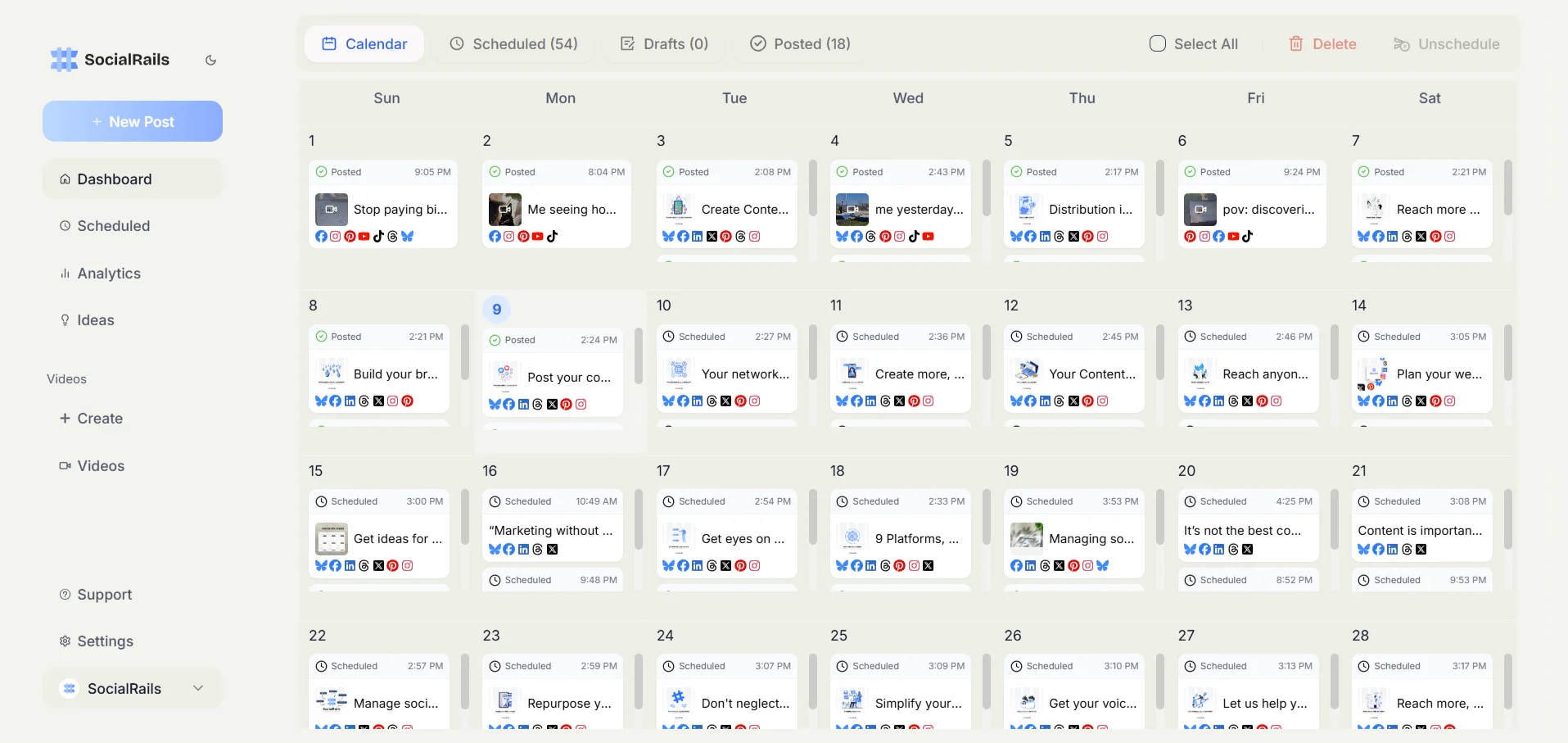
This guide covers the trends shaping social media in 2026 and how to evaluate which ones matter for your strategy.
15 Social Media Trends for 2026
1. Short-Form Video Dominates Everything
Short-form video is no longer a trend—it's the default content format. TikTok, Instagram Reels, YouTube Shorts, and even LinkedIn video drive the majority of organic reach across platforms.
Why it matters:
- Platforms prioritize video because it generates stronger engagement signals
- 15-60 second videos get the most algorithmic distribution
- Video consumption continues growing across all demographics
How to adapt:
- Repurpose long content into short clips
- Focus on strong hooks in the first 2-3 seconds
- Use native platform tools (trending audio, effects) for better reach
2. Social Media as Search Engine
Users increasingly search TikTok, YouTube, and Instagram instead of Google for product recommendations, how-to content, tutorials, and local business discovery.
What's driving this:
- Visual answers are often more helpful than text
- User-generated content feels more trustworthy than SEO-optimized articles
- Platform search algorithms have improved significantly
How to optimize:
- Include keywords in captions, spoken audio, and on-screen text
- Use descriptive hashtags that match search queries
- Create content that answers specific questions
3. AI as Workflow Support (Not Content Creator)
AI tools are standard for content workflows, but audiences are increasingly skeptical of AI-generated content. The winning approach: use AI behind the scenes, keep human creativity front and center.
Where AI adds value:
- Brainstorming and ideation
- Caption drafts and variations
- Trend identification and analysis
- Content repurposing and scheduling
- Performance analysis
Where AI falls short:
- Fully AI-generated posts (audiences notice and disengage)
- AI influencers (low trust)
- Content without human oversight
4. Authenticity Over Polish
Highly produced, polished content is everywhere—and audiences are tuning it out. Content that feels human, relatable, and genuine outperforms corporate-style posts.
What performs well:
- Behind-the-scenes content
- Real people over stock imagery
- Imperfect video (phone-filmed, natural lighting)
- Honest takes over perfect messaging
- Employee-generated content
What underperforms:
- Overly staged photos
- Corporate speak
- Content that feels like traditional advertising
5. Long-Term Creator Partnerships
Brands are moving away from one-off sponsored posts toward ongoing creator partnerships. Multi-video campaigns with the same creators perform better and feel more authentic.
Why this works:
- Audiences build trust with creators over time
- Repeated exposure improves brand recall
- Creators become genuine advocates rather than paid promoters
- Content quality improves as creators understand the brand
How to implement:
- Partner with fewer creators for longer periods
- Give creators creative freedom
- Focus on micro and mid-tier creators with engaged audiences
6. Social Commerce Expansion
Buying happens on social platforms now. External links often get deprioritized, while native shopping features get algorithmic support.
Platform commerce features:
- TikTok Shop — In-app purchasing, live shopping
- Instagram Shop — Product tags, in-app checkout
- Pinterest Shopping — Product discovery and purchase
- Facebook Marketplace — Local and retail commerce
- YouTube Shopping — Product shelves, video tags
How to adapt:
- Set up native shopping where available
- Create shoppable content (product demos, reviews)
- Reduce reliance on "link in bio" strategies
7. Community Over Followers
Engagement metrics matter more than follower counts. Platforms prioritize content based on interactions, saves, shares, and conversations—not how many people follow you.
Signals that matter more:
- Comments and reply threads
- Saves and bookmarks
- Shares via DM
- Time spent viewing
- Repeat views
How to build community:
- Respond to every comment
- Ask questions that invite discussion
- Create content worth saving
- Build around shared interests, not just your brand
8. Quality Over Quantity (Algorithm Shift)
Posting frequently with low engagement now hurts your reach. Algorithms identify and deprioritize accounts that spam content without resonating with their audience.
The new approach:
- Post less, but make each post count
- Focus on engagement rate, not post count
- Delete underperforming content
- Test what resonates before scaling
9. Private and Semi-Private Spaces
Engagement is moving to Stories, DMs, Close Friends, private groups, and messaging apps. Public feeds are becoming discovery channels while real engagement happens in smaller spaces.
How to adapt:
- Invest in Stories and ephemeral content
- Encourage DM conversations
- Build or participate in relevant groups
- Create content worth sharing privately
10. Platform Fragmentation
There are now over 5 billion social media users across dozens of platforms. No single platform dominates all audiences. Smart strategies involve platform-specific content, not cross-posting everywhere.
Platform positioning in 2026:
- TikTok — Entertainment, discovery, younger audiences
- Instagram — Visual brands, lifestyle, shopping
- YouTube — Search, education, long-form
- LinkedIn — B2B, professional content
- X (Twitter) — Real-time, news, public discourse
- Threads — Text conversation, Instagram integration
- Facebook — Local, groups, 35+ demographics
- Pinterest — Inspiration, shopping, planning
11. Increased Regulation and Age Restrictions
Governments worldwide are implementing stricter social media regulations, particularly around younger users. Some regions have banned social media for under-16s, and more restrictions are coming.
What this means:
- Platform features may change for compliance
- Audience demographics could shift
- Advertising targeting will face new limits
- Data collection practices are changing
12. Social + Experiential Integration
Online and offline marketing are merging. Brands create IRL experiences designed to generate social content, and social strategies amplify physical events.
Examples:
- Pop-up events designed for social content
- User-generated content from brand experiences
- Live events streamed to social platforms
- AR/VR integrations bridging digital and physical
13. Employee Advocacy and Personal Brands
Employees and executives sharing content often outperform official brand accounts. Personal brands attached to companies provide authenticity that corporate accounts can't match.
How companies are adapting:
- Encouraging employee content creation
- Supporting executive personal brands
- Creating employee advocacy programs
- Providing content frameworks without scripts
14. Audio and Voice Content
Podcasts, audio posts, and voice features continue growing. Platforms like X Spaces, LinkedIn Audio, and integrated podcast features give audio new distribution.
Why audio is growing:
- Consumed during other activities (commuting, working out)
- Builds deeper connection than text
- Lower production barrier than video
- Strong for long-form content and conversations
15. Niche Platform Growth
While major platforms remain dominant, niche platforms serving specific communities are growing. Discord servers, Substack, and interest-specific apps are drawing engaged audiences.
Trend implications:
- One-size-fits-all social strategy is outdated
- Community engagement matters more than mass reach
- Consider platform-specific strategies over broad presence
Why Trends Matter
Understanding trends isn't about chasing every viral moment—it's about making informed decisions about where to invest your time.
Types of Trends
Content Format Trends
These are shifts in how content is created and consumed:
- Short-form video — The dominant format across all platforms
- Behind-the-scenes content — Raw, authentic over polished
- User-generated content — Customer content as marketing
- Interactive content — Polls, quizzes, Q&A, challenges
Platform Feature Trends
New capabilities platforms are promoting:
- Native shopping — In-app commerce features
- Live streaming — Real-time content and interaction
- Stories and ephemeral content — Temporary formats
- AI-assisted creation — Built-in creation tools
Topic and Cultural Trends
Content themes gaining attention:
- Seasonal moments — Holidays, events, cultural moments
- Industry news — Topics relevant to your niche
- Viral challenges — Participation formats that spread
- Social commentary — Current events driving conversation
Behavioral Trends
How audiences are changing:
- Private sharing — DMs and close friends over public posts
- Passive consumption — Watching without engaging publicly
- Multi-platform usage — Different platforms for different purposes
- Search behavior — Social platforms replacing search engines
How to Identify Trends Early
Platform Native Tools
Each platform provides trend signals:
External Tools
- Google Trends — Search interest over time, rising topics
- Social listening platforms — Monitor conversations and sentiment
- Competitor analysis — What's performing for similar accounts
- Industry newsletters — Curated trend reports
Manual Monitoring
- Follow trend-setting creators in your niche
- Join industry communities and groups
- Track platform official announcements
- Watch what top brands in adjacent industries are doing
Should You Participate? Evaluation Framework
Not every trend is worth your time. Use this framework:
1. Brand Fit Assessment
- Does this align with your brand values?
- Will your audience find it relevant or forced?
- Can you add a unique perspective or just copy?
2. Timing Analysis
- Is the trend rising, peaking, or declining?
- Can you create quality content fast enough?
- How saturated is participation already?
3. Risk Evaluation
- Could this trend become controversial?
- Do you understand the full context?
- Will this content age well or embarrass you later?
4. Resource Reality
- Do you have the skills/equipment to execute well?
- Is the time investment worth the potential return?
- Does this take resources from higher-priority content?
Rule of thumb: If you have to force it, skip it. Forced trend participation is obvious to audiences.
Platform-Specific Trend Strategies
TikTok
- Trending sounds are critical—use them while still rising
- Put your unique spin on challenges
- Duets and Stitches can extend trending content reach
- Watch the For You page daily to catch trends early
- Adapt TikTok trends to Reels (but don't just repost)
- Story features like polls and quizzes follow their own trends
- Trending audio translates from TikTok
- Carousels have their own trend patterns
YouTube
- Shorts follow TikTok trends with slight delay
- Long-form trends are more topic-based
- Thumbnail and title trends matter for discoverability
- Comment section participation can boost videos
- Professional takes on business news
- Industry-specific trend commentary
- New feature adoption (newsletters, live) gets boosted
- Text posts and carousels have their own formats
X (Twitter)
- Real-time event commentary is expected
- Trending hashtag participation (done well)
- Thread formats for deeper analysis
- Quote posts for hot takes
Common Trend Mistakes
Measuring Trend Content Success
Key Metrics to Track
How to Evaluate
- Compare trend content performance to your 30-day average
- Track follower growth during trend participation
- Note which trend types perform best for your audience
- Calculate time investment vs. results
Building a Sustainable Trend Strategy
Content Mix Recommendation
Process for Trend Participation
- Monitor — Spend 10-15 minutes daily watching trends develop
- Evaluate — Use the framework above to assess fit
- Plan — Decide your unique angle before creating
- Execute — Create quality content quickly
- Analyze — Track performance and learn for next time
Trends to Avoid in 2026
Some patterns are declining or risky:
- Engagement bait — "Like if you agree" style content is penalized
- Overly promotional — Hard sells underperform across platforms
- Controversy for attention — Risky and rarely worth it
- AI-generated faces — Audiences have learned to recognize and distrust
- Copied content without credit — Platforms are improving detection
- Hashtag stuffing — No longer helps, often hurts
- Buy now, urgent — Scarcity tactics that feel manipulative
Quick Checklist: Before Participating
Ask yourself:
- Does this genuinely fit my brand?
- Will my audience care?
- Can I add something unique?
- Is the timing right (not too late)?
- Have I researched the context?
- Can I execute with quality?
- Is this worth the time investment?
If you answer "no" to any of these, consider skipping.
Frequently Asked Questions
How quickly do social media trends change?
It depends on the trend type. Viral sounds and memes can peak and fade within days. Format trends (like short-form video) develop over months and last years. Cultural trends vary—some are seasonal, others are generational shifts.
Should I follow every trend in my industry?
No. Be selective. Participating in trends that don't fit your brand or that you can't execute well hurts more than helps. Choose trends where you can add genuine value and create quality content.
How do I know if a trend is dying?
Signs a trend is past peak: major brands are participating (usually late adopters), engagement on trend content is declining, the "For You" and Explore pages show less of it, and trend trackers show declining interest.
Is it worth participating in trends late?
Usually not. Late trend participation often looks behind-the-times. However, if you have a truly unique angle or the trend is evergreen (not time-sensitive), late participation can still work.