

Instagram Story Ideas for Business: 50+ Ideas That Drive Engagement (2026)

Instagram Story Ideas for Business: 50+ Ideas That Drive Engagement
Quick answer: The best Instagram Story ideas for business include behind-the-scenes content, product demos, customer testimonials, polls and Q&As, and limited-time offers. Organize your stories around clear business goals -- building trust, driving engagement, generating sales, educating your audience, or growing community -- and aim for a 70/30 split of value content to promotional content.
Create content, post everywhere
Create captions, images, and videos with AI. Schedule to 9 platforms in seconds.
Start your free trial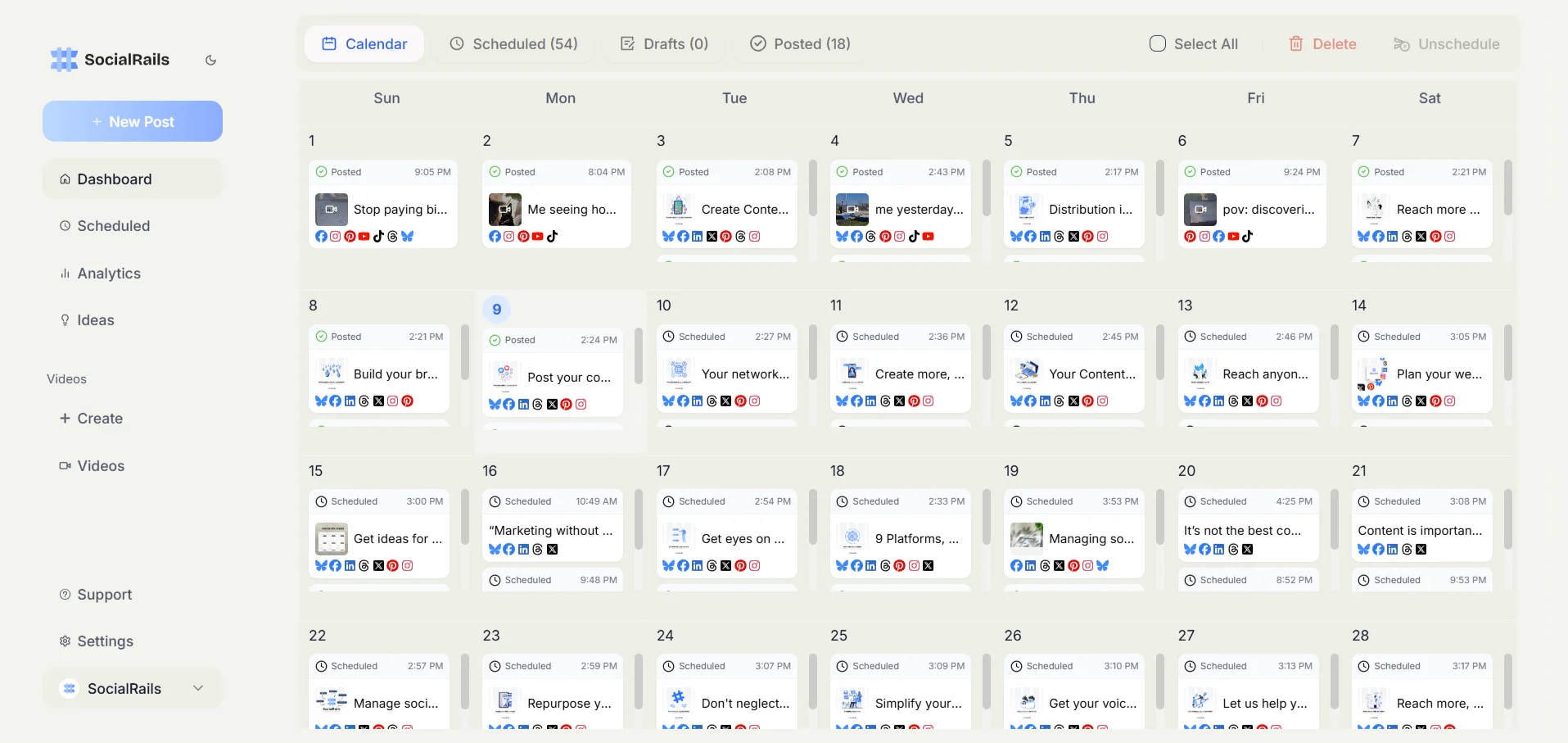
Why Instagram Stories Matter for Business
Instagram Stories are one of the most effective ways for businesses to connect with their audience. They sit at the top of the app, they feel more personal than feed posts, and the built-in interactive features (polls, questions, quizzes, sliders) make it easy for followers to engage without leaving the app.
For businesses specifically, Stories offer advantages that feed posts cannot match:
- Visibility - Stories appear at the top of the Instagram app, before any feed content
- Authenticity - The temporary, casual format feels more genuine than polished feed posts
- Interactivity - Built-in stickers for polls, questions, quizzes, and countdowns drive two-way communication
- Link stickers - Every Instagram account can now add link stickers to Stories, making it easy to drive traffic to your website, product pages, or landing pages
- Algorithm signals - Consistent Story posting signals to Instagram that your account is active, which can benefit your overall reach
The key to great business Stories is organizing your content around specific goals. Below, we break down 50+ ideas into five categories based on what you want to achieve.
Overview: Story Ideas by Business Goal
Stories That Build Trust
Trust is the foundation of every customer relationship. These Story ideas pull back the curtain and show the real side of your business -- the people, the process, and the imperfect moments that make your brand human.
1. Day-in-the-Life Series
Film a real workday from start to finish. Show the morning routine, the workspace, the meetings, the problem-solving, and the end-of-day wrap-up. This works because it lets followers see the effort and care that goes into your business.
Example: A bakery owner films their 4 AM start, the dough prep, the first batch out of the oven, the shop opening, and the last customer of the day.
2. Meet the Team
Introduce individual team members with a short Story sequence: their name, their role, a fun fact, and what they are working on this week. Repeat this regularly so followers get to know everyone.
Example: "Meet Sarah, our head of customer support. Fun fact: she has answered over 5,000 support tickets this year. Today she is working on updating our FAQ page."
3. Product Creation Process
Document how your product goes from raw materials to finished item. Show the messy middle -- the sourcing, the prototyping, the mistakes, and the final result.
Example: A jewelry maker shows the raw metal, the cutting, the shaping, the polishing, and the finished ring side by side with the original sketch.
4. Workspace Tour
Give followers a tour of where the work happens. Point out personal touches, favorite tools, and the spaces where different types of work get done.
Example: A graphic designer walks through their home office setup, showing their monitor, tablet, reference books, and the whiteboard where they map out client projects.
5. Packaging and Shipping
Show how orders get packed and shipped. This is surprisingly engaging because customers love seeing the care that goes into getting their order to them.
Example: An e-commerce brand films the picking, wrapping, labeling, and drop-off process for a batch of orders, adding text like "Your order on its way."
6. Mistakes and What We Learned
Share a real mistake your business made and what you changed because of it. Vulnerability builds trust faster than perfection.
Example: A restaurant owner shares a Story about a recipe that failed during a busy service and explains the backup plan they now have in place.
7. How We Make Decisions
Walk followers through a real business decision -- what options you considered, what tradeoffs you weighed, and what you chose and why.
Example: A clothing brand shares the three fabric options they tested for a new product line and explains why they chose the slightly more expensive one based on durability testing.
8. Supplier and Partner Spotlights
Introduce the people and businesses you work with. This shows followers your values and the quality of your supply chain.
Example: A coffee shop introduces their bean supplier, shows the farm or roastery, and explains why they chose to partner with them.
9. Before and After Your Space
Show how your workspace, store, or studio has evolved over time. Use the side-by-side comparison to highlight growth.
Example: A salon shares a photo of their first rented chair next to a video of their current full salon, with the story of how they got from one to the other.
10. Celebrating Milestones Honestly
Share wins, but also share what it took to get there. A milestone Story that includes the struggle is more relatable than pure celebration.
Example: "We just hit 1,000 orders. Here is what the first year actually looked like" -- followed by a few honest snapshots of early challenges.
Stories That Drive Engagement
Engagement is the metric that matters most for Instagram's algorithm. These Story ideas use interactive features to turn passive viewers into active participants.
11. This or That Polls
Present two options related to your niche and let followers vote. Keep choices genuinely interesting -- not obvious.
Why it works: Polls require just one tap, making them the lowest-friction engagement action on Stories. They also give you real data about your audience's preferences.
Example: A home decor brand posts two living room layouts and asks "Which vibe for our next collection?"
12. Quiz Sticker Challenges
Create a multi-Story quiz about your industry, product, or niche. Use the quiz sticker so followers can see if they got the answer right.
Example: A skincare brand runs a "Skincare Myth or Fact?" quiz with five questions about ingredients and routines.
13. Question Box AMAs
Use the question sticker to run an Ask Me Anything session. Answer each question in a follow-up Story, which creates a long sequence of content that keeps people watching.
Example: A financial advisor opens a "Ask me anything about budgeting" question box on Monday morning and spends the afternoon answering questions on Stories.
14. Emoji Slider Ratings
Use the emoji slider to get quick feedback on ideas, products, or content. The sliding action is satisfying and drives more responses than a simple yes/no.
Example: A restaurant posts photos of three potential new menu items and asks followers to rate their excitement with the fire emoji slider.
15. Countdown to an Event
Use the countdown sticker for product launches, sales, events, or content drops. Followers can tap to get reminded when the countdown ends.
Example: "New collection drops Friday at 9 AM" with a countdown sticker. Followers who tap the reminder get a notification when it goes live.
16. Fill in the Blank
Post a sentence with a blank and ask followers to DM or reply with their answer. This drives direct messages, which are a strong engagement signal.
Example: A fitness coach posts "The hardest part of working out consistently is ______" and shares the best responses in follow-up Stories.
17. Caption This Photo
Post an unusual, funny, or interesting photo from your business and ask followers to come up with a caption.
Example: A pet grooming business posts a photo of a dog mid-bath with a hilarious expression and says "Best caption wins a free nail trim."
18. Prediction Polls
Ask followers to predict an outcome related to your business or industry. Follow up later with the actual result.
Example: A real estate agent asks "What do you think the average home in [city] sold for last month?" with four price range options, then reveals the answer the next day.
19. Story Reaction Chains
Post a statement and ask followers to react with a specific sticker or emoji. Then repost the best reactions.
Example: "React with your Monday mood" -- then compile and repost the responses as a follow-up Story.
20. Would You Rather (Business Edition)
Create "Would you rather" scenarios relevant to your niche. These are simple, fun, and get high response rates.
Example: A travel agency asks "Would you rather: beach vacation with no phone, or city trip with unlimited budget?"
Stories That Generate Sales
These Story ideas move followers closer to a purchase without feeling like a hard sell. The key is showing value first and making the buying process easy.
21. Product Demo in Real Conditions
Show your product being used in a real setting, not a studio. Film it in natural lighting, in an actual home or office, with real people using it.
Why it works: Followers can picture themselves using it. Polished product photos sell the idea; real demos sell the product.
Example: A bag company shows their laptop bag being packed for a real commute -- laptop, charger, water bottle, notebook -- and carried through a train station.
22. Customer Testimonial Reposts
Repost customer Stories, DMs (with permission), or reviews. Add a simple "Thank you" or brief context. Let the customer's words do the selling.
Example: A skincare brand reposts a customer's before-and-after Story with the text "Results after 30 days. Thank you @customer for sharing."
23. Limited-Time Offer with Countdown
Pair a genuine limited-time discount with the countdown sticker. State the offer clearly, show what they get, and add a link sticker to the purchase page.
Example: "24-hour flash sale: 25% off all candles. Tap the link to shop. Countdown ends tomorrow at midnight."
24. New Product Teasers
Build anticipation over several days. Show close-up details, hint at features, ask followers to guess what it is, and then reveal.
Example: Day 1: a close-up texture shot. Day 2: a color swatch. Day 3: a silhouette. Day 4: the full product reveal with a link to purchase.
25. Side-by-Side Comparisons
Show your product next to a common alternative or previous version. Highlight the specific differences that matter to your customer.
Example: A water bottle brand shows their bottle holding ice after 12 hours next to a generic bottle where the ice has melted, with a simple "Same morning. Different bottle."
26. "How I Would Use This" Walkthrough
Pick one product and show three to five different ways to use it. This helps customers who are interested but unsure how it fits into their life.
Example: A scarf brand shows the same scarf worn as a headband, a neck scarf, a bag accessory, a belt, and a hair tie.
27. Restock Alerts
When a popular item comes back in stock, announce it on Stories first. This rewards your Story viewers with early access.
Example: "Back in stock: the Olive Tote you sold out in 3 days last month. Link in Stories before we announce on feed."
28. Honest Product Limitations
Tell followers who your product is NOT for. This builds trust and actually increases conversions because the people who do buy feel more confident.
Example: "Our planner is designed for freelancers and solopreneurs. If you manage a team of 10+, you will probably need something with more project management features."
29. Bundle or Pairing Suggestions
Show products that work well together. Explain why the combination is better than individual purchases.
Example: A coffee brand shows their medium roast paired with a specific grinder setting and a brewing method, explaining why this combination works.
30. Customer FAQ Answers
Answer the real questions you get from customers before they buy. Address objections, sizing concerns, shipping times, and return policies.
Example: "Our most asked question: Does the color look the same in person? Here it is in natural light, indoor light, and flash."
Stories That Educate Your Audience
Educational content positions your business as the expert in your space. When followers learn from you, they trust you -- and they come back.
31. Quick Tip of the Day
Share one actionable tip related to your niche in a single Story frame. Keep it short enough to read in 5 seconds.
Why it works: Quick tips are easy to consume, easy to screenshot, and easy to share via DM -- which extends your reach.
Example: A photographer posts "Tip: Shoot portraits during the hour after sunrise or before sunset. The light is softer and more flattering than midday sun."
32. Common Mistakes in Your Industry
Call out mistakes you see people making and explain the better approach. Be helpful, not condescending.
Example: A personal trainer posts "Mistake: Stretching cold muscles before a workout. Instead: Start with 5 minutes of light cardio to warm up, then stretch."
33. Myth vs. Fact Series
Pick a common misconception in your niche and debunk it with a clear explanation.
Example: A dentist posts "Myth: Whitening toothpaste damages enamel. Fact: Most whitening toothpastes use mild abrasives that are safe for daily use when used as directed."
34. Step-by-Step Mini Tutorial
Break a process into 4-6 Story frames, one step per frame. Add text overlays and arrows to make each step clear.
Example: A makeup artist shows a 5-step everyday makeup routine: primer, foundation, brows, mascara, lip color -- one Story frame per step with product names listed.
35. Tool or Resource Recommendations
Share the specific tools, apps, or resources you actually use in your business. Explain what you use each one for and why.
Example: A social media manager shares their top 3 scheduling tools with one Story per tool, covering price, best feature, and biggest limitation.
36. Industry News Breakdown
When something changes in your industry, be the first to explain what it means for your followers in simple terms.
Example: When a new Instagram feature launches, a marketing consultant explains what it does, who should use it, and how to set it up -- all in Stories.
37. Terminology Explained
Pick one industry term per week and explain it in plain language. Save these to a Highlight called "Glossary" or "Learn."
Example: A financial advisor explains "What is compound interest?" in three Story frames with a simple visual example.
38. Before and After Transformations
Show the starting point and end result of your work, with context about what was done and how long it took.
Example: An interior designer shows the empty room, the mood board, the work in progress, and the final styled space.
39. Book or Resource Reviews
Share a book, course, or resource you recently found valuable. Give a one-sentence summary, who it is best for, and your key takeaway.
Example: A business coach shares "Just finished [book title]. Best for: service-based business owners in their first 2 years. Key takeaway: price based on value delivered, not hours worked."
40. Trend Analysis
Explain a trend in your industry: what is happening, why it matters, and what your followers should do about it.
Example: A fashion brand explains "Quiet luxury is trending. Here is what that means for your wardrobe and why you don't need to buy anything new."
Stories That Build Community
Community-building Stories make your followers feel like they are part of something, not just watching from the outside.
41. Repost User-Generated Content
When a customer tags you or posts about your product, repost their Story to yours. Add a thank-you message and tag them back.
Why it works: It rewards the customer who posted, shows social proof to other followers, and encourages more people to tag you in the future.
Example: A clothing brand reposts a customer's outfit photo with "Love how @customer styled the Linen Shirt. Tag us to be featured."
42. Customer Shoutouts
Pick a customer each week and give them a dedicated shoutout. Share what they do, how they use your product, and why you appreciate them.
Example: "Customer of the week: @customer runs a plant shop in Portland and uses our planters for all their window displays. Go give them a follow."
43. Collaboration Announcements
When you partner with another business or creator, introduce them to your audience. Explain what you are working on together and why you chose them.
Example: "Excited to announce our collab with @localbakery. Next month we are launching a coffee + pastry subscription box. Here is the story of how we connected."
44. Community Challenges
Create a challenge related to your niche and ask followers to participate by posting their own Stories and tagging you.
Example: A fitness brand launches a "7-Day Morning Stretch Challenge" with a different stretch each day. Followers film themselves doing it and tag the brand.
45. Follower Polls That Shape Your Business
Use polls to let followers vote on real business decisions: new product colors, event topics, content themes, or menu items.
Example: "We are adding a new flavor to our lineup. Help us choose: Lavender Honey or Cinnamon Chai?" Then follow up with the winning result and a thank-you.
46. Shared Playlists or Resource Lists
Create a collaborative playlist, reading list, or resource list with input from your followers.
Example: A yoga studio asks "What is your favorite song to stretch to?" and compiles the responses into a Spotify playlist, then shares the link on Stories.
47. Feature Your Local Community
If your business has a physical location, spotlight other local businesses, events, or causes in your area.
Example: A bookshop posts "Three businesses on our block you should visit this weekend" with a Story frame for each neighbor.
48. Celebrate Customer Milestones
When customers share personal or professional milestones with you, celebrate them on your Stories (with their permission).
Example: "Huge congrats to @customer who just launched their own business. They have been a customer since day one and we could not be prouder."
49. Behind-the-Scenes of a Collaboration
Document the process of working with another brand or creator. Show the planning, the creative process, and the final result.
Example: Two brands film a split-screen Story series: each shows their side of creating a joint product, then they reveal the finished item together.
50. Ask for Feedback and Show You Listened
Ask followers for feedback on something specific, then post a follow-up showing what you changed based on their input.
Example: "Last month you told us our checkout process was confusing. Here is what we changed." Then show the updated process step by step.
Instagram Story Dimensions and Best Practices
Getting the technical details right ensures your Stories look professional on every device.
Dimensions and Format:
- Resolution: 1080 x 1920 pixels
- Aspect ratio: 9:16 (full vertical)
- File formats: JPG or PNG for images, MP4 or MOV for video
- Maximum video length: 60 seconds per Story frame (previously 15 seconds, updated by Instagram)
- Safe zone: Keep important text and elements within the center 1080 x 1420 area. The top and bottom of the screen are partially covered by your username, reply bar, and other UI elements
Design Best Practices:
- Place key text in the middle 80% of the frame, away from top and bottom edges
- Use high-contrast text colors so text is readable over any background
- If adding music, place text stickers above the music sticker so nothing overlaps
- Test your Stories on multiple devices before posting -- text that fits on a large phone may get cut off on a smaller screen
Story Highlights: Organizing Your Best Content
Your Story Highlights sit permanently on your profile, directly below your bio. Treat them as a curated introduction to your business for new visitors.
Recommended Highlight categories for businesses:
- About - Who you are, what you do, your mission
- Products/Services - Your offerings with key details
- Reviews - Customer testimonials and feedback
- FAQ - Answers to your most common questions
- Behind the Scenes - Ongoing BTS content
- Tips - Educational content from your niche
Keep each Highlight to 15-20 Story frames maximum. Remove outdated frames regularly so the content stays current and relevant.
You can also pin text to Instagram Stories so it tracks objects in your video, creating more dynamic and professional-looking Story content.
Measuring Your Story Performance
Track these metrics in Instagram Insights to understand what is working:
- Reach - How many unique accounts saw your Story
- Impressions - Total number of times your Story was viewed
- Exits - When people stopped watching (high exits on a specific frame means that content is not holding attention)
- Replies - Direct messages generated from Stories (a strong engagement signal)
- Profile visits - How many people tapped through to your profile
- Link clicks - Taps on your link stickers (available to all accounts)
- Sticker taps - Interactions with polls, questions, quizzes, and other stickers
What to do with this data: Compare metrics across Story types. If your behind-the-scenes Stories consistently get more replies than your promotional Stories, that tells you what your audience values. Double down on what works and experiment with what does not.
Creating a Story Content Calendar
Consistency matters more than volume. Here is a simple weekly framework:
- Monday - Educational tip or industry insight
- Tuesday - Behind-the-scenes or team content
- Wednesday - Interactive Story (poll, quiz, or question box)
- Thursday - Product or service spotlight
- Friday - Community content (UGC repost, shoutout, or collaboration)
- Weekend - Casual, personal content that shows the human side of your brand
You do not need to post every single day. Start with 3-4 days per week and increase as you build a library of content ideas. Learn how to schedule Instagram Stories to plan ahead and stay consistent. If you want to create Stories with interactive stickers from your desktop, tools like Storrito handle that, though you'll want a multi-platform scheduler if you post beyond Instagram.
For more content planning ideas, check our 50 social media post themes or our social media content calendar guide.
How often should I post Instagram Stories for my business?
Most successful business accounts post 1-3 Stories per day. The key is consistency rather than frequency. Quality content posted on a regular schedule performs better than sporadic high-volume posting. Monitor your reach and engagement metrics to find the right balance for your audience.
What is the best time to post Instagram Stories?
The best posting times depend on your audience's location and behavior. Generally, weekdays between 9 AM - 11 AM and 1 PM - 3 PM tend to see strong engagement. Check your Instagram Insights under "Your Audience" to see when your specific followers are most active and adjust your schedule accordingly.
Can anyone add links to Instagram Stories?
Yes. Instagram removed the 10,000-follower requirement for link stickers. All Instagram accounts can now add link stickers to their Stories, regardless of follower count or verification status. To add a link, tap the sticker icon when creating a Story and select the "Link" sticker.
What size should Instagram Story images be?
Instagram Stories should be 1080 x 1920 pixels with a 9:16 aspect ratio. Keep important text and elements within the center of the frame, avoiding the top and bottom edges where Instagram's UI overlays appear. This same vertical format applies to Reels as well.
How do I add music to Instagram Stories?
Tap the sticker icon when creating a Story, select "Music," then browse or search for a song. You can choose a specific clip (up to 15 seconds), adjust the start point, and pick how the music sticker displays (lyrics, album art, or minimal). Note that music availability varies by region and account type.
Can I schedule Instagram Stories in advance?
Yes. Instagram's own app now supports Story scheduling natively through the Meta Business Suite. Third-party tools like Later, Hootsuite, and Buffer also offer Story scheduling. Keep in mind that some interactive features like polls and question stickers may not be available through all third-party schedulers.
How can I see who viewed my Instagram Stories?
Tap on your active Story, then swipe up or tap "Seen by" at the bottom left of the screen. You will see a list of accounts that viewed each Story frame. This viewer list is only available while the Story is live (within 24 hours) and for a short period after it expires in your Archive.
Can I save my Instagram Stories permanently?
Yes. Enable "Save Story to Archive" in your Instagram settings so all Stories are automatically saved. You can also manually download individual Story frames to your camera roll. For permanent display on your profile, add Stories to Highlights, which keeps them visible beyond the 24-hour limit.
Looking to grow your Instagram presence beyond Stories? Check out our 150+ Instagram Reels ideas for short-form video content, or browse our free Instagram tools to optimize your content strategy.
Was this article helpful?
Let us know what you think!