
How to Get More Facebook Likes: What Actually Works in 2026

Getting more likes on Facebook in 2026 looks different than it did a few years ago. Reach now flows mostly through short video, Facebook counts Page followers instead of Page "likes," and the algorithm quietly penalizes the old "like if you agree" tricks. This guide covers what still moves likes and followers, and what to stop doing, without buying fake engagement.
TL;DR: What Moves Likes in 2026
If you only change a few things, change these:
- Lead with short video (Reels). Facebook pushes Reels to people who do not follow you before it shows them to your own audience, so video is the fastest way to reach new people who might like and follow you.
- Stop using engagement bait. "Like if you agree," "tag 5 friends," and "share to enter" are demoted by Facebook, and repeat use can suppress your whole Page's reach.
- Optimize for shares, saves, and comments, not just likes. These "meaningful" interactions carry far more weight in the algorithm than a plain like, and they pull more reach behind them.
- Post consistently and reply fast. A steady cadence you can sustain beats occasional bursts, and quick replies keep conversations (and reach) alive.
- Know that Page "likes" are now followers. Facebook retired the Page Like in 2024, so growing your Page means growing followers, while post likes remain a separate, post-level metric.
Create content, post everywhere
Create captions, images, and videos with AI. Schedule to 9 platforms in seconds.
Start your free trial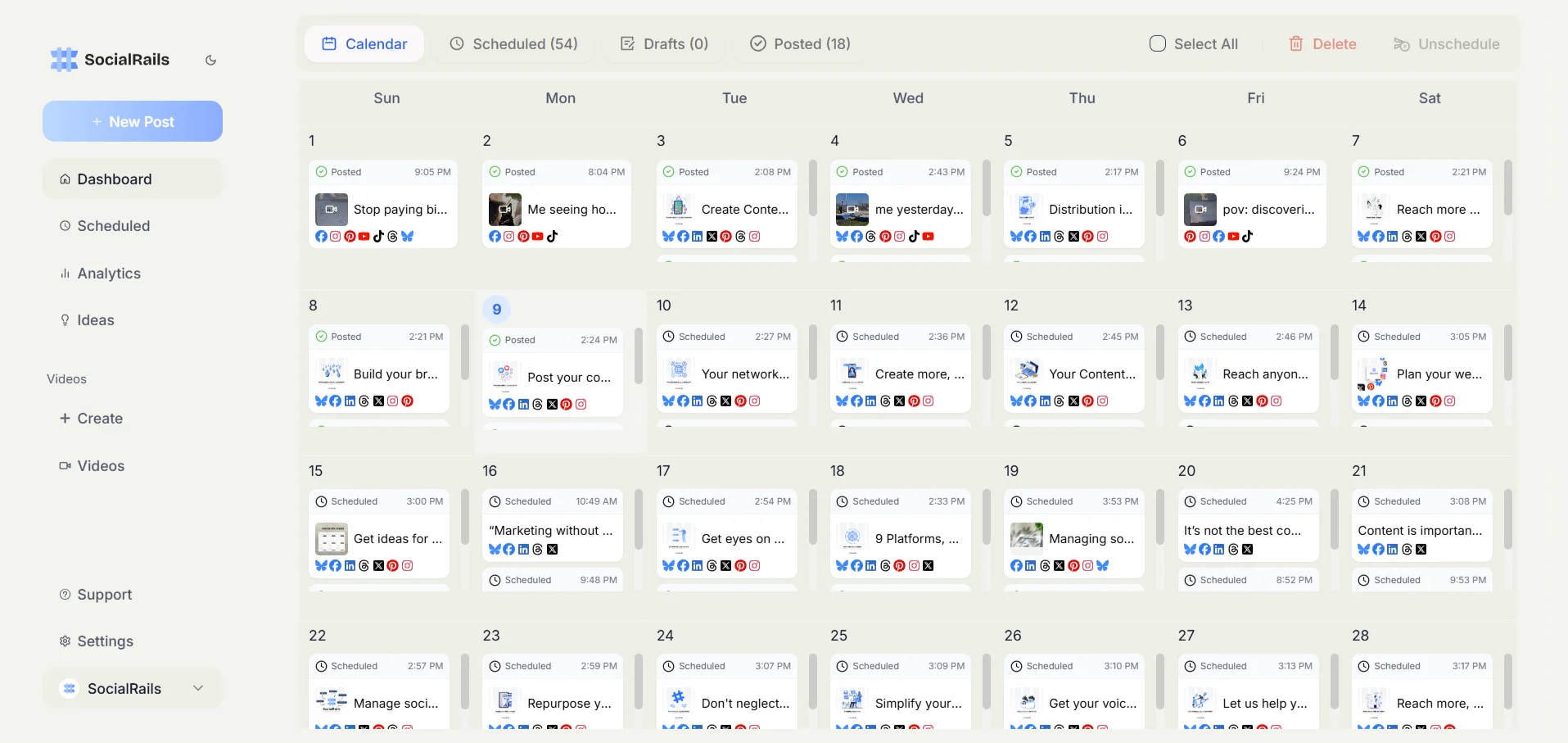
Page Likes vs Followers: The 2024 Change You Need to Know
This trips up a lot of people, so it is worth clearing up first.
In 2024, Facebook removed the "Like" button from Pages and moved to a followers-only model. Pages no longer collect "likes" as an audience count. When Pages migrated to the new experience, anyone who had liked and followed a Page was carried over as a follower, while people who had only liked it were not transferred. Meta's reasoning was that likes did not reliably mean someone actually received or engaged with a Page's content, whereas followers do.
So "getting more Facebook likes" now really splits into two separate goals:
- Post likes are the reactions on an individual post. These still exist and still count as engagement.
- Page followers are your audience size. This is what replaced the old Page "like" number.
Personal profiles and public figures can still gather profile follows too. If you are consolidating audiences, our guide on how to merge Facebook Pages walks through keeping followers intact. And to understand what a like is actually worth in the ranking system, see Facebook post engagement.
Why Buying Likes Backfires
Buying likes or joining "like-for-like" ladders is still the fastest way to hurt yourself, and it works against you more than ever:
- Purchased likes come from accounts that never engage, which drags your engagement rate down and signals low-quality content to the algorithm.
- Fake or inactive audiences reduce the share of real people who see future posts, because Facebook measures how your actual audience responds.
- It violates Facebook's terms and can lead to content or Page restrictions.
- It gives you a vanity number with no business behind it: no comments, no shares, no customers.
Genuine likes from people who actually see and care about your content are the only ones the algorithm rewards.
Reels-First Reach: How Distribution Actually Works Now
The single biggest shift is that Facebook is a discovery platform, not just a friends-and-family feed. A large share of what people see in Feed now comes from accounts they do not follow, surfaced by recommendations, and short video is the main vehicle.
What that means in practice:
- Reels get tested on non-followers first. The algorithm shows a Reel to people outside your audience to gauge response before pushing it wider, so a single strong Reel can reach far beyond your follower count.
- Watch time is a leading signal. A short video most people finish tends to travel further than a longer one people swipe past. Hook viewers in the first seconds and keep it tight.
- Original content is favored. Meta has said low-effort reposts and reaction clips without added commentary get deprioritized, so repurposed content from other platforms works less well than something made for Facebook.
Always add captions to your videos so they land with the sound off, which is how most people watch.
Tactics That Still Get Likes
1. Post video and Reels regularly
Short video is where organic reach lives. Publish Reels consistently, keep them focused on one idea, and lead with a strong opening few seconds. Longer video and Facebook Live still work for existing fans, especially for Q&As, demos, and events, but Reels are what reach new people.
2. Design posts for meaningful engagement
Facebook weighs comments, shares, and saves more heavily than plain likes. Write posts that genuinely invite a response instead of demanding one:
- Ask an open question people actually want to answer: "What is the one tool you would not run your week without?"
- Share a short, specific story or lesson that others can relate to and add to.
- Offer a genuinely useful tip or resource worth saving.
Avoid the manipulative versions ("like if you agree," "tag 5 friends," "comment YES"), which Facebook treats as engagement bait. More on that below.
3. Use strong visuals
Bright, clear images and well-produced video still outperform plain text for reactions. Note that Facebook retired the old "text must be under 20% of the image" ad rule back in 2020, so you no longer need to police text coverage on your images, though clean, uncluttered visuals still read better.
4. Post consistently and know your own best times
Consistency matters more than any universal "perfect time." There is no single best time that works for every Page. Instead of copying a generic schedule, open Meta Business Suite and check when your followers are online, then test posting around those windows for a few weeks. For a deeper walkthrough, see best times to post on Facebook.
5. Reply quickly and keep conversations going
Responding to comments within a few hours, asking follow-up questions, and thanking people keeps a post active longer, which the algorithm reads as a healthy conversation and rewards with more reach.
6. Build community in Groups
Groups remain one of the strongest organic-reach surfaces on Facebook, often outperforming Pages for distribution. Join or build communities where your audience already gathers, contribute real value before promoting anything, and let genuine relationships bring people back to your content. Our list of Facebook groups every social media manager should join is a good starting point.
7. Use mentions, tags, and Page collaborations
Tagging relevant Pages, co-creating content, and cross-promoting with partners exposes your posts to overlapping audiences. See Facebook mentions and tags for how to do it without spamming.
8. Optimize your Page
A complete Page earns trust and follows: a clear profile photo, a strong cover image, a real description, current contact details, and working CTA buttons that turn interest into action.
9. Share genuine user-generated content
Reposting real customer photos, reviews, and stories (with permission) gives you authentic content that others engage with, and it makes the people featured more likely to like, comment, and share.
10. Analyze and adjust
Use your insights in Meta Business Suite to see which posts earn the most reactions, shares, and saves, then make more of what works. Track the numbers that matter with our Facebook metrics guide.
A Note on Hashtags
Hashtags do very little on Facebook compared with Instagram or TikTok. They are not a meaningful discovery driver here, so a couple of relevant ones is fine but they are not a lever worth optimizing. Spend that effort on the video hook and the first comment instead.
What to Stop Doing
Engagement bait
Facebook explicitly demotes posts that beg for interaction: "like if," "share to enter," "tag a friend," "comment YES." Its machine-learning systems detect these patterns, and Pages that use them repeatedly get demoted more broadly than a single post, meaning reduced reach across everything you publish. Design for real responses instead.
Buying likes or followers
Covered above: it lowers your engagement rate, wastes budget, and risks your Page. Skip it entirely.
Posting too often with thin content
Flooding the feed dilutes each post's engagement and can push people to unfollow. A smaller number of strong posts beats a stream of filler.
Being purely promotional
Wall-to-wall selling suppresses reach and interest. Mix in value, stories, and community so your audience wants to keep seeing you.
Content Types That Earn Reactions
- Short video and Reels: the strongest reach driver, especially originals made for Facebook.
- Live video: good for existing fans, real-time Q&As, demos, and events.
- Strong photos and graphics: product shots, behind-the-scenes, and clean quote or tip visuals.
- Conversation-starter text posts: genuine questions and short, specific stories.
How the Algorithm Ranks Your Posts
Facebook decides who sees a post based on a mix of signals:
- How likely the specific person is to have a meaningful interaction (comment, share, save, or a considered reaction), which now outweighs a plain like.
- Watch time and completion for video.
- Relationship and past behavior between the viewer and your Page.
- Content quality and originality, with reposts and low-value clips deprioritized.
- Recency, so timing still matters at the margins.
To lean into this: publish original short video, write posts that spark real replies, respond quickly, and avoid anything the system reads as manipulation. Understanding why engagement matters for a business helps frame the whole approach.
Measuring Your Progress
Track these in Meta Business Suite (Creator Studio was retired and its features moved here):
- Post reactions and shares: individual post performance.
- Page followers: your audience size, which replaced the old Page "like" count.
- Engagement rate: interactions divided by reach, times 100. A commonly cited benchmark is roughly 1 to 3 percent, but treat it as a rough guide and watch your own trend rather than a fixed target.
- Reach: how many people saw your content, split between followers and non-followers.
- Saves and comments: high-intent signals that often precede wider reach.
Growth depends heavily on your niche, content quality, and consistency, so focus on steady improvement in your own numbers rather than chasing a specific percentage.
Related Resources
- Best Times to Post on Facebook
- Facebook Business Suite Complete Guide
- Why Social Media Engagement Matters for Business
- Facebook Metrics Guide - Track your Page KPIs
- How to Merge Facebook Pages - Consolidate duplicate Pages
Start Free Trial - Plan and schedule your Facebook content with SocialRails
Frequently Asked Questions
How many likes per post is considered good on Facebook?
There is no fixed number, because it depends on your reach and audience. A commonly cited engagement-rate benchmark is roughly 1 to 3 percent of the people who saw the post, but treat that as a rough guide, not a rule. It matters more to watch shares, saves, and comments, since Facebook weighs those meaningful interactions more heavily than a plain like, and to track your own trend over time rather than comparing to a universal figure.
What are the best times to post on Facebook for more likes?
There is no single best time that works for every Page. Generic "post at 3 PM Wednesday" advice ignores that your audience has its own patterns. Open Meta Business Suite, check when your followers are actually online, and test posting around those windows for a few weeks. Consistency and timing that fits your specific audience beat any one-size-fits-all schedule.
Should I ask people to like my Facebook posts?
No. Directly asking for likes, shares, or tags ("like if you agree," "tag 5 friends") is treated as engagement bait, and Facebook demotes it. Pages that use it repeatedly can see reduced reach across everything they post, not just the one post. Instead, create content that earns reactions naturally through value, story, or a genuine question like "What is your experience with this?"
Do Facebook ads help get more organic likes?
They can, indirectly. Boosting a strong organic post or running a follower campaign puts your content in front of more relevant people, some of whom will follow and engage on their own afterward. Even a small daily budget aimed at audiences similar to your existing engaged followers can extend reach. Ads work best on content that already performs well organically, so test first, then amplify the winners.
How important are Facebook Stories for getting likes?
Stories help keep your Page visible at the top of the app and can drive attention to your main posts, but they are a supporting tactic rather than the main reach driver. Post a few per day with interactive elements like polls and questions to stay top of mind. For reaching new people, short video Reels do far more heavy lifting than Stories.
What type of Facebook posts get the most likes?
Short video and Reels lead the way in 2026, because Facebook pushes them to people who do not yet follow you, exposing your content to new potential fans. Original video made for Facebook outperforms reposts from other platforms. After video, strong images and genuine conversation-starter posts earn the most reactions, while plain promotional text posts get the least reach.
How often should I post on Facebook to maximize likes?
Consistency matters more than raw frequency. Many small businesses do well with a few strong posts per week, while larger brands may post daily, but the right number is whatever quality level you can sustain. A steady, dependable schedule your audience can expect will generate more engagement over time than sporadic bursts of thin, low-value posts.
Can joining Facebook Groups help me get more likes on my posts?
Yes. Groups remain one of the strongest organic-reach surfaces on Facebook and often distribute content better than Pages. Join a handful of relevant Groups, contribute genuinely useful insights, and build real relationships before sharing your own content. Avoid direct self-promotion and focus on helping others first, and the visibility and credibility you build there can bring engagement back to your Page.
Was this article helpful?
Let us know what you think!