

Instagram Ecommerce: The Complete Guide to Selling on Instagram (2026)

Instagram has become one of the largest product discovery platforms in the world. With over 2 billion monthly active users browsing feeds, Stories, and Reels, it sits at the intersection of social media and online shopping — making it a natural fit for ecommerce businesses of all sizes.
This guide covers everything you need to set up and grow an Instagram ecommerce presence in 2026, including the latest shopping features, recent policy changes, and strategies that actually drive sales.
What Is Instagram Ecommerce?
Instagram ecommerce refers to the tools and features that let businesses sell products directly through the Instagram app. Instead of sending people to a separate website to browse, you can tag products in posts, Stories, and Reels so users can tap, view details, and buy — all within a few taps.
Core Instagram shopping features include:
- Product tags in feed posts, Stories, and Reels
- Instagram Shop tab on your business profile
- Product detail pages with images, pricing, and descriptions
- Collections to organize products into browsable categories
- Live Shopping to showcase products during broadcasts
- Shopping from Explore to reach new audiences
Whether you run a small handmade jewelry shop or a large fashion brand, Instagram ecommerce lets you turn your content into a storefront.
Create content, post everywhere
Create captions, images, and videos with AI. Schedule to 9 platforms in seconds.
Start your free trial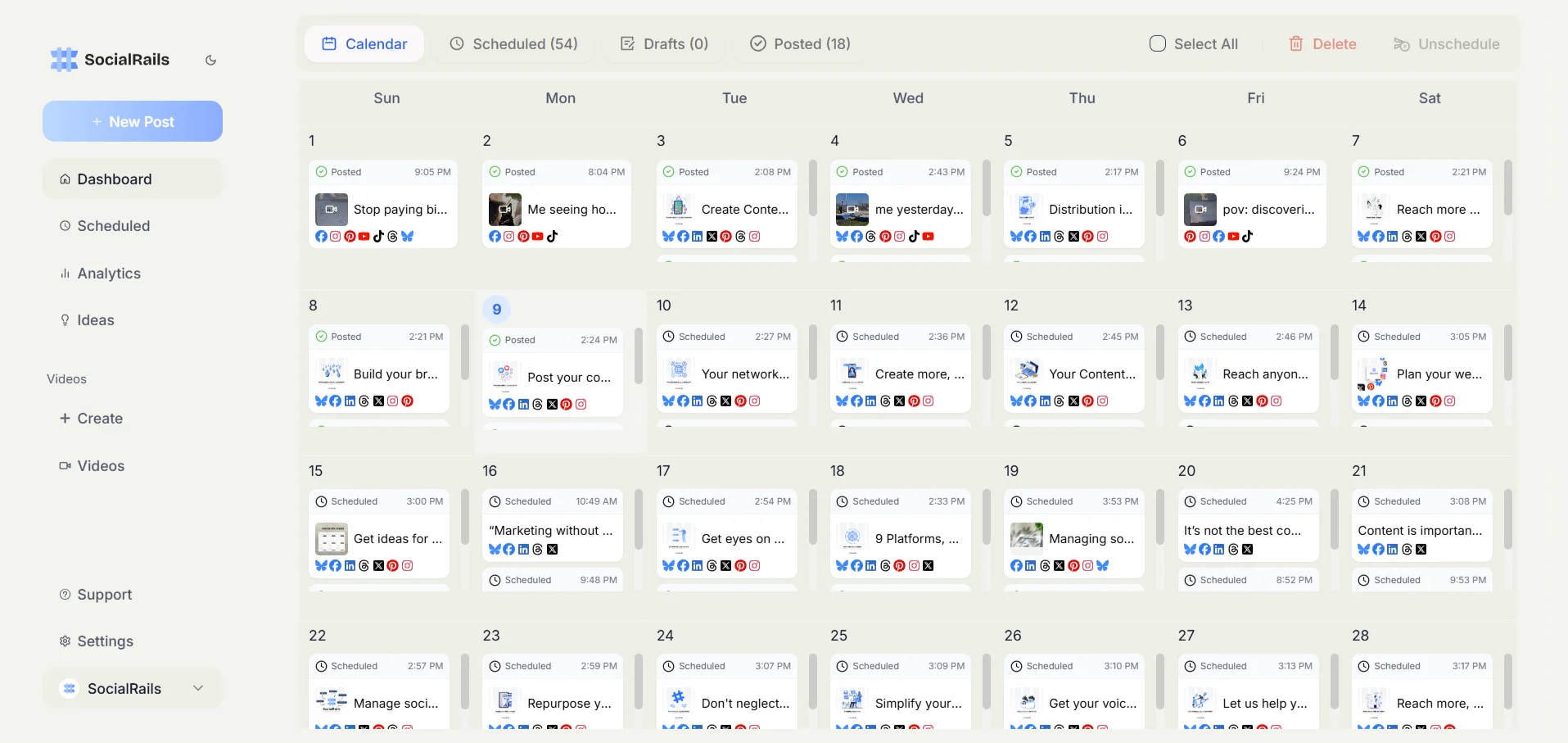
What Changed in 2026: Instagram Shopping Updates
Instagram's commerce features have shifted significantly. Here's what you need to know:
Native Checkout Was Removed (September 2025)
Meta discontinued in-app checkout on both Facebook and Instagram in September 2025. Previously, customers could complete a purchase entirely within the Instagram app. Now, all purchases redirect to the merchant's own website for checkout.
What this means for sellers:
- Your product catalog, Shop tab, and product tags still work
- Customers are redirected to your website when they tap "Buy"
- You handle all order management, shipping, and returns on your own platform
- No more per-sale fees to Meta (previously 5% or $0.40 minimum)
- You need a functional ecommerce website (Shopify, WooCommerce, etc.)
To automate the content side (scheduling product posts, Reels, and UGC across every network), see our best social media schedulers for e-commerce comparison, the tools that actually handle product tagging at scheduling time.
New Buy Now Button in Ads (March 2026)
At Shoptalk 2026, Meta announced a new Buy Now button that appears directly within Instagram ads. When a user taps it, they can check out through partners like Shopify, Stripe, PayPal, or Adyen — without leaving the ad experience. This partially bridges the gap left by native checkout removal.
AI-Generated Product Summaries
Meta is rolling out AI-powered product review summaries that appear when users click an ad or visit a product page from Instagram. These summaries pull from reviews and product data to give shoppers a quick overview before they buy.
Creator Affiliate Expansion
Instagram expanded its creator affiliate program, allowing creators in 22 countries to tag products from affiliate catalogs directly in their Reels. Affiliate partners include Amazon, eBay, Temu (US), Mercado Libre (Latin America), and Shopee (Asia).
Instagram Shopping Eligibility Requirements
Before you can sell on Instagram, your account needs to meet specific requirements.
What's NOT eligible for Instagram Shopping:
- Services (coaching, consulting, freelance work)
- Digital-only products in most regions
- Prohibited items (alcohol, weapons, supplements with certain claims)
- Accounts with active policy violations
What type of account do you need to sell on Instagram?
How to Set Up Instagram Shopping (Step by Step)
Step 1: Switch to a Business or Creator Account
If you're still on a personal account:
- Go to Settings → Account → Switch to professional account
- Choose Business (recommended for ecommerce) or Creator
- Select a category that describes your business
- Add contact information
Step 2: Connect to a Facebook Page
Instagram Shopping requires a connected Facebook Page:
- Go to Settings → Account → Linked Accounts
- Connect to your Facebook Business Page
- If you don't have one, create it at facebook.com/pages/create
Step 3: Set Up Your Product Catalog in Commerce Manager
Your product catalog is the backbone of Instagram Shopping. Go to business.facebook.com/commerce to get started.
If you use Shopify, the setup is straightforward — install the Facebook & Instagram sales channel and your products sync automatically. For a detailed walkthrough, see our Instagram Shopping + Shopify integration guide.
For WooCommerce, install the "Facebook for WooCommerce" plugin to sync your catalog, set up pixel tracking, and manage orders.
For BigCommerce, use the native Commerce Manager integration, which includes real-time inventory updates.
What's the easiest way to set up your Instagram product catalog?
Step 4: Connect Your Instagram Account in Commerce Manager
- In Commerce Manager, go to Settings → Business Assets
- Click Add Instagram Account
- Authorize the connection
- Select which products to make available on Instagram
Step 5: Verify Your Domain
- In Commerce Manager, go to Settings → Business Settings → Brand Safety → Domains
- Add your website URL
- Verify using one of: meta tag, DNS TXT record, or HTML file upload
Step 6: Submit for Review
- On Instagram, go to Settings → Business → Shopping
- Select your catalog
- Submit for review
- Approval usually takes 1–3 business days
If your application is rejected:
- Review Meta's commerce policies carefully
- Check that all products in your catalog are eligible
- Make sure your domain is verified
- Confirm your catalog has complete product information (images, descriptions, prices)
- Fix the issues and resubmit
Creating Shoppable Content That Sells
Once approved, you can start tagging products across all Instagram content types. For a deep dive on product tagging, see our Instagram Shoppable Posts guide.
Product Tags in Feed Posts
- Create your post as usual
- Tap Tag Products
- Tap on the image where the product appears
- Search and select the product from your catalog
- Share the post
Limits: Up to 5 products per single image, up to 20 across a carousel.
Tips:
- Tag products where they're actually visible in the image
- Use lifestyle photos showing the product in context — not just product-on-white-background shots
- Don't over-tag. One or two products per image feels natural; five feels like a catalog page.
Shoppable Stories
- Create a Story
- Tap the sticker icon
- Select the Product sticker
- Choose a product from your catalog
- Customize the sticker's appearance and placement
Stories are particularly effective for limited-time promotions, new arrivals, and behind-the-scenes content that features your products in action.
Shopping in Reels
Reels are Instagram's highest-reach content format. To add product tags:
- Create and edit your Reel
- Before posting, tap Tag Products
- Select the products featured in the video
- A "View Products" button appears for viewers
Content ideas for shoppable Reels:
- Product demonstrations and tutorials
- Unboxing and first-impression videos
- Before/after transformations
- Styling or outfit-of-the-day content
- Trending audio paired with product showcases
Live Shopping
Live Shopping lets you pin and showcase products in real time during an Instagram Live broadcast. Viewers can tap to view product details and purchase.
How to set up:
- Start an Instagram Live
- Tap the shopping bag icon
- Pin products as you discuss them
- Viewers see product cards and can tap to buy
What works well in Live Shopping:
- Announce the Live in advance via Stories and posts
- Demonstrate each product thoroughly
- Answer viewer questions in real time
- Offer Live-exclusive discounts or early access
- Keep sessions focused (30–60 minutes)
Instagram Ecommerce Strategy: What Actually Drives Sales
Setting up a shop is the easy part. Driving consistent sales requires a content and engagement strategy.
Build a Content Mix That Balances Value and Selling
Posting only product photos won't build an engaged audience. A balanced approach works better:
The key is leading with value. People follow accounts that teach them something or entertain them — not accounts that only sell. When you do post products, show them in context rather than just listing features.
What's the most effective approach to Instagram ecommerce content?
Use User-Generated Content (UGC)
Customer-created content is one of the most effective tools for Instagram ecommerce. When real people share photos and videos of your products, it builds trust in ways polished brand photography can't.
How to encourage UGC:
- Create a branded hashtag and ask customers to use it
- Repost customer photos and videos (with permission)
- Run a "share your look" or "show us your setup" campaign
- Feature UGC in Stories highlights
Brands like Glossier built much of their early growth on UGC — reposting customer selfies and reviews created a community-driven brand identity that felt authentic rather than advertised.
Write Captions That Convert
Your captions should do more than describe the product. A good ecommerce caption follows this structure:
Hook — grab attention in the first line
Value — explain the benefit or tell a story
Details — key features, sizing, or materials
CTA — clear next step (tap to shop, link in bio)
Example:
The bag that fits your laptop, lunch, and gym clothes — without looking like a duffel.

Our Luna Tote has a padded laptop sleeve, insulated pocket,
key clip, and magnetic closure. Available in 5 colors.

Tap the product tag to shop →
Use our Caption Generator to draft product captions quickly.
Leverage Influencer and Creator Partnerships
With Instagram's expanded creator affiliate program, partnering with influencers has become more accessible:
- Product seeding: Send free products to creators in exchange for honest reviews
- Affiliate partnerships: Creators tag your products in their Reels and earn a commission on sales
- Sponsored posts: Pay for dedicated product features with shoppable tags
- Co-created content: Collaborate on limited-edition products or exclusive collections
Start with micro-influencers (1,000–50,000 followers) in your niche. They typically have higher engagement rates and more trust with their audience than larger accounts.
Optimize Your Instagram Profile for Shopping
Your profile is your storefront. Make it easy for visitors to understand what you sell and how to buy:
- Bio: Clearly state what you sell and include a call-to-action
- Link in bio: Use a link-in-bio tool (Linktree, Stan Store, or a custom landing page) to direct traffic to your best-selling products, current promotions, and main store
- Highlights: Create highlight categories like "New Arrivals," "Best Sellers," "Reviews," and "How to Order"
- Shop tab: Organize products into collections (by category, season, price range, or use case)
Running Instagram Shopping Ads
Organic reach alone won't scale most ecommerce businesses. Instagram ads let you put your products in front of targeted audiences.
Ad Formats for Ecommerce
Retargeting for Higher Conversions
Set up the Meta Pixel on your website to track visitor behavior, then create retargeting audiences:
- Website visitors who viewed product pages but didn't buy
- Add-to-cart abandoners who started checkout but didn't complete
- Past customers for upsells and new product launches
- Lookalike audiences based on your best customers
Retargeting ads consistently outperform cold audience ads because you're reaching people who already showed interest in your products.
Measuring Instagram Ecommerce Performance
Key Metrics to Track
Shopping-specific metrics:
- Product page views from Instagram
- Website clicks from product tags
- Add-to-cart rate
- Conversion rate (purchases ÷ visitors)
- Revenue attributed to Instagram
- Average order value
Content performance metrics:
- Product tag tap rate
- Shop tab visits
- Engagement rate on shopping posts vs. non-shopping posts
- Reel views on product content
- Story completion rate on shoppable Stories
Where to Find Your Data
For a deeper look at reading your Instagram data, see our Instagram Analytics guide.
Ecommerce Platforms That Integrate With Instagram
Shopify is the most seamless option — products sync automatically, inventory stays up to date, and Shopify is now a checkout partner for Meta's new Buy Now ad button. See our Shopify + Instagram integration guide for setup instructions.
Common Instagram Ecommerce Problems (and Fixes)
"My products aren't getting views"
- Tag products more consistently across all content types (posts, Stories, Reels)
- Post shoppable Reels — they get significantly more reach than static posts
- Use relevant hashtags on shopping content
- Promote your Shop tab in your bio and Stories
- Run shopping ads to targeted audiences
"People click but don't buy"
- Make sure your website loads fast on mobile (Instagram traffic is almost entirely mobile)
- Display shipping costs and delivery time upfront
- Simplify your checkout process — fewer steps = fewer dropoffs
- Offer free shipping above a threshold
- Retarget visitors with ads featuring the products they viewed
- Read our shopping cart optimization guide for more tactics
"My catalog keeps getting rejected"
- Check that all product images meet minimum quality standards (1080×1080px)
- Remove any prohibited products from your catalog
- Make sure every product has a title, description, price, and availability status
- Verify your website domain in Commerce Manager
- Ensure product landing page URLs work and match catalog listings
"I'm not sure if Instagram Shopping is worth it for my business"
Instagram Shopping works best for businesses that sell visual, lifestyle-oriented physical products. Fashion, beauty, home decor, jewelry, food, and fitness products tend to perform well. If your products benefit from being seen in context — worn, styled, used, or demonstrated — Instagram is a strong channel.
If you sell primarily B2B, high-ticket services, or products that require extensive consultation before purchase, Instagram Shopping may be less effective as a direct sales channel (though it can still work for brand awareness and lead generation).
Frequently Asked Questions
How do I get started with Instagram Shopping?
Switch to a Business or Creator account, connect a Facebook Page, create a product catalog in Meta Commerce Manager, verify your domain, and submit for review through Settings → Business → Shopping. The entire setup takes 1–2 hours, plus 1–3 days for approval.
Can I sell digital products on Instagram?
Instagram Shopping is primarily designed for physical products. Digital products, subscriptions, and services are limited or not supported in most regions. You can still promote digital products through regular posts with a link in your bio, but you won't be able to use product tags or the Shop tab for them.
Does Instagram charge fees on sales?
No. Since Meta removed native in-app checkout in September 2025, there are no Instagram fees on sales. All transactions happen on your own website, so you only pay your payment processor's fees (Stripe, PayPal, etc.) and your ecommerce platform fees.
How do I sell physical products on Instagram?
Set up a product catalog in Meta Commerce Manager (or sync from Shopify/WooCommerce), get approved for Instagram Shopping, then tag your products in posts, Stories, and Reels. When customers tap a product tag, they see details and can click through to your website to purchase.
What are the Instagram Shopping eligibility requirements in 2026?
You need a Business or Creator account, a connected Facebook Page, a product catalog in Commerce Manager, a verified website domain, compliance with Meta's commerce policies, and to be located in a supported market. Your account must be in good standing with no active policy violations.
What products sell best on Instagram?
Products that are visually appealing and benefit from lifestyle context perform best: fashion and clothing, beauty and skincare, jewelry and accessories, home decor, food and beverages, and fitness products. Products that photograph well and can be demonstrated in Reels tend to see the highest engagement and conversion.
How many products can I tag in a post?
You can tag up to 5 products per single image or video post. For carousel posts, you can tag up to 20 products total across all slides. Place tags where the product is actually visible in the image for the best user experience.
What's the best ecommerce platform for Instagram integration?
Shopify offers the most seamless Instagram integration — products auto-sync, inventory stays updated, and Shopify is a checkout partner for Meta's new Buy Now ad button. WooCommerce and BigCommerce also offer solid integrations. The best choice depends on your existing setup and business needs. See our best ecommerce platform comparison for more detail.
Why was my Instagram Shopping application rejected?
Common reasons include: selling prohibited items, active policy violations on your account, an incomplete product catalog (missing images, descriptions, or prices), an unverified domain, or attempting to sell services instead of physical products. Review the specific rejection reason in Commerce Manager, fix the issues, and resubmit.
Can I use Instagram to sell without a website?
Instagram Shopping requires a website with checkout capability. Since Meta removed in-app checkout, all purchases redirect to your own site. If you don't have a website yet, platforms like Shopify, Squarespace, or BigCommerce let you set one up quickly and integrate with Instagram Shopping.
Related Resources
Instagram Ecommerce Deep Dives:
- Instagram Shoppable Posts: Complete Setup Guide — detailed guide to product tagging
- Instagram Shopping + Shopify Integration — step-by-step Shopify setup
- Social Commerce Complete Guide — selling across all social platforms
- Best Ecommerce Platform for Small Business — compare Shopify vs WooCommerce vs BigCommerce
Sales & Conversion:
- Shopping Cart Optimization Guide — reduce cart abandonment
- FOMO Marketing Guide — create urgency that converts
- Social Proof Marketing Guide — build trust with reviews and testimonials
- Best Selling Products Online — trending products in 2026
Instagram Growth:
- Grow Instagram Followers — build your audience
- Increase Instagram Engagement — drive more interaction
- Best Times to Post on Instagram — optimal posting schedule
- Instagram Analytics Guide — understand your performance data
Free Instagram Tools:
- Instagram Post Generator — create shoppable post ideas
- Instagram Caption Generator — write product captions
- Hashtag Generator — find relevant shopping hashtags
- Engagement Calculator — measure your performance
- Try SocialRails — schedule and automate your Instagram content
Was this article helpful?
Let us know what you think!