

FOMO Marketing: 18 Tactics That Increase Conversions (2026 Guide)

TL;DR - Quick Answer
18 min readFOMO works because losing hurts. Loss aversion is 2x stronger than gain motivation.
FOMO Marketing: 18 Tactics That Increase Conversions
FOMO—fear of missing out—drives purchase decisions. This guide shows you 18 tactics to use it ethically.
Create content, post everywhere
Create captions, images, and videos with AI. Schedule to 9 platforms in seconds.
Start your free trial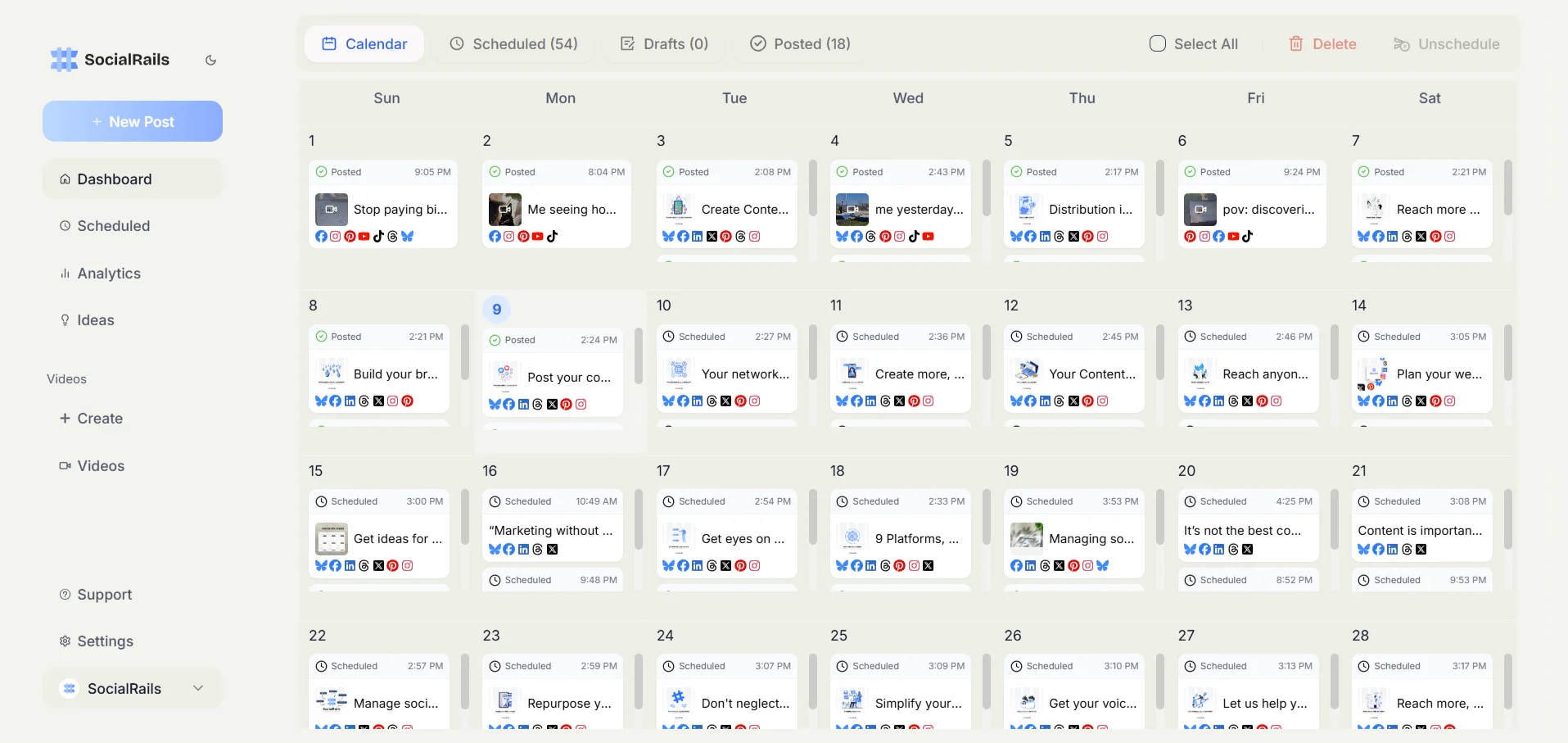
For related strategies, see creating urgency in sales.
What Is FOMO Marketing?
FOMO marketing uses the anxiety that others are experiencing something you're not to motivate action.
It works because of loss aversion: we're 2x more motivated to avoid losses than acquire gains. This principle was first documented by psychologists Daniel Kahneman and Amos Tversky in their Nobel Prize-winning research on decision-making.
Why is 'Save $50 before midnight' more effective than 'Get $50 off'?
💡 Tip: Think carefully before selecting your answer!
The Psychology Behind FOMO
18 FOMO Marketing Tactics That Convert
Time-Based FOMO
1. Countdown Timers
Show exact time remaining until offer expires.
Example: Amazon Prime Day countdown creates billions in sales over 48 hours.
Implementation:
- Add countdown to product pages, emails, landing pages
- Use specific end times ("Ends 11:59 PM EST")
- Make timer visible throughout purchase journey
Impact: Countdown timers typically improve conversion rates
2. Flash Sales
Short-duration sales create urgency through time pressure.
Example: Fashion Nova's 24-hour flash sales generate significant revenue spikes.
Implementation:
- Announce via email, SMS, push notifications
- Use countdown clock prominently
- Show time remaining at checkout
Best duration: 24-48 hours for discovery, 4-6 hours for maximum urgency
3. Limited-Time Bonuses
Add value that disappears after deadline.
Example: "Order in next 2 hours, get free shipping + bonus gift"
Implementation:
- Stack time-limited bonuses on core offer
- Show what disappears after deadline
- Use "while supplies last" for bonus items
Impact: Valuable time-limited bonuses can meaningfully lift conversions
4. Early Bird Pricing
Reward fast action with better prices.
Example: Event tickets starting at $199 (first 100), rising to $299, then $399
Implementation:
- Clear tier structure with price escalation
- Show current tier and when it ends
- Display how many spots remain at current price
Best for: Events, courses, memberships, software launches
A flash sale runs for 24-48 hours. When should you send the final reminder?
💡 Tip: Think carefully before selecting your answer!
Quantity-Based FOMO
5. Limited Stock Indicators
Show when inventory is running low.
Example: Booking.com — "Only 2 rooms left at this price!"
Implementation:
- Show actual inventory levels when low (<10)
- Use urgent colors (red, orange)
- Position near Add to Cart button
Impact: Genuine low-stock indicators can significantly improve conversions
6. Limited Editions
Create products that won't be restocked.
Example: Supreme drops sell out in seconds, reselling at 10x prices.
Implementation:
- Announce limited quantities upfront
- Never restock (maintain scarcity credibility)
- Create waitlists for next release
Best for: Fashion, collectibles, collaborations
7. Waitlists
Force people to wait builds desire and FOMO.
Example: Robinhood launched with waitlist of 1M+ people, referrals moved you up.
Implementation:
- Show position in line
- Offer ways to move up (referrals, engagement)
- Send "your turn" notification with deadline
Impact: Well-executed waitlists can achieve high conversion rates
8. Sold-Out Indicators
Show what others missed to trigger FOMO for remaining items.
Example: "3 colors sold out, 2 remaining" increases urgency for what's left.
Implementation:
- Cross out sold-out variants
- Show "Notify me when back" option
- Highlight remaining availability
Social FOMO
9. Real-Time Purchase Notifications
Show what others are buying right now.
Example: "Sarah from Austin just purchased this item"
Implementation:
- Use tools like Fomo, Proof, or TrustPulse
- Show recent purchases (last 24-48 hours)
- Include buyer location for relatability
Impact: Purchase notifications can improve conversions, especially on high-traffic sites
10. Viewer Counts
Show how many people are looking at the same item.
Example: "42 people are viewing this right now"
Implementation:
- Display on product pages
- Update in real-time or near real-time
- Use when genuinely high traffic
Impact: High viewer counts create social validation and urgency
11. Purchase Velocity
Show how fast items are selling.
Example: "247 sold in last 24 hours"
Implementation:
- Calculate and display for popular items
- Update frequently
- Use for trending or new items
12. Social Proof Numbers
Show popularity through usage statistics.
Example: "Join 50,000+ marketers who read this newsletter"
Implementation:
- Use specific numbers (not rounded)
- Update regularly
- Segment by relevance ("10,000 e-commerce brands")
Exclusive FOMO
13. Members-Only Access
Create exclusive spaces that non-members can't access.
Example: Amazon Prime Day — $14.9B in 48 hours, Prime members only.
Implementation:
- Show what non-members are missing
- Offer trial access with conversion deadline
- Create membership tiers with escalating exclusivity
Impact: Prime members spend significantly more than non-members
14. VIP Early Access
Let loyal customers buy before everyone else.
Example: "VIP sale starts Thursday, public sale Saturday"
Implementation:
- Email VIP list 24-48 hours early
- Show "Early Access Ending Soon" countdown
- Limit early-access quantities
Benefit: Increases loyalty while creating FOMO for non-VIPs
15. Invite-Only Products
Require invitation to purchase certain items.
Example: OnePlus launched invite-only, creating massive demand.
Implementation:
- Request invites builds anticipation
- Invite existing customers to refer others
- Create social proof around "who got in"
16. Beta Access
Let early adopters try new features first.
Example: "Join the beta — limited to 500 users"
Implementation:
- Clear limit on beta spots
- Feedback requirement adds exclusivity
- Graduate successful betas to public with testimonials
Which FOMO tactic did Robinhood use to get 1M+ signups before launch?
💡 Tip: Think carefully before selecting your answer!
Contextual FOMO
17. Seasonal/Event FOMO
Tie offers to events that have natural endings.
Example: "Back to School Sale — Ends when school starts"
Implementation:
- Align with cultural moments
- Use natural deadlines (seasons, holidays, events)
- Create countdown to event
Calendar opportunities:
- New Year (January)
- Valentine's Day (February)
- Back to School (August)
- Black Friday/Cyber Monday (November)
- Holiday Season (December)
18. Price Increase Warnings
Announce upcoming price changes.
Example: "Price increasing to $99 on February 1st — lock in $79 now"
Implementation:
- Announce 2-4 weeks in advance
- Show current vs. future price
- Explain reason for increase (adds credibility)
Impact: Price increase announcements can drive significant pre-deadline sales
FOMO Marketing by Channel
Email FOMO Tactics
Subject lines:
- "Last chance: Sale ends tonight"
- "You're about to miss this"
- "Only 12 left in stock"
- "[First name], your cart is about to expire"
Body copy:
- Countdown GIFs showing time remaining
- Stock levels ("Only 3 left at this price")
- What happens after deadline (price increase, sold out)
Timing:
- 48 hours before deadline
- 24 hours before deadline
- 4 hours before deadline
- 1 hour final reminder
Website FOMO Elements
Social Media FOMO
Instagram Stories:
- Countdown sticker for launches
- Poll asking "Did you get yours?"
- Showing sold-out items
Twitter/X:
- Real-time stock updates
- Customer unboxing retweets
- "Selling fast" announcements
TikTok:
- Haul videos creating desire
- "Last one in stock" content
- Behind-the-scenes of popular products
SMS FOMO
Best practices:
- Keep messages short (under 160 characters)
- Include deadline or scarcity element
- Link directly to product
Example: "Flash sale: 40% off ends in 3 hours. Shop now: [link]"
Timing: Most effective 2-4 hours before deadline
FOMO Campaign Examples
Booking.com — Layered FOMO
Booking.com uses multiple FOMO triggers on every listing:
- "Only 2 rooms left at this price!"
- "In high demand — booked 5 times in last 24 hours"
- "15 people looking at this property"
- "Free cancellation until [date]" (reduces risk of acting on FOMO)
Result: Booking.com is known for having strong conversion rates in the travel booking space
Amazon — Prime Day FOMO
Amazon's Prime Day creates perfect FOMO storm:
- Exclusive: Prime members only
- Limited time: 48 hours
- Limited quantity: "Lightning deals" with progress bars
- Countdown: Timer on every deal
- Social: "X% claimed" indicators
Result: Billions in sales during the 48-hour event, growing each year
Glossier — Product Launch FOMO
Glossier's limited edition launches:
- Waitlist: Join before launch
- Exclusive: Early access for existing customers
- Limited: "Limited edition" messaging
- Social: Customer photos flood Instagram
Result: Sell out within hours, massive earned media
Robinhood — Waitlist FOMO
Early growth hack:
- Waitlist: 1M+ people waiting
- Position: "You are #847,293 in line"
- Referral: Each referral moves you up
- Social proof: Counter showing total signups
Result: Viral growth before product launch
Ethical FOMO Marketing
5 Rules for Ethical FOMO
- Only use real scarcity. If you'll restock in 2 days, don't say "limited edition".
- Honor deadlines. If sale ends at midnight, end it at midnight.
- Be transparent. Explain why something is limited.
- Provide value. FOMO should highlight genuine opportunities.
- Don't overuse. Constant "urgency" trains customers to ignore it.
Red Flags to Avoid
The FTC's advertising guidelines require that marketing claims be truthful. Deceptive urgency tactics can lead to legal issues:
- Countdown timers that reset on refresh
- "Only X left" that never changes
- Daily "flash sales" (not actually urgent)
- Fake purchase notifications
- Exaggerated scarcity claims
A countdown timer resets every time a visitor refreshes the page. Is this ethical?
💡 Tip: Think carefully before selecting your answer!
Measuring FOMO Effectiveness
Key Metrics
A/B Testing FOMO Elements
Test variables:
- Timer vs. no timer
- Stock indicator vs. no indicator
- Specific number vs. "limited"
- Countdown vs. end date
- Social proof vs. scarcity
Test duration: Minimum 2 weeks, 1000+ visitors per variation
Common FOMO Mistakes
1. Always-On Urgency
Problem: Every email screams "URGENT!" — nothing feels urgent Fix: Reserve FOMO for genuine opportunities
2. Crying Wolf
Problem: "Sale ends tonight!" — same sale runs next week Fix: Honor deadlines, vary your offers
3. Wrong Audience
Problem: Using FOMO on customers who need education, not urgency Fix: Match messaging to buyer stage
4. No Follow-Through
Problem: "Limited stock!" — but always available Fix: If you say limited, mean it
5. FOMO Without Value
Problem: Creating urgency for mediocre offers Fix: FOMO amplifies — make sure the offer is worth amplifying
FOMO Marketing Checklist
Before launch:
- Is the scarcity/urgency real?
- Are deadlines clearly communicated?
- Does the offer provide genuine value?
- Is messaging honest and transparent?
Implementation:
- Countdown timer on landing page
- Stock indicators on product pages
- Urgency in email subject lines
- Social proof elements active
- Cart expiration messaging
After campaign:
- Did sales spike before deadline?
- What was conversion rate lift?
- Any customer complaints about tactics?
- Document what worked for next time
Related Guides
- Creating Urgency in Sales: Complete Guide
- Social Proof Marketing: 20 Examples
- Emotional Marketing: 25 Examples
- Power Words That Drive Sales
- What Does FOMO Mean?
Free Tools
- Urgency Message Generator - Create FOMO messages for sales and marketing
- Power Words Generator - Find emotional trigger words
Key Takeaways
- FOMO works because losing hurts. Loss aversion is 2x stronger than gain motivation.
- Layer your FOMO. Combine time, quantity, social, and exclusivity triggers.
- Keep it honest. Fake urgency destroys trust forever.
- Match to buyer stage. FOMO converts ready buyers, not browsers.
- Test and measure. Track impact, don't assume it's working.
The best FOMO marketing doesn't create false urgency—it highlights genuine opportunities. When your offer is truly valuable and actually limited, telling people is a service, not manipulation.
Was this article helpful?
Let us know what you think!