
Best Social Media CRM Software 2026: Track Leads from Social to Sale

Best Social Media CRM Software 2026: Complete Guide
Social media CRM software connects your social interactions with your sales pipeline. Instead of losing track of promising leads who engage on Instagram or comment on LinkedIn, these tools help you capture, nurture, and convert them into customers.
Create content, post everywhere
Create captions, images, and videos with AI. Schedule to 9 platforms in seconds.
Start your free trial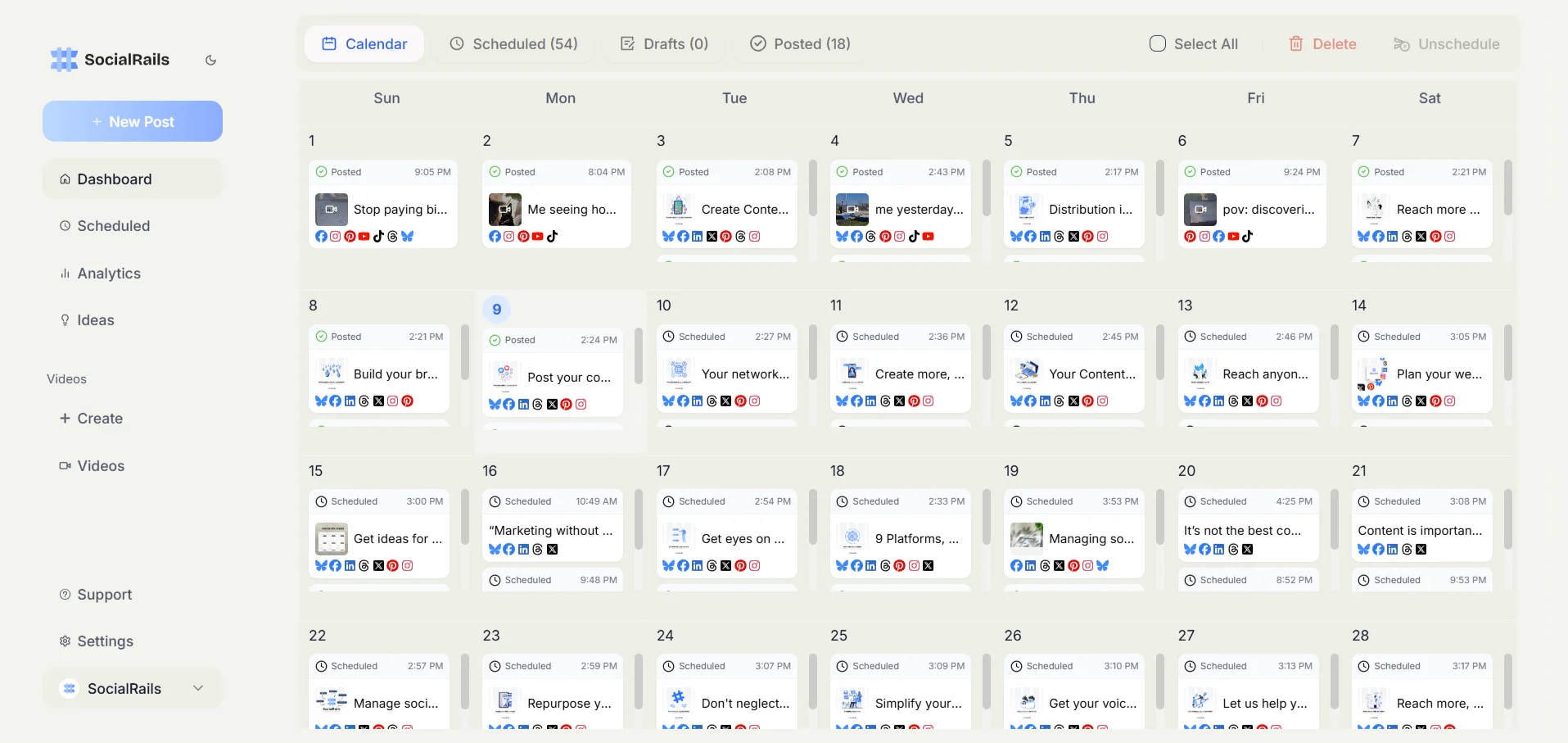
What is Social Media CRM Software?
Social media CRM (Customer Relationship Management) software integrates social media interactions with traditional CRM functions. It captures leads from social platforms, tracks engagement history, and helps you manage customer relationships that originate from social media.
According to Gartner's definition, social CRM is "the integration of social media channels into customer relationship management platforms." It extends traditional CRM by incorporating data from platforms like LinkedIn, X (Twitter), Instagram, and Facebook.
Traditional CRM vs. Social CRM:
Why You Need Social Media CRM
The problem: Your sales team is missing leads.
Someone comments on your Instagram post asking about pricing. A LinkedIn user shares your content and adds "been looking for something like this." A potential customer tweets about needing your exact solution.
Without social CRM, these signals disappear. With it, they become leads in your pipeline.
Key benefits:
- Capture social leads automatically - No more manually tracking who engaged
- See full engagement history - Know every interaction before reaching out
- Faster response times - Get notified when prospects engage
- Better personalization - Reference past interactions in outreach
- Track social ROI - Connect social activity to revenue
Best Social Media CRM Software 2026
1. HubSpot CRM + Social Tools
Best for: Small to mid-size businesses wanting an all-in-one solution
Social CRM Features:
- Social media monitoring and publishing
- Auto-capture leads from social interactions
- Track social engagement on contact records
- Social inbox for managing conversations
- Attribution reporting (social to revenue)
Pricing:
- Free CRM (limited social features)
- Marketing Hub Starter: $20/month
- Professional: $890/month
- Enterprise: $3,600/month
Pros:
- Truly integrated CRM and social tools
- Excellent free tier to start
- Strong automation capabilities
- Great for inbound marketing
Cons:
- Gets expensive at scale
- Social features less robust than specialists
- Requires Hub subscriptions for full features
2. Salesforce Social Studio
Best for: Enterprise organizations already using Salesforce
Social CRM Features:
- Deep Salesforce CRM integration
- Social listening across platforms
- Lead and contact creation from social
- Social customer service tools
- AI-powered sentiment analysis
Pricing:
- Basic: $1,000/month
- Professional: $4,000/month
- Enterprise: Custom pricing
Pros:
- Most powerful for Salesforce users
- Enterprise-grade capabilities
- Advanced analytics and AI
- Scales with organization
Cons:
- Expensive entry point
- Complex setup and administration
- Overkill for small businesses
- Requires Salesforce ecosystem
3. Sprout Social
Best for: Teams prioritizing social engagement with CRM integration
Social CRM Features:
- Unified social inbox
- Contact management within platform
- CRM integrations (Salesforce, HubSpot, Zendesk)
- Conversation history tracking
- Team collaboration tools
Pricing:
- Standard: $249/month
- Professional: $399/month
- Advanced: $499/month
Pros:
- Excellent social inbox experience
- Strong CRM integrations
- Built-in approval workflows
- Comprehensive reporting
Cons:
- No native CRM, requires integration
- Higher price point
- Per-seat pricing adds up
- Limited free trial
See how it compares: Sprout Social alternatives
4. Zoho CRM + Zoho Social
Best for: Budget-conscious businesses wanting integrated tools
Social CRM Features:
- Native integration between products
- Social lead capture
- Social engagement tracking on contacts
- Social listening basics
- Automated lead assignment
Pricing: (see full Zoho Social pricing)
- Zoho CRM Free: Up to 3 users
- Standard: $14/user/month
- Zoho Social: $10-$40/month
- Bundle discounts available
Pros:
- Very affordable
- Tight integration within Zoho ecosystem
- Good for small teams
- Includes basic automation
Cons:
- Less powerful than enterprise solutions
- Social features more basic
- Better in full Zoho ecosystem
- Interface dated compared to competitors
5. Agile CRM
Best for: Small businesses wanting social CRM on a budget
Social CRM Features:
- Social profile enrichment
- Social engagement tracking
- Basic social listening
- Lead scoring with social signals
- Email + social automation
Pricing:
- Free: Up to 10 users (limited)
- Starter: $8.99/user/month
- Regular: $29.99/user/month
- Enterprise: $47.99/user/month
Pros:
- Affordable for small teams
- All-in-one platform
- Social profile enrichment helpful
- Decent automation
Cons:
- Social features limited
- Interface needs improvement
- Support can be slow
- Not for complex needs
6. Nimble
Best for: Relationship-focused sellers who live on social
Social CRM Features:
- Automatic social profile enrichment
- Social relationship tracking
- Browser extension for LinkedIn/Twitter
- Unified contact management
- Social signals and insights
Pricing:
- Business: $24.90/user/month (annual)
- $29.90/user/month (monthly)
Pros:
- Excellent social profile enrichment
- Great browser extension
- Simple, clean interface
- Strong for relationship selling
Cons:
- Limited marketing automation
- Not for complex sales processes
- Smaller company (support concerns)
- Fewer integrations than leaders
7. Freshsales + Freshmarketer
Best for: Growing teams wanting modern, affordable CRM
Social CRM Features:
- Social profile viewing
- Basic social tracking
- Integration with Freshdesk for social support
- Lead scoring
- Marketing automation with social
Pricing:
- Free: Basic CRM features
- Growth: $15/user/month
- Pro: $39/user/month
- Enterprise: $69/user/month
Pros:
- Modern, clean interface
- Affordable pricing
- Good mobile apps
- AI features included
Cons:
- Social features not standout
- Better for email than social
- Freshworks ecosystem dependency
- Social listening limited
Comparison Table
Key Features to Look For
Must-Have Features
1. Social Profile Enrichment Automatically pull social profiles into contact records. When you add an email, the system finds LinkedIn, Twitter, and other profiles.
2. Engagement History See every social interaction with a contact, comments, likes, shares, DMs, in one timeline alongside emails and calls.
3. Lead Capture from Social Automatically create leads when someone engages meaningfully. Configure rules for what triggers lead creation.
4. Social Inbox Unified inbox for managing social messages, comments, and mentions without switching platforms.
5. CRM Integration If using standalone social tools, ensure they integrate deeply with your CRM of choice.
Nice-to-Have Features
6. Social Listening Monitor brand mentions, competitors, and industry keywords across platforms.
7. Automation Auto-assign leads based on social source, trigger workflows from social engagement, automate follow-ups.
8. Attribution Reporting Track which social interactions influenced closed deals. Connect social to revenue.
9. AI/Sentiment Analysis Identify positive/negative sentiment, prioritize high-intent engagement, predict lead quality.
How to Choose the Right Tool
Decision Framework
Choose HubSpot if:
- Want all-in-one marketing + CRM + social
- Starting from scratch
- Budget is flexible for growth
- Inbound marketing focused
Choose Salesforce Social Studio if:
- Already using Salesforce
- Enterprise-scale needs
- Complex sales processes
- Budget isn't primary concern
Choose Sprout Social + CRM integration if:
- Social engagement is priority
- Need best-in-class social inbox
- Have existing CRM to integrate
- Team manages high volume social
Choose Zoho if:
- Budget is tight
- Want integrated ecosystem
- Small team (under 10)
- Don't need advanced social
Choose Nimble if:
- Relationship selling focus
- Heavy LinkedIn/Twitter usage
- Simple CRM needs
- One-person or small team
Implementation Best Practices
Getting Started
Week 1: Setup
- Import existing contacts
- Connect social accounts
- Configure lead capture rules
- Set up social inbox
- Train team on basics
Week 2: Process Design
- Define what creates a lead
- Set up lead assignment rules
- Create response templates
- Establish response time goals
- Configure notifications
Week 3: Integration
- Connect to email platform
- Set up marketing automation
- Configure reporting dashboards
- Test lead flow end-to-end
- Document processes
Common Mistakes to Avoid
1. Capturing every interaction as a lead Not every like is a lead. Define meaningful engagement triggers.
2. Ignoring response time Social expectations are fast. Set up alerts for high-priority engagement.
3. Siloing social from sales Ensure sales team sees social context. Train them to reference it.
4. Not tracking attribution If you can't prove social ROI, budget gets cut. Set up tracking from day one.
5. Over-automating responses Auto-responses feel impersonal. Use automation for internal workflows, not customer-facing.
Social CRM Metrics to Track
Engagement Metrics
- Social mentions and engagement rate
- Response time to social inquiries
- Social inbox volume and resolution
Pipeline Metrics
- Leads generated from social
- Social-sourced pipeline value
- Social lead conversion rate
Revenue Metrics
- Revenue attributed to social
- Customer lifetime value (social vs. other)
- Cost per social-acquired customer
Integrating with Your Stack
Common Integrations
Email Marketing:
- Mailchimp, Klaviyo, ActiveCampaign
- Sync social contacts to email lists
- Trigger emails from social engagement
Marketing Automation:
- HubSpot Marketing Hub, Marketo, Pardot
- Include social in lead scoring
- Trigger workflows from social
Customer Support:
Sales Tools:
Related Resources
Pricing & Comparisons:
- 15 Social Media Tools Compared
- Sprout Social Pricing 2026
- Hootsuite Pricing 2026
- Loomly Pricing 2026
- Buffer vs Loomly
Strategy Guides:
- Social Media Management Pricing Guide
- Best Social Media Scheduler
- Social Media Automation Tools Guide
- How to Get Social Media Clients
- Social Media Archiving Software
- LinkedIn Analytics Tools
- Social Listening Tools
- B2B Lead Generation Ideas
- Social Media ROI Guide
Frequently Asked Questions
What is the difference between CRM and social CRM?
Traditional CRM software manages customer relationships through email, phone, and direct interactions. Social CRM extends this by integrating social media interactions, capturing leads from social engagement, tracking social conversations in contact records, and enabling customer service through social channels. Social CRM adds real-time social monitoring and engagement capabilities to standard CRM functions.
Do I need a separate social media tool if my CRM has social features?
It depends on your priorities. All-in-one solutions like HubSpot provide decent social features alongside CRM. However, if social media is your primary lead source or you need advanced social publishing, listening, and analytics, a dedicated social tool like Sprout Social integrated with your CRM often provides better results. Consider the volume of your social interactions and how central social is to your sales process.
Can small businesses benefit from social CRM?
Yes. Small businesses often benefit significantly because they can't afford to lose leads. Free or affordable options like HubSpot's free CRM, Zoho, or Agile CRM provide basic social CRM features. Even simple social profile enrichment and engagement tracking can help small teams follow up more effectively on social leads.
How do I measure ROI from social CRM?
Track these key metrics: leads generated from social sources, conversion rate of social-sourced leads vs. other channels, pipeline value from social leads, and revenue attributed to social engagement. Most social CRM tools provide attribution reporting that connects social touches to closed deals. The ROI formula: (Revenue from social-sourced deals - Social CRM software cost) / Social CRM software cost.
Which social platforms do social CRM tools support?
Most social CRM tools support the major platforms: LinkedIn, X (formerly Twitter), Facebook, and Instagram. Some also support YouTube, TikTok, Pinterest, and other networks. Enterprise solutions typically support more platforms. Check that your tool supports the specific platforms where your prospects are most active.
How long does it take to implement social CRM?
Basic setup typically takes 1-2 weeks: connecting accounts, importing contacts, and configuring lead capture rules. Full implementation with automation, team training, and refined processes usually takes 4-8 weeks. Enterprise solutions like Salesforce Social Studio may require longer implementation periods with dedicated resources.
Summary
Social media CRM software bridges the gap between social engagement and sales. The best choice depends on your existing tech stack, budget, and whether social is your primary lead source.
Quick recommendations:
- All-in-one solution: HubSpot
- Enterprise Salesforce users: Social Studio
- Social-first teams: Sprout Social + CRM integration
- Budget-conscious: Zoho or Agile CRM
- Relationship sellers: Nimble
Start with a free trial, test the social-to-CRM workflow with real leads, and measure how many opportunities you'd have missed without it. That ROI calculation usually justifies the investment.
Was this article helpful?
Let us know what you think!