

Generate Evergreen Content That Never Expires
Create a library of timeless posts you can schedule on repeat. Build once, reuse forever.
Your Content Details
What Makes Content Evergreen?
Evergreen Content IS:
- - Timeless tips that apply year-round
- - How-to guides for common problems
- - Myth-busting posts in your industry
- - Motivational quotes that resonate always
- - FAQs your audience asks repeatedly
Evergreen Content is NOT:
- - Seasonal or holiday-specific posts
- - News or current event commentary
- - Posts referencing specific dates or years
- - Trend-based or viral challenge content
- - Time-limited promotions or offers
What Is Evergreen Content?
Evergreen content is social media content that remains relevant, useful, and engaging long after it is published. Unlike trending posts tied to current events or seasonal campaigns, evergreen posts address timeless topics: advice, how-to guides, industry truths, and motivational messages that your audience needs year-round.
Think of it like a library you build once and draw from repeatedly. A single evergreen post can be scheduled, reshared, and repurposed across months or even years without losing its value. Use a content scheduling tool to keep your feed active without the daily scramble.
Evergreen vs Trending Content
Both have a place in your strategy, but they serve different purposes:
| Factor | Evergreen Content | Trending Content |
|---|---|---|
| Lifespan | Months to years | Days to weeks |
| Relevance | Always applicable | Time-sensitive |
| Effort to Create | Higher upfront, then reuse | Quick turnaround needed |
| Engagement Pattern | Steady, consistent | Spikes then drops |
| SEO / Discoverability | Compounds over time | Short burst of visibility |
| Scheduling | Can be queued and recycled | Must be posted immediately |
| Examples | Tips, how-tos, FAQs, quotes | News reactions, memes, challenges |
A healthy content mix is typically 60-70% evergreen and 30-40% trending or timely. Use our Content Calendar Generator to map out both types into a balanced weekly plan.
10 Types of Evergreen Social Media Posts
Ten proven formats with examples:
- Tips and Quick Wins: "3 ways to improve your email open rates without changing your subject line." Short, actionable advice that applies regardless of the season.
- How-To Guides: "How to set up your first Facebook Business Page (step by step)." Instructional posts that walk through a process your audience regularly faces.
- Myth-Busters: "MYTH: You need 10K followers to succeed. TRUTH: Engagement rate matters more than follower count." Challenge misconceptions in your industry.
- Motivational Quotes: Pair an industry-relevant quote with your own commentary. These consistently perform well across Instagram and LinkedIn.
- Checklists: "Your pre-launch checklist: branding, landing page, email list, social media profiles, content plan." Highly saveable and shareable.
- FAQ Answers: Turn the questions your audience asks repeatedly into standalone posts. Each FAQ becomes a reusable content piece.
- Industry Definitions: "What is CTR? Click-through rate measures how many people click your link compared to how many saw it." Educational posts that help beginners.
- Common Mistakes: "5 mistakes new freelancers make (and how to avoid them)." People love learning what NOT to do.
- Comparison Posts: "Reels vs Stories: when to use each one." Help your audience make decisions they face regularly.
- Engagement Questions: "What is the best advice you have ever received about [your industry]?" Open-ended questions that spark conversation every time you post them.
How to Build an Evergreen Content Library
Follow these six steps to build a reusable content library:
Step 1: Audit Your Best-Performing Posts
Look at your analytics from the past 6-12 months. Which posts got consistent engagement long after publishing? Use insights from our content calendar generator to identify patterns.
Step 2: Identify Recurring Questions
What does your audience ask you repeatedly in DMs, comments, emails, or sales calls? Every recurring question is an evergreen post waiting to be written. Our Blog Post Ideas Generator can help you brainstorm topics from these questions.
Step 3: Categorize by Content Type
Organize your posts into categories: tips, how-tos, myth-busters, checklists, quotes, and questions. This makes it easy to maintain variety when scheduling. Effective content curation includes mixing your own evergreen posts with curated content from your industry.
Step 4: Assign Reuse Frequencies
Not every post should be reshared at the same interval. Quick tips can go out weekly, while longer how-to posts work better on a monthly rotation. Space them far enough apart that repeat viewers don't notice.
Step 5: Schedule and Automate
Load your evergreen library into a content scheduling tool and set up recurring queues. This keeps your feed active even during busy weeks or creative dry spells.
Step 6: Review and Refresh Quarterly
Every three months, review your evergreen posts. Update any statistics, refresh the copy if needed, and retire posts that no longer align with your brand. Replace them with new evergreen content from this generator.
Build Your Complete Content Strategy
- Content Calendar Generator — build 4-week calendars and slot evergreen posts alongside timely content
- Content Pillar Builder — define the core themes your evergreen library should cover
- Content Repurposing Tool — adapt each evergreen post for all 6 platforms at once
- Blog Post Ideas Generator — turn topic ideas into both blog posts and social content
For a deeper understanding of timeless content strategies, read our guide on what evergreen means in marketing.
Frequently Asked Questions
What is evergreen content and why does it matter for social media?
Evergreen content is social media content that remains relevant and valuable regardless of when it is viewed. Unlike trending posts that expire quickly, evergreen posts (such as tips, how-tos, myth-busters, and FAQs) can be scheduled on repeat for weeks or months. This matters because it reduces content creation burnout, keeps your feed consistently active, and means every post delivers value to new followers who discover it at any time.
How often can I repost evergreen content without annoying my audience?
The ideal reuse frequency depends on the platform and your posting volume. On high-volume platforms like Twitter/X, you can reshare evergreen posts every 1-2 weeks. On Instagram and LinkedIn, spacing them 3-4 weeks apart works best. The key is to mix evergreen posts with fresh and timely content so your feed never feels repetitive. Our tool suggests reuse frequencies (Weekly, Bi-weekly, Monthly) for each generated post.
What is the difference between evergreen content and trending content?
Evergreen content addresses timeless topics that are always relevant to your audience: tips, tutorials, common questions, and fundamental advice. Trending content is tied to current events, viral moments, seasonal happenings, or platform-specific trends. A strong social media strategy uses both: evergreen posts (60-70% of your content) provide a steady foundation, while trending posts (30-40%) capture attention during peak moments.
How many evergreen posts do I need to build a content library?
A solid starting point is 20-30 evergreen posts. If you post 5 times per week and 60% is evergreen, that means roughly 3 evergreen posts per week. With 30 posts on a monthly rotation, you will have 10 weeks of unique evergreen content before any repeats. As your library grows, you can extend cycles to 2-3 months between reshares, making your content feel perpetually fresh.
Can I use the same evergreen post on multiple platforms?
Yes, but you should adapt the format for each platform. A LinkedIn evergreen post might be a longer thought-leadership piece, while the same concept on Twitter/X should be condensed into a punchy thread or single tweet. Instagram may benefit from a carousel or visual format of the same tip. Our generator suggests the best platform for each post, but you can repurpose any post across platforms by adjusting length, tone, and format.
Schedule your evergreen posts on autopilot
Build your evergreen library, then let SocialRails schedule and recycle your best posts across all platforms automatically.
Start your free trial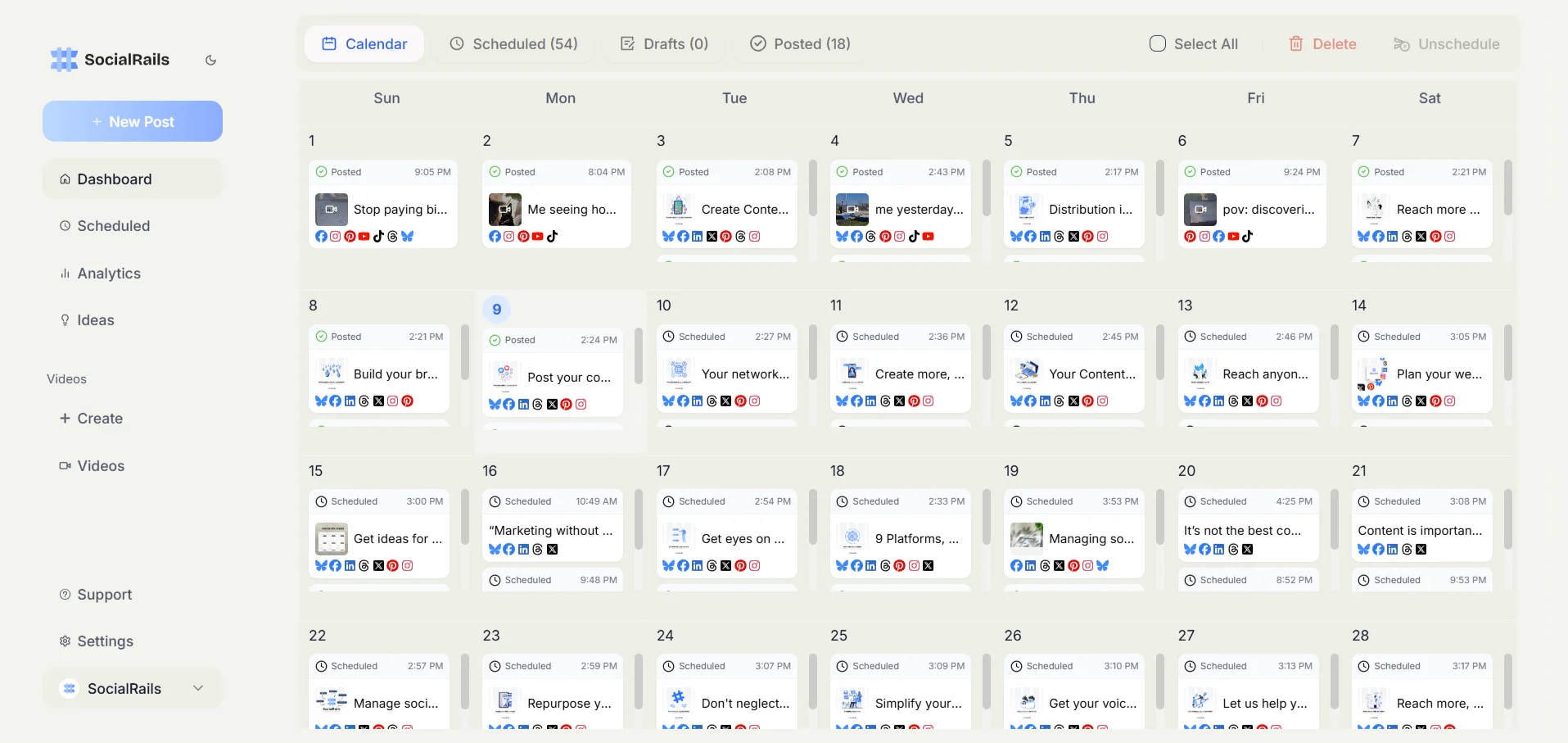
Complete Your Social Media Toolkit
Maximize your social media success with our other free tools
Content Calendar Generator
Create 4-week content calendars built for your industry and platforms.
Content Pillar Builder
Define the core themes your evergreen library should cover.
Content Repurposing Tool
Turn each evergreen post into 6 platform-ready versions.
Brand Voice Generator
Keep your evergreen posts on-brand with a voice guide.
Social Media Checklist Generator
Never miss a task in your content workflow.
Blog Post Ideas Generator
Generate endless blog and content topics for any niche.