

Calculate Your Social Media ROI
Enter your costs and results to see your true return on social media investment. No guessing, just numbers.
Your Investment (Monthly)
Facebook Ads, Instagram Ads, LinkedIn Ads, etc.
Scheduling tools, design tools, analytics tools
Your rate or your team member's rate
Your Results (Monthly)
Direct sales, conversions, or attributable revenue
DM inquiries, form fills, email signups
Average total revenue per customer
Traffic driven from social media channels
Maximize your ROI with smarter scheduling
Save 10+ hours per week on social media management. Schedule, analyze, and optimize across 9 platforms with SocialRails.
Start your free trial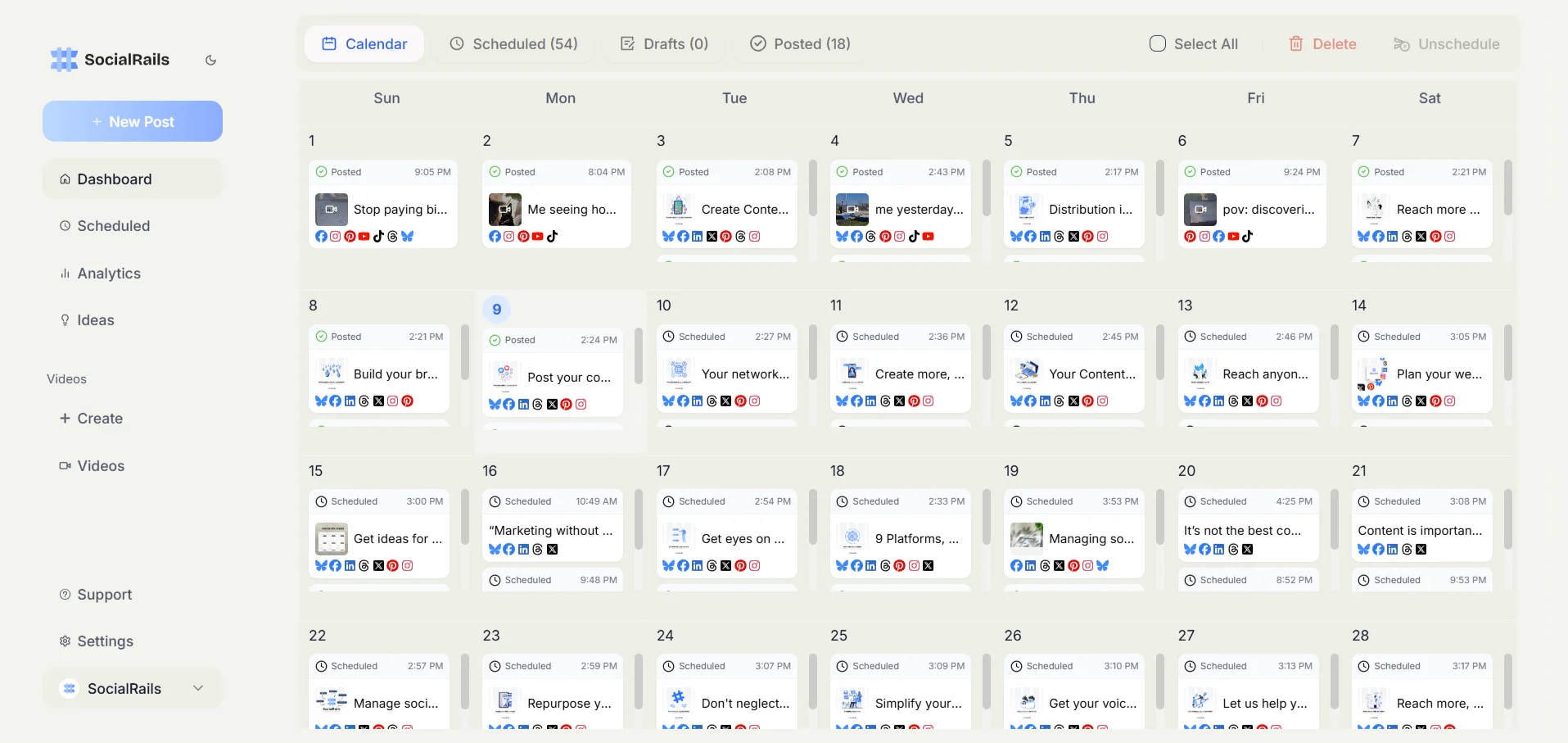
How to Calculate Social Media ROI
Social media ROI measures the return on your social media investment relative to the cost. The formula is straightforward:
ROI = ((Revenue from Social Media - Total Investment) / Total Investment) × 100
Most brands struggle with ROI measurement because they only count ad spend as their investment. The reality: labor costs (your time or your team's time) are usually the largest expense.
The Three Pillars of Social Media Costs
1. Ad Spend
Money spent on paid advertising: Facebook Ads, Instagram Ads, LinkedIn Ads, Twitter/X Ads, TikTok Ads. This is the most obvious cost and the easiest to track.
2. Tool and Software Costs
Monthly subscriptions for scheduling tools, design tools (Canva Pro), analytics platforms, social listening tools, and content creation tools.
3. Labor Costs
The biggest hidden cost. If you spend 10 hours per week on social media and your time is worth $50/hour, that is $2,165/month in labor cost alone. This includes content creation, community management, analytics review, and strategy planning.
What Counts as Social Media Revenue?
- Direct sales: Products or services sold through social media links, shops, or attributed via UTM tracking
- Lead value: Leads generated through DMs, comments, or link clicks, multiplied by average customer value and close rate
- Website traffic value: Visits driven from social, valued at your average cost-per-click from paid channels
- Brand awareness: Harder to quantify, but brand lift studies and search volume increases can indicate value
Improving Your Social Media ROI
Focus on these three areas:
Reduce Costs
- Use a scheduling tool like SocialRails to reduce time spent posting manually
- Batch-create content to work more efficiently
- Repurpose content across platforms instead of creating from scratch
- Optimize ad targeting to reduce wasted spend
Increase Revenue
- Use stronger calls-to-action in your posts
- Optimize your link-in-bio and landing pages for conversions
- Post at optimal times to maximize reach
- Build evergreen content that keeps generating leads long after posting
Improve Efficiency
- Focus on platforms that drive the most results, not all platforms equally
- Build a content calendar to eliminate daily decision-making
- Track engagement rate to identify your highest-performing content types
- Use a social media checklist to make sure nothing falls through the cracks
For a deeper analysis of measuring social media returns, see our social media ROI guide.
Frequently Asked Questions
How do you calculate social media ROI?
ROI = ((Revenue from Social Media - Total Investment) / Total Investment) × 100. Include ad spend, tool costs, and labor costs in your total investment.
What is a good social media ROI?
A "good" ROI depends on your industry and goals. B2C brands typically see higher direct ROI, while B2B brands may see lower direct ROI but higher lead value. Any positive ROI means profitability. Track your own numbers monthly and aim to improve over time.
What costs should I include?
Include ad spend, tool/software costs, and labor costs. Labor (hours × hourly rate) is often the largest investment and most frequently underestimated.
How do I track revenue from social media?
Use UTM parameters on social links, set up conversion tracking on ad platforms, track DM inquiries and form submissions, and ask new clients how they found you.
How can I improve my social media ROI?
Reduce costs (automate scheduling, batch-create content, repurpose), increase revenue (stronger CTAs, better landing pages), and improve efficiency (focus on top platforms, use a content calendar).
Complete Your Social Media Toolkit
Maximize your social media success with our other free tools
Engagement Rate Calculator
Calculate your engagement rate across platforms
Best Posting Time Calculator
Find the best times to post for maximum reach
Content Calendar Generator
Plan your content strategy
Content Repurposing Tool
Save time by repurposing across platforms
Hashtag Generator
Optimize reach with the right hashtags
Social Media Checklist Generator
Never miss a task in your workflow