What Is a Content Calendar?
A content calendar is a planning tool that maps out what content you'll publish, when you'll publish it, and on which platforms.
Create content, post everywhere
Create captions, images, and videos with AI. Schedule to 9 platforms in seconds.
Start your free trial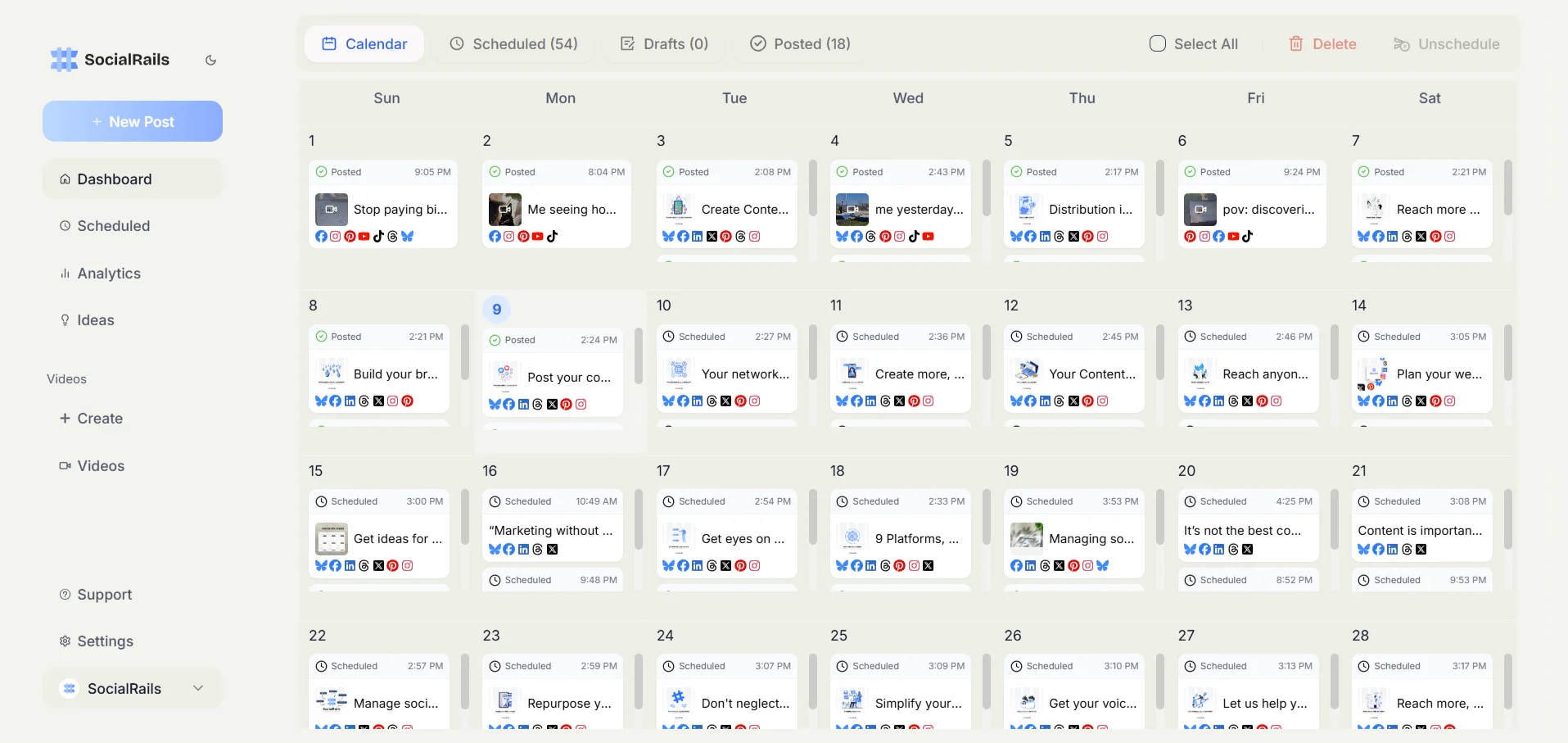
Think of it as a schedule for your social media posts, blog articles, emails, or any content your brand creates. Instead of figuring out what to post each day, you plan it in advance.
Why You Need a Content Calendar
Stay Consistent
Never miss a posting day. Your audience expects regular content.
Save Time
Plan once, post all week. No more daily scrambling for ideas.
Better Content Mix
Balance educational, entertaining, and promotional posts intentionally.
Keep Your Team Aligned
Everyone knows what's being posted and when.
Without a content calendar, most creators and brands fall into a pattern of either posting randomly or not posting at all. A calendar solves both problems by turning content from a daily decision into a planned workflow.
What to Include in a Content Calendar
Every content calendar entry should cover:
- Date and time — When the content goes live
- Platform — Where it's being published (Instagram, LinkedIn, TikTok, etc.)
- Content type — Image, video, carousel, story, text post, etc.
- Caption or copy — The actual text for the post
- Hashtags — Relevant tags for discoverability
- Links or mentions — Any URLs or tagged accounts
- Visual assets — The image or video file
- Status — Draft, approved, scheduled, or published
Some teams also track content pillars (the theme or topic category), campaign associations, and performance notes after publishing.
Types of Content Calendars
Social media calendar
Focused on scheduling posts across platforms like Instagram, TikTok, Facebook, LinkedIn, and Twitter/X. This is the most common type and what most people mean when they say "content calendar."
Editorial calendar
Used for longer-form content like blog posts, articles, and guides. An editorial calendar typically plans weeks or months ahead and includes topic research, writing assignments, and publication dates.
Email marketing calendar
Maps out email campaigns, newsletters, and automated sequences. Helps coordinate email timing with social media and blog publishing.
Video content calendar
Specialized for YouTube, TikTok, or Reels creators who need to plan filming, editing, and publishing around a production schedule.
Content Calendar vs. Editorial Calendar
People often use these terms interchangeably, but there's a practical difference:
Many teams use both — an editorial calendar for big-picture planning and a content calendar for day-to-day social execution.
How Often to Post by Platform
| Platform | Minimum | Ideal | Maximum |
|---|---|---|---|
| 3/week | 5/week | 2/day | |
| 2/week | 3/week | 1/day | |
| TikTok | 3/week | 1/day | 3/day |
| 2/week | 4/week | 2/day | |
| Twitter/X | 3/week | 1-3/day | 5/day |
Start small. Posting 3 times a week consistently is far more effective than posting 10 times one week and going silent the next. Build a sustainable rhythm first, then increase frequency as you have capacity.
Content Calendar Best Practices
Plan in batches. Set aside a few hours once a week (or once a month) to plan and create content in bulk. Batching is faster than creating one post at a time. Learn more about content batching.
Follow the 80/20 rule. Aim for roughly 80% valuable or entertaining content and 20% promotional content. Audiences disengage quickly from accounts that only sell.
Leave room for spontaneity. Don't schedule every single slot. Reserve 20-30% of your calendar for trending topics, real-time engagement, and timely content you can't plan for.
Review and adjust monthly. Look at which planned posts performed best and which underperformed. Use that data to improve next month's calendar.
Link your calendar to your goals. Each post should connect to a broader objective — brand awareness, engagement, traffic, or conversions. A calendar without strategy is just a schedule.
For a complete step-by-step walkthrough on building your calendar from scratch, see our Content Calendar Guide with templates and real examples.
Content Calendar Tools
Free options
- Social Media Content Calendar Excel Tool — Pre-built Excel template with monthly and weekly views
- Content Calendar Generator — Generate a starter calendar instantly
- Google Sheets or Excel — Simple and flexible for basic planning
- Google Calendar or Notion — Good for solo creators who want a simple visual layout
Dedicated social media tools
Tools like SocialRails let you plan, schedule, and auto-publish posts across multiple platforms from a single visual calendar. Features like drag-and-drop scheduling, AI content suggestions, and best-time recommendations make calendar management faster than manual methods.
Frequently Asked Questions
What is a content calendar? A content calendar is a planning document that maps out what content you'll publish, when, and on which platforms. It helps you stay consistent, save time, and maintain a strategic content mix.
What's the difference between a content calendar and an editorial calendar? A content calendar typically focuses on social media posts and short-form content planned on a weekly basis. An editorial calendar covers longer-form content like blog posts and articles, usually planned monthly or quarterly. Many teams use both.
How far ahead should I plan content? Most social media managers plan 1-2 weeks ahead for social posts and 1-3 months ahead for blog content and campaigns. Planning too far ahead makes it harder to stay relevant and respond to trends.
What's the best tool for a content calendar? It depends on your needs. A simple spreadsheet works for solo creators. Teams managing multiple platforms benefit from dedicated tools like SocialRails that combine planning with scheduling and analytics. Try our free Content Calendar Generator to get started.
How do I decide what to post? Start with content pillars — 3-5 core topics your brand covers. Then rotate between educational, entertaining, and promotional content. Use analytics to see what your audience responds to and adjust accordingly.