

Franchise Marketing Plan: The Complete 2026 Template & Strategy Guide

Quick Answer: A franchise marketing plan should follow the 70/30 framework: 70% corporate-controlled brand marketing (identity, messaging, national campaigns) and 30% local franchise flexibility (community events, local partnerships, regional promotions). This balances brand consistency with local market relevance.
The #1 reason franchise marketing fails: trying to be everything to everyone.
Corporate campaigns ignore local markets. Franchisees go rogue. Budgets waste on strategies that don't scale.
Skip to: 70/30 Framework | Plan Template | Budget Guide
Create content, post everywhere
Create captions, images, and videos with AI. Schedule to 9 platforms in seconds.
Start your free trial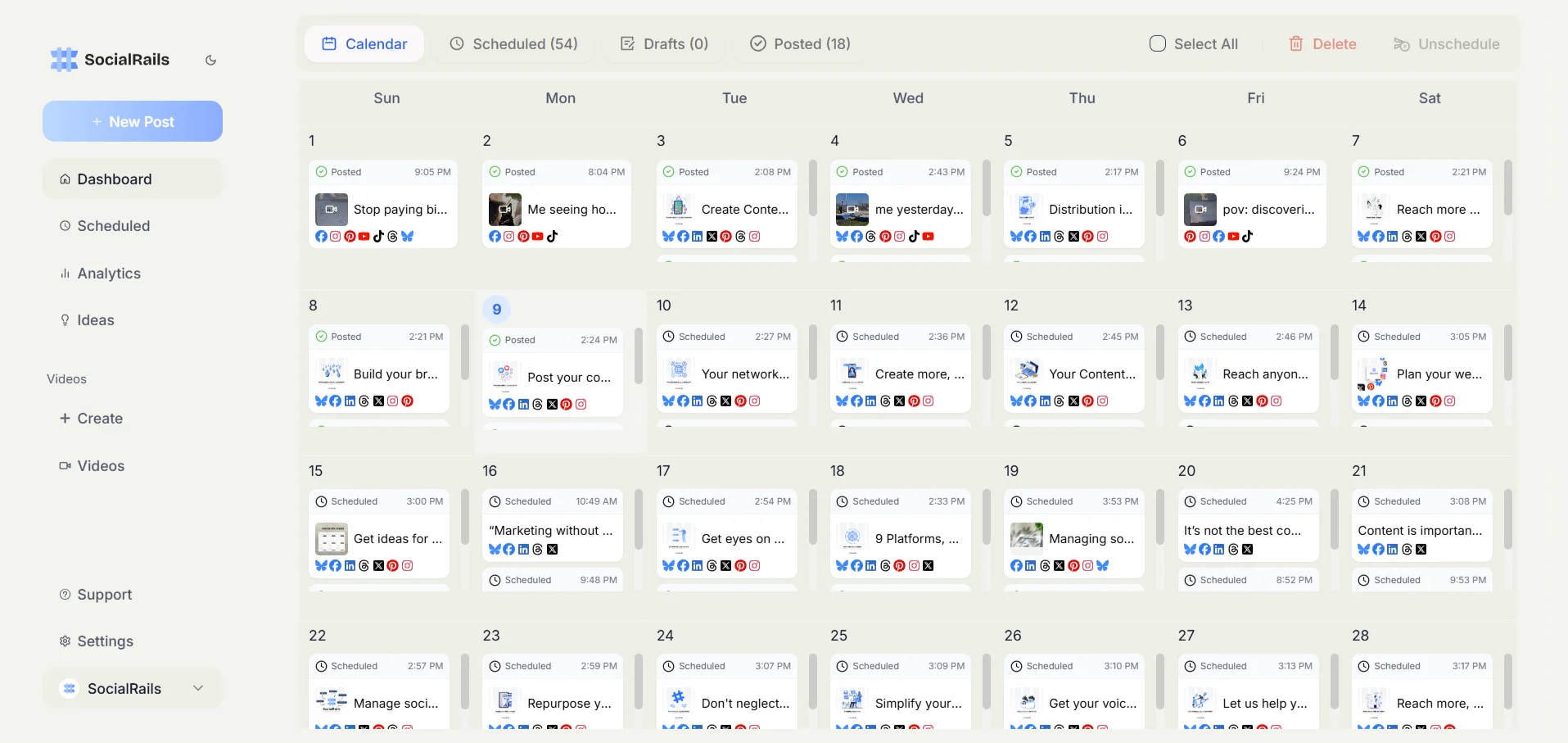
The Core Challenge
The tension: Brand consistency vs. local relevance.
Too much consistency → generic marketing that doesn't resonate.
Too much flexibility → brand chaos across locations.
The 70/30 Framework
70% Corporate Control
- • Brand identity
- • Core messaging
- • National campaigns
- • Marketing templates
- • Technology stack
- • Crisis protocols
30% Local Flexibility
- • Local partnerships
- • Community events
- • Location offers
- • Neighborhood content
- • Local influencers
- • Regional promotions
Ratio by industry:
- Fast food: 80/20 (high consistency)
- Service franchises: 60/40 (more flexibility)
- B2B franchises: 65/35 (balanced)
Your top-performing franchise location wants to run their own social media campaigns with custom messaging. What's the best approach?
💡 Tip: Think carefully before selecting your answer!
Part 1: Corporate Marketing Setup
Brand Foundation (Required Documents)
1. Brand Guidelines
- Logo usage + downloadable files
- Color palette (hex, Pantone, RGB)
- Typography standards
- Voice and tone
- Visual examples of what NOT to do
2. Marketing Playbook
- Campaign templates by season
- Social media calendar
- Promotion approval process
- Review response templates
3. Asset Library
- Social templates (Canva/Adobe)
- Email templates
- Print materials
- Video scripts + b-roll
National Campaign Calendar
Key principle: Give franchisees everything they need. Don't expect creation from scratch.
Technology Stack
Why standardize: Consistent data, easier support, better reporting.
For franchise systems in vehicle service, see vertical-specific tool stacks: the best social media tools for car dealerships covers inventory feeds and walk-around video at multi-rooftop scale, and the best social media tools for auto repair shops covers Tekmetric and AutoLeap for shop-management-driven marketing.
Part 2: Local Marketing Framework
Franchisee Approval Levels
✓ Green Light
No approval needed:
- • Post using templates
- • Review responses
- • Community events
- • Partnerships under $500
- • GBP updates
⚠️ Yellow Light
Requires review:
- • Custom campaigns
- • Partnerships over $500
- • Local media outreach
- • New promotional offers
- • Event sponsorships
✗ Red Light
Corporate only:
- • Brand changes
- • National campaigns
- • Crisis management
- • Legal/PR issues
- • Major partnerships
Local SEO Structure
Website architecture:
franchise.com/locations/
franchise.com/locations/city-name/
franchise.com/locations/city-name-2/
Each location page needs:
- Unique content (250+ words)
- Full NAP matching Google exactly
- Embedded Google Map
- Location-specific photos
- Customer reviews
- Local keywords
Google Business Profile:
- Corporate controls: Name format, category, core description
- Franchisee manages: Hours, photos, Posts, Q&A
A franchisee wants to create their own location-specific website instead of using a page on the corporate site. What's the risk?
💡 Tip: Think carefully before selecting your answer!
Part 3: Budget Management
National Advertising Fund
Typical structure:
- 1-3% of gross revenue per franchisee
- Managed by corporate
- Spent on brand-level initiatives
Allocation:
Local Marketing Budgets
Suggested allocation:
- 40% → Digital ads (local Facebook, Google)
- 25% → Partnerships and sponsorships
- 20% → Content and social
- 15% → Events and community
Plan Template
Quick Template Outline
1. Executive Summary
- Franchise overview
- Year objectives
- Budget summary
- Key initiatives
2. Brand Strategy
- Positioning
- Target profiles
- Differentiation
- Messaging pillars
3. Corporate Plan
- Campaign calendar
- Digital strategy
- Content strategy
- PR approach
4. Local Framework
- Empowerment guidelines
- Local SEO requirements
- Partnership playbook
- Community guidelines
5. Budget
- Fund allocation
- Local budgets
- Technology investment
- Training programs
6. Measurement
- KPI framework
- Reporting schedule
- Benchmarks
- Improvement process
Common Mistakes
Your franchise has 15 locations. Marketing performance varies wildly. What's likely the root cause?
💡 Tip: Think carefully before selecting your answer!
Top 5 Mistakes
- Ignoring local differences → Allow 30% customization
- No franchisee training → 2-3 hour onboarding + monthly webinars
- No fund accountability → Quarterly transparent reporting
- Reactive marketing → Plan calendar 6+ months ahead
- Measuring activity, not results → Focus on leads and revenue
Action Checklist
This week:
- Audit brand consistency across 5 random locations
- Survey franchisees on marketing support
- Document current 70/30 split
This month:
- Create/update brand guidelines
- Build basic marketing playbook
- Select unified technology stack
This quarter:
- Roll out standardized tools
- Train franchisees on guidelines
- Launch first coordinated campaign
Create content, post everywhere
Create captions, images, and videos with AI. Schedule to 9 platforms in seconds.
Start your free trialRelated Resources
Multi-Location Strategy:
- Best Social Media Tools for Franchises (tool comparison for franchise systems)
- Multi-Location Marketing Complete Guide
- PromoRepublic Review (franchise social media platform)
- Distributed Marketing Explained
- Local Business Promotion Guide
Local SEO & Presence:
Marketing Planning:
Frequently Asked Questions
What should be included in a franchise marketing plan?
A franchise marketing plan should include: brand guidelines, 70/30 corporate-local allocation framework, national campaign calendar, local marketing playbook, technology stack specifications, budget allocation (national advertising fund + local budgets), franchisee approval levels, local SEO structure, measurement KPIs, and training programs.
How much should franchisees spend on local marketing?
Franchisees should typically spend 3-8% of gross revenue on local marketing, depending on location revenue. Locations under $500K should spend 3-5%, $500K-$1M should spend 4-6%, and locations over $1M should spend 5-8%. This is in addition to the national advertising fund contribution (usually 1-3%).
What is the 70/30 rule in franchise marketing?
The 70/30 rule means 70% of marketing should be corporate-controlled (brand identity, core messaging, national campaigns, templates, crisis protocols) while 30% is locally flexible (community events, local partnerships, neighborhood content, regional promotions). The exact ratio varies by industry: fast food may be 80/20, while service franchises might be 60/40.
Should franchisees have their own websites?
No. Franchisee locations should have pages on the corporate domain (franchise.com/locations/city-name/) rather than separate websites. Location pages on the main domain inherit corporate SEO authority, while separate sites start from zero and create brand inconsistency.
How do you maintain brand consistency across franchise locations?
Maintain consistency through: comprehensive brand guidelines, marketing playbooks with templates, a standardized technology stack, clear approval levels (green/yellow/red light system), regular training, and a centralized asset library. Give franchisees everything they need to execute correctly rather than expecting them to create from scratch.
Was this article helpful?
Let us know what you think!