
How to Create a Social Media Content Calendar: Complete Guide (January 2026)

How to Create a Social Media Content Calendar: Complete Guide (January 2026)
A well-structured social media content calendar is the backbone of successful social media marketing. This comprehensive guide will teach you how to create, implement, and optimize a content calendar that drives engagement and achieves your business goals.
Create content, post everywhere
Create captions, images, and videos with AI. Schedule to 9 platforms in seconds.
Start your free trial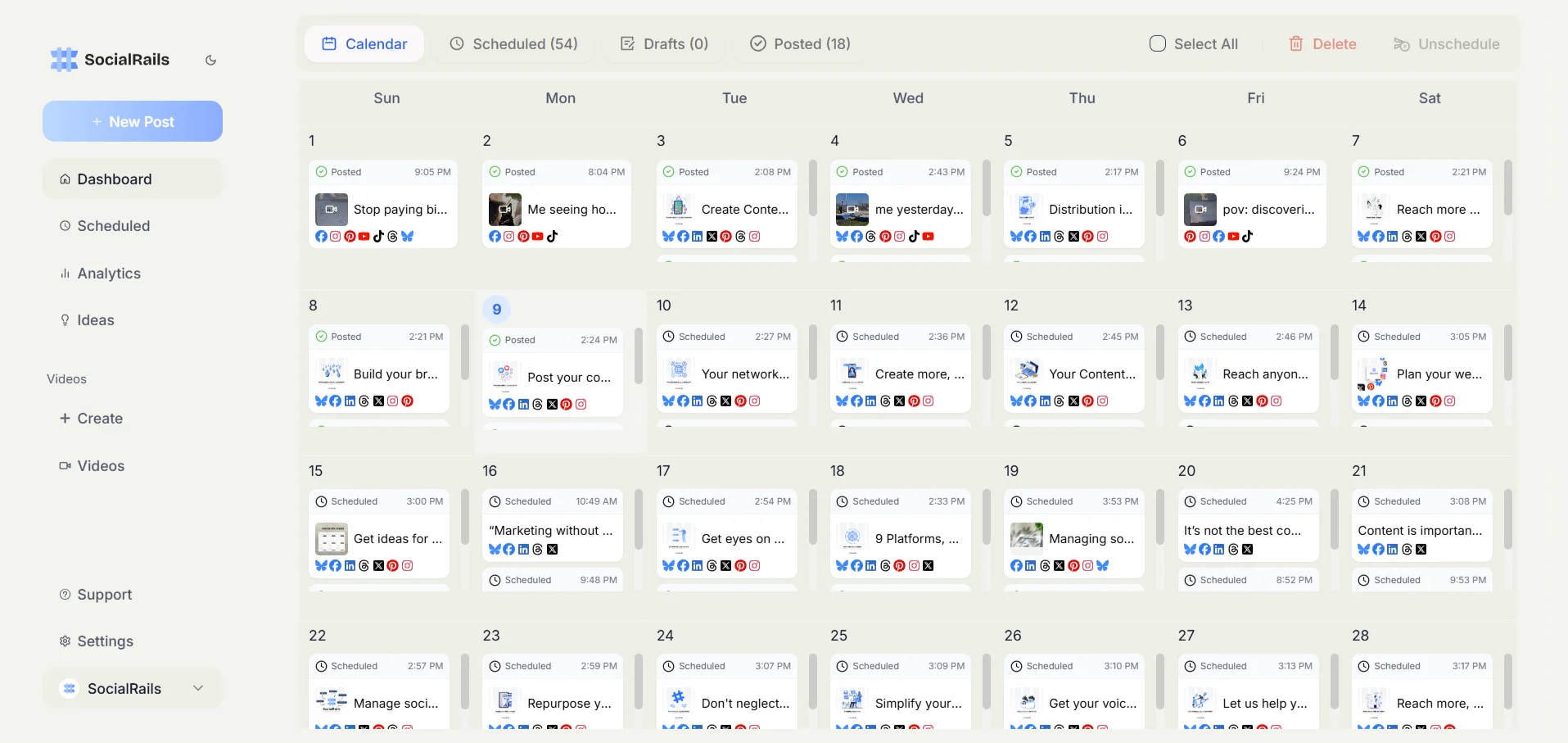
What is a Social Media Content Calendar?
A social media content calendar is a strategic planning document that outlines what content you'll publish, when you'll publish it, and on which platforms. It serves as your roadmap for consistent, purposeful social media marketing.
Key Components of an Effective Content Calendar
Quick Start Tools: Skip the blank spreadsheet — use our Content Calendar Generator for instant social media calendars, our Blog Calendar Template Generator for SEO-focused blog planning, or our YouTube Content Calendar Generator for video creators.
Essential Elements:
- Content Topics: What you'll post about (need ideas? See 50 post themes or generate fresh ones with our Social Media Post Prompts Generator)
- Publishing Dates: When content goes live
- Platform Specifications: Where content will be published
- Content Formats: Type of content (image, video, story, etc.)
- Captions and Copy: Prepared text for each post
- Hashtags: Relevant tags for discoverability
- Visual Assets: Images, videos, graphics planned
- Approval Status: Content review and approval workflow
- Cross-platform Integration: Planning for content repurposing like embedding Instagram feeds on websites
Benefits of Using a Content Calendar
Strategic Advantages
Consistency and Planning:
- Maintains regular posting schedule
- Prevents last-minute content scrambling
- Ensures balanced content mix
- Aligns content with business objectives
Time and Resource Management:
- Reduces daily decision-making
- Allows for batch content creation
- Improves team collaboration
- Enables better resource allocation
Content Quality:
- More thoughtful content planning and strategy
- Better alignment with seasonal trends and campaigns
- Opportunity to plan Pinterest advertising campaigns months ahead using Pinterest advertising secrets for maximum impact
Performance Optimization:
- Tracks what content performs best
- Identifies optimal posting times
- Helps plan seasonal and timely content
- Facilitates A/B testing strategies
Business Impact
Brand Consistency:
- Maintains cohesive brand voice
- Ensures visual consistency across platforms
- Aligns messaging with brand values
- Creates predictable audience experiences
Audience Engagement:
- Anticipates audience needs and interests
- Plans for community engagement opportunities
- Schedules content for optimal audience activity
- Maintains conversation continuity
Step-by-Step Content Calendar Creation
Step 1: Define Your Content Strategy
Establish Goals and Objectives:
- Brand Awareness: Increase visibility and recognition
- Lead Generation: Drive traffic and conversions
- Community Building: Foster engagement and loyalty
- Customer Support: Provide value and assistance
Identify Your Audience:
- Demographics and psychographics
- Platform preferences and behavior
- Content consumption patterns
- Engagement preferences and timing
Determine Content Pillars:
- Educational: How-to guides, tips, tutorials
- Entertainment: Funny, inspiring, engaging content
- Promotional: Product announcements, sales, offers
- Community: User-generated content, testimonials
- Behind-the-scenes: Company culture, team spotlights
- Lifestyle: Personal stories and brand narratives (see our lifestyle blog guide for inspiration)
Step 2: Choose Your Tools and Platforms
Calendar Tool Options:
Free Tools:
- Google Sheets: Customizable and collaborative
- Google Calendar: Simple scheduling interface
- Trello: Visual board-style organization
- Notion: All-in-one workspace with templates
Paid Tools:
- Hootsuite: Comprehensive social media management (see cheaper alternatives)
- Buffer: User-friendly scheduling and analytics (find budget options)
- Sprout Social: Advanced collaboration features (explore affordable alternatives)
- Later: Visual content planning and scheduling (compare cost-effective tools)
- CoSchedule: Marketing calendar integration (discover budget-friendly options)
- Planable: Team collaboration and approval workflows (check out cheaper alternatives). Note: ContentCal, another popular calendar tool, was acquired by Adobe in 2022 and discontinued
- SocialPilot: Multi-client management (view affordable options)
- Agorapulse: Engagement-focused management (see budget alternatives)
- Beplan: Visual board planning with AI credits and Post Quality Score (see pricing)
Platform-Specific Tools:
- Meta Business Suite: Facebook and Instagram scheduling
- LinkedIn Company Page: Native LinkedIn scheduling
- Twitter Media Studio: Twitter-specific planning
- Pinterest Business: Pinterest content scheduling
Step 3: Plan Your Content Mix
Content Distribution Framework:
Struggling to fill every slot? Content curation tools help you find shareable third-party content for days when you cannot create from scratch.
80/20 Rule Application:
- 80% valuable, educational, entertaining content
- 20% promotional, sales-focused content
Weekly Content Structure Example:
- Monday: Motivational Monday (inspiration)
- Tuesday: Tutorial Tuesday (educational) - see our Tuesday Social Media Post Ideas guide
- Wednesday: Wisdom Wednesday (tips/advice)
- Thursday: Throwback Thursday (nostalgia/history)
- Friday: Feature Friday (product/service highlight)
- Saturday: Saturday Spotlight (community/UGC)
- Sunday: Sunday Summary (weekly recap/preview)
Step 4: Determine Posting Frequency
Platform-Specific Recommendations:
Facebook:
- Frequency: 3-5 posts per week
- Best Times: 1-3 PM weekdays
- Content Mix: 60% shared content, 40% original
Instagram:
- Feed Posts: 3-7 posts per week
- Stories: 2-5 stories daily
- Reels: 3-4 per week
- Best Times: 11 AM - 1 PM and 7-9 PM
Twitter/X:
- Frequency: 3-5 tweets daily
- Best Times: 8-10 AM and 7-9 PM
- Strategy: Mix original tweets, retweets, and replies
LinkedIn:
- Frequency: 2-5 posts per week
- Best Times: 8-10 AM Tuesday-Thursday
- Focus: Professional, industry-focused content
TikTok:
- Frequency: 3-5 videos per week
- Best Times: 6-10 PM weekdays
- Strategy: Trend-based, authentic content
Step 5: Create Content Templates
Post Template Structure:
Content Template:
- Date & Time: [Specific scheduling details]
- Platform: [Facebook, Instagram, Twitter, etc.]
- Content Type: [Image, video, carousel, story]
- Topic/Theme: [Main subject matter]
- Caption: [Complete text copy]
- Hashtags: [Relevant tags]
- Visual: [Image/video description or file name]
- CTA: [Call-to-action]
- Link: [If applicable]
- Status: [Draft, Ready, Scheduled, Published]
Campaign Templates:
Campaign Template:
- Campaign Name: [Descriptive title]
- Start Date: [Campaign launch]
- End Date: [Campaign conclusion]
- Objective: [Primary goal]
- Key Messages: [Main talking points]
- Content Series: [Related posts]
- Hashtag: [Campaign-specific tags]
- Success Metrics: [KPIs to track]
Advanced Content Calendar Strategies
Seasonal and Event-Based Planning
Annual Planning Calendar:
- Q1: New Year motivation (see our January Social Media Calendar for daily post ideas), Valentine's Day, Spring prep
- Q2: Spring activities, Mother's Day, graduation season
- Q3: Summer activities, Father's Day, back-to-school, Labor Day campaigns
- Q4: Fall activities, Halloween, holiday season
Industry-Specific Events:
- Conference seasons and trade shows
- Industry awareness months
- Product launch cycles
- Regulatory or compliance deadlines
- Academic calendars and school schedules (see school scheduler software for K-12)
Holiday and Observance Integration:
- National holidays and celebrations (see our Juneteenth post ideas and International Women's Day posts)
- Fun national days like National Dog Day (August) and National Boyfriend Day (October) that drive high engagement
- International awareness days
- Industry-specific observances
- Cultural and religious holidays
Content Series and Campaigns
Series Planning Examples:
- Monday Motivation: Weekly inspirational content
- Feature Friday: Weekly product or service highlights
- Customer Spotlight: Monthly customer success stories
- Behind the Scenes: Quarterly company culture content
Campaign Coordination:
- Product launch campaigns (use our free social media campaign template)
- Seasonal promotional campaigns
- Brand awareness initiatives
- Community engagement drives
Cross-Platform Content Adaptation
Platform-Specific Optimization:
Single Content Piece Adaptations:
- Blog Post → Instagram carousel + Facebook link post + Twitter thread
- Video → Full video on YouTube + Clips for Instagram Reels + Quotes for Twitter
- Infographic → LinkedIn post + Instagram story + Pinterest pin
Maintaining Consistency While Customizing:
- Adapt messaging for platform audiences
- Optimize visual formats for each platform
- Adjust posting times for platform-specific audiences
- Modify hashtags for platform algorithms
Content Creation Workflow
Batch Content Creation Process
Batching saves time by grouping similar tasks together.
Weekly Batch Creation Schedule:
- Monday: Content ideation and planning
- Tuesday: Visual content creation (photos, graphics)
- Wednesday: Video content creation and editing
- Thursday: Caption writing and hashtag research
- Friday: Content review, approval, and scheduling
Speed up this process with our weekly content batch planner — it generates a full week of ready-to-post captions, hashtags, and posting times in one session.
Content Creation Stations:
- Photography Setup: Consistent lighting and backgrounds
- Graphic Design Workspace: Templates and brand assets tracked in our Marketing Asset Inventory Checklist
- Video Recording Area: Good lighting and audio setup
- Content Review Process: Quality control and brand alignment
Content Approval Workflow
Team Collaboration Process:
- Content Creator: Develops initial content and captions
- Brand Manager: Reviews for brand consistency and messaging
- Legal/Compliance: Approves regulated content (if applicable)
- Marketing Manager: Final approval and scheduling authorization
Approval Tracking System:
- Use color coding (Red: Needs revision, Yellow: Under review, Green: Approved)
- Include approval dates and reviewer names
- Track revision requests and changes
- Maintain version control for content iterations
Measuring Content Calendar Success
Key Performance Indicators (KPIs)
Engagement Metrics:
- Likes and Reactions: Content appreciation
- Comments: Conversation generation
- Shares: Content value and virality
- Saves: Content utility and reference value
Reach and Awareness:
- Impressions: Total content visibility
- Reach: Unique audience size
- Follower Growth: Audience building success
- Brand Mention Tracking: Organic brand awareness
Conversion Metrics:
- Click-through Rate: Link engagement
- Website Traffic: Content driving behavior - track with UTM parameters
- Lead Generation: Contact form submissions - understand your CPL (Cost Per Lead)
- Sales Attribution: Revenue from social media
Analytics and Optimization
Regular Review Schedule:
- Weekly: Quick performance check and adjustments
- Monthly: Comprehensive analysis and strategy review
- Quarterly: Major strategy evaluation and planning
- Annually: Complete strategy overhaul and goal setting
Data-Driven Adjustments:
- Identify top-performing content types
- Optimize posting times based on engagement data
- Refine content mix based on audience response
- Adjust frequency based on engagement trends
Content Calendar Templates
Basic Monthly Calendar Template
Content Calendar Structure:
- Week 1: Brand awareness focus
  - Monday: Company culture post
  - Wednesday: Industry news/trends
  - Friday: Product feature highlight

- Week 2: Educational content focus
  - Monday: How-to tutorial
  - Wednesday: Tips and tricks
  - Friday: FAQ or common questions

- Week 3: Community engagement focus
  - Monday: User-generated content
  - Wednesday: Customer spotlight
  - Friday: Interactive post (polls, questions)

- Week 4: Promotional content focus
  - Monday: Special offer or discount
  - Wednesday: Product demonstration
  - Friday: Call-to-action for newsletter/trial
Advanced Campaign Calendar
Campaign Planning Template:
- Pre-Launch Phase (Week -2 to -1):
  - Teaser content and anticipation building
  - Behind-the-scenes content creation
  - Influencer or partner coordination

- Launch Week:
  - Official announcement across all platforms
  - Live content (streams, Q&A sessions)
  - User-generated content encouragement

- Sustaining Phase (Week +1 to +4):
  - Success stories and testimonials
  - Additional product/service features
  - Community response and feedback sharing

- Wrap-up Phase (Week +5):
  - Campaign results and thank you posts
  - Lessons learned and next steps
  - Community appreciation and recognition
Common Content Calendar Mistakes
Planning and Execution Errors
Over-Scheduling Pitfalls:
- Posting too frequently without quality consideration
- Ignoring real-time opportunities and trends
- Rigid adherence to calendar without flexibility
- Not leaving room for spontaneous content
Under-Planning Issues:
- Inconsistent posting schedules
- Last-minute content creation stress
- Missed seasonal opportunities
- Lack of content variety
Content Quality Concerns
Avoiding Generic Content:
- Don't rely solely on stock photos
- Avoid repetitive captions and messaging
- Ensure content aligns with brand voice
- Create original, valuable content
Engagement Optimization:
- Don't ignore comments and messages
- Respond promptly to audience interaction
- Encourage conversation and community building
- Monitor and adjust based on engagement patterns
Tools and Resources
Streamline your content calendar creation with our comprehensive Social Media Content Calendar Generator that creates customized posting schedules based on your industry, audience, and goals.
For optimal posting times, use our Best Posting Time Calculator to determine when your specific audience is most active across different platforms.
Platform-Specific Content Ideas:
- Facebook Content Ideas Generator - Community-focused post ideas
- Twitter Content Ideas Generator - Engaging tweets and threads
- LinkedIn Content Ideas Generator - Professional content concepts
- Pinterest Content Ideas Generator - Visual pin inspiration
- Threads Content Ideas Generator - Conversational post topics
- Bluesky Content Ideas Generator - Decentralized social content
Future Trends in Content Calendar Management
AI and Automation Integration
Emerging Technologies:
- AI Content Generation: Automated caption and hashtag suggestions
- Predictive Analytics: Content performance forecasting
- Smart Scheduling: Algorithm-optimized posting times
- Automated A/B Testing: Content variation testing
Preparation Strategies:
- Stay updated with platform algorithm changes
- Test new AI-powered content tools
- Maintain human oversight for brand authenticity
- Balance automation with genuine engagement
Content Calendar Tool Reviews:
- Loomly Review - Detailed calendar tool analysis
- Later Review - Visual platform scheduling review
- Sprout Social vs HubSpot - Enterprise comparison
Free Content Planning Tools
Build your content calendar with our free tools:
- Content Calendar Generator — Create a customized content calendar
- Best Time to Post Calculator — Find optimal posting times
- Hashtag Generator — Generate relevant hashtags for each post
- Caption Generators — AI-powered captions for any platform
- Engagement Calculator — Measure content performance
Content Inspiration
- Social Media Questions to Ask Students — 100+ discussion prompts and engagement starters
- Friyay Captions and Memes — Ready-made Friday content for your calendar
- Bluesky Marketing Strategy — Strategy guide for the newest platform
Platform Evolution Impact
Adapting to Changes:
- New content formats and features
- Algorithm updates affecting reach
- Changing user behavior patterns
- Privacy and data regulation impacts
Conclusion
Creating an effective social media content calendar is essential for consistent, strategic social media marketing. By following this comprehensive guide, you can develop a system that saves time, improves content quality, and drives better results across all your social media platforms.
Key Takeaways:
- Define clear goals and audience before planning content
- Choose tools that fit your team size and workflow needs
- Maintain consistent posting schedules while staying flexible
- Track performance and adjust strategy based on data
- Plan seasonal content and campaigns in advance
- Create efficient workflows for content creation and approval
Remember that your content calendar should be a living document that evolves with your audience, platform changes, and business goals. Regular review and optimization ensure your content remains relevant, engaging, and effective in achieving your social media objectives.
Frequently Asked Questions
What should be included in a social media content calendar?
A content calendar should include: posting dates and times, platform specifications, content type (image, video, text), captions and copy, hashtags, visual assets, links, campaign tags, approval status, and performance metrics. The level of detail depends on your team size and workflow complexity.
How far in advance should I plan my content calendar?
Most businesses plan content 1-3 months in advance. Plan evergreen content and campaigns quarterly, seasonal content 2-3 months ahead, and leave 20-30% of your calendar flexible for timely, trending, or spontaneous content.
What's the best tool for creating a content calendar?
The best tool depends on your needs and budget. Google Sheets is great for beginners and small teams (free), Trello works well for visual planners, while tools like Hootsuite, Buffer, or Sprout Social offer advanced features for larger teams and agencies.
How often should I post on each social media platform?
Optimal posting frequency varies: Facebook 3-5 times per week, Instagram 3-7 posts weekly plus daily stories, Twitter 3-5 times daily, LinkedIn 2-5 times weekly, TikTok 3-5 times weekly. Quality matters more than quantity - adjust based on your audience engagement.
Should I post the same content across all platforms?
No, each platform has different audiences and formats. Adapt content for each platform: adjust image sizes, rewrite captions for platform tone, use platform-specific features, and optimize hashtags. Cross-posting identical content reduces engagement.
How do I maintain consistency when planning content?
Create content pillars (3-5 main topics), develop brand guidelines, use templates for recurring content types, batch create content in advance, and establish a review process. Set up a routine for content creation and stick to your calendar.
What's the 80/20 rule for social media content?
The 80/20 rule suggests 80% of your content should inform, educate, or entertain your audience, while only 20% should directly promote your products or services. This balance keeps followers engaged without overwhelming them with sales messages.
How do I handle last-minute changes to the content calendar?
Build flexibility into your calendar by leaving 20-30% open for timely content, have backup evergreen posts ready, create a crisis communication plan, and establish clear approval processes for urgent posts. Document changes for future reference.
Can I schedule Instagram Stories and Reels?
Instagram Stories can be scheduled through Meta Business Suite but with limited features. Reels typically need to be posted natively through the app for full functionality. Third-party tools have varying capabilities - always check current platform limitations.
How do I measure if my content calendar is working?
Track key metrics like engagement rate, reach and impressions, follower growth, click-through rates, conversions, and ROAS for paid content. Compare performance month-over-month, identify top-performing content types, and adjust your calendar based on data insights. Review metrics monthly and strategy quarterly.
Was this article helpful?
Let us know what you think!