
Why Social Media Management Matters More Than Most Businesses Realize

Why Social Media Management Matters More Than Most Businesses Realize
Posting when you remember, ignoring comments for days, and having no content plan isn't a social media strategy. It's a liability.
Businesses that actively manage their social media presence consistently outperform those that don't in leads, customer retention, and brand recognition.
Create content, post everywhere
Create captions, images, and videos with AI. Schedule to 9 platforms in seconds.
Start your free trial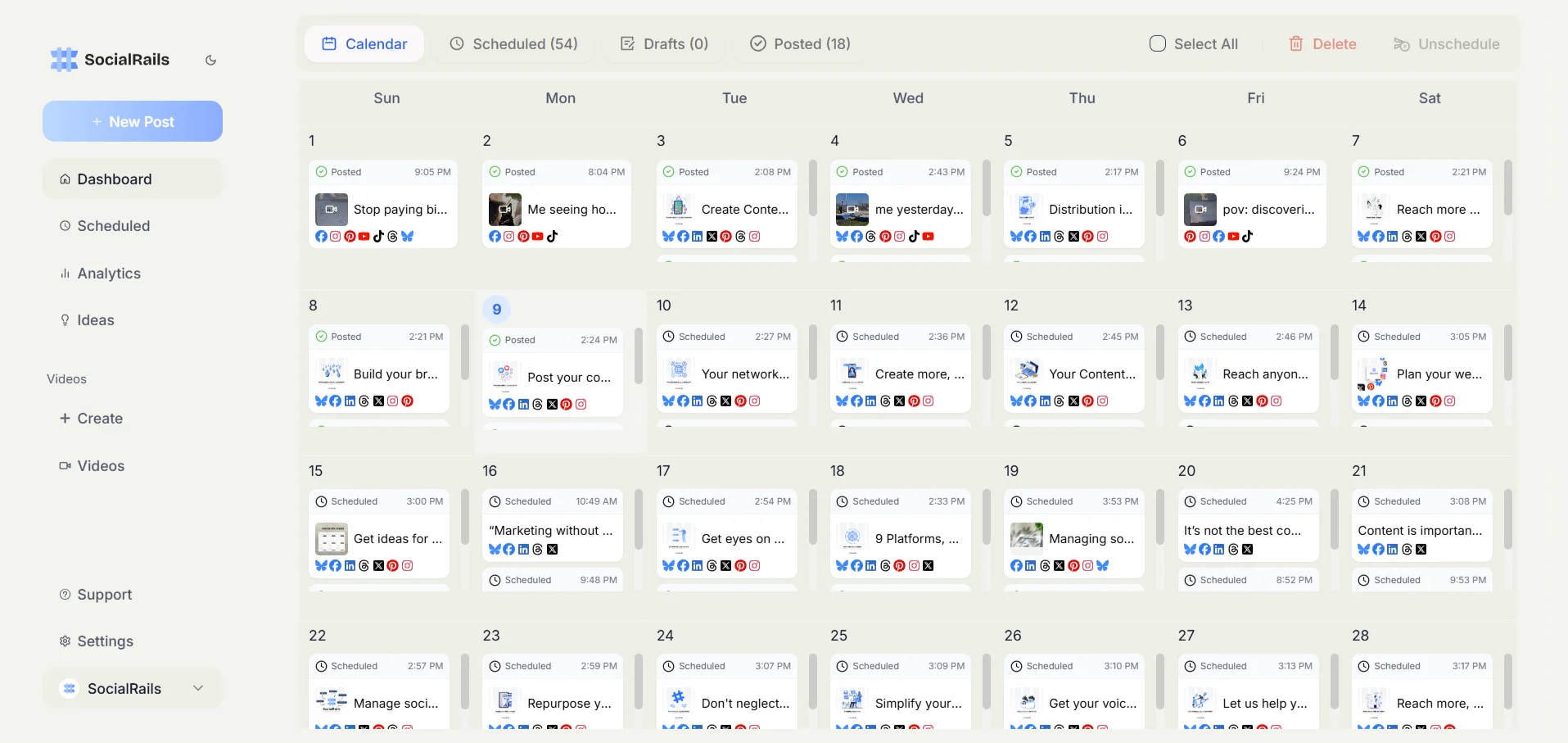
Managed vs. Unmanaged: The Difference at a Glance
What's the biggest risk of unmanaged social media for a business?
💡 Tip: Think carefully before selecting your answer!
8 Reasons Social Media Management Is Essential
1. Brand Consistency Builds Trust
Consistent brands are more recognizable and top-of-mind when buyers are ready to purchase. Trust is the foundation of every purchase decision, and social media is where people evaluate your credibility.
Inconsistent messaging confuses potential customers and erodes credibility.
What management provides:
- Unified brand voice across all platforms
- Consistent visual identity (colors, fonts, imagery)
- Cohesive messaging aligned with business goals
- Quality control before content goes live
2. Time and Resource Efficiency
Creating content ad-hoc takes significantly longer than batching content in planned sessions. Context-switching between platforms wastes hours weekly.
What management provides:
- Content batching and scheduling saves hours every week
- Approved content libraries and templates
- Clear workflows and responsibilities
- Tools that automate repetitive tasks
Plan your content efficiently with our Social Media Planner and Content Calendar Generator.
3. Audience Engagement Drives Growth
Consumers expect fast responses on social media, many within the same day. The longer you take to respond, the more likely they choose a competitor.
Brands that engage consistently build stronger customer relationships that translate to repeat purchases. Unanswered comments and messages signal that you don't care.
How quickly do customers expect a brand to respond on social media?
💡 Tip: Think carefully before selecting your answer!
4. Competitive Advantage
When competitors manage social and you don't, they appear in searches where you don't. They build relationships with your potential customers. They establish authority and expertise in your industry. They respond to trending topics while you miss them.
An active social presence puts you in front of audiences your competitors are already reaching.
5. Crisis Prevention and Management
Without management:
- Negative reviews go unanswered and multiply
- Misinformation about your brand spreads unchecked
- PR crises escalate before anyone notices
With management:
- Real-time monitoring catches issues early
- Prepared response templates for common scenarios
- Escalation procedures for serious situations
- Documented processes reduce response time
Learn more in our Social Media Reputation Management Guide.
6. Measurable ROI
Without tracking, you can't answer basic questions: Which content drives the most engagement? What time does your audience engage most? Which platform generates the most leads? What's your cost per lead from social?
What management tracks:
- Engagement rates by content type and platform
- Website traffic from social channels
- Lead generation and conversion attribution
- Customer acquisition cost from social
- Revenue influenced by social media
Track your performance with our Social Media Analytics and Social Media Budget Calculator. For a deeper look at proving value, see our Social Media ROI Guide.
7. Professional Online Presence
Consumers regularly use social media to research products and services before buying. A positive social media experience makes people more likely to recommend your brand.
An outdated or inactive social profile is worse than no profile at all.
8. Algorithm Performance
Social media algorithms reward managed accounts. Consistent posting signals an active, valuable account. Higher engagement rates increase organic reach. Regular use of platform features (Stories, Reels, Live) increases visibility.
Managed accounts build momentum. Each month of consistent effort makes the next month's content reach further.
Which of these actions helps your social media content reach more people organically?
💡 Tip: Think carefully before selecting your answer!
Industry Examples
Social media management looks different depending on your industry, but the principles are the same.
- Accounting firms use LinkedIn and Facebook to attract B2B clients through tax tips and regulatory updates
- Dental practices run before/after campaigns and patient testimonials to fill appointment books
- Interior designers showcase portfolios on Instagram and Pinterest to book high-value projects
- Charities drive donations and recruit volunteers through impact storytelling on Facebook
Each of these industries sees better results with consistent, managed social media than with sporadic posting.
Signs You Need Social Media Management
You need dedicated management if:
- You post less than 3x per week, inconsistency kills reach
- Comments go unanswered for 24+ hours, customers feel ignored
- You have no content calendar, reactive posting wastes time
- Multiple people post without guidelines, brand voice is inconsistent
- You don't track any metrics, you're flying blind
- You've had a social media crisis, and weren't prepared
- Competitors are outperforming you, they're managing, you're not
- Your followers aren't growing, stagnation means something's wrong
3 Ways to Start Managing Social Media
Option 1: In-House Management
Best for companies posting on 2-3 platforms with dedicated staff time.
See our Social Media Management Pricing Guide for detailed breakdowns.
Option 2: Social Media Management Tools
Best for small businesses and solopreneurs. Tools handle scheduling, analytics, team collaboration, content calendars, and response management.
Compare options in our Social Media Management Software Comparison or explore Free Social Media Management Tools.
Option 3: Agency or Consultant
Best for businesses wanting expert management without hiring. Agencies handle strategy, content creation, scheduling, community management, analytics, and campaigns.
Learn more in our Social Media Management Consulting Guide.
Step-by-Step: Get Started This Week
- Audit your current presence, use our Social Media Audit Template
- Set 2-3 clear goals, brand awareness, leads, customer service
- Choose your platforms, focus on 2-3 where your audience lives
- Create a posting schedule, use our Posting Schedule Templates
- Build a 30-day content calendar, use our Content Calendar Generator
- Set response time standards, aim for under 2 hours
- Pick a scheduling tool, see our Best Social Media Scheduler guide
- Track and optimize monthly, review analytics and adjust
Related resources:
Was this article helpful?
Let us know what you think!