

Value Proposition Examples: 30 Templates That Convert (2026 Guide)

TL;DR - Quick Answer
16 min readLead with benefit, not features. Customers care about outcomes.
Value Proposition Examples: 30 Templates That Convert
Your value proposition is the single most important element on your website. It's the first thing visitors read and the reason they stay or leave.
Create content, post everywhere
Create captions, images, and videos with AI. Schedule to 9 platforms in seconds.
Start your free trial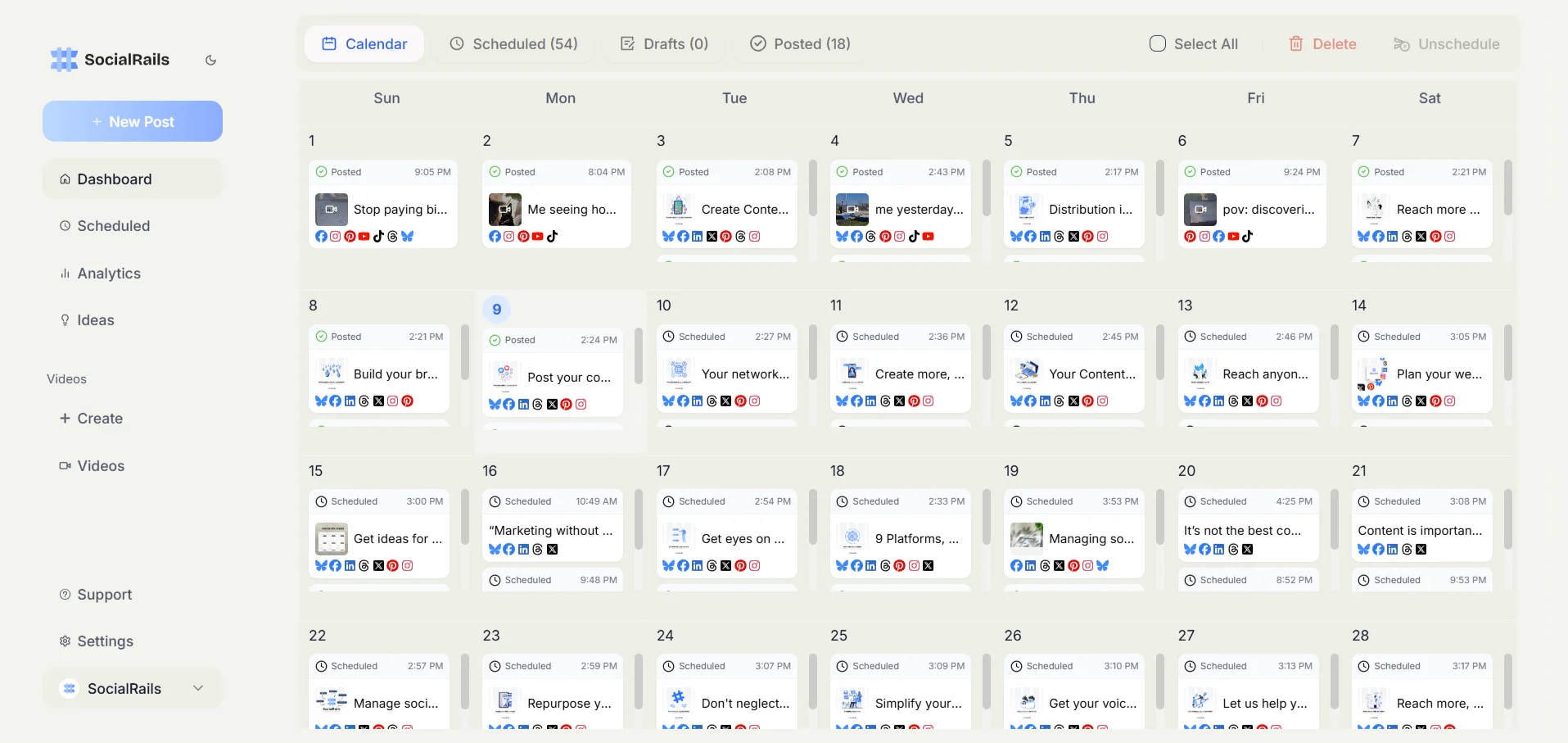
This guide gives you 30 real value proposition examples plus proven formulas to craft your own. For messaging that drives action, see our guide on power words for sales.
What Is a Value Proposition?
A value proposition is a clear statement that explains:
- What you offer
- Who it's for
- Why it's better than alternatives
- What specific benefit customers get
It answers the visitor's immediate question: "Why should I choose you?" As Harvard Business Review research shows, a clear value proposition is the single most important element for conversion.
Which is a complete value proposition?
💡 Tip: Think carefully before selecting your answer!
Value Proposition vs. Tagline vs. Mission
Your value proposition goes on your homepage, landing pages, and ads. Your tagline is for brand recall. Your mission is internal guidance.
5 Value Proposition Formulas That Work
Formula 1: The [Action] + [Outcome] Formula
Template: "[Action] to [outcome]"
Examples:
- "Write emails that convert in half the time"
- "Build websites without code in minutes"
- "Track expenses automatically and save 10 hours/week"
Formula 2: The [Product] for [Audience] Formula
Template: "[Product category] for [specific audience] who want [desired outcome]"
Examples:
- "CRM for small businesses who want enterprise features without the complexity"
- "Accounting software for freelancers who hate spreadsheets"
- "Email marketing for creators who want to own their audience"
Formula 3: The [Alternative] Without [Downside] Formula
Template: "[Get the benefit of alternative] without [its biggest downside]"
Examples:
- "Get enterprise security without the enterprise price"
- "Designer-quality graphics without hiring a designer"
- "Agency results without agency costs"
Formula 4: The [Number] + [Benefit] Formula
Template: "[Specific number] [benefit] in [timeframe]"
Examples:
- "10x your email open rates in 30 days"
- "Save 5 hours per week on social media"
- "Get 3x more qualified leads this month"
Formula 5: The "We Help" Formula
Template: "We help [audience] [achieve outcome] so they can [ultimate benefit]"
Examples:
- "We help busy founders build landing pages in minutes so they can launch faster"
- "We help ecommerce brands reduce returns by 40% so they keep more revenue"
- "We help remote teams collaborate seamlessly so work actually gets done"
30 Value Proposition Examples by Category
SaaS & Software
1. Slack
"Slack is where work happens" "Be more productive at work with less effort"
Why it works: Simple, bold claim that positions product as essential.
2. Notion
"One workspace. Every team." "Write, plan, organize, play"
Why it works: Emphasizes versatility and universal appeal.
3. Shopify
"If you can dream it, you can sell it with Shopify" "The platform commerce is built on"
Why it works: Empowering, removes barriers, establishes authority.
4. Zoom
"One platform to connect" "Video communications that empower people"
Why it works: Simple, focused on human connection over features.
5. HubSpot
"Grow better with HubSpot" "Software that's powerful, not overpowering"
Why it works: Addresses pain point of complex software.
6. Asana
"Manage your team's work, projects, & tasks online" "Work on big ideas without the busywork"
Why it works: Clear functionality + aspirational outcome.
7. Calendly
"Easy scheduling ahead" "Eliminate the back-and-forth of scheduling"
Why it works: Directly addresses specific pain point.
8. Loom
"Say it with video" "Record quick videos to update your team and cut down meetings"
Why it works: Clear use case with specific benefit.
9. Figma
"Design and prototype in one place" "Nothing great is made alone"
Why it works: Functional clarity + collaborative positioning.
10. Airtable
"Create apps that perfectly fit your team's needs" "The spreadsheet-database hybrid everyone's been waiting for"
Why it works: Describes novel category with clear benefit.
E-commerce
11. Warby Parker
"Boutique-quality eyewear at a revolutionary price" "Glasses starting at $95, including prescription lenses"
Why it works: Quality + price + specific number = clear value.
12. Dollar Shave Club
"Shave time. Shave money." "A great shave for a few bucks a month"
Why it works: Wordplay + clear price advantage.
13. Everlane
"Exceptional quality. Ethical factories. Radical transparency." "Know your factories. Know your costs. Always ask why."
Why it works: Values-led positioning that differentiates.
14. Casper
"The best bed for better sleep" "No more mattress stores. No more compromises."
Why it works: Addresses industry pain point directly.
15. Glossier
"Skin first. Makeup second. Smile always." "Beauty products inspired by real life"
Why it works: Philosophy-driven, emotionally resonant.
16. Allbirds
"The world's most comfortable shoes" "Made from nature. For nature."
Why it works: Bold claim + sustainability positioning.
17. Away
"First-class luggage at a coach price" "Thoughtful luggage for modern travel"
Why it works: Clear value equation (premium quality, accessible price).
18. Outdoor Voices
"Doing things" "Technical apparel for recreation"
Why it works: Simple, anti-athletic brand positioning.
19. Bombas
"Bee better" "Socks designed for comfort. Designed to give back."
Why it works: Product benefit + social mission integration.
20. ThirdLove
"We're on a mission to help every woman find her perfect fit" "Bras and underwear for every body"
Why it works: Addresses real industry problem (fit).
Services
21. Uber
"Go anywhere with Uber" "Tap the app, get a ride"
Why it works: Simple, clear functionality.
22. Airbnb
"Belong anywhere" "Book unique homes and experiences"
Why it works: Emotional positioning transcends accommodation.
23. Stripe
"Payments infrastructure for the internet" "Financial infrastructure that millions of businesses use"
Why it works: Clear scope, implies reliability through adoption.
24. Mailchimp
"Turn emails into revenue" "The #1 email marketing and automations platform"
Why it works: Direct outcome + authority claim.
25. Squarespace
"Everything to sell anything" "The all-in-one platform to build a beautiful website"
Why it works: All-in-one solution + quality positioning.
B2B
26. Salesforce
"The world's #1 CRM" "We bring companies and customers together"
Why it works: Authority through market position.
27. Zendesk
"Champions of customer service" "Beautifully simple software to improve your customer experience"
Why it works: Identity + product clarity.
28. Intercom
"The complete AI-first customer service solution" "Drive faster resolutions with AI-enhanced messaging"
Why it works: Modern positioning, specific capability.
29. DocuSign
"The way the world agrees" "Electronic signature and agreement cloud platform"
Why it works: Bold vision + functional clarity.
30. Twilio
"Build the future of communications" "Power personalized interactions with trusted APIs"
Why it works: Aspirational + specific capability.
How to Write Your Value Proposition
Step 1: Know Your Customer
Before writing anything, answer:
- Who is your ideal customer?
- What problem keeps them up at night?
- What have they tried before?
- Why did those solutions fail?
Exercise: Complete this sentence: "My customer is a [role] at a [company type] who struggles with [problem] and needs [solution] so they can [outcome]."
Step 2: Identify Your Unique Value
What do you offer that alternatives don't?
Step 3: Quantify When Possible
Vague: "Save time on email" Specific: "Write emails 10x faster"
Vague: "Affordable pricing" Specific: "Starting at $9/month"
Vague: "Increase conversions" Specific: "Increase conversions by 27%"
Step 4: Test Multiple Versions
Write 5-10 variations, then test:
Version A: Feature-focused "All-in-one project management with Gantt charts, Kanban boards, and time tracking"
Version B: Benefit-focused "Ship projects on time, every time"
Version C: Pain-focused "Stop losing projects to miscommunication"
Version D: Outcome-focused "Grow your business with organized project delivery"
Step 5: Validate With Customers
Ask existing customers:
- "How would you describe what we do?"
- "What made you choose us over alternatives?"
- "What's the biggest benefit you've experienced?"
Their language often becomes your best copy.
Value Proposition Templates
Template 1: The Complete Statement
For [target customer]
who [has this problem],
[product name] is a [category]
that [key benefit].
Unlike [alternatives],
we [unique differentiator].
Example: For busy marketing teams who struggle with social media consistency, SocialRails is a scheduling platform that automates posting across all channels. Unlike complex enterprise tools, we're designed to be set up in 5 minutes.
Template 2: The Homepage Headline
[Action verb] + [specific outcome] + [in timeframe/without downside]
Examples:
- "Launch your online store in minutes, not months"
- "Create professional designs without hiring a designer"
- "Build landing pages that convert in under an hour"
Template 3: The Subheadline
[Product] helps [audience] [achieve outcome] by [method/feature]
Examples:
- "Our AI writing assistant helps marketers create content 10x faster by generating drafts from simple prompts"
- "Our platform helps remote teams stay connected by bringing all communication into one searchable place"
Template 4: The Three-Point Value
[Benefit 1]. [Benefit 2]. [Benefit 3].
Examples:
- "Simple. Powerful. Affordable."
- "Create. Collaborate. Convert."
- "Build faster. Ship sooner. Grow bigger."
Testing Your Value Proposition
The 5-Second Test
Show someone your homepage for 5 seconds, then ask:
- What does this company do?
- Who is it for?
- Why should I choose them?
If they can't answer clearly, iterate.
The "So What?" Test
Read your value proposition, then ask "So what?" three times:
"We offer project management software" So what? "So teams can organize their work" So what? "So they ship projects on time" So what? "So they grow their business without chaos"
The last answer is often your real value proposition.
A/B Testing
Test value proposition variations on:
- Homepage headline
- Ad copy
- Email subject lines
- Landing pages
Measure:
- Conversion rate
- Time on page
- Bounce rate
- Click-through rate
Common Mistakes to Avoid
1. Too Vague
Bad: "We help businesses succeed" Good: "We help SaaS companies reduce churn by 30%"
2. Too Complex
Bad: "Our AI-powered, blockchain-enabled, cloud-native platform synergizes cross-functional workflows" Good: "Manage all your projects in one place"
3. Feature-Focused
Bad: "Gantt charts, Kanban boards, time tracking, reporting" Good: "Ship projects on time without the spreadsheet chaos"
4. No Differentiation
Bad: "Quality products at great prices" Good: "Boutique quality at warehouse prices"
5. Trying to Please Everyone
Bad: "Perfect for everyone" Good: "Built for remote teams of 5-50 people"
Value Proposition Checklist
Before publishing, verify your value proposition:
- Clear: Can someone understand it in 5 seconds?
- Specific: Does it include concrete details/numbers?
- Unique: Does it differentiate from alternatives?
- Relevant: Does it address customer's real problem?
- Credible: Can you back up any claims made?
- Compelling: Does it make someone want to learn more?
Related Guides
- Power Words That Drive Sales
- Emotional Marketing: 25 Examples
- Social Proof Marketing Guide
- Creating Urgency in Sales
- FOMO Marketing Tactics
Key Takeaways
- Lead with benefit, not features. Customers care about outcomes.
- Be specific. Numbers and details beat vague claims.
- Know your audience. Generic appeals to everyone convert no one.
- Test relentlessly. The "best" value proposition is the one that converts.
- Keep it simple. If it takes more than 5 seconds to understand, it's too complex.
Your value proposition is the foundation of all your marketing. Get it right, and everything else gets easier.
Was this article helpful?
Let us know what you think!