

Content Marketing Best Practices: 15 Rules That Actually Work (2026)

Most content marketing advice is generic. "Create great content" isn't a strategy.
Here are 15 specific best practices that separate brands getting results from brands just publishing into the void.
The 15 Best Practices
- Set documented goals
- Research your audience first
- Build content pillars
- Match content to search intent
- Quality over quantity
- Write for humans first
- Publish on a consistent schedule
- Repurpose everything
- Distribute as hard as you create
- Build internal links
- Update old content
- Measure what matters
- Add visuals and interactive elements
- Build your email list early
- Let data guide your decisions
Create content, post everywhere
Create captions, images, and videos with AI. Schedule to 9 platforms in seconds.
Start your free trial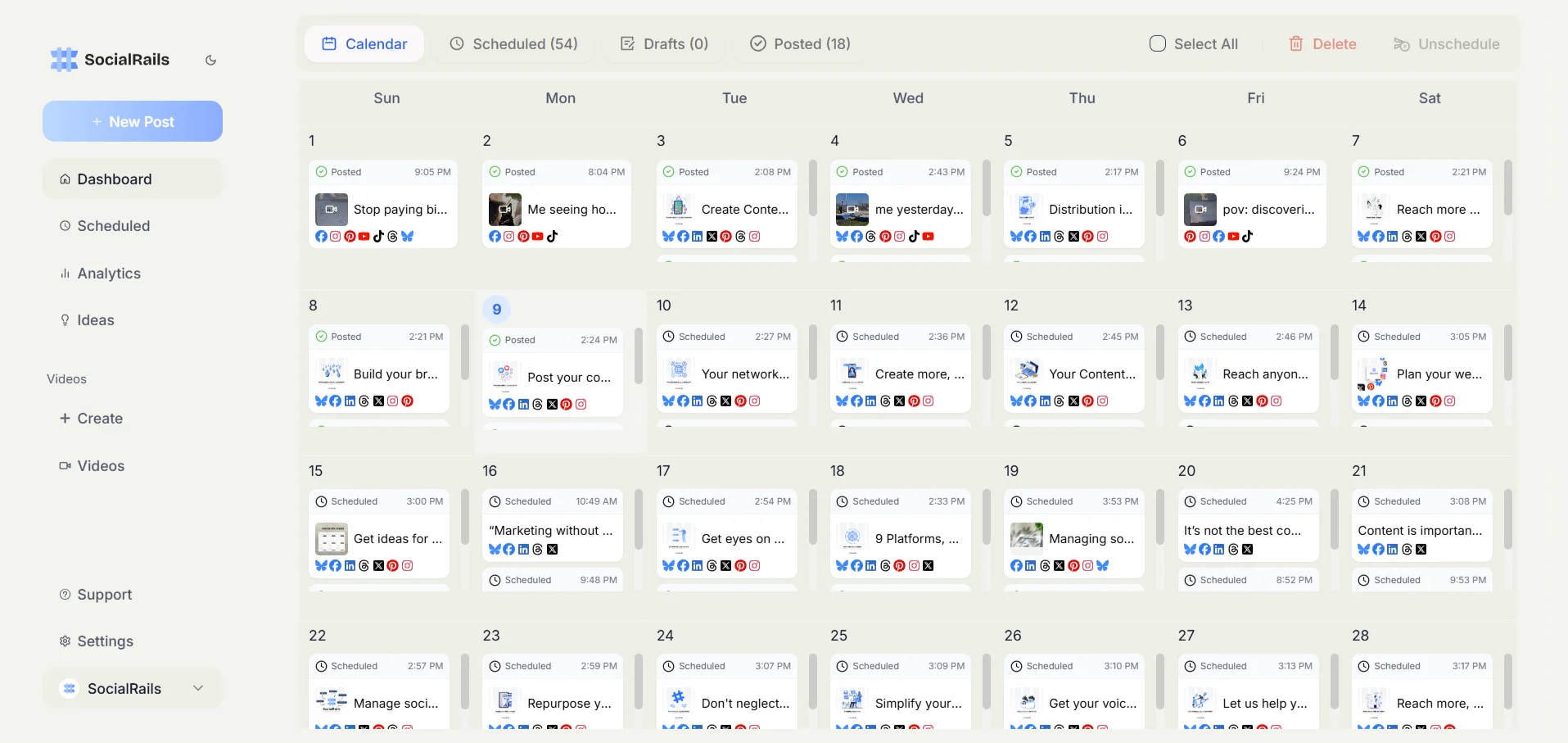
1. Set Documented Goals
Content without goals is just publishing. Pick 1 to 2 goals before creating anything.
Write your goals down. Teams with documented content strategies get better results than those winging it.
For a deeper look at goal-setting, see our content marketing goals guide.
2. Research Your Audience First
The #1 mistake: writing for yourself instead of your audience.
Before creating content, answer these:
- What questions does your audience ask?
- What problems are they trying to solve?
- Where do they hang out online?
- What format do they prefer (video, text, audio)?
Where to find these answers:
- Sales and support teams, they hear objections and questions every day
- Reviews, your product AND competitors' products
- Forums, Reddit, Quora, Facebook Groups
- Google Search Console, shows what people search to find you
What's the fastest way to learn what content your audience actually wants?
3. Build Content Pillars
Content pillars are 3 to 5 core topics your brand owns. Everything branches from them.
Example structure:
Pillar: Social Media Marketing
- Instagram marketing guide
- Facebook ads for beginners
- TikTok growth strategies
- Social media scheduling tips
Each piece links back to the pillar. Each pillar links out to its pieces. This builds topical authority.
Use our content pillar builder to map your clusters, or learn more in our content pillars guide.
4. Match Content to Search Intent
A keyword with 100 searches/month and perfect intent beats one with 10,000 and vague intent.
Don't write a blog post for a transactional query. Don't build a product page for an informational one.
Google's helpful content guidelines reward pages that match what the searcher actually needs.
Someone searches 'best email marketing tools 2026.' What type of content should you create?
5. Quality Over Quantity
One genuinely useful piece outperforms ten thin ones.
What makes content worth reading:
- Covers the topic more completely than the top results
- Includes actionable steps, not just theory
- Uses current data and examples
- Organized so readers find their answer fast
- Adds a perspective competitors don't have
Before writing, search your target keyword. Read the top 5 results. If you can't make something meaningfully better, pick a different topic.
6. Write for Humans First
Readable content that solves problems outperforms keyword-stuffed content every time.
Quick rules:
- Lead with the answer, not 500 words of introduction
- Keep paragraphs to 1 to 3 sentences
- Add subheadings every 200 to 300 words
- Write at an 8th-grade reading level
- Cut filler phrases ("in order to," "it's important to note")
7. Publish on a Consistent Schedule
Consistency beats volume. Once a week, every week, is better than five posts one week and silence the next.
Use a content calendar to plan ahead. Batch your writing to stay efficient.
8. Repurpose Everything
Every piece of content should live multiple lives.
One blog post becomes:
- A LinkedIn post (key takeaway)
- A Twitter/X thread (main points)
- An Instagram carousel (visual summary)
- A YouTube video (video version)
- A newsletter section (curated insight)
One well-researched post can fuel a full week of social media content.
Learn more in our content repurposing guide.
Which content format gives you the most repurposing potential?
9. Distribute as Hard as You Create
Most content fails because of distribution, not quality.
Spend at least as much effort promoting as creating. For a complete framework, see our content promotion strategies guide.
Distribution channels:
- Owned: Email list, social media, website
- Earned: Guest posts, podcast appearances, backlinks
- Paid: Social ads, sponsored newsletters
- Community: Reddit, Quora, Slack groups, Discord servers
Don't just publish and hope someone finds it.
10. Build Internal Links
Internal linking costs nothing and directly impacts rankings.
Rules:
- Link from high-authority pages to pages you want to rank
- Use descriptive anchor text (not "click here")
- Every new post links to 3 to 5 existing posts
- Update 2 to 3 old posts to link to every new post
- Create hub pages that link to all content on a topic
11. Update Old Content
Updating existing posts is often more effective than publishing new ones.
What to update:
Prioritize posts ranking on page 2 of Google. They're closest to driving real traffic.
12. Measure What Matters
Track metrics that connect to your goals, not vanity numbers.
Set up attribution so you know which content actually drives results.
Which metric best indicates that your content marketing is generating business results?
13. Add Visuals and Interactive Elements
Walls of text lose readers. Break content up with elements that add value.
Skip stock photos that don't add information. If a visual doesn't teach something or make data clearer, leave it out.
14. Build Your Email List Early
Social algorithms change. SEO rankings shift. Your email list is the only channel you fully own and control.
Email tactics for content marketers:
- Add signup CTAs to every blog post
- Offer a content upgrade (checklist, template) for signups
- Send a weekly newsletter featuring your best content
- Segment by interest for better relevance
- Use email to drive traffic to new content on publish day
Start before you think you need it.
15. Let Data Guide Your Decisions
Not every content idea works. Use performance data to do more of what works and cut what doesn't.
Monthly review process:
- Which posts drive the most traffic, leads, or conversions?
- Which posts get zero traffic after 3+ months?
- What do your best posts have in common?
- Update, consolidate, or remove underperformers
- Create more of what works
Content marketing is iterative. Treat every post as a test. Use tools like our B2B content gap finder to spot missed opportunities.
FAQ
What's the most important content marketing best practice?
Set documented goals. Without them, you can't measure success or know what's working.
How often should I publish?
Consistency matters more than frequency. Weekly with high quality beats daily with thin content.
SEO or social media for distribution?
Both, but SEO compounds. A ranked blog post drives traffic for years. A social post lasts hours. For more on this, see our social media marketing vs content marketing comparison.
How long should blog posts be?
Long enough to fully answer the query. A 500-word post that perfectly answers a simple question beats a 3,000-word post with filler.
When does content marketing start showing results?
Expect meaningful results after 6+ months of consistent effort. Track progress in 3 to 6 month windows.
Related Resources
- Content Marketing Goals Guide
- Content Marketing Process Guide
- Content Promotion Strategies Guide
- B2B Content Marketing Strategy
- Organic Social Media Marketing Guide
- Content Calendar Generator
- Content Pillar Builder
- B2B Content Gap Finder
Was this article helpful?
Let us know what you think!