

The Content Marketing Process: 7 Steps From Strategy to Results

The Content Marketing Process: 7 Steps From Strategy to Results
Content marketing isn't random publishing. It's a repeatable process that compounds into a reliable growth engine when executed consistently. This is the 7-step process that works.
The 7 Steps at a Glance
- Research & Planning, understand your audience and competitors
- Strategy & Goal Setting, define content pillars and targets
- Content Creation, write, design, and produce
- Editing & Optimization, polish and optimize for SEO
- Publishing & Distribution, get content live across channels
- Promotion & Amplification, drive traffic to your content
- Measurement & Iteration, track results and improve
Create content, post everywhere
Create captions, images, and videos with AI. Schedule to 9 platforms in seconds.
Start your free trial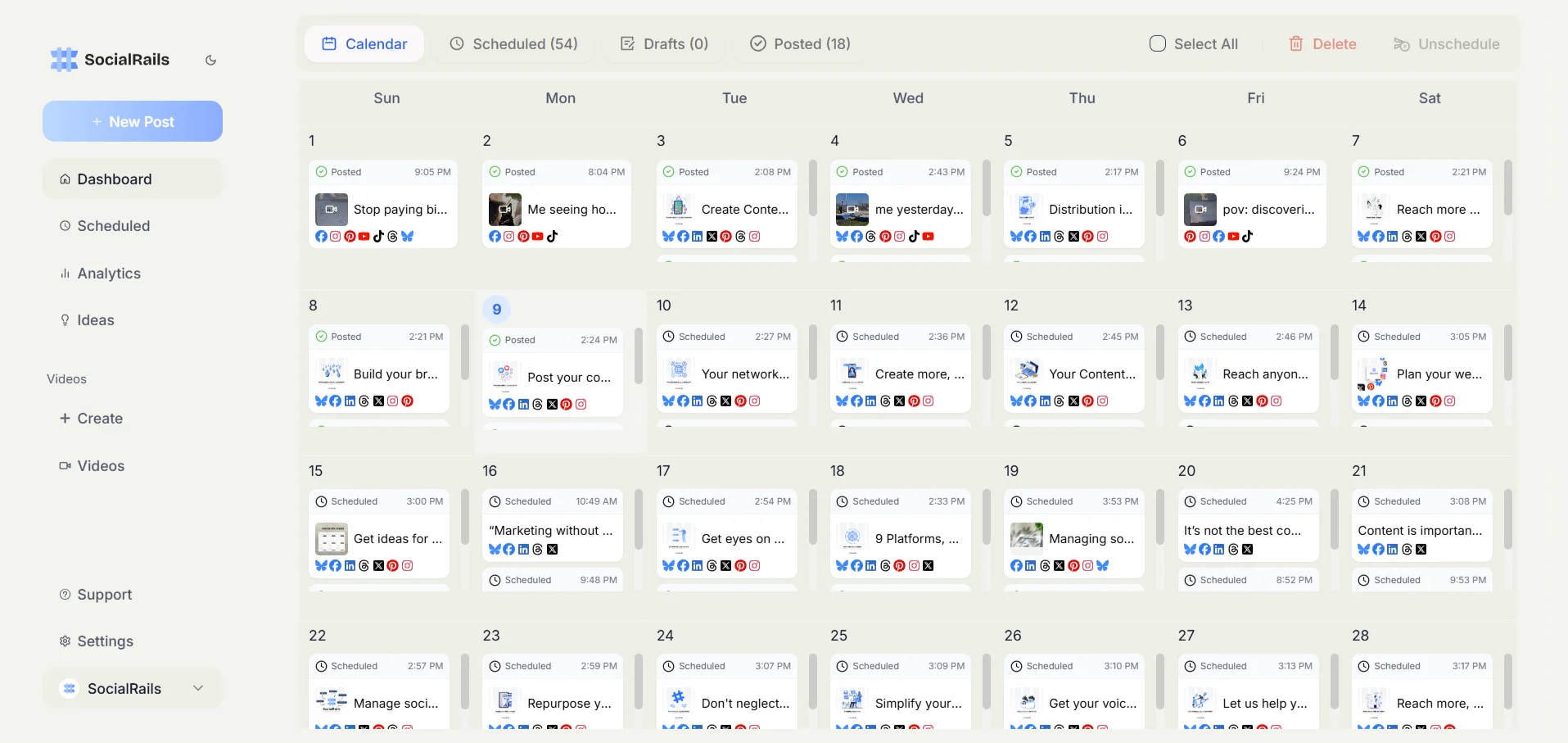
Step 1: Research & Planning
Every piece of content starts with research. Publishing without research is guessing.
Audience Research
- Who are you creating content for? Define 2-3 buyer personas with specific pain points
- What questions do they ask? Check Quora, Reddit, forums, and customer support tickets
- Where do they consume content? Blog, YouTube, LinkedIn, TikTok, podcasts, email
Content Ideation & Sourcing
Not every piece needs to be created from scratch. Content curation tools can help you discover trending topics and supplement your original content with high-quality third-party resources.
Keyword Research
- Use tools like Ahrefs, SEMrush, or Google Keyword Planner
- Focus on keywords with clear search intent
- Prioritize by: search volume, difficulty, and business relevance
Competitor Analysis
- Identify what's ranking for your target keywords
- Find content gaps (topics competitors haven't covered well)
- Note their format, length, and angle, then do it better
Time allocation: 20% of your total content marketing time should go to research.
Step 2: Strategy & Goal Setting
With research done, build the framework that guides everything you publish.
Define Content Pillars
Pick 3-5 core topics that align with your expertise and audience needs. Every piece of content should ladder up to one of these pillars. Use our free content pillar builder to organize your themes and map supporting content to each one.
Build an Editorial Calendar
Map content to a calendar with publishing dates, owners, and status. Use our free content calendar generator to get started. If you're comparing enterprise content platforms, see our ContentBird alternatives for options that include social scheduling at lower price points.
Set Goals
Tie content goals to business metrics. See our content marketing goals guide for the full framework.
What percentage of your content marketing time should go to research?
Step 3: Content Creation
This is where research becomes a tangible asset. The quality of your creation process determines everything.
Writing Process
- Create a brief, outline the target keyword, angle, structure, and word count. Use the blog title generator to test headline options before committing to an angle
- Write the draft, focus on getting ideas down, don't edit while writing
- Add visuals, tables, images, screenshots, and diagrams break up text
- Include CTAs, every piece needs a clear next step for the reader
Content Formats to Consider
Quality Standards
- Every piece should be better than the #1 ranking result for its keyword
- Include original insights, data, or perspectives (not just rewritten competitor content)
- Format for scannability: short paragraphs, headers, bullets, tables
Step 4: Editing & Optimization
Raw content isn't publish-ready. This step transforms a good draft into a great one.
Content Editing Checklist
- Accurate information (fact-check all claims and data)
- Clear structure (logical flow from intro to conclusion)
- Concise writing (remove filler words and redundant sentences)
- Consistent brand voice
- Grammar and spelling checked
SEO Optimization
- Target keyword in title, H1, meta description, and first 100 words. Run your title through the headline analyzer to check emotional score and readability
- Related keywords used naturally throughout
- Internal links to 3-5 relevant pages on your site
- External links to authoritative sources
- Meta description under 160 characters
- URL slug is short and descriptive
- Images have alt text
Technical Checks
- Mobile-friendly formatting
- Images compressed for fast loading
- All links working
- CTAs visible and functional
Step 5: Publishing & Distribution
Get content live on the right channels at the right time.
Publishing Best Practices
- Publish consistently, a predictable schedule builds audience habits
- Time it right, use SocialRails to find your optimal posting times
- Cross-post strategically, adapt content for each platform instead of copy-pasting
Distribution Channels
Schedule all social distribution in one session using SocialRails to save time and stay consistent.
What's the best approach when sharing a blog post on different social platforms?
Step 6: Promotion & Amplification
Publishing is half the work. Active promotion multiplies your content's reach.
Organic Promotion
- Share across all your social channels, multiple times with different angles
- Send to your email list
- Post in relevant communities (Reddit, Facebook groups, Slack channels)
- Reach out to people mentioned in the content
Paid Promotion
- Promote top-performing posts on Facebook and Instagram, where $20-50 can go a long way
- Run LinkedIn sponsored content for B2B pieces
- Use Google Ads for high-converting content
Outreach
- Contact sites that link to competing content and suggest yours as a better resource
- Guest post on relevant blogs with links back to your content
- Pitch journalists if your content contains original data or insights
Repurposing
Turn one piece of content into 5-10 pieces. Our guide on repurposing blog content for social media walks through each format in detail:
- Blog post → Twitter thread
- Blog post → LinkedIn carousel
- Blog post → YouTube video
- Key stats → Instagram graphic
- Full guide → Email series
Step 7: Measurement & Iteration
Measure what matters, learn what works, and double down.
Key Metrics by Stage
Review Process
- Weekly: Check traffic and engagement trends
- Monthly: Review goal progress, identify top/bottom performers
- Quarterly: Full content audit, strategy refinement, goal setting
Iterate Based on Data
- Double down on content types and topics that perform well
- Improve underperforming content by updating, expanding, or re-promoting it
- Stop creating content that consistently underperforms
- Experiment with new formats and channels each quarter
Content Marketing Process Checklist
Use this for every piece of content:
- Research: Keyword identified, competitor analysis done
- Strategy: Aligns with content pillar and business goal
- Creation: Draft written, visuals added, CTAs included
- Editing: Proofread, fact-checked, SEO-optimized
- Publishing: Live on blog, formatted correctly
- Distribution: Shared on all relevant channels
- Promotion: Email sent, social scheduled, outreach done
- Measurement: Performance tracked after 7, 30, and 90 days
What matters more for content marketing success: publishing frequency or content quality?
FAQ
How long does the content marketing process take? For a single blog post: 8-20 hours from research to measurement. The full 7-step cycle runs continuously, with steps overlapping.
What's the most important step in the process? Research (Step 1). Content built on solid research outperforms gut-feeling content every time.
How often should I publish content? Quality over quantity. Four excellent posts per month beats twenty mediocre ones. Consistency matters more than volume.
Can I skip steps? Every step matters, but the effort level varies. A quick social post might need 5 minutes of research. A pillar page might need days.
What tools do I need for content marketing? At minimum: a content management system, keyword research tool, analytics tool, and social media scheduler like SocialRails. See our tools section for free options.
Related Resources
Was this article helpful?
Let us know what you think!