
Banner Ad Sizes: The Complete Reference (2026)

Quick banner ad size reference
If you only build five sizes, build these. Between them they cover the large majority of display inventory across ad networks:
Add 336x280 and 970x250 if you are buying premium placements, and 320x100 if a meaningful share of your traffic is in-app.
Jump to: IAB sizes | Mobile sizes | Design rules | File specs | Google | Meta | LinkedIn | X | YouTube | Responsive vs fixed | FAQ
Create content, post everywhere
Create captions, images, and videos with AI. Schedule to 9 platforms in seconds.
Start your free trial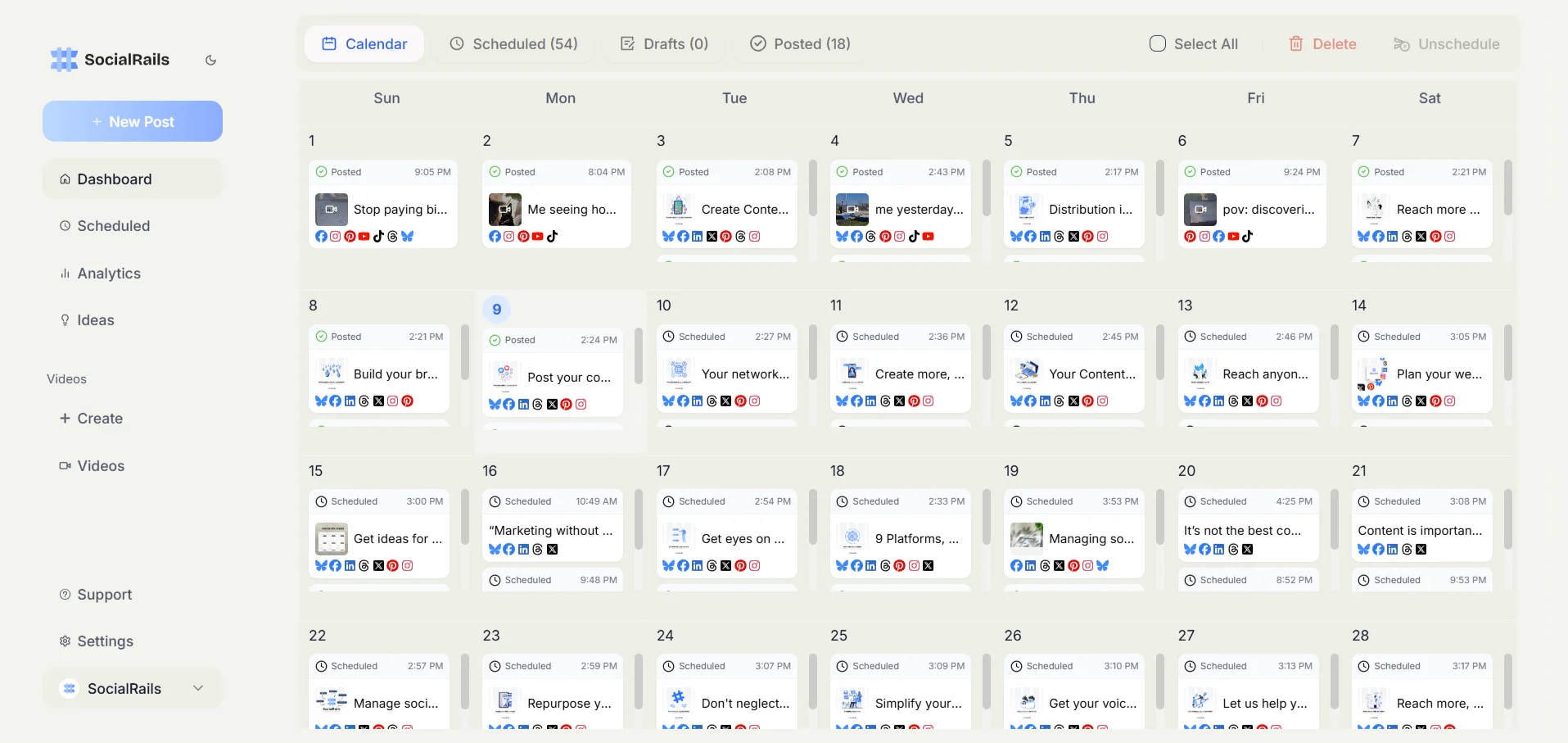
One thing most size guides get wrong
Lists like the one above are usually introduced as "the IAB standard sizes". They have not been that since 2017. The IAB's New Ad Portfolio replaced the old Universal Ad Package and moved the standard to aspect ratios with a permitted size range rather than fixed pixel dimensions, alongside the LEAN principles for lightweight, non-invasive ads. Under that scheme a 728x90 is expressed as a 6:1 or 4:1 flexible unit, a 300x250 as roughly 1:1 and a 300x600 as 1:2.
So why does everyone still trade in pixels? Because ad servers, publisher inventory and the buying interfaces of the major networks are still organised around the fixed sizes, and that is what your creative has to fill. The practical position: build to the fixed pixel sizes, because that is what the inventory is sold in, but expect to be asked for flexible or responsive creative on newer placements, and do not describe the fixed list as the current IAB standard, because it is not.
IAB Standard Banner Ad Sizes
The Interactive Advertising Bureau (IAB) sets industry-standard ad sizes. These ensure your ads work across ad networks and platforms.
Desktop Banner Ad Sizes
1. Medium Rectangle (300x250)
- Usage: The default unit of display advertising
- Placement: In-content, sidebar, footer
- Performance: The broadest inventory availability of any size
- Best For: Product showcases, clear CTAs, versatile content
- Why It Works: Large enough for creative, small enough for placement flexibility
2. Large Rectangle (336x280)
- Usage: Premium alternative to medium rectangle
- Placement: In-content, above fold
- Performance: Marginally more space than 300x250, less inventory
- Best For: Detailed product info, strong visuals
- Why It Works: More space without being intrusive
3. Leaderboard (728x90)
- Usage: Top of page banner
- Placement: Header, above content
- Performance: High visibility, but banner blindness is strongest at the top of a page
- Best For: Brand awareness, wide product images
- Why It Works: Prime position, catches attention immediately
4. Wide Skyscraper (160x600)
- Usage: Tall sidebar banner
- Placement: Right or left sidebar
- Performance: High engagement on content-heavy sites
- Best For: Multiple messages, scrolling content
- Why It Works: Stays visible as users scroll
5. Half Page (300x600)
- Usage: Large vertical ad unit
- Placement: Sidebar, often premium placement
- Performance: High impact, premium pricing
- Best For: Rich media, video, interactive content
- Why It Works: Impossible to miss, space for storytelling
6. Billboard (970x250)
- Usage: Large above-content banner
- Placement: Top of page, above article
- Performance: Maximum impact, expensive
- Best For: Major campaigns, product launches
- Why It Works: Dominates screen, captures full attention
7. Large Leaderboard (970x90)
- Usage: Alternative to standard leaderboard
- Placement: Top of page
- Performance: More space than 728x90
- Best For: Brand awareness on wide screens
- Why It Works: Modern wide-screen optimization
8. Portrait (300x1050)
- Usage: Very tall sidebar ad
- Placement: Right sidebar on long content pages
- Performance: Premium placement, high visibility
- Best For: Multi-product showcases, storytelling
- Why It Works: Enormous real estate, multiple CTAs possible
9. Square (250x250)
- Usage: Small square ad
- Placement: Sidebar, in-content
- Performance: Lower than medium rectangle
- Best For: Simple messages, icon-based creative
- Why It Works: Compact, non-intrusive
10. Small Rectangle (180x150)
- Usage: Small inline ad
- Placement: In-content, between paragraphs
- Performance: Low impact but less intrusive
- Best For: Native-style ads, subtle placements
- Why It Works: Blends with content
Mobile Banner Ad Sizes
1. Mobile Leaderboard (320x50)
- Usage: Standard mobile banner
- Placement: Top or bottom of mobile screen
- Performance: Most common mobile ad
- Best For: App monetization, mobile web
- Why It Works: Optimized for mobile screens
2. Large Mobile Banner (320x100)
- Usage: Taller mobile banner
- Placement: Top or bottom of screen
- Performance: 2x height of standard
- Best For: More creative space on mobile
- Why It Works: More visible without being intrusive
3. Mobile Medium Rectangle (300x250)
- Usage: Same as desktop but mobile-optimized
- Placement: In-content on mobile
- Performance: High engagement on mobile
- Best For: In-app ads, mobile article content
- Why It Works: Large enough to see, small enough to fit
4. Mobile Full Screen (320x480)
- Usage: Full mobile screen interstitial
- Placement: Between content/app screens
- Performance: Very high impact, and the format users complain about most
- Best For: App installs, major promotions
- Why It Works: Impossible to miss (use sparingly!)
Video Ad Sizes
1. In-Stream Video (640x360 or 640x480)
- Usage: Video that plays before/during content
- Placement: Video players
- Performance: High engagement with video content
- Best For: Product demos, storytelling
- Why It Works: Captive audience watching video
2. Out-Stream Video (300x250 or 300x600)
- Usage: Video in display ad placements
- Placement: In-content, sidebar
- Performance: Auto-play with sound off
- Best For: Silent video content, motion graphics
- Why It Works: Movement catches attention
Banner Ad Design Best Practices
Design Elements That Convert
Clear Value Proposition:
- State benefit in 5 words or less
- Answer: "What's in it for me?"
- Make promise obvious and specific
Strong Call-to-Action:
- Action verbs: "Get," "Try," "Start," "Download"
- Contrasting button color
- Button sized for fingers on mobile
- Create urgency: "Limited Time," "Today Only"
Our CTA generator produces button copy you can lift straight into a banner.
Visual Hierarchy:
- Most important element largest
- Eye naturally flows top-to-bottom, left-to-right
- Use contrast to guide attention
- Leave breathing room (white space)
Brand Consistency:
- Use brand colors
- Include logo (but don't dominate)
- Maintain visual identity
- Consistent style across ad sizes
Mobile Optimization:
- Larger text (readable without zooming)
- Bigger buttons (thumb-friendly)
- Simplified design (less detail works better)
- Fast load times (under 150KB)
Technical Specifications
File Requirements:
- Format: JPG, PNG, GIF, or HTML5
- Max File Size: 150KB (smaller = better)
- Animation: Max 30 seconds if animated
- Frame Rate: 24-30 FPS for HTML5
- No Flash: Not supported anymore
Resolution:
- 72 DPI for digital (higher is wasteful)
- RGB color mode (not CMYK)
- Save for web optimization
- Test on retina displays
Safe Zones:
- Keep critical elements 10px from edges
- CTAs shouldn't touch borders
- Allow for potential cropping
- Test on actual ad placements
Platform-Specific Banner Ad Sizes
Google Display Network
Recommended Sizes:
- 300x250 (Medium Rectangle)
- 336x280 (Large Rectangle)
- 728x90 (Leaderboard)
- 300x600 (Half Page)
- 320x50 (Mobile Banner)
- 320x100 (Large Mobile Banner)
Google Responsive Display Ads:
- Automatically resize to fit
- Upload images: 1200x628 (landscape), 1200x1200 (square)
- Headlines: 5 options up to 30 characters
- Descriptions: 5 options up to 90 characters
- Google AI optimizes combinations
Facebook Ads
Feed Placements:
- 1200x628 (link ads)
- 1080x1080 (single image)
- 1200x1200 (square feed)
Story Ads:
- 1080x1920 (9:16 vertical)
- Full screen mobile experience
Right Column:
- 254x133 (desktop only)
- Smaller, less prominent
Learn more about Facebook ad specifications. For non-ad Facebook images, see our guides on event cover sizes and profile picture sizes.
Instagram Ads
Feed:
- 1080x1080 (square)
- 1080x1350 (portrait 4:5)
- 1080x566 (landscape)
Stories:
- 1080x1920 (9:16 vertical)
- Safe zone: Center 1080x1420
Reels:
- 1080x1920 (9:16 vertical)
- Similar to Stories specs
LinkedIn Ads
Sponsored Content:
- 1200x627 (landscape)
- 1200x1200 (square)
Text Ads:
- 50x50 (small square image)
- 100 character headline
Message Ads:
- 300x250 (banner in message)
Twitter/X Ads
Image Ads:
- 1200x675 (16:9 landscape)
- 1200x1200 (1:1 square)
Website Cards:
- 800x418 (card image)
- 800x800 (square option)
YouTube Ads
Display Ads:
- 300x60 (mobile)
- 300x250 (desktop)
Overlay Ads:
- 480x70 (banner overlay)
- 728x90 (large overlay)
Video Thumbnail:
- 1280x720 (for custom thumbnails)
Banner Ad Size Performance & Strategy
Which sizes actually perform
Be sceptical of any guide, including earlier versions of this one, that gives you a per-size average CTR to two decimal places. Those tables circulate widely and are almost never sourced. Display CTR is dominated by placement quality, vertical, audience targeting and creative. Size is a minor variable by comparison, and a 300x250 in a good in-content slot will beat a 300x600 in a dead sidebar every time.
What can be said with confidence:
- In-content beats sidebar, which is why the rectangles (300x250, 336x280) are the workhorses
- Larger units get more attention but cost more and appear on less inventory, so 300x600 and 970x250 are a budget decision as much as a creative one
- Mobile units generally show higher CTR than desktop, though a meaningful share of that is accidental taps rather than intent, so judge mobile on post-click behaviour rather than CTR
- Interstitials get the highest CTR and the worst downstream numbers. Use them where the interruption is expected, such as between app screens, and watch bounce rate closely
The only reliable benchmark is your own account. Run the same creative across three or four sizes for a couple of weeks, then compare on cost per conversion rather than CTR.
By inventory availability (this part is stable):
- Medium Rectangle (300x250) on the widest range of placements
- Leaderboard (728x90) on most desktop pages
- Mobile Banner (320x50) across mobile web and in-app
- Wide Skyscraper (160x600) on content-heavy desktop sites
- Large Rectangle (336x280) noticeably less common than 300x250
Campaign Strategy by Goal
Brand Awareness:
- Best sizes: 728x90 (Leaderboard), 970x250 (Billboard)
- Placements: Above the fold, homepage takeovers
- Creative: Strong visuals, logo prominent
- Metrics: Impressions, reach, brand lift
Direct Response:
- Best sizes: 300x250, 336x280 (Rectangles)
- Placements: In-content, contextually relevant
- Creative: Clear offer, strong CTA
- Metrics: CTR, conversions, ROAS
Mobile App Installs:
- Best sizes: 320x50, 320x100, 300x250 mobile
- Placements: In-app, mobile web
- Creative: App screenshot, clear benefit
- Metrics: Install rate, cost per install
Retargeting:
- Best sizes: All standard sizes (wide reach)
- Placements: Across display network
- Creative: Product-specific, urgency
- Metrics: Return rate, conversion rate
Budget Allocation by Size
Conservative Approach (Proven Performers):
- Primary: Medium Rectangle (300x250)
- Important: Mobile Banner (320x50/100)
- Important: Leaderboard (728x90)
- Important: Large Rectangle (336x280)
Aggressive Approach (Premium Placements):
- Focus: Half Page (300x600)
- Focus: Billboard (970x250)
- Include: Medium Rectangle (300x250)
- Include: Mobile Medium Rectangle (300x250)
- Include: Wide Skyscraper (160x600)
Testing Approach:
- Start with medium rectangle (300x250)
- Add top 3-4 sizes to campaign
- Run 2 weeks, analyze performance
- Scale budget to best performers
- Keep testing new sizes quarterly
🛠️ Banner Ad Creation Tools
Design Tools:
- Canva - Templates for all standard sizes
- Adobe Express - Professional ad creation
- Google Web Designer - HTML5 ad builder
- Figma - For designers
Ad Builders:
- Google Ads Editor - Bulk editing, including responsive display ads
- Meta Ads Manager - Auto-optimized creative for Facebook and Instagram
- The Brief - Multi-size banner and animated banner production. You may know it as Bannersnack or Creatopy: it was Bannersnack until February 2021, Creatopy until October 2025, and creatopy.com now redirects to thebrief.ai. Guides listing Bannersnack and Creatopy as two different tools are listing the same company twice
- Flashtalking - Enterprise ad serving and creative management
Testing and Research Tools:
- Meta Ad Library - Competitor ad research, free and public
- AdEspresso - A/B testing across Meta placements
- Optimizely - Multivariate testing
Note that Google Display Planner no longer exists as a standalone tool. Its forecasting was absorbed into Display campaigns, where the estimates now appear as you set budget, bids and targeting. Reach Planner is not a replacement: it plans video reach across YouTube and video partners, not display placements.
For the organic side, our social media image size reference covers post and profile dimensions per platform.
Responsive vs. Fixed Size Ads
Responsive Display Ads (Recommended)
Pros:
- Automatically fit available ad space
- One creative works across sizes
- AI-optimized for performance
- Less production work
Cons:
- Less creative control
- May not look perfect in all sizes
- Requires trust in platform AI
Best For: Most campaigns, small teams, testing
Fixed Size Ads
Pros:
- Complete creative control
- Pixel-perfect design
- Consistent brand experience
- Better for complex creative
Cons:
- Need multiple sizes (more work)
- Miss some ad inventory
- Higher production costs
Best For: Premium campaigns, brand campaigns, large teams
Hybrid Approach (Best):
- Create fixed sizes for top 3-5 placements
- Use responsive for remaining inventory
- Get quality + coverage
FAQ
What is the most common banner ad size?
What are the standard IAB banner sizes?
What banner ad size has the highest CTR?
Should I create separate ads for each size?
What file size should banner ads be?
Do I need different banner sizes for mobile?
What makes a banner ad effective?
How many banner ad sizes should I create?
Ready to build your set? Start with the five sizes at the top of this page, keep every file under 150KB, and check the social media image size reference for the organic placements alongside your paid ones. Our CTA generator helps with button copy, and the visual identity guide keeps the set consistent across sizes.
Was this article helpful?
Let us know what you think!