
How to Announce a New Job on LinkedIn (+ 10 Ready-to-Use Templates)

Quick answer: Add the new role to your profile first, and decide right there whether to flip the Notify network toggle on or off. Then, when you are ready for the spotlight, publish a standalone post that tags your new company, thanks your previous team, and says what excites you. Career updates are one of the post types people most enjoy engaging with, because celebrating a milestone is easy and positive.
Jump to: Two Ways to Announce | Update Your Profile | When to Post | 10 Templates | Engagement Tips | FAQ
Create content, post everywhere
Create captions, images, and videos with AI. Schedule to 9 platforms in seconds.
Start your free trial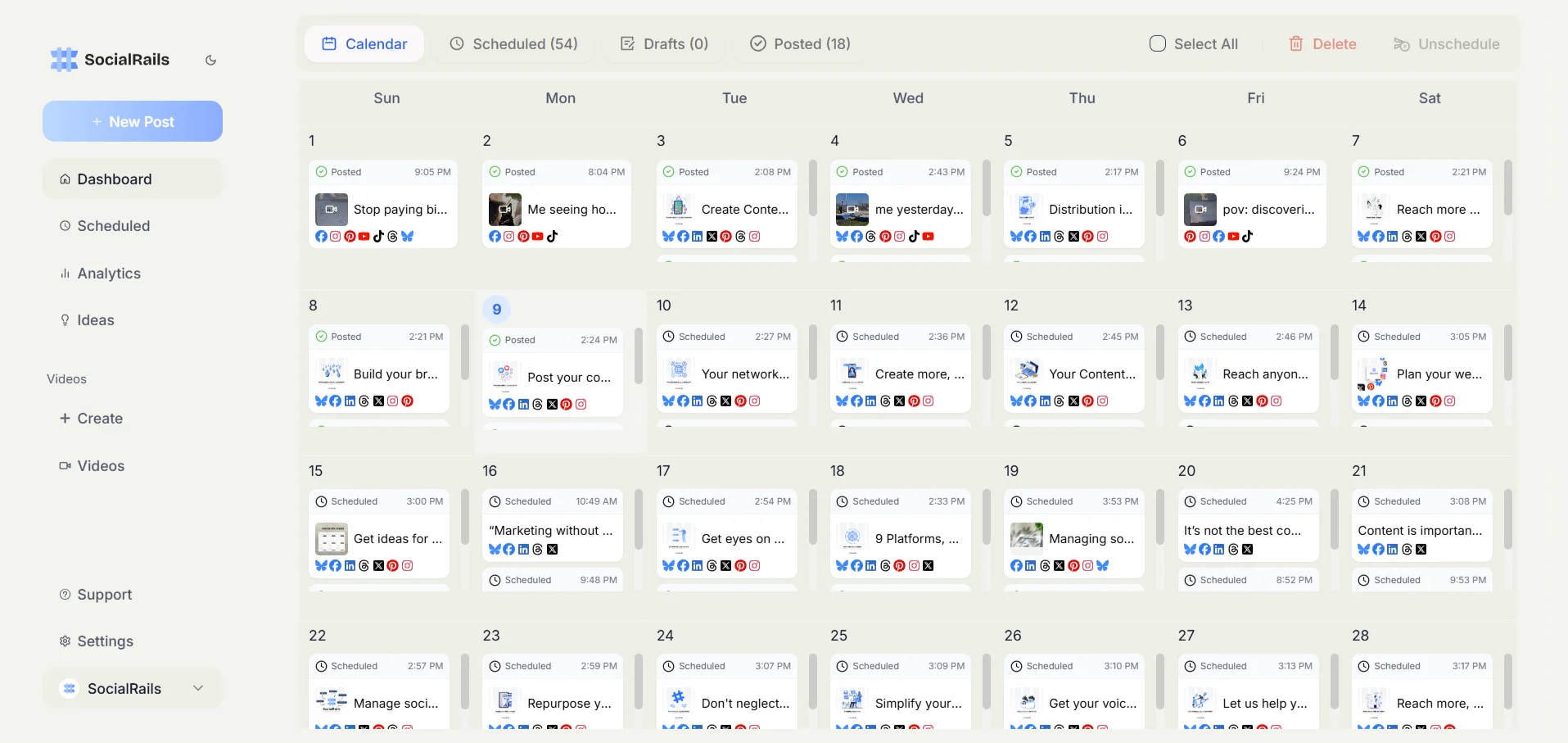
Two Ways to Announce a New Job
In 2026 there are two separate mechanics, and it helps to know which is which:
- The profile update notification. When you add or edit a role in your Experience section, LinkedIn shows a Notify network toggle at the top of the same dialog. Leave it on and saving the role sends a short automatic update to your connections. Switch it off and the change is saved quietly. Job updates can take up to two hours to appear in your network's feed once notifications are on.
- The standalone post. This is a normal post you write yourself from Start a post on the home feed. You control every word, add a photo, tag your new employer, and use hashtags. This is where the templates below come in.
Most people get the best result by saving the role quietly (toggle off), then publishing their own standalone post so the first thing the network sees is the version they wrote, not the generic "started a new position at [Company]" auto-update.
That standalone post is also worth more than a simple status change. Livy Kimbell, owner of Discover Social, says:
"A new role gives you a natural opportunity to tell your network what you want to become known for. Instead of stopping at 'I've joined X company', introduce an opinion about your industry, explain what you're excited to work on and give people a reason to associate your name with a particular subject. Your job title tells people what you do; your content should show them what you know."
Two other flows are easy to confuse with this, so to be clear:
- "Share that you're hiring" is for recruiters filling a role, not for announcing a job you just took.
- The green Open to work banner on your photo is for job seekers who want to be found. If you have already accepted an offer, turn it off before you announce.
Before You Post: Update Your Profile
Do this before your announcement goes live:
- Turn off profile-update sharing for the edit. Either flip the Notify network toggle off inside the Add role dialog, or set it globally at Settings & Privacy → Visibility → Share profile updates with your network → Off.
- Add the new role to Experience (Profile → Experience section → the plus icon → Add role).
- Update your headline with your new title and company.
- Update your About section if your focus changed.
- Change your location if applicable.
- Turn sharing back on afterward if you want future edits, like a work anniversary, to notify your network.
Doing the edits with notifications off prevents LinkedIn from pushing a generic "started a new position" update before your custom post is ready. Once your profile matches your new role, you can publish the post below. If you are also refreshing your headline for the new job, our LinkedIn headline examples are a good starting point.
When to Post
You accepted a new job offer yesterday. Your start date is in 3 weeks. When should you post?
💡 Tip: Think carefully before selecting your answer!
10 New Job Announcement Templates
Keep the opening tight. If you want to check how long your post can run before LinkedIn truncates it, see our guide to LinkedIn post character limits.
1. The Classic Professional
I'm excited to share that I've joined [Company] as [Title]!

After [X years] at [Previous Company], where I had the privilege of [key accomplishment], I'm ready for this next chapter.

At [Company], I'll be focused on [what you'll be doing]. I'm drawn to [specific thing about the company, mission, product, team].

Thank you to everyone at [Previous Company] who made the last few years incredible. And to my new team at [Company], let's build something great.

#NewJob #[Industry]
2. The Grateful One
Big news: I've started a new role as [Title] at [Company]!

I want to take a moment to thank the people who helped me get here:

→ [Name], for mentoring me when I was just starting out
→ [Name], for believing in me and giving me my first shot at [skill]
→ The entire [Previous Company] team, for [X years] of growth

I'm joining [Company] because [reason]. Can't wait to see what we build together.
3. The Short and Sweet
New chapter → [Title] at [Company].

Grateful for the journey. Excited for what's ahead.
4. The Storyteller
Two years ago, I was [where you were, a different career, a student, struggling with X].

Today, I'm starting as [Title] at [Company].

Here's what I learned along the way:

1. [Lesson]
2. [Lesson]
3. [Lesson]

If you're in the middle of your own transition, keep going. The path isn't always linear, but it gets you where you need to be.
5. The Casual / Authentic
Plot twist: I'm now a [Title] at [Company]

Not going to lie, this one feels surreal. [Company] is a place I've admired for [reason], and I still can't believe I get to be part of the team.

If you're connected to anyone there, I'd love an intro. And if you're at [Company], see you on Slack!
6. The Numbers-Driven
After [X years], [Y projects], and [Z accomplishment] at [Previous Company], I'm taking on a new challenge.

I've joined [Company] as [Title], where I'll be [focus area].

Some context on why this move:
• [Company] is growing [metric] year over year
• Their approach to [topic] aligns with how I think about [area]
• The team includes [notable people or what excites you]

Here's to the next chapter.
7. The Industry Expert
I've spent the last [X years] in [industry], and one thing has become clear: [insight about where the industry is heading].

That's why I'm joining [Company] as [Title].

[Company] is [what they're doing that aligns with the insight]. I'll be working on [specific initiative or team].

If you're working in [related space], I'd love to connect and swap notes.
8. The Team Player
It takes a village, and I have the best one.

Starting today, I'm [Title] at [Company].

This wouldn't have happened without:
• My team at [Previous Company] who taught me [skill]
• [Mentor/manager name] who pushed me to [action]
• Everyone in this network who shared advice, opportunities, and encouragement

I'm bringing everything I've learned to [Company]. Let's go.
9. The Funny / Light-Hearted
Updated my LinkedIn profile. This is not a drill.

I'm now [Title] at [Company].

Things I'm looking forward to:
✅ New coffee machine
✅ Actually doing [exciting part of the job]
✅ Pretending I know where everything is for the first 3 weeks

Things I'll miss:
❌ [Something funny about old job]

In all seriousness, I'm incredibly excited about this opportunity. [Company] is doing [impressive thing] and I'm lucky to be part of it.
10. The Career Changer
I did something unexpected: I left [previous field] to become a [new role].

After [X years] in [old industry], I realized [what drove the change]. So I [what you did: studied, took courses, networked, applied everywhere].

Today, I'm officially [Title] at [Company].

To anyone considering a career change: it's never too late. The skills you've built transfer more than you think.
Which template would you pick if you're switching from finance to UX design?
💡 Tip: Think carefully before selecting your answer!
Tips for Maximum Engagement
If a new job is part of a bigger repositioning, the same care you put into this post belongs in your certifications too. Here is how to add certifications to LinkedIn so your profile backs up the announcement. And if you are stuck on what to post next, our LinkedIn post ideas guide keeps the momentum going.
FAQ
When should I post my new job announcement on LinkedIn?
Post within your first week at the new company, on a Tuesday to Thursday morning. Make sure your previous employer already knows and your LinkedIn profile is updated first.
What is the Notify network toggle when I add a new role?
When you add or edit a position in your Experience section, LinkedIn shows a Notify network toggle at the top of the dialog. On means saving the role sends a short automatic update to your connections. Off means the change is saved quietly, which is what most people want before publishing their own custom post.
How do I update my profile without notifying my network?
Turn the Notify network toggle off inside the Add role dialog, or set it globally at Settings and Privacy, then Visibility, then Share profile updates with your network, switched to Off. Turn it back on later if you want future edits to notify people.
Should I tag my old company in a LinkedIn job announcement?
Yes, if you're leaving on good terms. A brief thank-you to your previous company is classy and often gets engagement from former colleagues.
Should I use the profile update or a standalone post to announce?
Use both, in order. Save the new role quietly first, then publish a standalone post you write yourself. That way the first thing your network sees is your version, not the generic "started a new position" auto-update.
Should I turn off the Open to work banner after I get the job?
Yes. The green Open to work banner is for job seekers who want to be found. Once you have accepted an offer, turn it off before you announce so your profile is consistent.
Related LinkedIn Guides
- LinkedIn Headline Examples That Get Clicks
- LinkedIn Post Ideas Guide
- LinkedIn Post Character Limits
- How to Add Certifications to LinkedIn
- LinkedIn Profile Picture Guide
Create content, post everywhere
Create captions, images, and videos with AI. Schedule to 9 platforms in seconds.
Start your free trialWas this article helpful?
Let us know what you think!