

Pharmaceutical Social Media Marketing: The 2026 Compliance Playbook

Pharma social media has the highest stakes in marketing. One off-label tweet can pull a launch. One missed adverse event in a comment thread can trigger a warning letter.
This guide is the practical compliance playbook: what the FDA, EMA, and platform rules actually say, the templates and tools regulated teams use, and how to build a workflow that ships content without legal panic.
Skip to: Regulations | Platforms | Fair Balance | AE Reporting | Workflow & Tools | Templates
Create content, post everywhere
Create captions, images, and videos with AI. Schedule to 9 platforms in seconds.
Start your free trial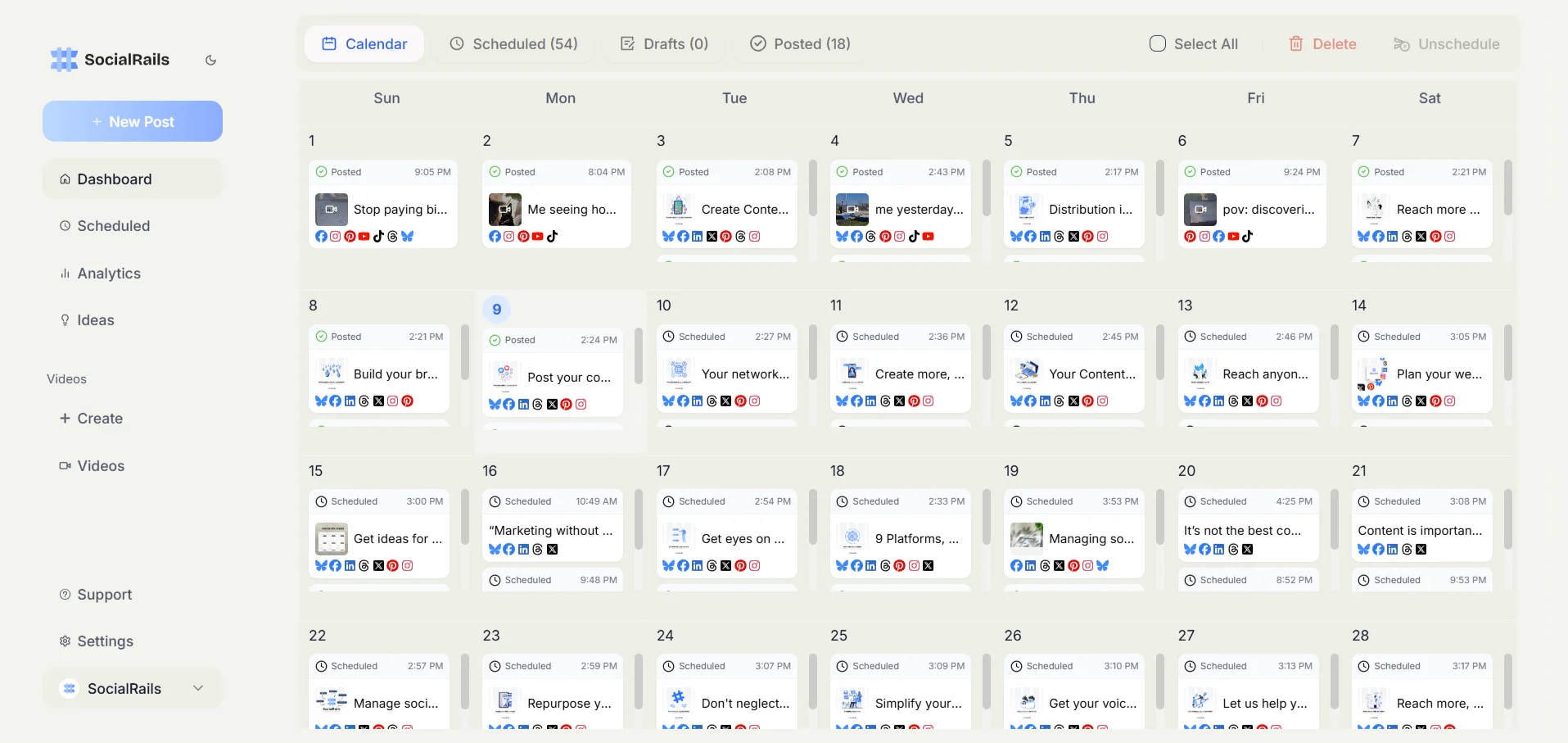
The 30-Second Answer
Pharma social media works when three systems are in place:
- A med/legal/regulatory (MLR) approval workflow: every post, reply, and comment routes through reviewers before publishing.
- A fair-balance content template: benefits and risks appear in the same asset, in the same view, with parity.
- An adverse event (AE) capture process: comments are monitored daily, and any mention of side effects or product complaints is logged within the 24-hour window.
Skip any one of these and you're shipping risk, not content.
Why Pharma Is Different on Social
Most marketing playbooks assume you can A/B test, jump on trends, and ship in hours. Pharma can't.
Pharma marketers are not "slow", they're solving a different problem. The rest of this guide assumes you accept that and want a system that ships compliant content fast.
The Regulations You're Working Under
United States: FDA, FTC, OPDP
The FDA's Office of Prescription Drug Promotion (OPDP) governs Rx promotion. Key rules:
- 21 CFR 202.1: Rx ads must include indication, risk info, and a "brief summary." Reminder ads (drug name only) are allowed but cannot mention indication.
- One-click rule: On character-limited platforms (X, headlines), you can link to risk info if a click reveals the full safety statement. OPDP's 2014 draft guidance is still the working standard.
- Off-label is illegal: You cannot promote uses outside the approved label, even in response to a question. Route to medical information.
- AE reporting: 21 CFR 314.80 requires sponsors to report adverse events within 15 days (serious) or in periodic safety reports (non-serious). Social mentions count.
The FTC adds endorsement, testimonial, and material-connection rules for both branded and unbranded social.
Europe: EMA, EFPIA, ABPI
- EMA + national agencies: Rx promotion to the public is prohibited in all EU member states. You can run patient-disease awareness (unbranded) and HCP-only branded (gated). Period.
- EFPIA Code: Trade body code for HCP promotion, including digital.
- UK ABPI Code: One of the strictest globally. Self-regulated by PMCPA. Treats LinkedIn HCP posts as promotion if branded.
Industry guardrails: PhRMA, IFPMA
PhRMA's Direct-to-Consumer Code and IFPMA's global code add voluntary commitments above regulation: balanced messaging, HCP consultation prompts, transparency on partnerships.
Bottom line: US allows DTC Rx but tightly. EU/UK doesn't. Build your matrix before you write a single post.
Your US-approved Rx product has a TikTok video that goes viral in the UK. A UK patient comments asking how to get it. What's the correct response?
💡 Tip: Think carefully before selecting your answer!
What Each Platform Allows
Meta (Facebook + Instagram)
Meta requires you to be on their pharma whitelist for Rx ads. Even then, no engagement targeting (no targeting based on health condition interest). Comments are open by default, turn off comments on Rx posts unless you have moderation coverage.
The most pharma-friendly platform for HCP marketing. Targeting by specialty, hospital, and seniority. Branded HCP content is allowed with risk language. Public-facing branded posts trigger the same DTC rules as elsewhere.
TikTok
TikTok's policy bans pharmaceutical drug promotion in most regions. Unbranded disease awareness can work if it doesn't reference a specific product. Treat all influencer partnerships as paid promotion regardless of disclosure.
X (Twitter)
The most useful platform for character-limited Rx. The "one-click rule" means a tweet can mention the indication if a clearly visible link routes to full safety information. Pin the ISI tweet.
Fair Balance: The Rule That Trips Most Teams
Fair balance means risk info gets the same prominence as benefit claims: same view, same sensory format, same emphasis.
What fair balance looks like
On Instagram (single image):
- The image carries the benefit claim (or the patient story)
- Risk info appears in the image itself OR in the caption above the fold
- "See full Prescribing Information" link in bio + caption
On a 60-second TikTok:
- Benefit + indication: 0:00–0:30
- Important Safety Information: 0:30–1:00 (same speaker, same audio quality, same on-screen size)
- Pinned comment with ISI link
On a carousel:
- Slide 1: Benefit/indication
- Slides 2–3: Mechanism, patient story
- Slide 4: ISI in full
- Caption includes ISI summary + Prescribing Information link
What fair balance is NOT
- Burying risks in a footnote
- Putting ISI in a separate "swipe to see safety" slide most users skip
- Shrinking risk text to half the size of benefit text
- Splitting benefit and risk across two posts
OPDP's enforcement letters consistently flag asymmetric prominence. Build your template once with parity, then reuse.
A 30-second Reel shows the indication for the first 25 seconds, then briefly shows risk info on screen for 5 seconds at the end. Is this fair balance?
💡 Tip: Think carefully before selecting your answer!
Adverse Event (AE) Reporting on Social
Any time someone mentions a side effect, lack of efficacy, product complaint, or off-label use on a channel you operate, monitor, or sponsor: you have a pharmacovigilance obligation.
What counts as an AE on social
- "I took [drug] and got a rash"
- "[Drug] didn't work for me"
- "My mom is on [drug] and her hair is falling out"
- Even comments on a competitor post if your handle is tagged
The four-element rule
A reportable AE needs: identifiable patient, identifiable reporter, suspect product, suspect event. If a comment has all four, log it. If it's missing one, you still log it as a "potential AE" pending follow-up.
The 24-hour cycle
What to never do
- Delete an AE comment without capturing it first
- Ask for medical details in public replies
- Promise a specific outcome to the reporter
- Miss the 24-hour internal log window
Tools that help
- Sprinklr Pharma: Khoros: and Brandwatch have AE-flagging keyword libraries built in.
- For smaller teams, a structured social inbox with AE keyword alerts (rash, allergic, side effect, didn't work, hospital, etc.) is enough, provided someone watches it daily.
The MLR Workflow Pharma Marketers Actually Run
Med/Legal/Regulatory review is the bottleneck. Here's the version that ships content fastest while staying compliant.
Step 1: Pre-clear templates, not posts
Get MLR approval on template families (e.g., "patient-story carousel template" or "HCP webinar promo template"). Each new post fills the template, review is a delta check, not a from-scratch review.
Step 2: Use a tool with multi-step approval
Pharma teams need:
- Sequential approvals (writer → med → legal → regulatory → publish)
- Locked fields so a reviewer can't accidentally re-edit cleared ISI
- Audit trail of every change with timestamp + user
- Comment threads attached to the asset: not in email
Tools that support this well:
Step 3: Lock the safety information
Important Safety Information is a locked content block. It should be:
- Stored in one place (your DAM or CMS)
- Versioned (label updates trigger re-approval cascades)
- Auto-attached to every published post via template
Never let a community manager hand-type ISI. Insert from library.
Step 4: Monitor channels you operate
You're responsible for comments under your post, replies to your account, and content your sponsored partners publish. Set up listening for:
- AE keywords
- Off-label keywords ("does it work for [other condition]?")
- Brand misspellings + ™/® mentions
- Endorsement disclosures missing #ad
Step 5: Train influencer partners
Pharma influencer programs work when each partner gets:
- Approved talking points (no ad-libbing efficacy claims)
- Required disclosures (#ad, #PaidPartnership, material connection)
- ISI overlay templates
- Training on AE redirect ("If anyone tells you about a side effect, please tell them to call [number] and let me know")
Pharma-Safe Content Templates
Template 1: Disease Awareness (Unbranded)
[Hook: stat or patient quote]
[Disease education, no product mention]
[CTA: "Talk to your doctor about [condition]"]
[Link: disease.com or unbranded landing page]
No product, no off-label risk, but log AE comments anyway.
Template 2: Branded Reminder (US)
Image: Product name + tagline (no indication, no claim)
Caption: "Have questions about [BRAND]? Talk to your healthcare provider."
Link: brand.com homepage with full PI
Reminder ads are the safest branded format. They build awareness without triggering full ISI requirements.
Template 3: Branded Indication (US, full ISI)
Image: Benefit visual + indication line
Caption (above the fold):
  - Indication
  - Most important risk info
  - "See full ISI in image / link"
Image carries: full ISI as final slide or readable overlay
Caption ends with: PI link, MedWatch reporting line, "Report side effects to FDA at 1-800-FDA-1088"
Template 4: HCP-Only LinkedIn (US)
Hook: data point from clinical trial
Body: indication + key efficacy stat with citation
ISI block (formatted, not buried)
PI link + sales rep CTA
Targeted to HCP audiences only via LinkedIn job-title targeting.
Template 5: AE Response
"Thanks for reaching out. We take all reports of side effects seriously.
Please call our medical information team at [phone] or visit [link].
For your safety, please don't share medical details publicly."
Same script every time. Pinned to your moderation playbook.
Common Mistakes That Trigger OPDP Letters
- Indication without risk: A tweet saying "BRAND treats X" with no ISI link.
- Comparative claims without head-to-head data: "Better than [competitor]" requires direct trial evidence.
- Patient testimonials without typical-results disclaimer: Outliers need "Individual results may vary" plus baseline.
- Influencer posts missing #ad: FTC violation; OPDP also flags this for promotion attribution.
- Off-label responses to questions: Even "Yes, some patients use it for X" triggers misbranding.
- Stale ISI: Label updated, social posts didn't refresh. Set automatic expiration on safety blocks.
- Geo-untargeted DTC: A US Rx ad seen by EU/UK patients is a code violation.
Building a Compliance-First Content Calendar
A pharma calendar typically splits into four streams:
Stream 1: Disease awareness (40% of volume)
Unbranded, educational, low risk. Easy to scale.
Stream 2: Brand reminders (20%)
Product name only. Fastest MLR cycle.
Stream 3: Branded promotional (25%)
Full ISI required. Longest MLR cycle. Plan 4-6 weeks ahead.
Stream 4: Corporate / patient stories (15%)
Pipeline news, ESG, patient advocacy. Reviewed by communications + legal, not OPDP.
Build each stream with separate templates and separate approval lanes so a corporate news post isn't waiting behind a branded promotional review.
Your community manager sees a comment: 'I've been on [BRAND] for 3 months and it's been amazing for my anxiety!' BRAND is approved for depression, not anxiety. What do you do first?
💡 Tip: Think carefully before selecting your answer!
Frequently Asked Questions
Can pharma brands use influencers?▼
Yes. Both branded and unbranded influencer programs are legal in the US if disclosures, training, and MLR review are in place. The FTC requires "#ad" or "#PaidPartnership." OPDP holds the brand accountable for the influencer's claims. Train each partner before they post.
What's the safest social platform for pharma?▼
LinkedIn for HCP, YouTube for full-ISI long-form, X for time-sensitive announcements with one-click ISI. Meta works with whitelisting. TikTok is most restricted.
How long does MLR review take?▼
Typical industry benchmark: 2-4 weeks for new branded promotional, 3-7 days for templated branded, 1-3 days for unbranded disease awareness, same-day for pre-approved reactive responses. Teams using template-based approvals are at the low end of these ranges.
Do we need to monitor competitor social?▼
Yes for two reasons: (1) tagged mentions of your brand on competitor posts trigger AE obligations, (2) industry monitoring informs medical/legal arguments about prevailing standards.
What about employee LinkedIn posts?▼
Employees are on a continuum from "personal" to "speaking for the company." A scientist posting about a publication is closer to corporate speech than a sales rep retweeting a brand post. Have a written employee social policy, train annually, and require disclosure when posting about anything brand-related.
Can we delete negative comments?▼
You can moderate (hide, not delete) clearly off-topic, abusive, or spam content. You should never delete clinical complaints, AE mentions, or off-label discussions before logging them. Document your moderation policy and apply it consistently.
Tool Stack Recommendations by Team Size
Small pharma comms team (1-3 people, generics or specialty)
- Scheduling/approvals: SocialRails or Loomly
- Listening/AE: Brandwatch or Mention
- Asset library: Veeva Vault PromoMats
Mid-market (4-15 people, mid-size pharma)
- Scheduling/approvals: Sprinklr or Hootsuite Enterprise
- Listening/AE: Sprinklr Insights or Khoros
- Asset library: Veeva Vault PromoMats
Enterprise (15+, top 20 pharma)
- Scheduling/approvals: Sprinklr Pharma or Khoros
- Listening/AE: Sprinklr or Synthesio (now Ipsos)
- Asset library: Veeva Vault, integrated with publishing
Conclusion
Pharma social media is a system, not a series of one-off posts. Get the template families pre-approved, lock the ISI in a versioned library, set up a 24-hour AE listening loop, and pick a tool with real multi-step approvals and audit trails. Then you can move at the speed of your industry without inviting an OPDP letter.
The teams that publish the most regulated content are the ones with the cleanest workflow, not the ones cutting corners.
Related Reading
Healthcare & Regulated Industries:
- Healthcare Social Media Marketing Guide
- Chiropractic Social Media Marketing
- 75 Optometry Social Media Posts
- Medical Practice Marketing Guide
- Audiology Practice Marketing Guide
- Orthodontist Social Media Marketing
- Veterinary Social Media Marketing
- Financial Advisor Social Media Marketing
- Social Media by Industry Hub
Compliance & Approval Workflows:
- Best Social Media Tools for Marketing Teams
- Social Media for Lawyers Guide
- Loomly Review, multi-step approvals
- Sprout Social Review, enterprise approvals
Strategy:
Was this article helpful?
Let us know what you think!