
Why Most Businesses Fail at Split Testing Facebook Ads (And How to Win)

Why Most Businesses Fail at Split Testing Facebook Ads (And How to Win)
Most businesses waste thousands of dollars on Facebook ads because they fundamentally misunderstand split testing. While everyone knows they should test their ads, the majority do it wrong, testing too many variables at once, drawing conclusions too early, or completely misinterpreting their results. This complete guide reveals the systematic approach that separates winning advertisers from the rest.
Create content, post everywhere
Create captions, images, and videos with AI. Schedule to 9 platforms in seconds.
Start your free trial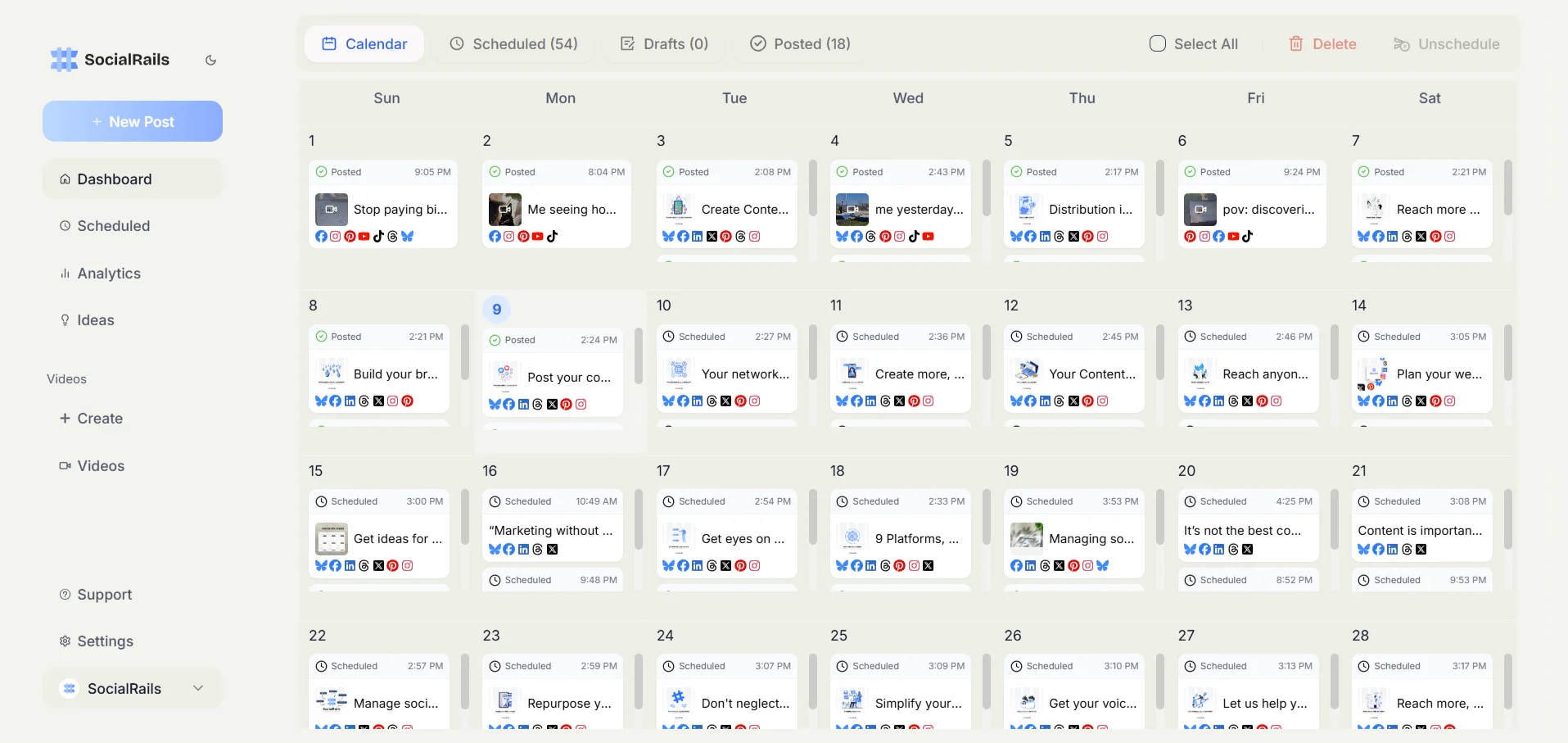
The Facebook Ads Split Testing Crisis
Many advertisers don't properly implement split testing strategies, yet those who do often see significant improvements in campaign performance. The problem isn't lack of tools, Facebook provides robust testing capabilities, it's lack of methodology.
Why Most Split Tests Fail
Common Failure Patterns:
- Testing everything at once instead of isolated variables
- Making decisions based on insufficient data
- Confusing statistical significance with practical significance
- Ignoring seasonal and temporal factors
- Misaligning test objectives with business goals
Understanding Facebook Ads Split Testing
📊 Quick Comparison: Testing Methods
| Method | Best For | Minimum Budget | Time Needed |
|---|---|---|---|
| A/B Testing | Single variable testing | $50/test | 3-7 days |
| Multivariate | Multiple variables | $500+/test | 7-14 days |
| Sequential | Step-by-step optimization | $200+/week | 4+ weeks |
What Is Split Testing?
Split testing (also called A/B testing) is the process of running two or more versions of your Facebook ad simultaneously to determine which performs better. The key is testing only one variable at a time to isolate what's actually driving performance differences.
Types of Facebook Ad Split Tests
Creative Testing:
- Images vs. videos
- Different ad copy approaches
- Call-to-action buttons
- Headlines and descriptions
Audience Testing:
- Demographics variations
- Interest-based audiences
- Lookalike audiences
- Custom audience segments
Placement Testing:
- Facebook Feed vs. Instagram Stories
- Audience Network performance
- Messenger ad effectiveness
- Different device preferences
Campaign Objective Testing:
- Awareness vs. conversion campaigns
- Traffic vs. engagement objectives
- Different bidding strategies
- Budget allocation methods
The Scientific Approach to Facebook Ads Testing
Phase 1: Hypothesis Formation
Before launching any test, you need a clear hypothesis based on data or reasonable assumptions.
Hypothesis Framework:
- What you're testing (specific variable)
- Why you believe one version will outperform (reasoning)
- How you'll measure success (specific metrics)
- When you'll evaluate results (time frame)
Example Hypothesis: "Video creative will outperform static image ads for our fitness product because video can better demonstrate the product in use, leading to higher engagement rates and lower cost per conversion over a 7-day testing period."
Phase 2: Test Design and Setup
Single Variable Testing: Always test only one element at a time. If you test both creative and audience simultaneously, you won't know which variable caused performance differences.
Facebook's Split Testing Tool Setup:
- Navigate to Ads Manager
- Select "Create" and choose your campaign objective
- At the ad set level, toggle on "Split Testing"
- Choose your variable (Creative, Audience, Placement, or Delivery Optimization)
- Set your budget and schedule
- Define your success metric
Phase 3: Statistical Significance Requirements
Sample Size Calculations:
- Minimum 100 conversions per test variation
- At least 1,000 people reached per ad set
- High confidence level for reliable results
- Consider your normal conversion rate for planning
Testing Duration:
- Minimum 3-7 days to account for day-of-week variations
- Longer for B2B campaigns (7-14 days typical buying cycle)
- Account for seasonal fluctuations
- Stop tests early only with overwhelming evidence (99% confidence)
Advanced Split Testing Strategies
Sequential Testing Method
Instead of testing everything randomly, follow this proven sequence:
Week 1: Audience Testing
- Test 3-4 different audience segments
- Keep creative and placement constant
- Winner becomes your baseline audience
Week 2: Creative Testing
- Use winning audience from Week 1
- Test 3-4 creative variations with our Ad Copy Variant Generator
- Focus on one creative element (image, video, copy)
Week 3: Placement Testing
- Use winning audience and creative
- Test automatic vs. manual placements
- Compare performance across different platforms
Week 4: Optimization Testing
- Test bidding strategies
- Compare campaign objectives
- Fine-tune budget allocation
Creative Testing Framework
Image Testing Variables:
- People vs. product-focused images
- Lifestyle vs. studio photography
- Emotional vs. logical appeals
- Color schemes and visual composition
Video Testing Variables:
- Length (15s vs. 30s vs. 60s)
- Hook strength (first 3 seconds)
- With vs. without captions
- Animation vs. live-action
Copy Testing Variables:
- Short vs. long-form copy
- Benefit-focused vs. feature-focused
- Urgency vs. educational tone
- Different pain points addressed
Audience Testing Methodology
Demographic Splits:
- Age ranges (18-35 vs. 35-55 vs. 55+)
- Gender performance comparisons
- Geographic testing for local businesses
- Device preference analysis
Interest Testing:
- Broad vs. narrow interest targeting
- Competitor audience overlap
- Behavioral targeting options
- Life event targeting opportunities
Lookalike Audience Testing:
- 1% vs. 3% vs. 5% lookalike sizes
- Different source audiences (customers, website visitors, email list)
- Country-specific vs. global lookalikes
- Excluding existing customers vs. including them
Technical Split Testing Setup
Facebook's Native Split Testing
Advantages:
- Automatic statistical significance calculations
- Built-in confidence intervals
- Even budget distribution
- Integrated reporting
Setup Process:
- Campaign level: Choose your objective
- Ad set level: Enable "Split Test"
- Select test variable and create variations
- Set budget ($5-10 per variation minimum)
- Choose test duration (3-14 days)
- Launch with identical schedules
Manual Testing Setup
When to Use Manual Testing:
- Testing campaign objectives (must be done manually)
- Complex multi-variable scenarios
- Custom attribution windows
- Advanced audience exclusions
Manual Testing Best Practices:
- Use identical budgets and schedules
- Launch simultaneously to avoid timing bias
- Use consistent naming conventions
- Monitor external factors that might influence results
Measuring and Interpreting Results
Key Metrics to Track
Primary Metrics (Based on Campaign Objective):
- Cost per conversion
- Conversion rate
- Return on ad spend (ROAS)
- Cost per click (CPC)
Secondary Metrics:
- Click-through rate (CTR)
- Cost per 1,000 impressions (CPM) - compare your results against industry CPM benchmarks
- Frequency
- Relevance score
Engagement Metrics:
- Comments, likes, shares
- Video view rates
- Time spent on landing page
- Bounce rate
Statistical Significance vs. Practical Significance
Statistical Significance: A high confidence level means there's only a small chance the results are due to random variation. Facebook's split testing tool automatically calculates this.
Practical Significance: Even if results are statistically significant, the difference might be too small to matter for your business. A 2% improvement in CTR might be statistically significant but not worth implementing if it doesn't meaningfully impact your bottom line. Compare your results to industry CTR benchmarks to understand if your performance is truly above average.
Decision Framework:
- Statistical significance: High confidence level
- Practical significance: Meaningful improvement in key metrics
- Cost consideration: Implementation effort vs. projected benefit
- Risk assessment: Downside if you're wrong
Common Split Testing Mistakes
Mistake 1: Testing Too Many Variables
The Problem: Running a test with different images, copy, audiences, and placements simultaneously makes it impossible to identify what's driving results.
The Solution: Test one variable at a time using the sequential testing method outlined above.
Mistake 2: Ending Tests Too Early
The Problem: Checking results daily and stopping tests as soon as one version appears to be winning leads to false conclusions.
The Solution: Set your testing duration upfront and stick to it unless you reach overwhelming statistical significance (99%+).
Mistake 3: Ignoring External Factors
The Problem: Not accounting for seasonality, news events, competitor actions, or website changes that could influence results.
The Solution: Document external factors during testing periods and consider their potential impact on results.
Mistake 4: Testing Insignificant Elements
The Problem: Spending time testing minor variations (like button colors) instead of elements that could significantly impact performance.
The Solution: Focus on high-impact variables first: audiences, core value propositions, and primary creative elements.
Mistake 5: Not Having a Control Group
The Problem: Testing two new variations against each other without maintaining a control (your current best-performing ad).
The Solution: Always include your current champion ad as a control to ensure new variations actually improve performance.
Advanced Testing Strategies
Multivariate Testing
When to Use: Only after you've exhausted single-variable testing and have substantial budget and traffic.
Setup Approach:
- Test 2-3 variables with 2-3 variations each
- Requires significantly larger sample sizes
- Best for high-volume accounts ($10,000+ monthly spend)
- Use statistical software for proper analysis
Holdout Testing
Purpose: Measure the incremental lift from your advertising efforts.
Implementation:
- Exclude a small percentage of your target audience from all ads
- Compare conversion behavior between exposed and unexposed groups
- Measure true advertising incrementality
- Particularly valuable for brand awareness campaigns
Geo Testing
Applications:
- Testing different creative strategies by region
- Measuring local vs. national campaign effectiveness
- Rolling out new products in test markets
- Comparing seasonal performance across geographies
Budget Allocation for Testing
Testing Budget Rules
10-20% Rule: Allocate 10-20% of your total Facebook ads budget specifically for testing. This ensures continuous optimization without risking your proven campaigns.
Per-Test Budget Guidelines:
- Minimum $50-100 per variation for meaningful data
- Plan for 3-7 days of testing at your target daily spend
- Higher budgets for lower-conversion-rate businesses
- Account for your typical cost per conversion when planning
ROI Calculation for Testing
Testing ROI Formula:
Testing ROI = (Improvement in Performance × Future Ad Spend) - Testing Costs
Example: If testing costs $500 and reveals a 25% improvement in ROAS for your $5,000 monthly ad spend:
Testing ROI = (0.25 × $5,000 × 12 months) - $500 = $14,500 annual benefit
Tools and Resources for Advanced Testing
Facebook's Native Tools
Split Testing Feature:
- Built into Ads Manager
- Automatic statistical significance calculations
- Visual results comparison
- Confidence interval reporting
Experiments Tool:
- More advanced testing scenarios
- Holdout group testing
- Conversion lift studies
- Brand survey lift testing
Third-Party Testing Tools
Analytics Platforms:
- Google Analytics for deeper conversion tracking
- Triple Whale for e-commerce attribution
- Northbeam for advanced attribution modeling
- Facebook Analytics (deprecated but historical data valuable)
Statistical Significance Calculators:
- Optimizely's free calculator
- VWO's A/B test calculator
- Neil Patel's significance calculator
- Custom Excel/Google Sheets calculators
Building a Testing Culture
Documentation Systems
Test Log Template:
- Hypothesis and reasoning
- Test setup details (dates, budget, audiences)
- Results and statistical significance
- Key learnings and next steps
- Impact on overall account performance
Knowledge Base:
- Winning creative elements
- Audience insights
- Seasonal performance patterns
- Platform-specific best practices
Team Processes
Testing Calendar:
- Plan tests in advance
- Avoid testing during high-impact periods (Black Friday, major launches)
- Coordinate with other marketing activities
- Schedule regular results review meetings
Decision-Making Framework:
- Clear criteria for determining winners
- Escalation process for conflicting results
- Implementation timeline for test winners
- Risk management for test failures
The Future of Facebook Ads Testing
AI and Machine Learning Integration
Automated Testing: Facebook's machine learning is increasingly handling optimization automatically, but human-designed tests still provide strategic advantages.
Dynamic Creative Optimization: Facebook's DCO automatically tests creative combinations, but strategic testing of audience and placement remains crucial.
Privacy and Attribution Changes
iOS 14.5+ Impact: Reduced attribution data makes statistical significance harder to achieve, requiring longer testing periods and larger sample sizes.
First-Party Data Importance: Testing strategies increasingly rely on first-party data and conversion API implementations for accurate measurement. A properly configured Facebook Pixel setup is essential for collecting reliable conversion data that powers meaningful split tests.
Conclusion
Successful Facebook ads split testing isn't about having access to fancy tools – it's about applying rigorous methodology and scientific thinking to your optimization process. The 10% of businesses that succeed with split testing share common traits: they test systematically, measure correctly, and implement learnings consistently.
Start with the sequential testing framework outlined in this guide. Focus on one variable at a time, ensure statistical significance before making decisions, and document everything for future reference. Most importantly, view testing as an ongoing process, not a one-time activity.
The businesses that master Facebook ads split testing don't just improve their current campaigns – they build a sustainable competitive advantage through superior optimization capabilities. In an increasingly competitive advertising landscape, this systematic approach to testing isn't just beneficial – it's essential for long-term success.
Remember: every great advertising account is built on hundreds of small optimizations found through careful testing. Start testing systematically today, and join the businesses that truly understand how to optimize Facebook ads for maximum performance.
Related Resources
Learn more about Facebook advertising success with these guides:
Was this article helpful?
Let us know what you think!