
Canva Review 2026: Features, Pricing & Honest Verdict

TL;DR: Canva is the default template-first design tool. Generous free plan, Pro at $15/month adds Magic Studio AI, Brand Kit, and Background Remover. Scheduling is basic, most posters stack a second tool.
G2 rating 4.7/5 across tens of thousands of reviews.
Create content, post everywhere
Create captions, images, and videos with AI. Schedule to 9 platforms in seconds.
Start your free trial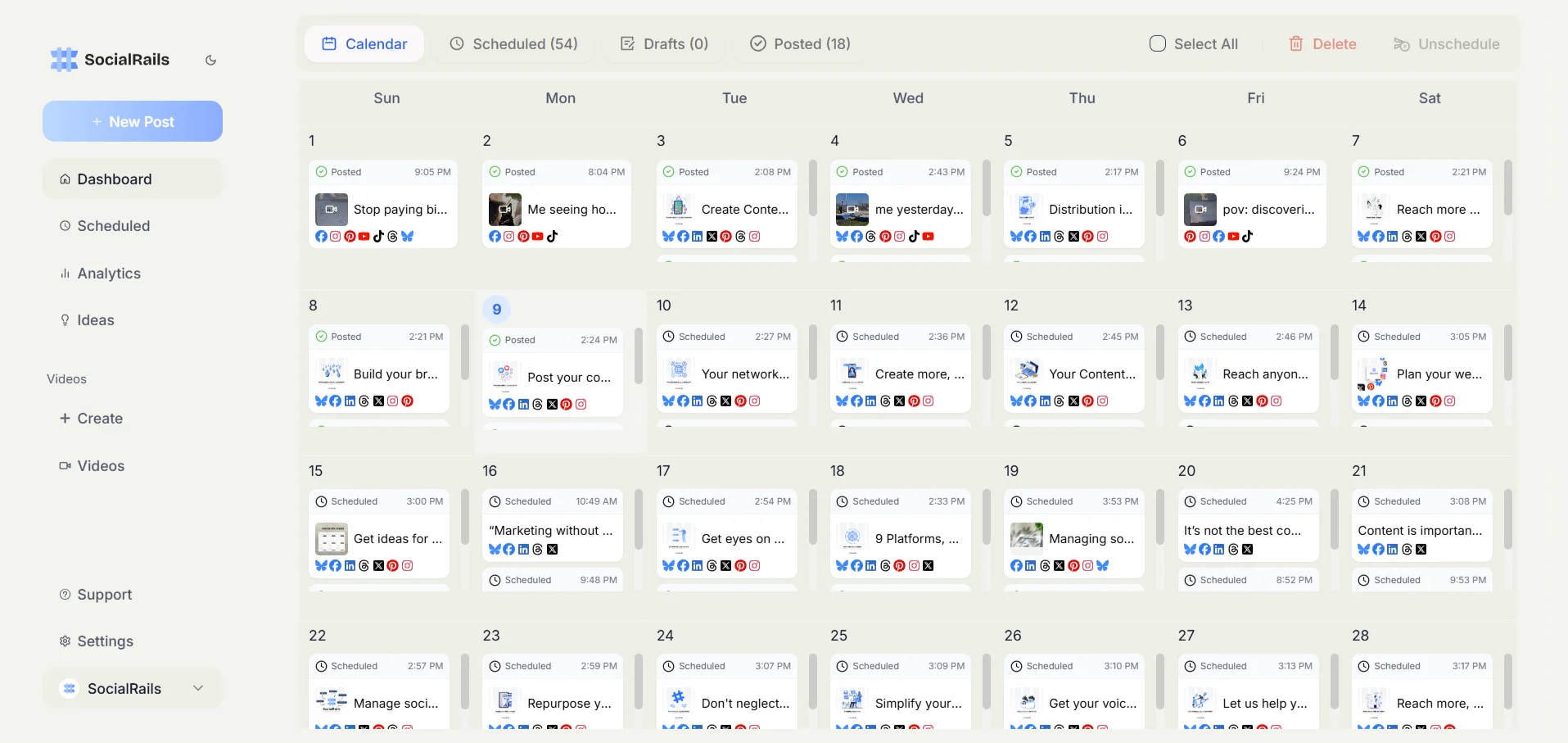
Quick Verdict
Bottom line: Free plan covers casual use. Pro is worth it for Brand Kit, Magic Studio, or Background Remover. Scheduling is weak, so social-first users pair Canva with a scheduler or bundle both in SocialRails ($29/month).
Does Canva Have a Free Plan?
Yes. Canva's Free plan is permanent and unusually generous.
What the Free plan includes:
- 250,000+ free templates
- 1 million+ free photos, graphics, audio
- 5 GB cloud storage
- Basic AI features (limited credits)
- 1 user
- No credit card required
When you upgrade: Pro at $15/month adds Brand Kit, Background Remover, Magic Studio at full access, 1 TB storage, and premium stock.
If your design volume is low, the Free plan can last you years without paying a cent.
Does Canva have a free plan?
Canva Pricing
Canva for Education and Nonprofits are free for verified users. For a full breakdown, see our Canva pricing guide.
Canva Features
Template Library
Canva's core strength. Over 250,000 templates spanning:
- Social posts: Instagram, TikTok, YouTube, LinkedIn, Pinterest, Facebook
- Presentations: Decks, pitch decks, education slides
- Print: Business cards, flyers, posters, invitations
- Video: Reels, shorts, promos, intros
- Documents: Resumes, reports, worksheets
- Ads: Display banners, social ads, Google Ads
Template quality varies (community-submitted), but the sheer volume means you can usually find something close to what you need.
Magic Studio (Pro)
Canva's AI suite, rolled out across plans with Pro getting full access.
- Magic Write: Text generation for captions, social copy, outlines
- Magic Edit: Replace objects in images with a prompt
- Magic Design: Auto-generate on-brand designs from a prompt + image
- Magic Media: Text-to-image and text-to-video generation
- Magic Eraser: Remove objects from photos
- Magic Morph: Transform shapes and objects
Output quality is good for social-grade work. For publication-grade images, you'd still pair with Firefly or Midjourney.
Which Canva feature lets you auto-generate on-brand designs from a prompt + reference image?
Brand Kit (Pro)
Upload logos, fonts, colors, and brand assets once, then apply them to any design. On Teams, Brand Kits extend to multi-brand support and brand controls.
- Free: Not included
- Pro: 1 kit with fonts, colors, logos
- Teams: Unlimited kits, brand controls
For agencies or multi-brand teams, Brand Kit alone often justifies Teams pricing.
Content Planner (Scheduling)
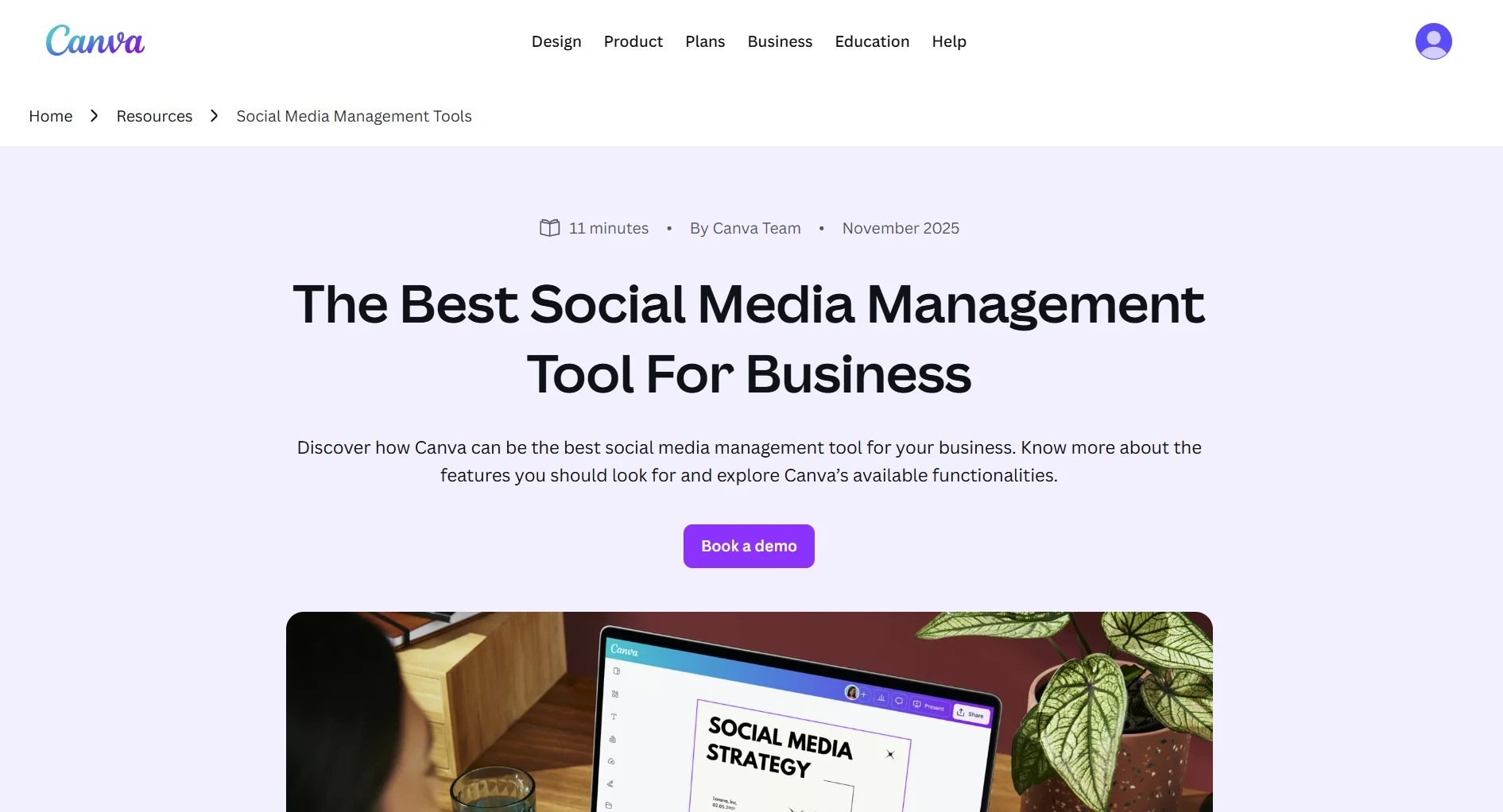
Canva includes a built-in scheduler. It posts to Facebook, Instagram, LinkedIn, Pinterest, X, and a few others. Expect limitations:
- No approval workflows
- No deep analytics
- Limited to account-linked platforms (e.g., Instagram requires a Business or Creator account)
- No team queues, labels, or categories
If scheduling is a primary use, most users pair Canva with a dedicated social tool.
Real-Time Collaboration
On Teams, you get Google Docs-style co-editing, comments, and approval workflows. Solid for teams that design in pairs or need sign-off before publishing.
What's the biggest limitation of Canva's built-in scheduler?
Background Remover
One-click background removal on images. Available on Pro. Quality is excellent for typical product and portrait shots.
Print Services
Order business cards, posters, flyers, and merchandise directly. Canva handles fulfillment; you pay print costs separately from your subscription.
Pros
- Permanent, genuinely useful Free plan. Unusual in design software.
- Massive template library. 250K+ covers almost every use case.
- Drag-and-drop is fast. New users are productive in minutes.
- Magic Studio AI. Generative tools baked into the editor.
- Brand Kit (Pro). Keeps colors, fonts, and logos consistent.
- Cross-format resize. Resize a design for multiple channels in one click.
- Works in the browser. No install required; apps also available.
Cons
- Scheduling is basic. Content Planner lacks the depth of dedicated schedulers.
- Everything looks a bit "Canva". Template-based design is recognizable, which can hurt brand differentiation.
- Teams pricing stacks fast. 10 users = $100/month.
- Magic Studio has credit limits. Heavy AI users can hit caps even on Pro.
- No pixel-level pro editing. Designers doing print-grade or retouching still need Photoshop.
- Free plan adds premium element fees. Using a premium element on Free costs $1 per element or nudges you to Pro.
What's the biggest Canva limitation for solo social media managers?
Who Should Use Canva
Good fit:
- Solo creators who post weekly+ and care about visuals
- Small businesses designing across print and social
- Marketing teams with 3+ designers (Teams justifies its pricing)
- Teachers and students (Canva for Education is free and generous)
- Nonprofits (Canva Nonprofits is free Teams access)
Not a good fit:
- Pure designers who need pixel-level control (use Photoshop/Figma)
- Teams whose main job is posting to social (dedicated schedulers are stronger)
- Heavy AI image generators (Firefly, Midjourney are better for final output)
- Brands worried about "Canva aesthetic" (work with a designer instead)
Final Verdict
Canva is the default choice for template-first design, and with good reason. The Free plan is genuinely useful, Pro at $15/month is reasonable if you design regularly, and Teams at $10/user scales well for small marketing teams.
The one weak spot is social media scheduling. If posting is a big part of your workflow, pairing Canva with a dedicated scheduler (or picking a tool that bundles design + scheduling) tends to save money and reduce tool-switching.
Rating: 4.6/5. Strongest free plan in design software, top-tier templates, basic scheduling.
Alternatives Worth Considering
See our full Canva alternatives list, pricing breakdown, or the Canva vs Buffer comparison.
Related reads:
- Canva vs Hootsuite
- Canva vs Simplified
- Canva vs Buffer
- Best Canva Social Media Templates
- Best AI Tools for Social Media
FAQ
Is Canva worth it in 2026?
The Free plan is absolutely worth using. Pro at $15/month is worth it if you use Brand Kit, Background Remover, or Magic Studio regularly. For teams, Canva Teams at $10/user (3-user min) is reasonable for 3-10 users, but stacks fast above that.
Does Canva have a free plan?
Yes. The Free plan is permanent, includes 250,000+ templates, 1 million+ free photos/graphics, 5 GB of storage, and basic Magic Studio credits. No credit card required.
What's the difference between Canva Free and Pro?
Pro adds Brand Kit, Background Remover, Magic Studio at full access, premium stock (100M+ assets), 1 TB storage, Content Planner scheduling, and 24/7 support. Free is still usable, but these are the features heavy users tend to miss.
Can Canva schedule social media posts?
Yes, via Content Planner on Pro. It posts to Facebook, Instagram, LinkedIn, Pinterest, X, and a few others. It lacks approvals, deep analytics, and advanced queues, so most serious users add a dedicated scheduler. SocialRails ($29/month) combines design and scheduling in one tool.
How does Canva compare to Adobe Express?
Canva has more templates and a larger community. Adobe Express has Firefly AI built in and is cheaper ($9.99 vs $15). For heavy AI users, Adobe Express is tempting; for template variety, Canva still leads.
Is Canva good for print design?
Yes, for business cards, flyers, posters, and similar items. Canva handles fulfillment through its print service. For high-end print (packaging, publication-grade), designers still use Adobe InDesign and Illustrator.
Does Canva have AI image generation?
Yes. Magic Media generates images (and short videos) from text prompts. Quality is good for social-grade work. Pro includes more credits than Free, but heavy users can still hit limits.
What languages does Canva support?
Canva's UI and templates are localized for 100+ languages, including most European, Asian, and Middle Eastern languages. Magic Write generates text in multiple languages, though English output is strongest.
Can I use Canva for commercial work?
Yes, with caveats. Free and Pro cover most commercial use, but certain premium stock elements have their own licensing terms. Always check the license on individual assets before using them in paid client work or merchandise.
Was this article helpful?
Let us know what you think!